
0 ITEMS

Simple Capitalized Earnings Business Valuation Model
This simple Capitalized Earnings Business Valuation model template offers a quick and easy method to perform a business valuation using the income approach. This template suggests to use 3 years of actual profits as the basis for the valuation of a business by normalizing its earnings to a representative level of normalized profits after tax and by capitalizing such profits by the company’s estimated discount rate corrected for growth.
Normalization of earnings refers to the process of correcting the company’s historic profits by eliminating the effects of one-time exceptional effects which are not part of a normal company year. In this model, we suggest to either use the average of three years’ normalized earnings or simply estimating the company’s true earnings potential. This Excel spreadsheet also includes the calculation of the Weighted Cost of Capital (WACC) which can be used to estimate a company’s discount rate. Overall this one-page template offers a simple way to quickly estimate the value of any business by using the capitalized earnings valuation method.


Are you looking for a simple and efficient way to estimate the value of your business? Look no further! Download our Capitalized Earnings Spreadsheet Template today and unlock the power to do a simple business valuation. This is a simple one-page spreadsheet template in Excel designed to give you a quick answer to what a business might be worth by using the capitalized earnings valuation method.
The Capitalized Earnings valuation Method offers a simple way to quickly estimate the value of your business. This simple Excel spreadsheet template suggests using the 3 years of historic profits and correcting for one-time effects to obtain the level of normalized profits. A three-year average can then be used to estimate the sustainable profits after tax which then can be capitalized using a company’s discount rate and correct for eventual growth.
The capitalized earnings valuation method is simpler to apply than a full-scale Discounted Cash Flow (DCF) valuation since only three years of historic data are needed (instead of a minimum 5-year forecast such as the DCF method).
How does the Capitalized Earnings Valuation Method work?
- The concept of the Weighted Average Cost of Capital (WACC) is used to calculate the estimated discount rate for the company.
- We analyze 3 years of historic profits at the level of EBIT (Earnings before Interest and Taxes).
- Each year of historic profits is corrected for extraordinary effects so that we can understand what EBIT would have resulted in without such effects (normalization of profits)
- We then take a three-year average as a proxy for the expected level of sustainable profits going forward
- We deduct pro-forma taxes on such profits at the company’s income tax rate to obtain the expected sustainable profits after tax (Normalized EBIT * (1-tax rate)) going forward
- We then use the Gordon Growth model to estimate the company’s enterprise value by capitalizing the expected sustainable profits after tax by the company’s discount rate less growth rate (g). The corresponding formula would be: (EBIT / (WACC – g)
- From the obtained enterprise value, we need to deduct, as per the specified valuation date and the company’s corresponding balance sheet, the financial debt and add cash and eventual non-operation assets.
- This then results in the expected equity value of the business by using the capitalized earnings valuation method.
Please also refer to our article A Guide to Understanding Capitalized Earnings Valuation. Enjoy!
Why use this Simple Capitalized Earnings Valuation Template
- Easy way to perform a quick business valuation
- Only three years of historic data needed
- One-page spreadsheet template
- Charts included to better understand the business valuation result and its assumptions
Important to note, the capitalized earnings valuation method is more applicable to established businesses with a track record of steady earnings and fewer startups that might either show strong growth or are having years of losses.
Ready to do your own Capitalized Earnings Business Valuation?
What are you waiting for? This template is offered for FREE. Don’t miss out on this great opportunity to estimate the value of your business with our free Capitalized Earnings Valuation Method Template. Download the spreadsheet template now and find out how much your business is worth by using this simple way of performing a business valuation!
This template comes as an MS Excel spreadsheet template.
The current Model Version is 1.5.
The File Type is .xlsx
Similar ProductsOther customers were also interested in...



 eFinancialModels
Waterfall Profit Distribution Model (up to 4 Tiers...
We are introducing our 4-Tier Waterfall Profit Distribution Model. The waterfall profit distribution... Read more

Budget Template in Excel – Analysis in 4 Ste...
The Purpose of the 4 Step Budget Analysis Spreadsheet Template is to offer a user-friendly solution ... Read more

 Anuj
Anuj
Private Equity Fund Model (Investor Cashflows)
The Private Equity Fund Cashflows Model helps LPs and GPs analyze fund cash flows, returns, and dist... Read more

 Jason Varner
All My Financial Models, Spreadsheets, Templates, ...
Lifetime access to all future templates as well! Here is a set of spreadsheets that have some of the... Read more
 Pierre-AlexandreHeur...
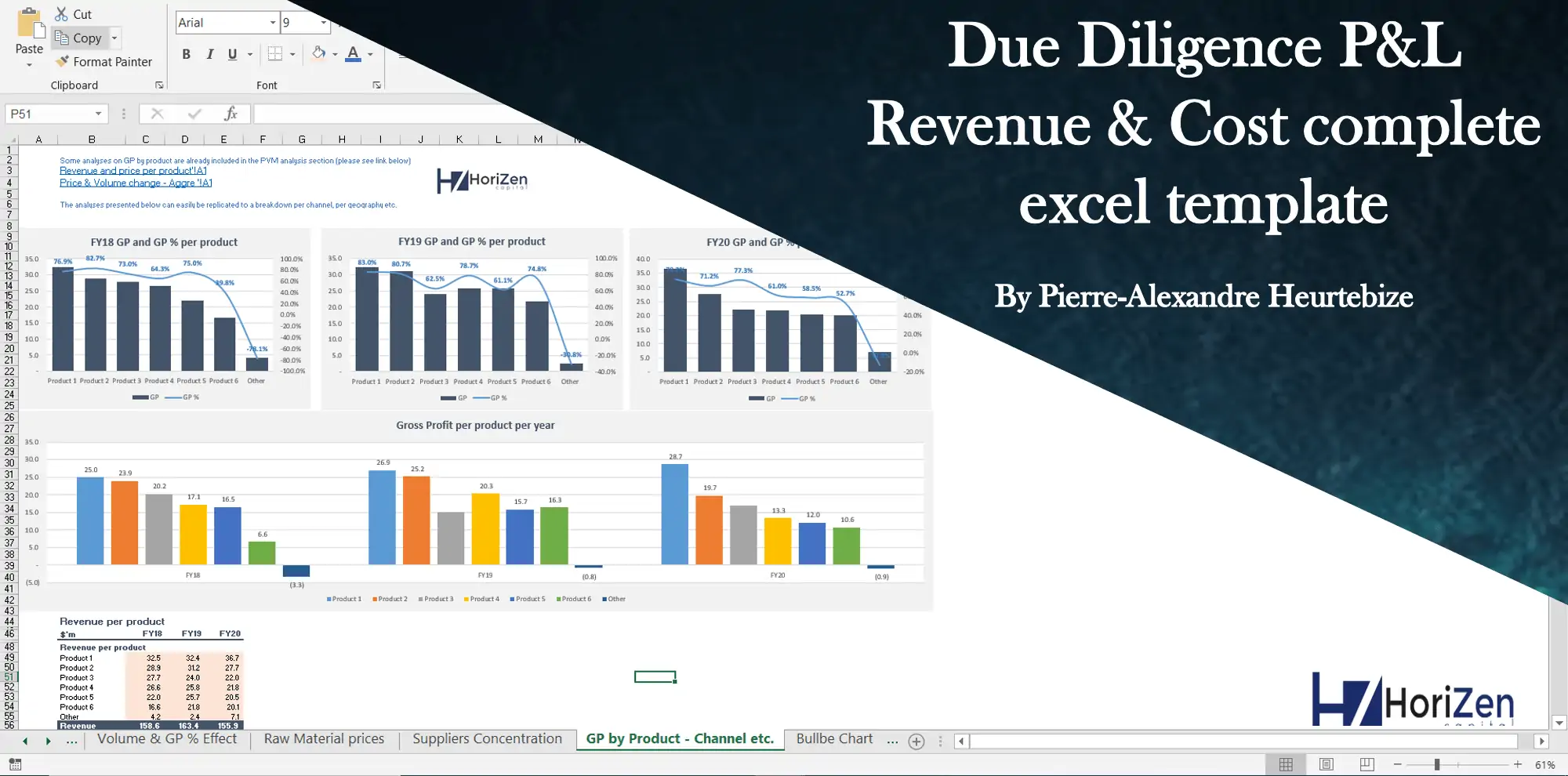
Due Diligence P&L – Exhaustive Revenue a...
Model for in depth understanding of high level profit and loss and revenue analysis. Big-4 like chec... Read more

 Giorgos
Startup Company Financial Model – 5 Year Fin...
Highly-sophisticated and user-friendly financial model for Startup Companies providing a 5-Year adva... Read more

Advanced Financial Model with DCF and Valuation
Dynamic 10-Year Financial Model, suitable for any type of business, supporting strategic planning, i... Read more
General Financial Models – All-in-One Bundle
A collection of templates suitable for various types of businesses/industries, covering major accoun... Read more

Franchisor Licensing: Financial Model with Cap Tab...
Build up to a 10 year financial forecast with assumptions directly related to the startup and operat... Read more

 NEETEM
Feasibility Study Template – 10 years Model
Advance Feasibility studies template for 10 years ( Financial model for any projects & Feasibili... Read more
You must log in to submit a review.