
0 ITEMS

Business Valuation Expert Financial Model Excel Template
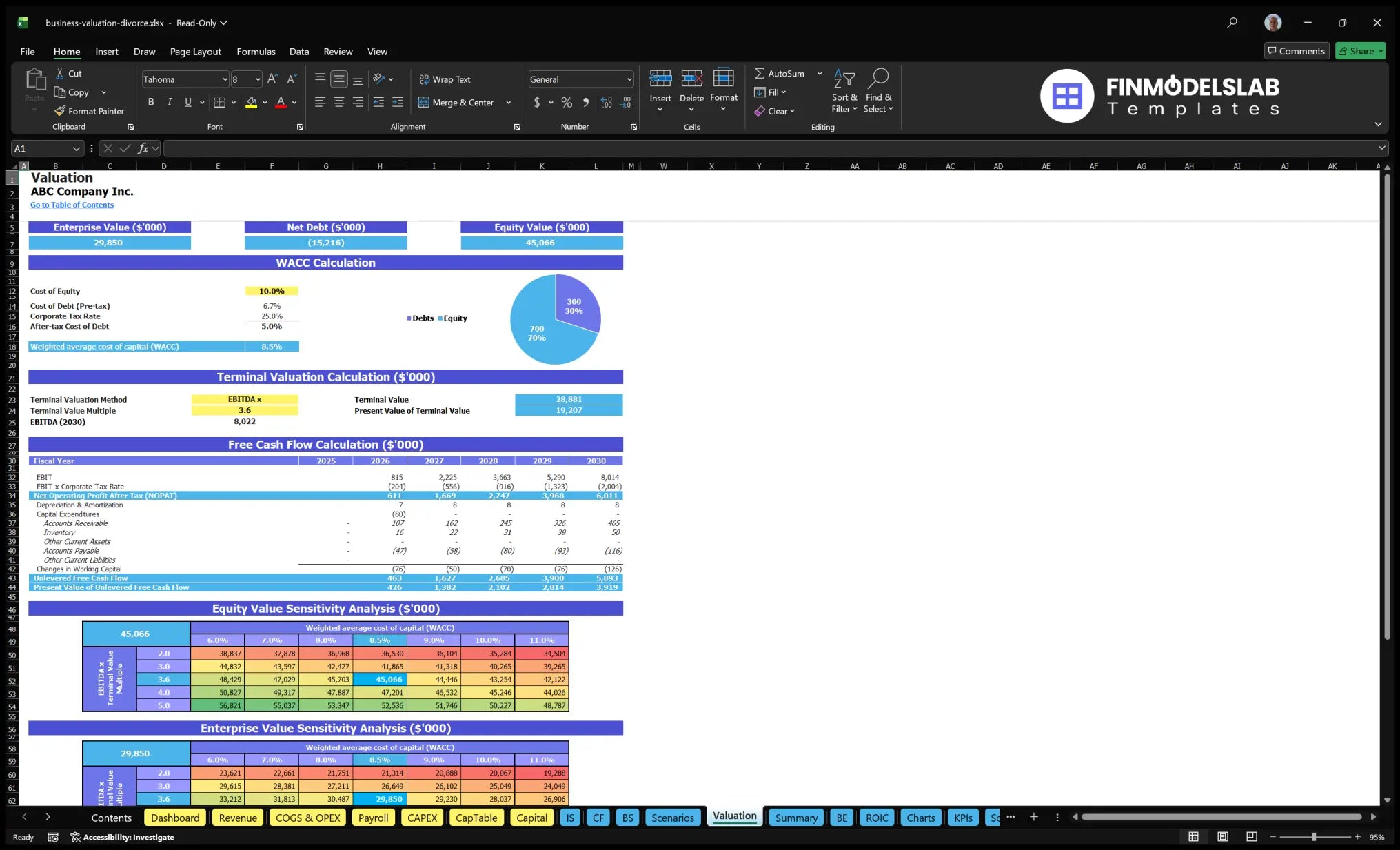
The Business Valuation for Divorce Financial Model helps users build a structured financial forecast for a professional practice focused on divorce-related business appraisal, marital asset valuation, litigation consulting, valuation reviews, and expert testimony. Instead of starting with a blank spreadsheet, buyers receive a ready-to-use financial model template designed around the revenue drivers, cost structure, staffing needs, and performance metrics that matter in this specialized service business. It supports practical financial planning by helping users organize assumptions, estimate service revenue, evaluate startup costs, forecast operating expenses, and understand how the business may perform over time. This template is built for entrepreneurs, business owners, consultants, analysts, attorneys, mediation teams, valuation professionals, and founders preparing business plans, funding documents, or internal financial reviews. It is especially useful for users who need to explain financial outcomes clearly to lenders, partners, investors, or stakeholders involved in business valuation for divorce planning. The model allows users to adjust revenue assumptions such as customer volume, billable hours, service pricing, and service mix, while also accounting for payroll, marketing, office costs, software, insurance, and other operating expenses that influence profitability. The Business Valuation for Divorce Financial Model brings together cash flow forecasting, profitability analysis, break-even analysis, and scenario planning so users can assess whether the business can sustain operations, scale responsibly, and generate attractive returns. By linking assumptions to projected financial statements and dashboard outputs, the template helps users see how decisions around pricing, hiring, client acquisition, and funding affect future results. It also gives users a clearer view of liquidity needs, payback timing, margin performance, and long-term financial viability. Fully editable and compatible with Microsoft Excel and Google Sheets, the template can be customized for a startup valuation practice, an established advisory firm, a forensic accounting service line, or a consulting business expanding into divorce-related financial analysis. It saves time, improves consistency, and gives decision-makers a more professional framework for evaluating opportunities, preparing presentations, and managing financial expectations with confidence.

Financial Model Overview
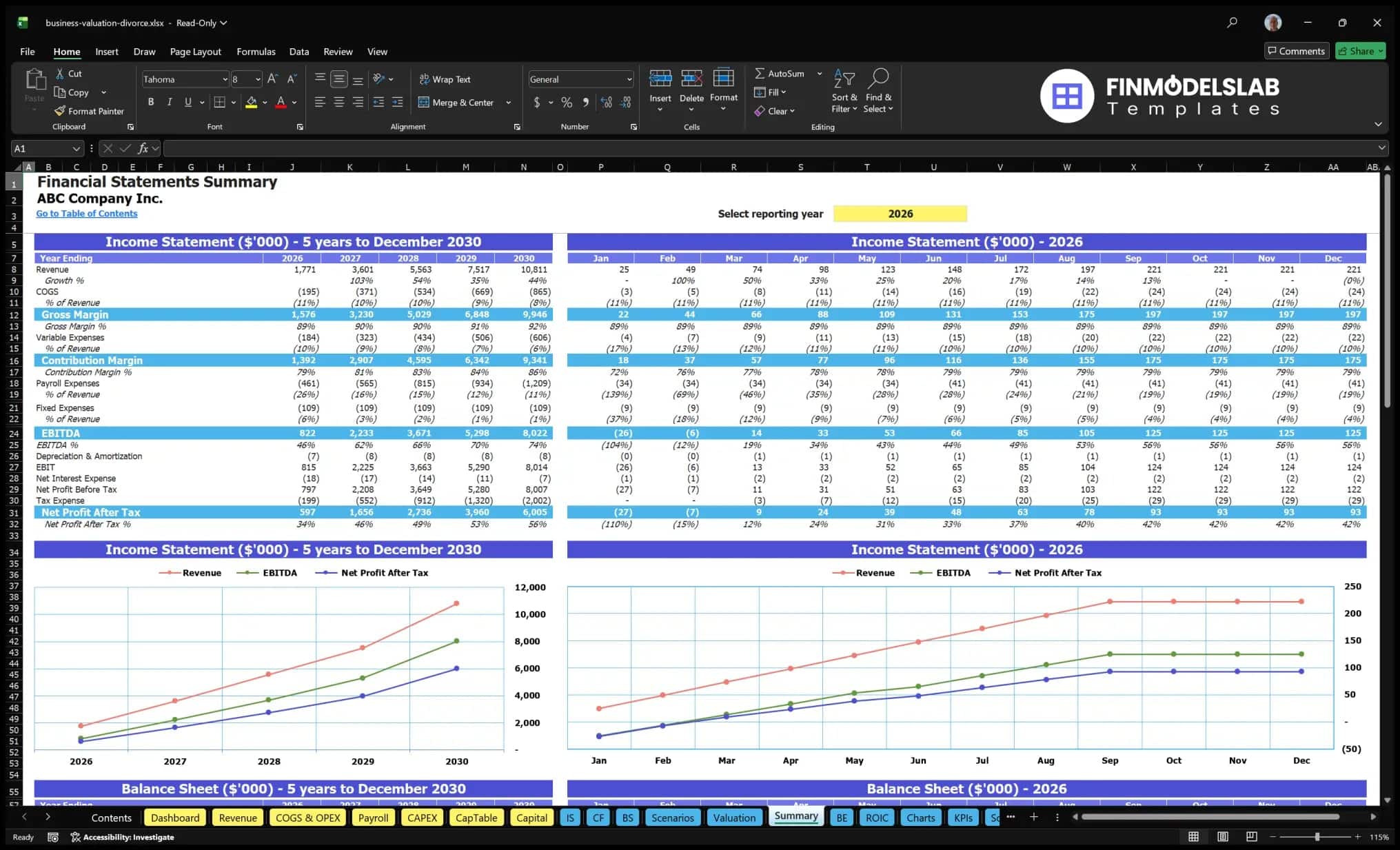
The Business Valuation for Divorce Financial Model is a ready-to-use financial model template designed for professionals who need to plan, evaluate, or present the economics of a divorce-focused business valuation practice. This type of business depends on specialized service revenue, expert labor, case volume, billable hours, client acquisition, and credible financial reporting, so a structured model is essential for replacing rough estimates with organized projections. The template helps users forecast revenue from valuation reports, expert testimony, valuation reviews, and litigation consulting while also connecting those assumptions to operating expenses, payroll, cash flow, profitability, and investment returns. It is useful for entrepreneurs launching a new practice, valuation professionals expanding their services, consultants building client-facing forecasts, attorneys and mediation teams reviewing financial scenarios, and analysts preparing business plans or funding materials. Because the model is editable, users can adapt assumptions to their own pricing, staffing plan, market, service mix, and growth strategy while still working from a professional framework built for decision-making.
All-in-One Dashboard
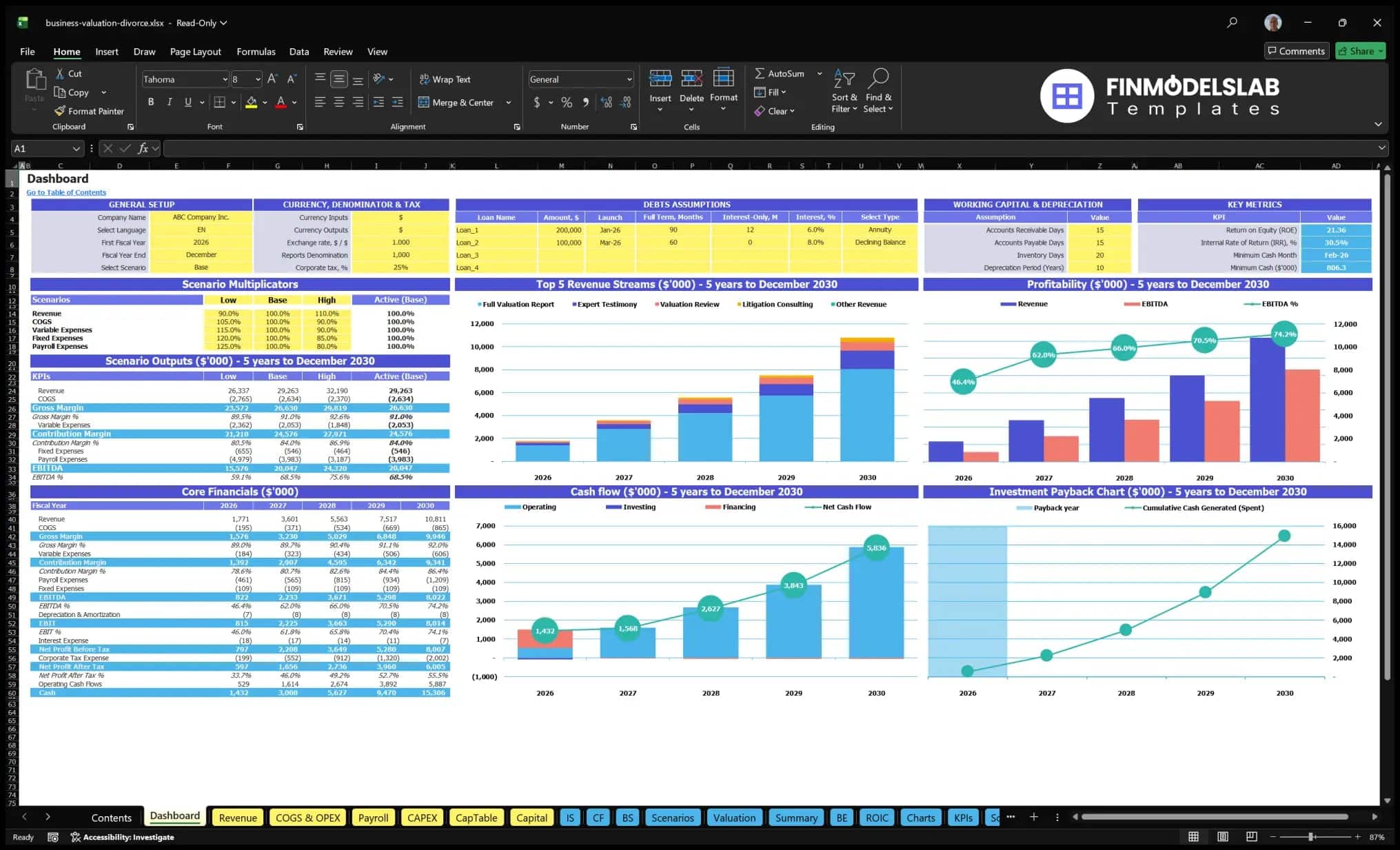
The all-in-one dashboard brings the most important inputs and outputs into one central view so users can quickly understand the financial position of the business without searching through multiple worksheets. This component typically consolidates assumptions such as revenue drivers, service mix, pricing, case volume, cost structure, staffing levels, capital requirements, and key timing inputs, then translates them into headline results such as revenue, EBITDA, net income, cash balance, margins, payback period, and valuation-related outputs. For a Business Valuation for Divorce Financial Model, this is especially valuable because attorneys, mediation teams, lenders, investors, partners, and firm owners often need a concise summary of ownership value, cash flow capacity, and business performance under realistic assumptions. The dashboard helps users validate whether the model is aligned with their intended strategy, identify where performance is strongest or weakest, and prepare for discussions about funding, hiring, pricing, and business growth. It also makes the template easier to use for non-financial users because key outputs are visible in one organized area, turning complex projections into a practical management tool.
Low, Base, and High Scenario Analysis
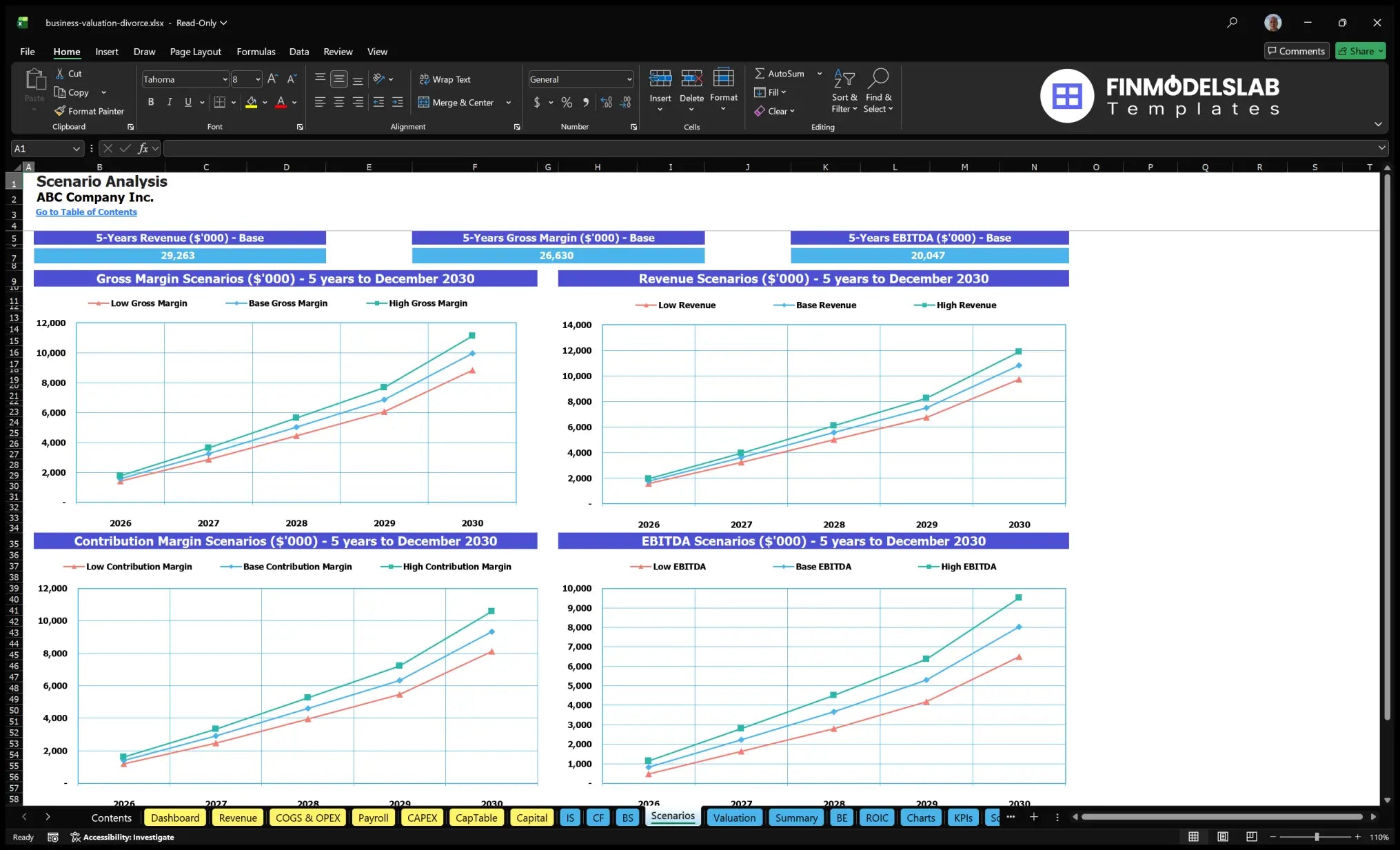
The low, base, and high scenario analysis section allows users to test how the business performs under different operating conditions. Instead of relying on one forecast, users can adjust major assumptions such as client acquisition rates, billable hours per case, hourly rates, service mix, marketing effectiveness, payroll timing, utilization, and expense growth to create conservative, expected, and optimistic outcomes. In a divorce business valuation practice, this matters because demand can vary based on referral networks, local divorce activity, court timelines, economic conditions, and the firm’s ability to win higher-value engagements. The low scenario can show how the business handles slower case volume or lower billable utilization, the base scenario can represent the most likely operating plan, and the high scenario can test the effect of stronger referrals, premium pricing, or increased expert testimony work. The outputs help users compare revenue, margins, cash flow, break-even timing, and funding needs across different cases. This component supports better decision-making because it shows the range of possible outcomes before money is committed, staff are hired, or growth plans are presented to stakeholders.
Professional Charts
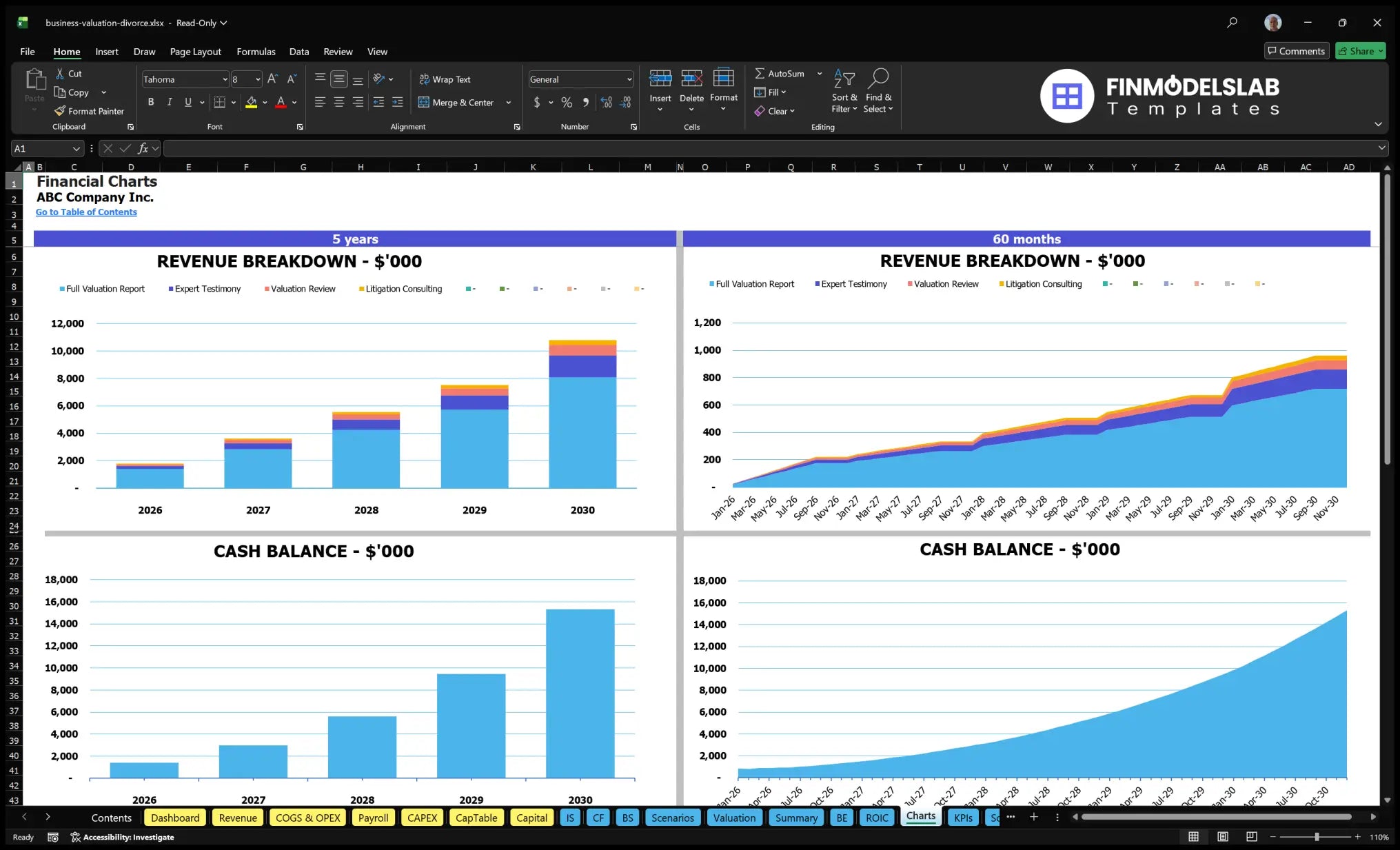
The professional charts component converts the model’s financial outputs into visual reports that are easier to interpret and present. These charts may show trends in revenue, gross profit, EBITDA, net income, operating expenses, cash flow, cumulative cash balance, service mix, and other financial metrics across the forecast period. For a business valuation for divorce practice, visual clarity is especially important because stakeholders may include attorneys, mediators, financial experts, lenders, spouses, partners, or internal management teams who need to understand the numbers quickly. A chart showing revenue growth by year can help explain the scale of the opportunity, while a cash flow chart can highlight liquidity needs and a margin chart can demonstrate whether the practice is becoming more efficient as it grows. Professional visuals also support funding presentations and business plan documents because they make the financial story more accessible than raw spreadsheet tables alone. This section helps users communicate assumptions and conclusions with confidence, making it easier to discuss pricing strategy, staffing expansion, investment requirements, and expected financial performance in a clear and credible way.
ROE Components and DuPont Analysis
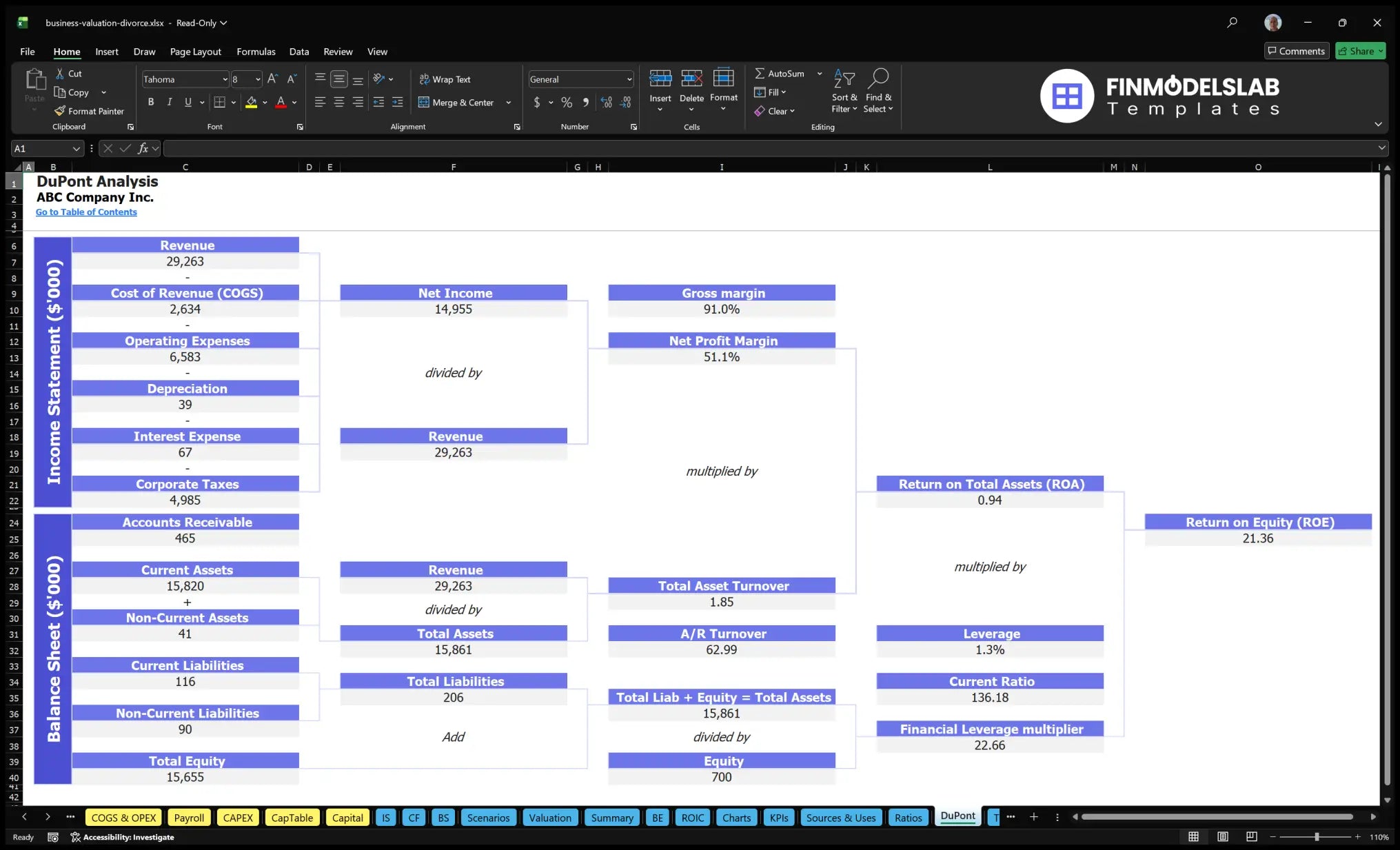
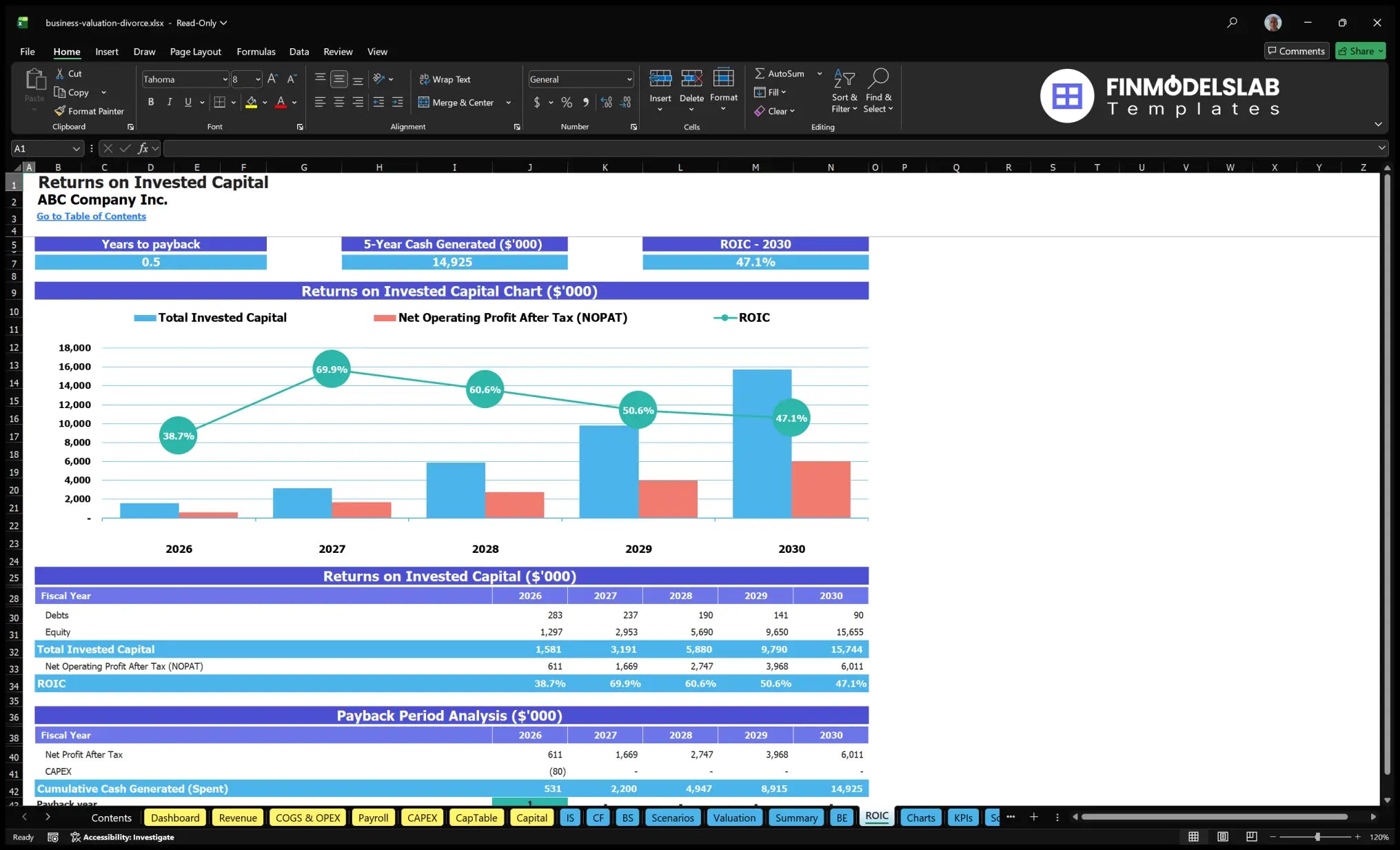
The ROE components section uses DuPont-style analysis to break return on equity into the underlying drivers that create or reduce shareholder return. Rather than showing only one final percentage, this component helps users understand how profitability, asset efficiency, and financial leverage contribute to overall return. In the context of a Business Valuation for Divorce Financial Model, this is useful for assessing whether the practice is generating attractive returns from the capital invested in software, databases, workstations, office setup, staffing, marketing, and working capital. Inputs may include net income, revenue, assets, equity, margins, and balance sheet assumptions, while outputs can include return on equity, profit margin, asset turnover, and leverage-related metrics. By separating the drivers of ROE, users can see whether returns are improving because of stronger margins, better utilization of resources, or changes in capital structure. This is valuable for owners, investors, and lenders because it provides a deeper view of business performance than revenue growth alone. It also helps management identify practical improvement levers, such as raising average billable rates, increasing expert testimony volume, improving staff productivity, or managing asset investment more efficiently.
Revenue Inputs
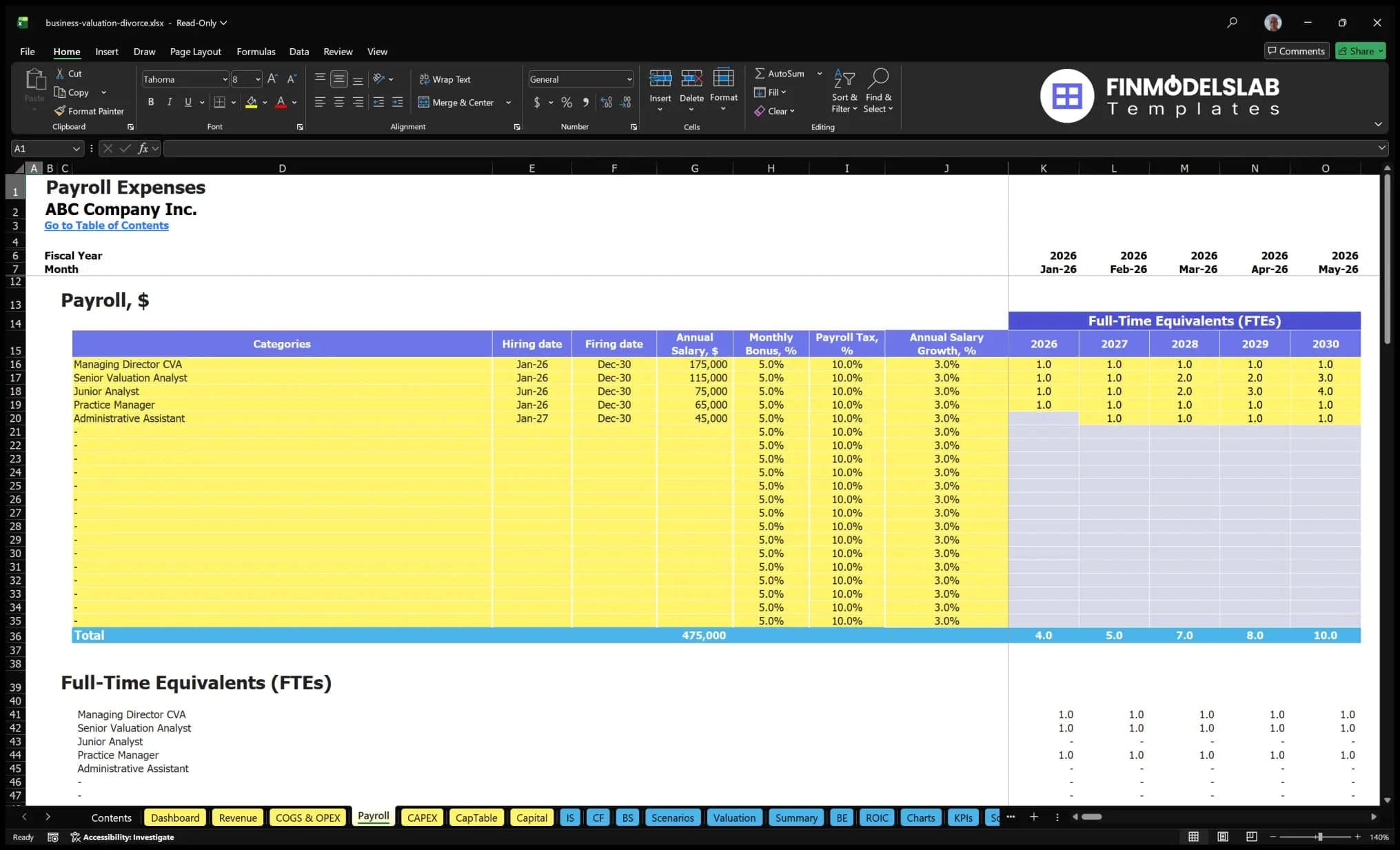
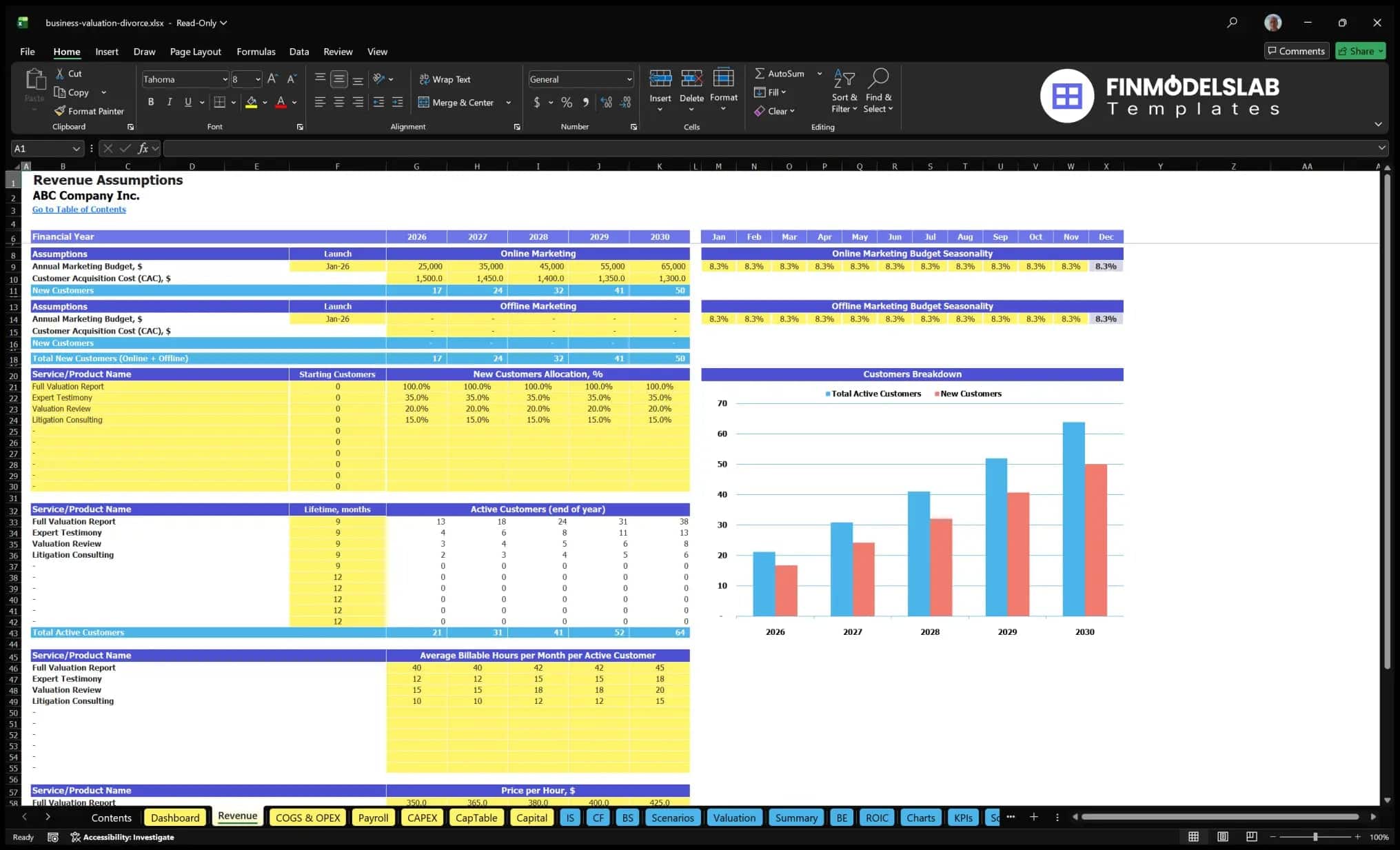
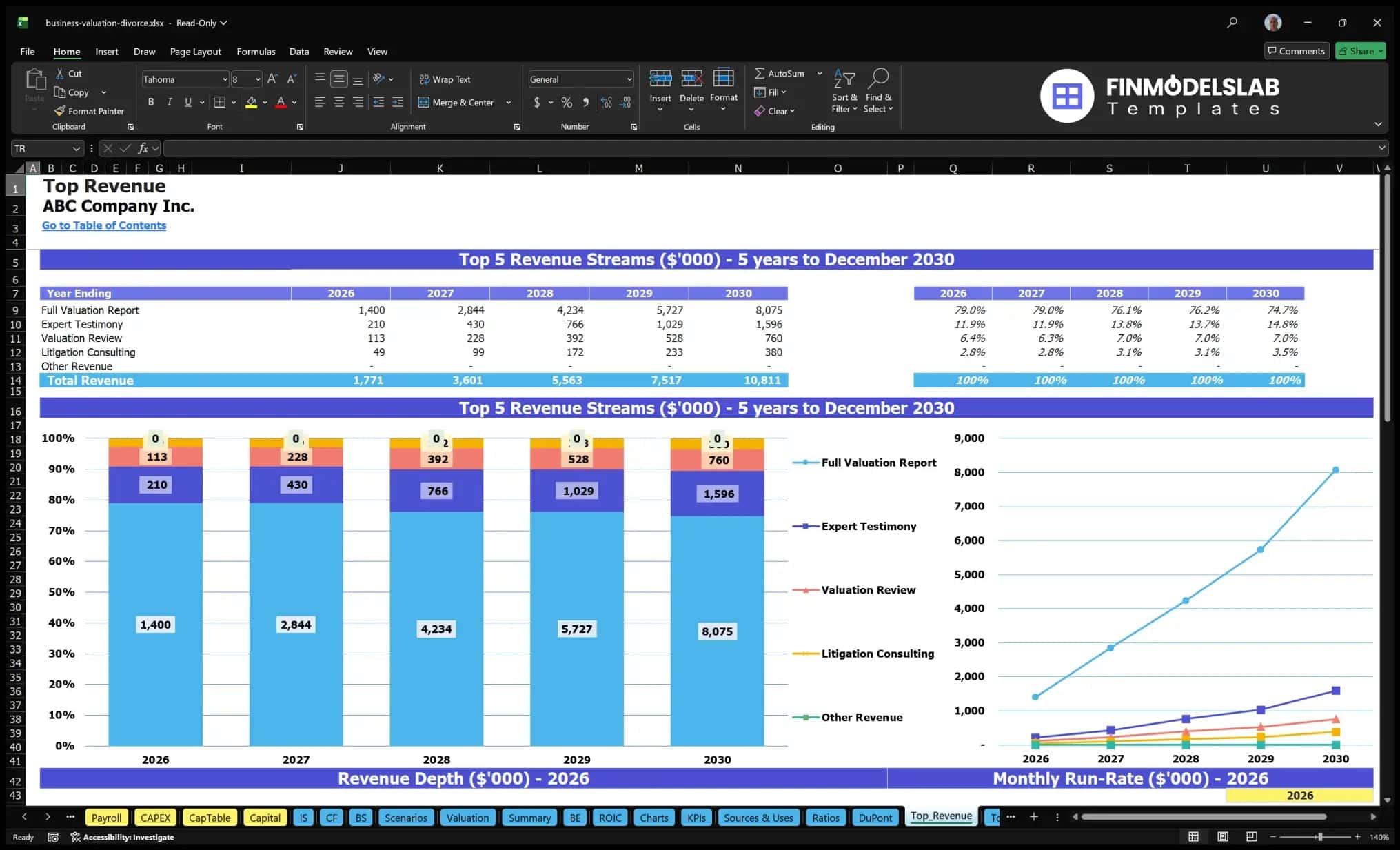
The revenue inputs section is where users define the commercial assumptions that drive the forecast. For a divorce business valuation practice, revenue is commonly linked to service categories such as full valuation reports, expert testimony, valuation reviews, and litigation consulting. This section may allow users to enter assumptions for active customers, number of engagements, average billable hours, pricing per hour or per project, growth rates, customer acquisition, conversion rates, repeat work, and service mix. Because the model is based on specialized services, revenue assumptions need to reflect the way professionals actually earn income from case work, advisory work, court support, and review assignments. The outputs from this section feed into the revenue forecast, income statement, cash flow projection, and profitability analysis, making it one of the most important areas of the model. Users can test how a higher rate for expert testimony, a larger share of full valuation reports, or a stronger referral pipeline affects the top line. This component supports pricing decisions, sales planning, marketing budgets, capacity planning, and revenue strategy by showing exactly which assumptions create growth and which services contribute most to financial performance.
Bank-Ready Reports
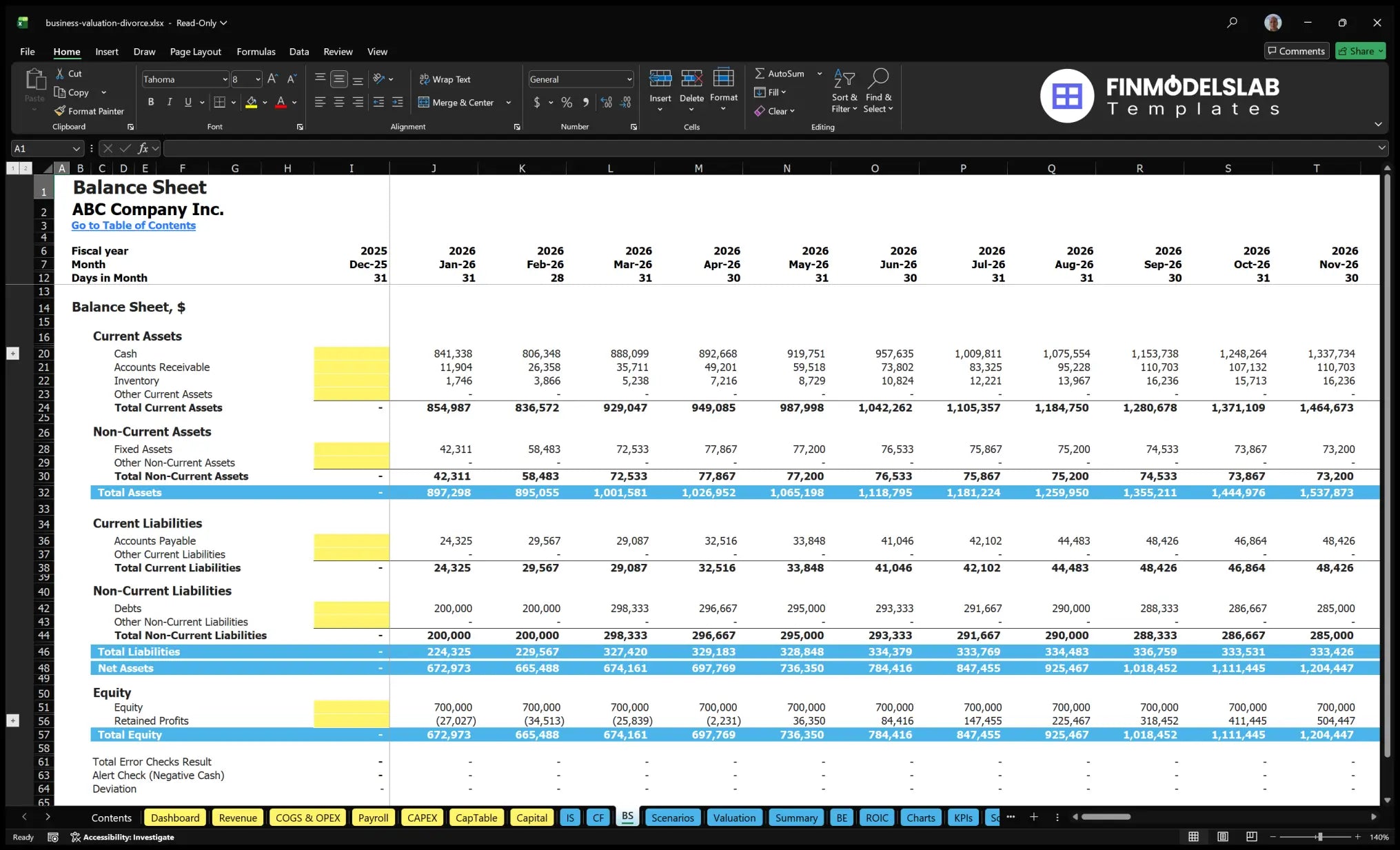
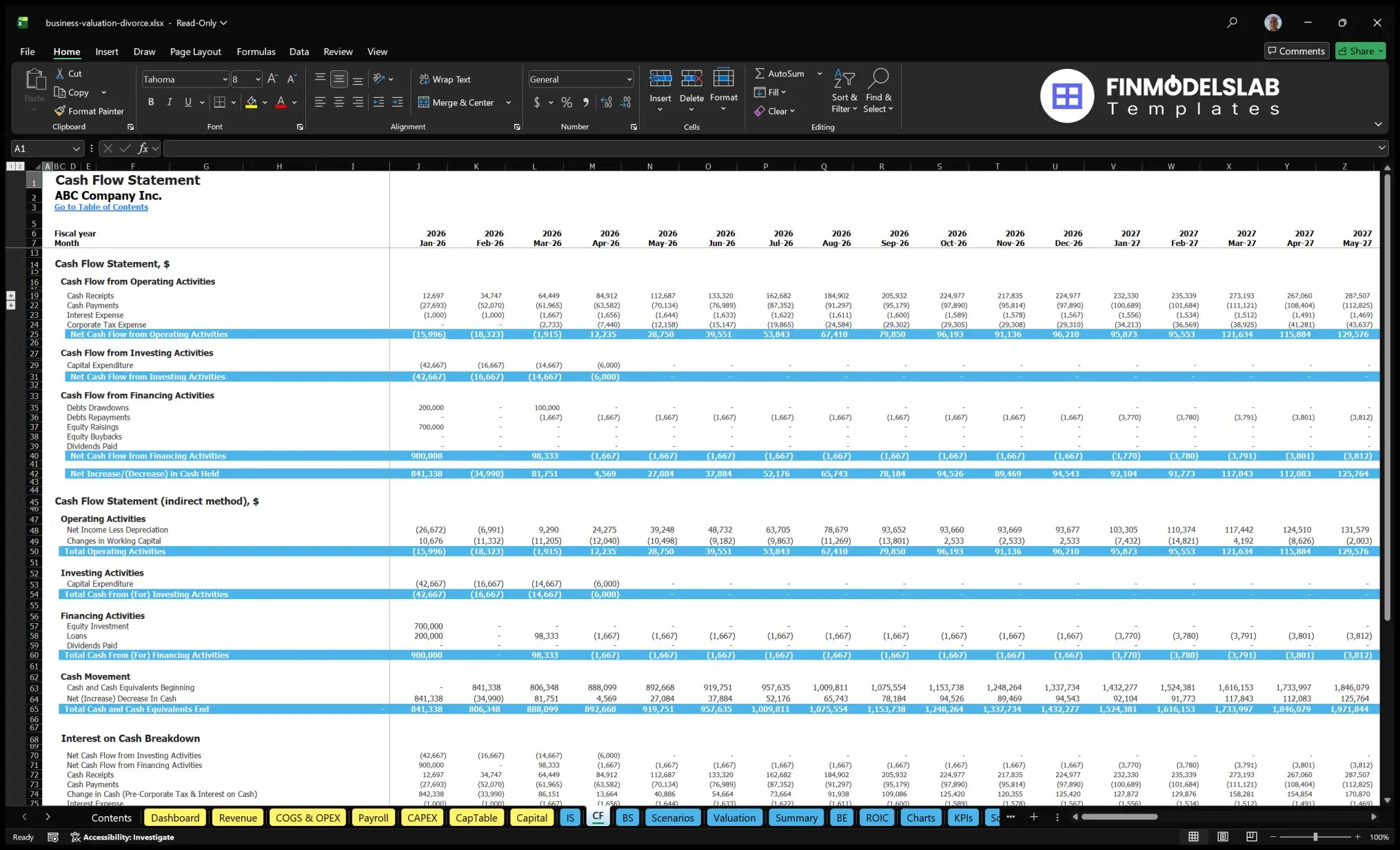
The bank-ready reports component organizes forecast outputs into a format suitable for lenders, investors, partners, and professional stakeholders. These reports may include projected income statements, cash flow statements, balance sheet summaries, financing assumptions, debt service capacity, profit margins, working capital needs, and key financial metrics that a lender or funding reviewer would expect to see. For a Business Valuation for Divorce Financial Model, this is useful when launching a new practice, expanding an existing firm, financing software and database investments, hiring additional analysts, or securing a business line of credit to manage timing gaps between case work and client payments. Inputs may include loan amounts, repayment terms, interest rates, startup investment, capital expenditures, revenue forecasts, expense assumptions, and owner equity contributions. Outputs help users explain how the business will generate revenue, cover operating expenses, maintain liquidity, and repay financing obligations. The professional structure also helps reduce back-and-forth during funding discussions because the core financial statements and assumptions are already organized. This section is especially valuable for users preparing business plans, loan packages, investor presentations, or internal approval documents.
Revenue Breakdown
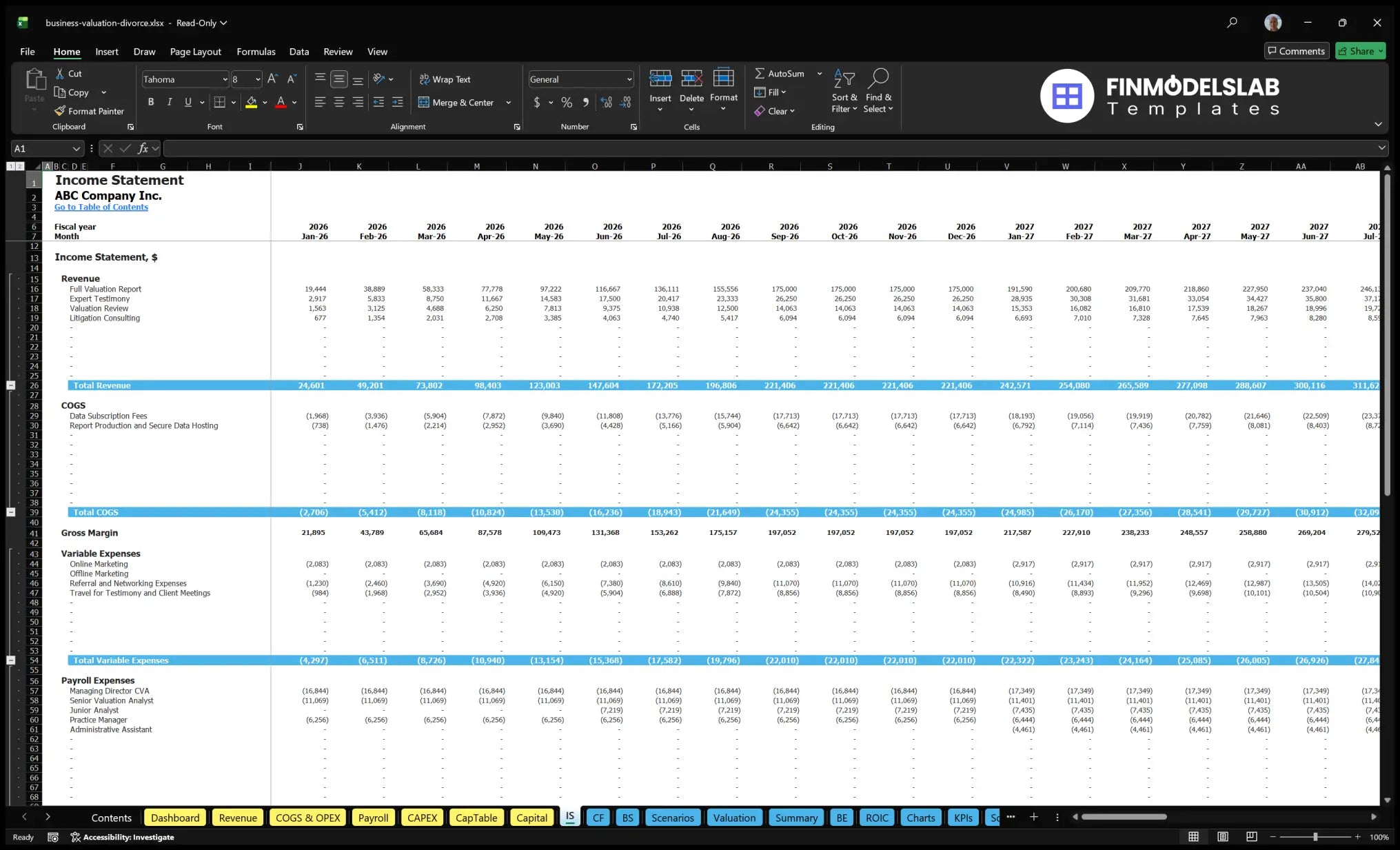
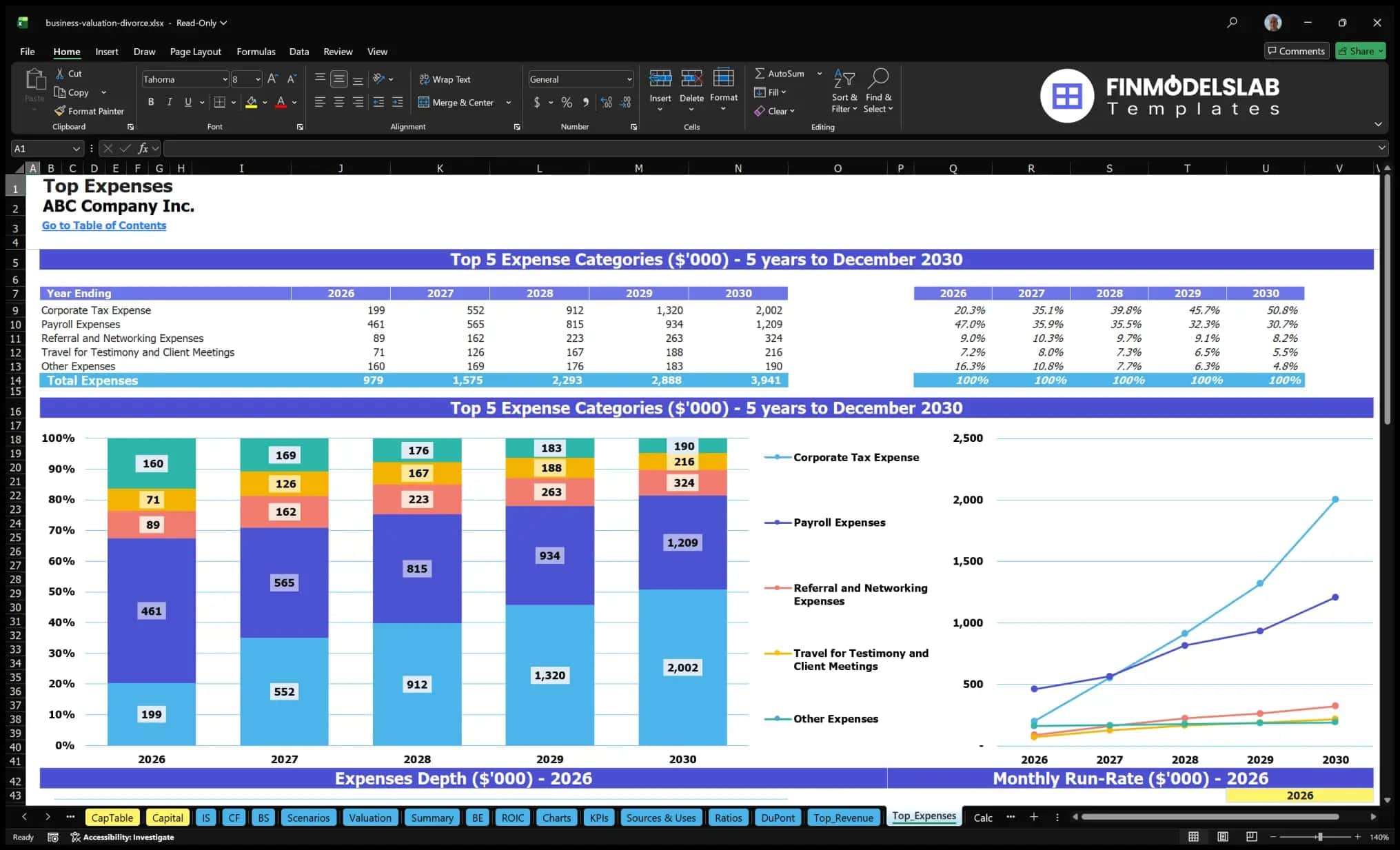
The revenue breakdown section provides a detailed view of how total revenue is generated across different service streams. Instead of showing only one revenue line, it separates income by offering, such as full valuation reports, expert testimony, valuation reviews, litigation consulting, or other customized services the user adds to the model. Each revenue stream can be driven by its own assumptions, including price, hours, customer count, case frequency, growth rate, or utilization level. This matters because not all divorce valuation services have the same margin profile, capacity requirements, sales cycle, or strategic value. Expert testimony may command a higher hourly rate but occur less frequently, while valuation reviews may be more repeatable and easier to schedule. Full valuation reports may require more analyst time and direct costs but can generate substantial project revenue. The outputs help users understand which services drive the most revenue, which offerings deserve more marketing focus, and how changes in service mix affect profitability and cash flow. This component is useful for pricing strategy, resource allocation, hiring plans, and business development because it gives users a clear view of the economic contribution of each service category.
KPI Dashboard
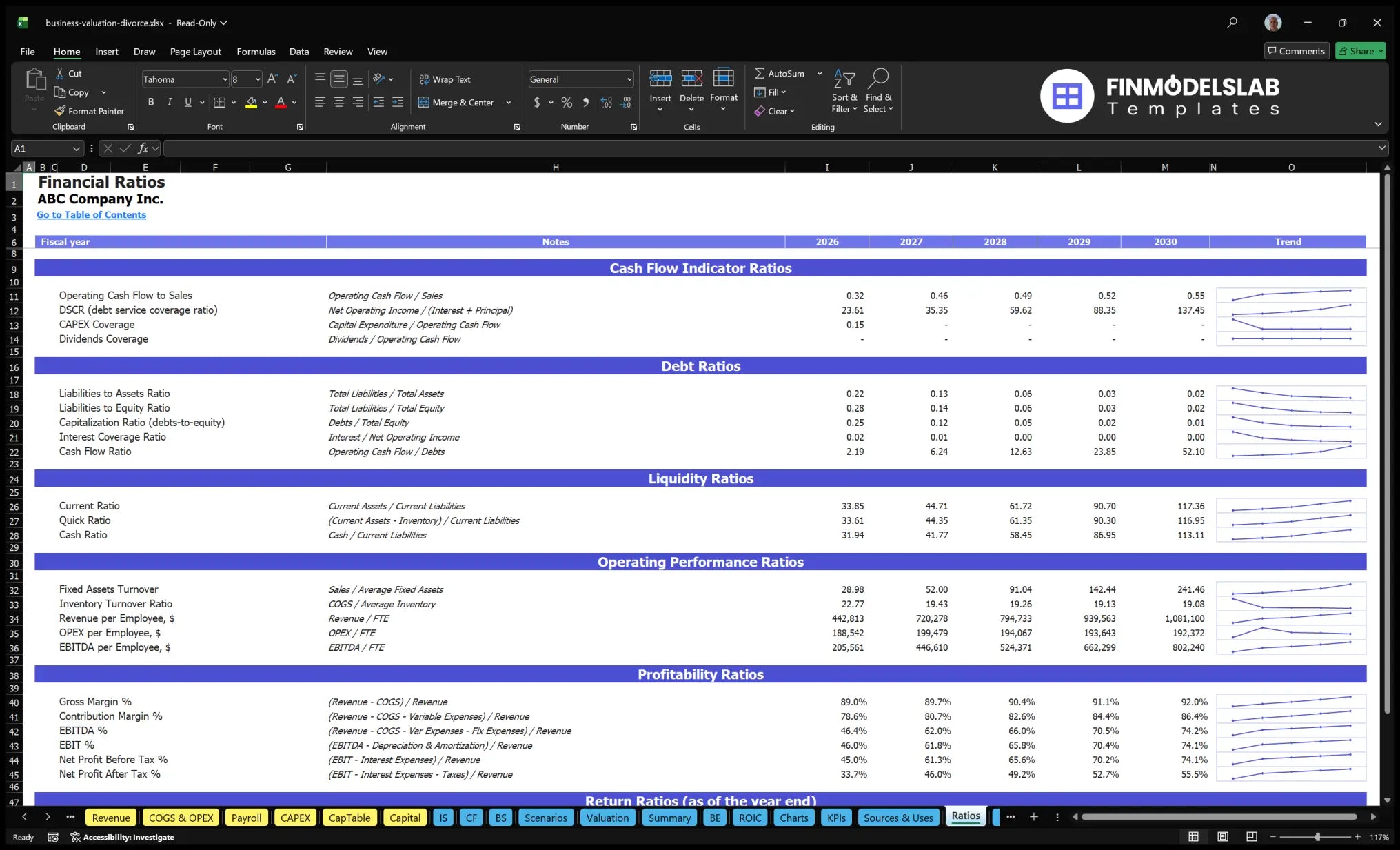
The KPI dashboard focuses on the performance metrics that help users monitor whether the business is operating according to plan. For a divorce-focused valuation practice, key performance indicators may include total revenue, revenue growth, EBITDA, net profit margin, cash balance, customer acquisition cost, average revenue per client, billable hours, utilization, payback period, ROE, IRR, and other benchmark metrics. This component turns the financial model into an ongoing management tool rather than a one-time forecast. Users can compare planned performance against updated assumptions, identify whether marketing spend is generating enough client volume, evaluate whether payroll costs are aligned with utilization, and monitor whether profitability is improving as the practice scales. The KPI dashboard is also helpful for stakeholder communication because it summarizes complex financial information in a clear and concise format. Attorneys, partners, investors, and lenders can quickly see whether the model supports sustainable growth, adequate liquidity, and reasonable returns. By tracking the right metrics, users can make faster decisions about raising prices, adjusting staffing, controlling expenses, investing in marketing, or changing the service mix to improve overall performance.
Break-Even Analysis
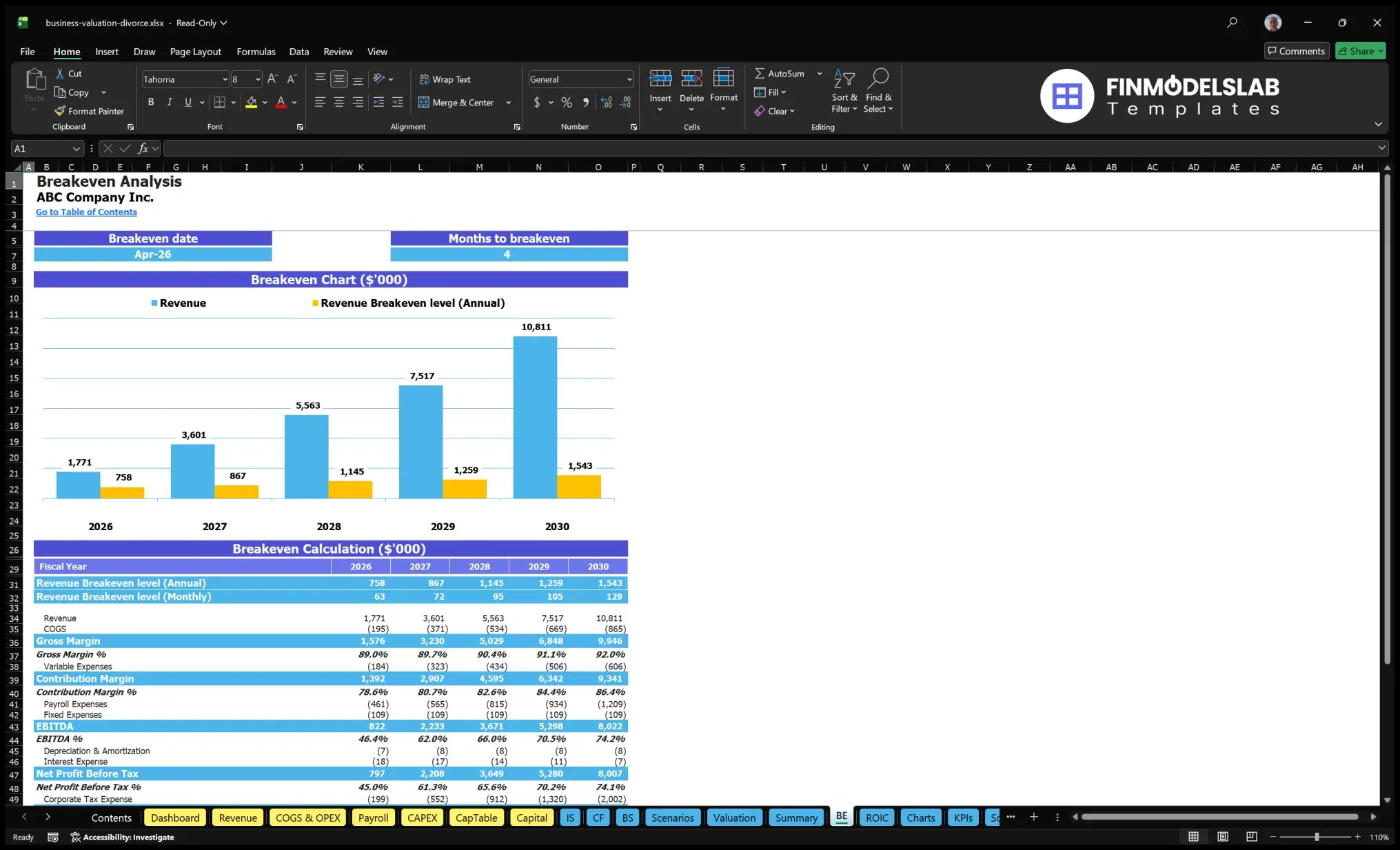
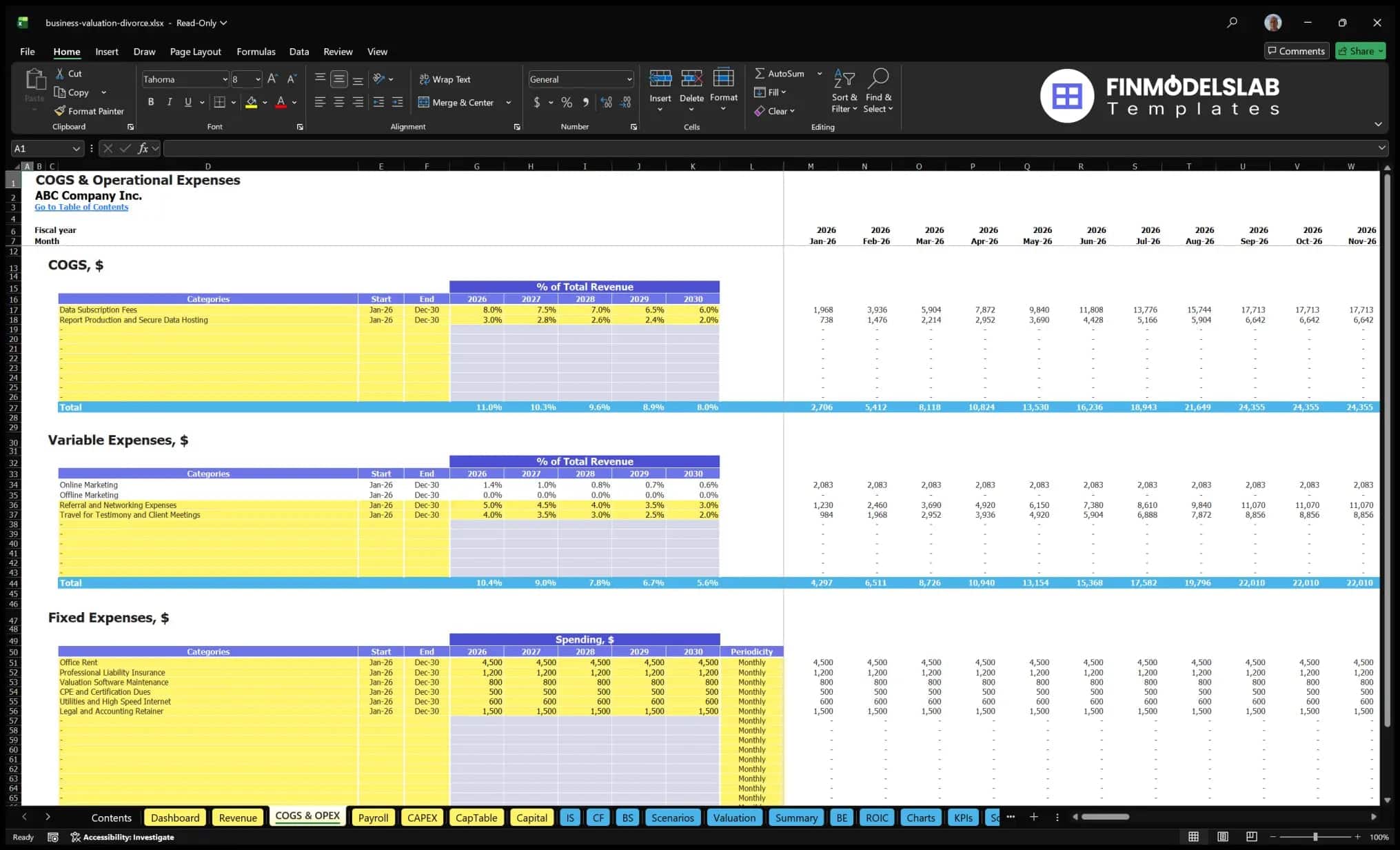
The break-even analysis component helps users identify when projected revenue is sufficient to cover all fixed and variable costs. This is especially important for a Business Valuation for Divorce Financial Model because professional service practices often require upfront investment in software, research databases, qualified staff, marketing, office setup, professional insurance, and working capital before recurring case revenue becomes predictable. Inputs may include monthly fixed expenses, payroll, rent, insurance, software subscriptions, marketing spend, direct service costs, pricing, billable hours, revenue growth, and gross margin assumptions. The outputs may show the break-even month, break-even revenue level, required case volume, and the timing of cumulative profitability. This helps users understand how quickly the practice must generate client work to become self-sustaining and how sensitive profitability is to pricing, utilization, and expense control. For planning and funding, the break-even view is valuable because it shows the risk period before the business covers its costs. It also helps owners make practical decisions about phased hiring, retainer requirements, marketing budgets, and initial funding levels so they can reduce pressure on cash flow while building a stable client base.
Startup Costs and Funding Requirements
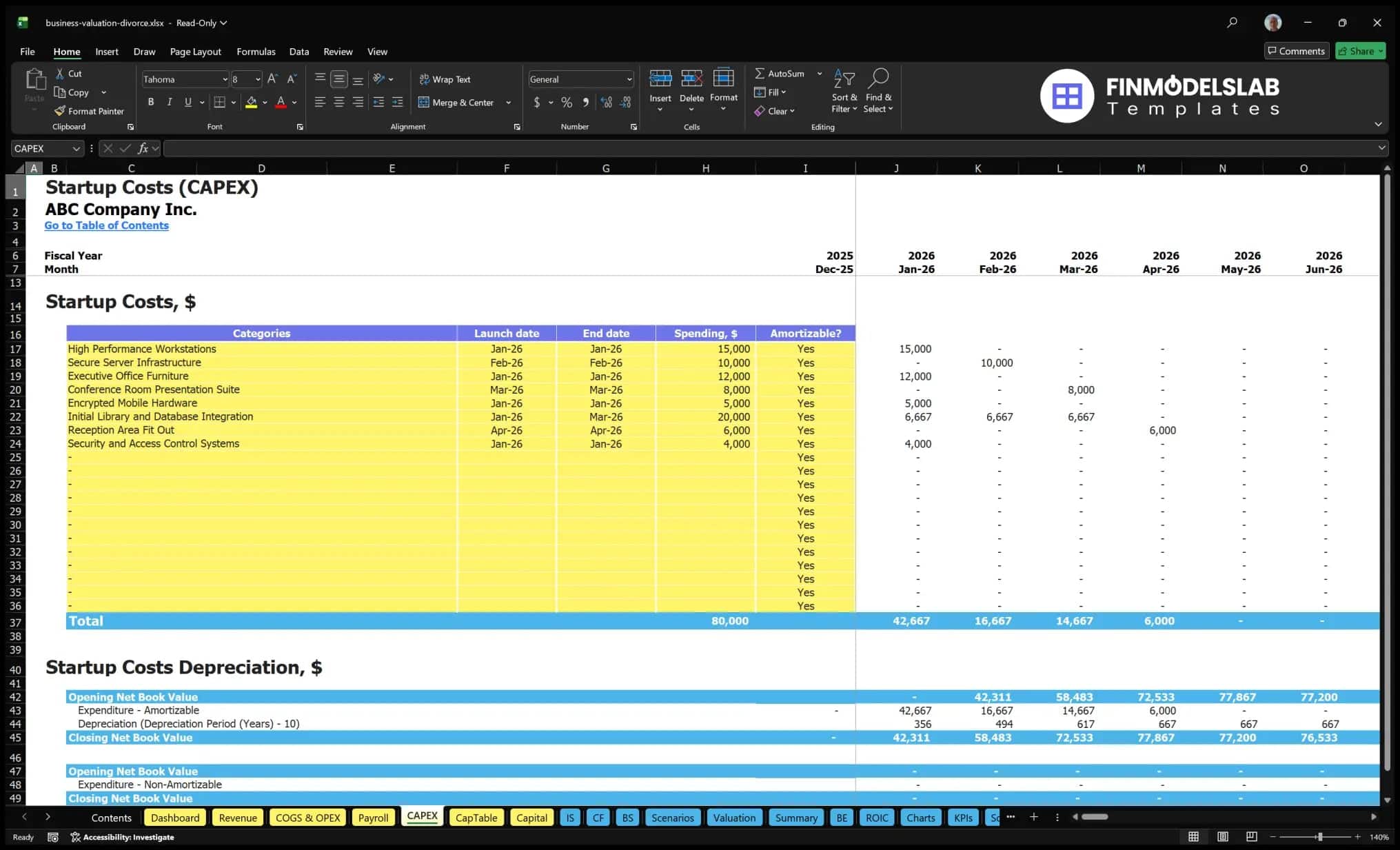
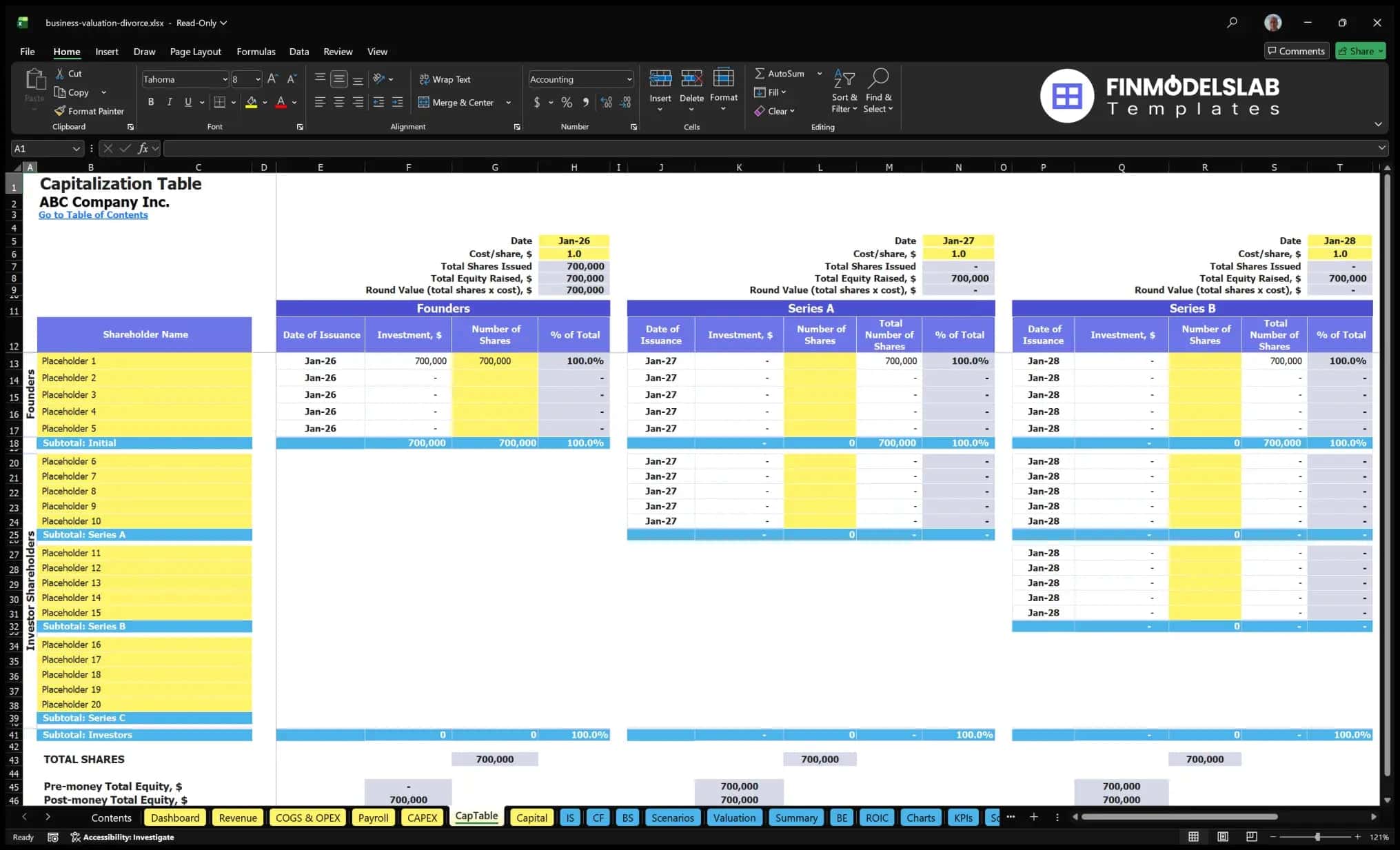
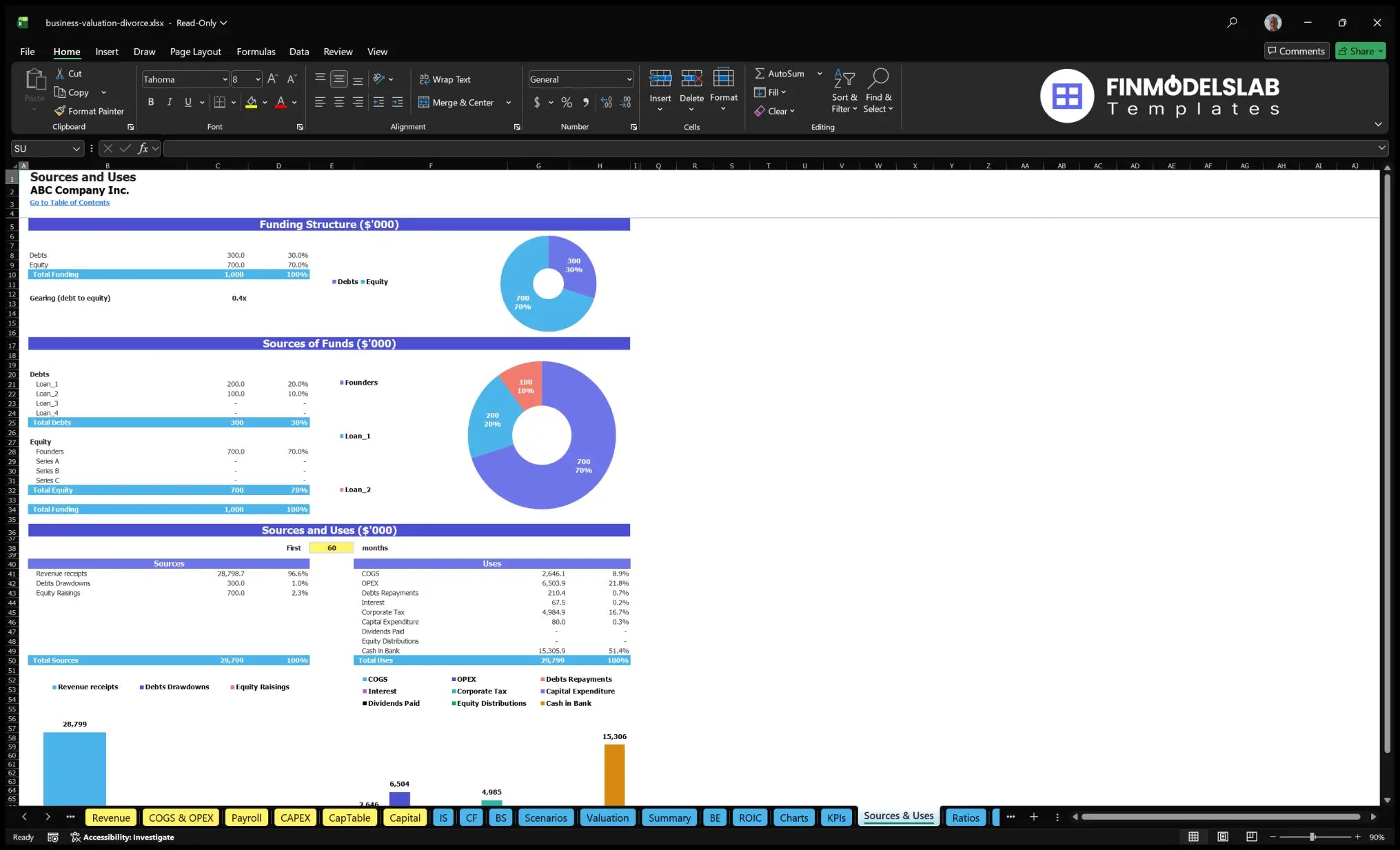
The startup costs and funding requirements component organizes the initial investment needed to launch or expand the divorce business valuation practice. This section may include one-time setup costs such as valuation databases, research libraries, high-performance workstations, office furniture, professional software, legal setup, licensing, insurance deposits, website development, branding, initial marketing, training, and working capital reserves. It can also include funding sources such as owner equity, investor capital, bank loans, credit lines, or other financing. The model uses these inputs to estimate how much capital is needed before operations begin and how that funding affects cash flow, debt repayment, equity returns, and overall financial sustainability. For users preparing business plans or funding documents, this component helps justify the launch budget and show that the business has enough capital to cover early expenses while revenue ramps up. It is also useful for established firms adding divorce valuation services because it separates incremental investment from ongoing operating costs. By clearly mapping startup needs and funding sources, the template supports better budgeting, more realistic launch planning, and more confident conversations with lenders, partners, investors, or internal decision-makers.
File types:
Excel – Single-User: .xlsx
Excel – Multi-User: .xlsx
Similar ProductsOther customers were also interested in...


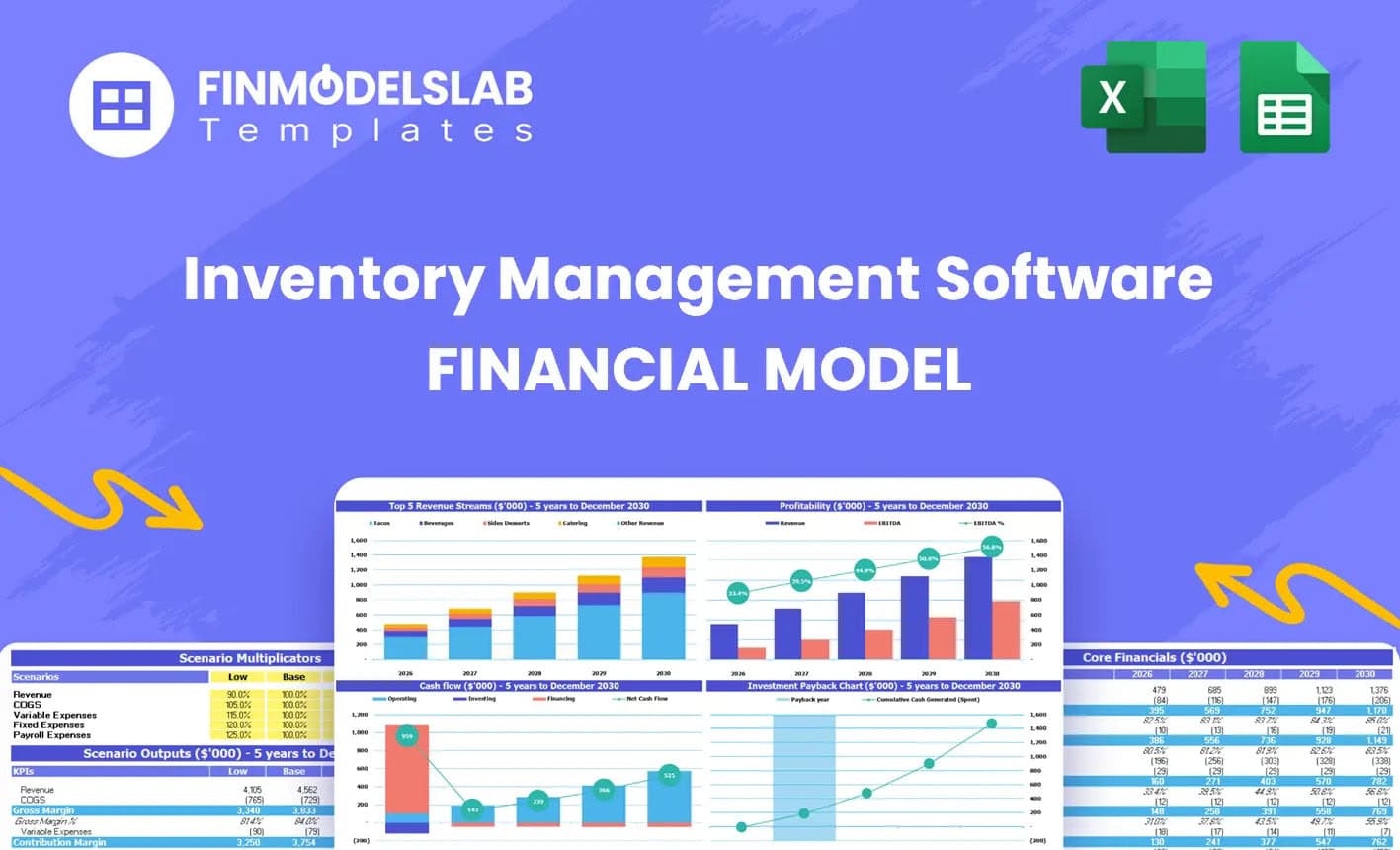
 HenrySheykin
Inventory Control Software Financial Model Excel T...
The Inventory Management Software Financial Model helps entrepreneurs, founders, consultants, analys... Read more

Budget vs Actual Excel Template
The Personal Budgeting App Financial Model Financial Model Template helps founders, entrepreneurs, c... Read more
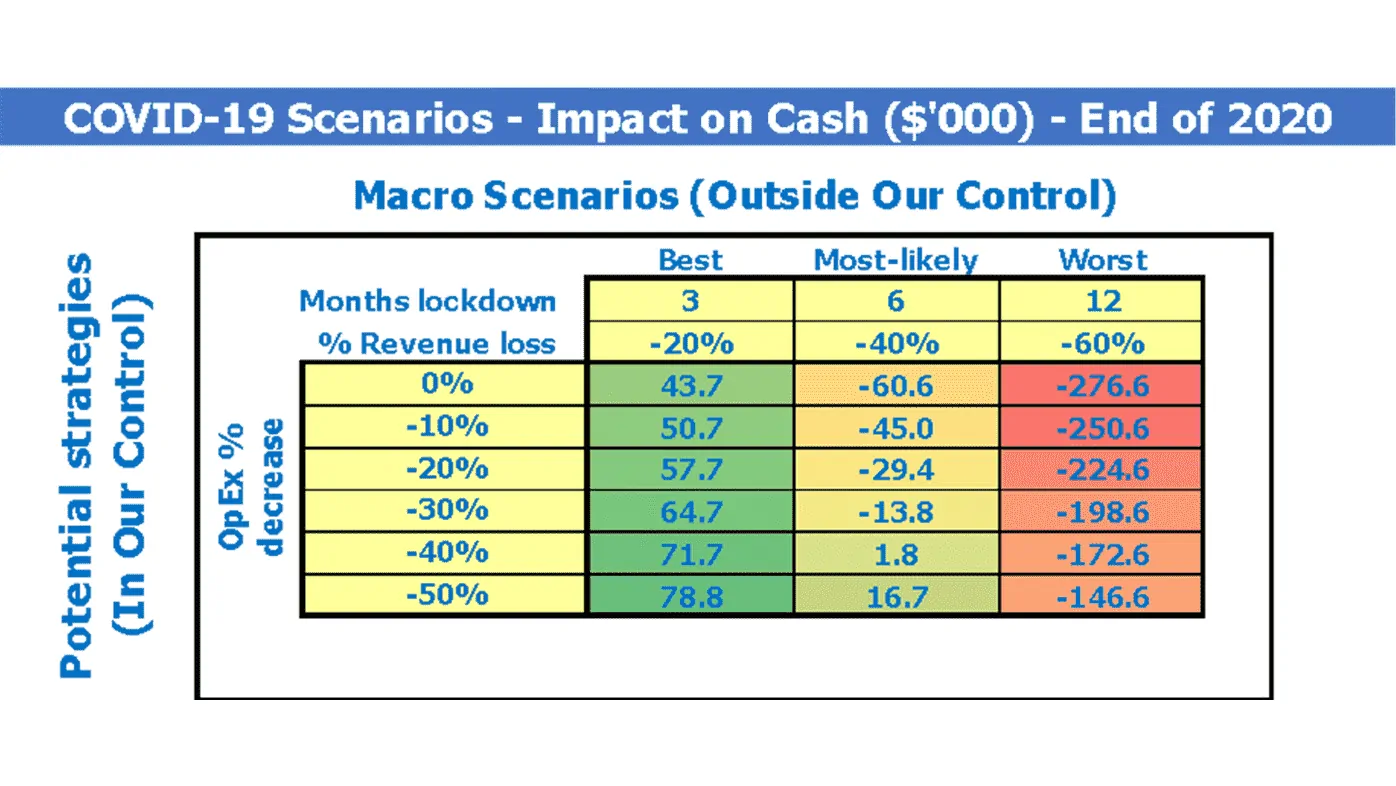
Financial Model Excel Template to fight COVID-19
The coronavirus has turned many small and big companies upside down. The decrease in sales, problems... Read more

 Anuj
Anuj
Private Equity Fund Model (Investor Cashflows)
The Private Equity Fund Cashflows Model helps LPs and GPs analyze fund cash flows, returns, and dist... Read more

 Jason Varner
All My Financial Models, Spreadsheets, Templates, ...
Lifetime access to all future templates as well! Here is a set of spreadsheets that have some of the... Read more

 Giorgos
Advanced Financial Model with DCF and Valuation
Dynamic 10-Year Financial Model, suitable for any type of business, supporting strategic planning, i... Read more

Startup Company Financial Model – 5 Year Fin...
Highly-sophisticated and user-friendly financial model for Startup Companies providing a 5-Year adva... Read more

Franchisor Licensing: Financial Model with Cap Tab...
Build up to a 10 year financial forecast with assumptions directly related to the startup and operat... Read more

General Financial Models – All-in-One Bundle
A collection of templates suitable for various types of businesses/industries, covering major accoun... Read more
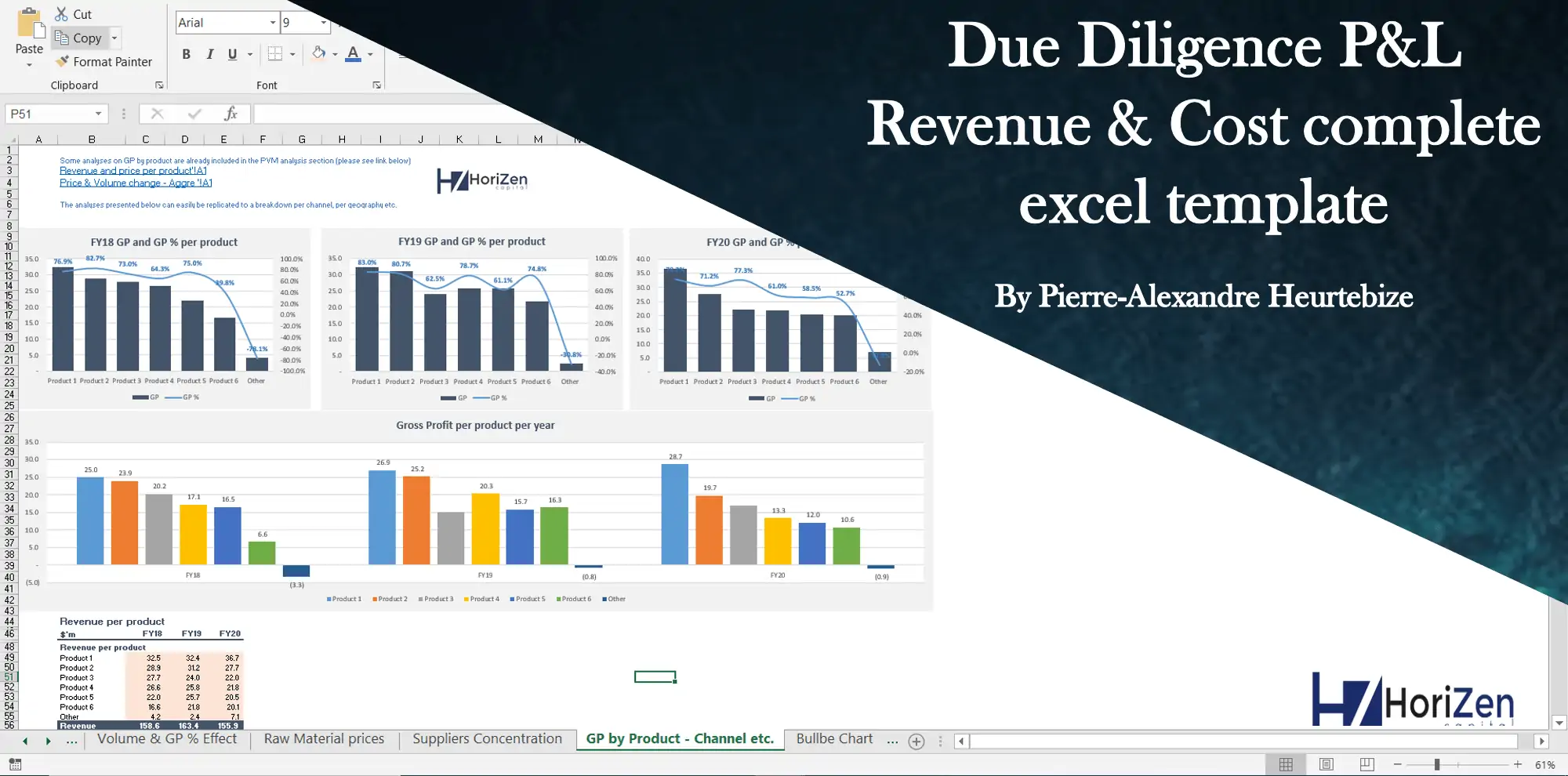
 Pierre-AlexandreHeur...
Due Diligence P&L – Exhaustive Revenue a...
Model for in depth understanding of high level profit and loss and revenue analysis. Big-4 like chec... Read more
You must log in to submit a review.