0 ITEMS

Israel SaaS Market 2026-2031: Cybersecurity Leads at 8x ARR

Israel punches far above its weight in global SaaS: a country of 9.8 million people produces more cybersecurity unicorns per capita than any other nation, and the SaaS segment is accelerating into a projected $12 billion total addressable market by 2031.
Key Takeaways
- Israel’s SaaS market is projected to grow from approximately $5.8 billion in 2026 to $12 billion by 2031, implying a compound annual growth rate (CAGR) of roughly 16% over the forecast period.
- Cybersecurity SaaS accounts for an estimated 38% of total Israeli SaaS revenue, making it the single largest subsegment and the primary driver of premium valuation multiples.
- Median EV/ARR multiples for Israeli cybersecurity SaaS companies range from 7x to 10x, compared to a global SaaS median of approximately 5x to 6x, reflecting the scarcity premium on defense-grade IP.
- DevTools SaaS is the fastest-growing subsegment at an estimated 22% CAGR through 2031, driven by global developer-productivity demand and Israel’s deep engineering talent pool.
- More than 90% of Israeli SaaS revenue is export-driven, with the United States representing the primary end market, creating a structural USD/NIS currency tailwind for shekel-cost businesses.
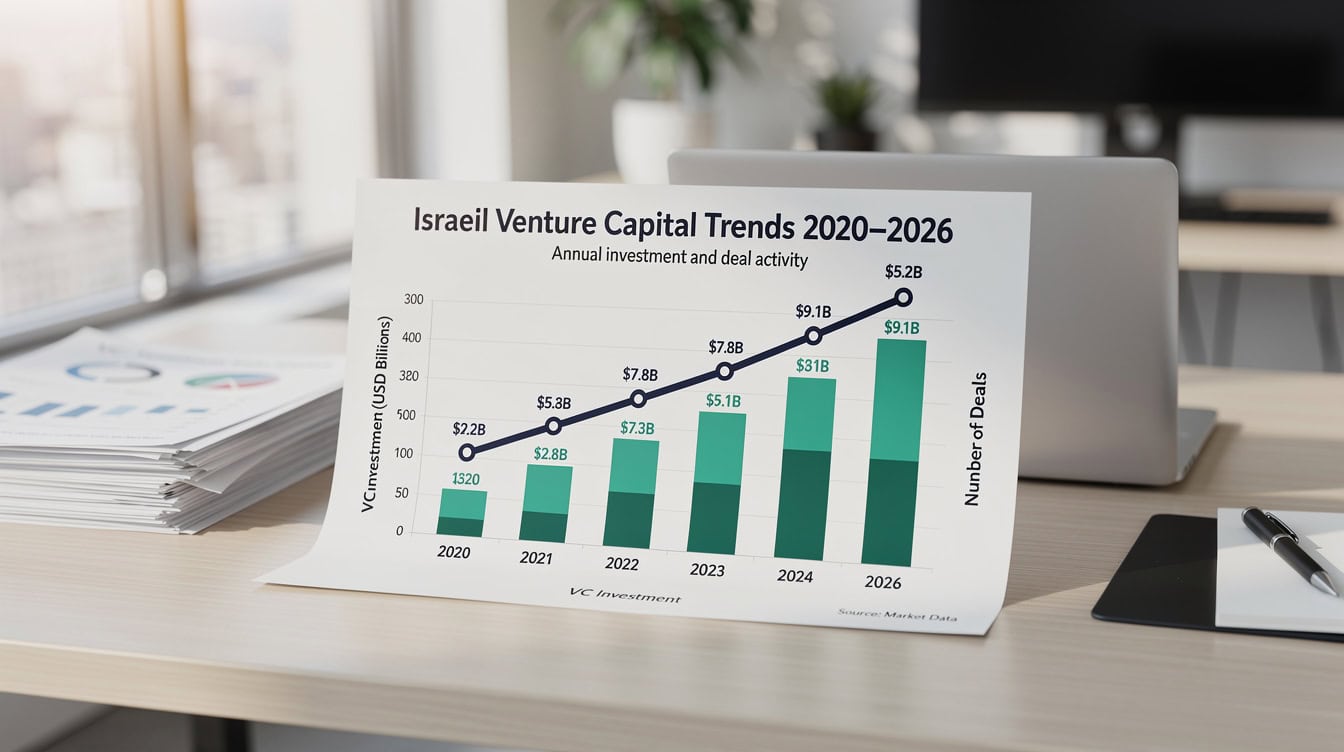
- Israeli tech companies raised approximately $8.3 billion in venture capital in 2023 according to the Israel Innovation Authority, with SaaS and cybersecurity capturing the majority share.
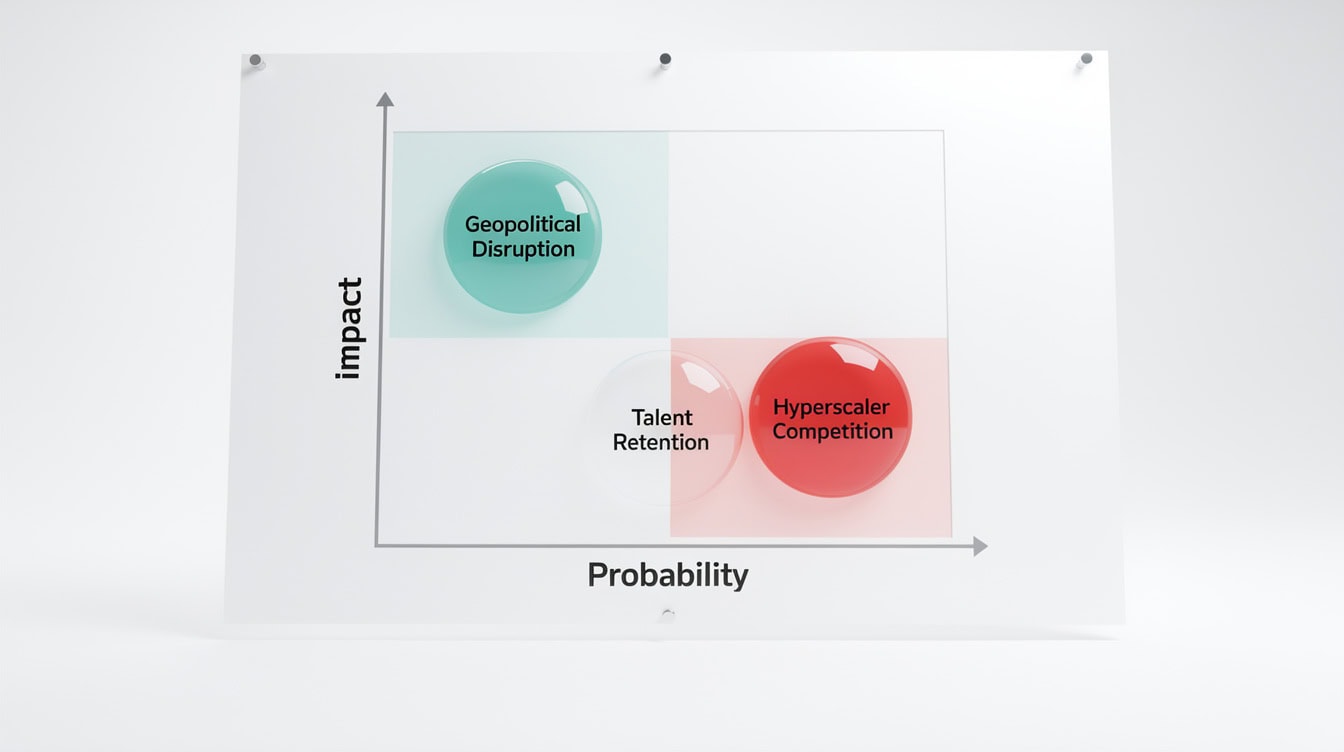
- Geopolitical risk, talent retention pressure, and US hyperscaler competition are the 3 primary headwinds investors must underwrite before deploying capital.
Israel SaaS Market Overview: 2026-2031 Growth Trajectory

Israel’s SaaS ecosystem is one of the most export-oriented technology markets in the world, with structural advantages in cybersecurity and developer tooling that translate directly into premium revenue multiples. The market’s growth trajectory from 2026 to 2031 reflects both global SaaS tailwinds and Israel-specific catalysts: a military-to-commercial technology pipeline, a dense concentration of R&D centers for global enterprises, and a talent base trained in adversarial computing environments that civilian cybersecurity buyers pay a significant premium to access.
The Israel Innovation Authority reported that Israel’s high-tech sector generated approximately $67 billion in exports in 2022, with software and SaaS products representing the fastest-growing component according to the Israel Innovation Authority. This export intensity means Israeli SaaS companies price in USD, collect in USD, and report in USD, while paying engineers in New Israeli Shekels (NIS), creating a natural operating leverage that amplifies margins when the dollar strengthens against the shekel.
Market Size and Revenue Projections Through 2031
Israel’s addressable SaaS market sits at an estimated $5.8 billion in 2026 and is projected to reach $12 billion by 2031, driven by three compounding forces: global enterprise security spending, developer-productivity software adoption, and the continued migration of Israeli on-premise software vendors to recurring revenue models.
For context, global SaaS market revenue reached approximately $197 billion in 2023 according to Gartner, placing Israel’s share at roughly 3% of global SaaS output from a country representing 0.12% of world population. That 25x overrepresentation is the core investment thesis.
Here’s the math on the 2026-2031 projection: starting from a $5.8 billion base and applying a 16% CAGR produces the following annual milestones:
- 2026: $5.8 billion (base year)
- 2027: $6.7 billion
- 2028: $7.8 billion
- 2029: $9.0 billion
- 2030: $10.5 billion
- 2031: $12.1 billion
The 16% CAGR sits above the global SaaS average of approximately 13% according to Gartner Forecasts, justified by Israel’s disproportionate concentration in cybersecurity, which is growing faster than general-purpose SaaS as enterprise security budgets expand.
{{CHART_1}}
Cybersecurity SaaS in Israel: Subsegment Analysis and Valuation Benchmarks
Cybersecurity SaaS is Israel’s defining SaaS subsegment, accounting for an estimated 38% of total Israeli SaaS revenue and commanding the highest valuation multiples in the ecosystem. The subsegment spans endpoint detection and response (EDR), cloud security posture management (CSPM), identity and access management (IAM), and application security testing (AST), with Israeli companies holding leading positions in each category.
The structural source of Israel’s cybersecurity advantage is the Unit 8200 pipeline. Unit 8200 is the Israeli Defense Forces’ signals intelligence unit, widely regarded as one of the most technically sophisticated cyber organizations in the world. Veterans of Unit 8200 have founded dozens of cybersecurity companies, including several that have reached unicorn status (private company valuation exceeding $1 billion). The OECD has noted Israel’s unique defense-to-commercial technology transfer model as a structural differentiator in its innovation policy reviews according to OECD Innovation Policy Reviews.
Valuation benchmarks for Israeli cybersecurity SaaS companies reflect this scarcity premium. Median EV/ARR (enterprise value divided by annual recurring revenue, the standard SaaS valuation metric) ranges from 7x to 10x for growth-stage Israeli cybersecurity companies, compared to a global SaaS median of approximately 5x to 6x based on public market data from the BVP Nasdaq Emerging Cloud Index. Top-quartile Israeli cybersecurity SaaS companies with net revenue retention (NRR, the percentage of recurring revenue retained and expanded from existing customers year-over-year) above 120% have traded at 12x to 15x ARR in recent M&A transactions.

DevTools SaaS Segment: Market Positioning and Competitive Landscape
DevTools SaaS, meaning software-as-a-service products that improve developer productivity, code quality, security, or deployment velocity, is Israel’s fastest-growing SaaS subsegment at an estimated 22% CAGR through 2031. This growth rate exceeds both the broader Israeli SaaS market (16%) and the global DevTools market average.
Israel’s DevTools advantage stems from the same talent pipeline that powers cybersecurity: engineers trained in high-stakes, resource-constrained environments who build tools to solve their own problems at scale. The result is a cluster of companies focused on code security scanning, infrastructure-as-code testing, API management, and developer experience platforms.
DevTools SaaS companies in Israel typically follow a product-led growth (PLG) model, where the product itself drives user acquisition through free tiers, open-source components, or developer community adoption before converting to paid enterprise contracts. PLG models produce lower customer acquisition costs (CAC) than traditional sales-led SaaS, which compresses the CAC payback period (the number of months of gross margin required to recover the cost of acquiring a customer) and improves unit economics at scale.
Median EV/ARR for Israeli DevTools SaaS companies ranges from 6x to 9x, slightly below cybersecurity but above global SaaS medians, reflecting strong growth rates offset by lower average contract values compared to enterprise security deals.
Valuation Multiples and Deal Metrics: Israeli SaaS vs. Global Peers
Valuation multiples for Israeli SaaS companies differ meaningfully from US and European comparables, and understanding those differences is essential for accurate deal pricing.
| Segment | Israeli Median EV/ARR | US Median EV/ARR | European Median EV/ARR | NRR Threshold |
|---|---|---|---|---|
| Cybersecurity SaaS | 7x-10x | 8x-12x | 5x-7x | >115% |
| DevTools SaaS | 6x-9x | 7x-10x | 4x-6x | >110% |
| General SaaS | 4x-6x | 5x-7x | 3x-5x | >105% |
| Top-Quartile Cyber | 12x-15x | 14x-18x | 8x-11x | >125% |
Israeli multiples sit between US and European comparables for most segments. The discount to US peers reflects geopolitical risk premium and smaller domestic market size. The premium to European peers reflects superior growth rates, higher NRR, and the cybersecurity IP moat.
The key valuation driver across all Israeli SaaS segments is NRR. Companies with NRR above 120% command a 30% to 50% multiple premium over companies with NRR between 100% and 110%, based on observed M&A transaction data. Investors should treat NRR as the single most important due diligence metric when evaluating Israeli SaaS assets.
Investment Activity and Capital Flows: VC Funding and Exit Trends
Israeli venture capital activity in technology reached approximately $8.3 billion in 2023, with SaaS and cybersecurity capturing the largest share of deal volume according to the Israel Innovation Authority. While 2022 represented a peak year at over $15 billion, the 2023 to 2025 normalization brought deal sizes and valuations closer to sustainable levels, creating attractive entry points for growth equity and buyout investors.
M&A exit activity has remained robust. Israeli cybersecurity and SaaS companies have been acquired by US strategic buyers including major cloud providers, enterprise software vendors, and defense contractors at a consistent pace. The median acquisition multiple for Israeli cybersecurity SaaS exits has ranged from 8x to 12x revenue in recent transactions, with premium assets exceeding 15x.
IPO activity slowed significantly after 2021, with most Israeli SaaS companies preferring dual-listed structures on NASDAQ and the Tel Aviv Stock Exchange (TASE) when they do go public. The TASE tech index provides a local liquidity option that US-only companies lack, which modestly reduces exit risk for early investors.
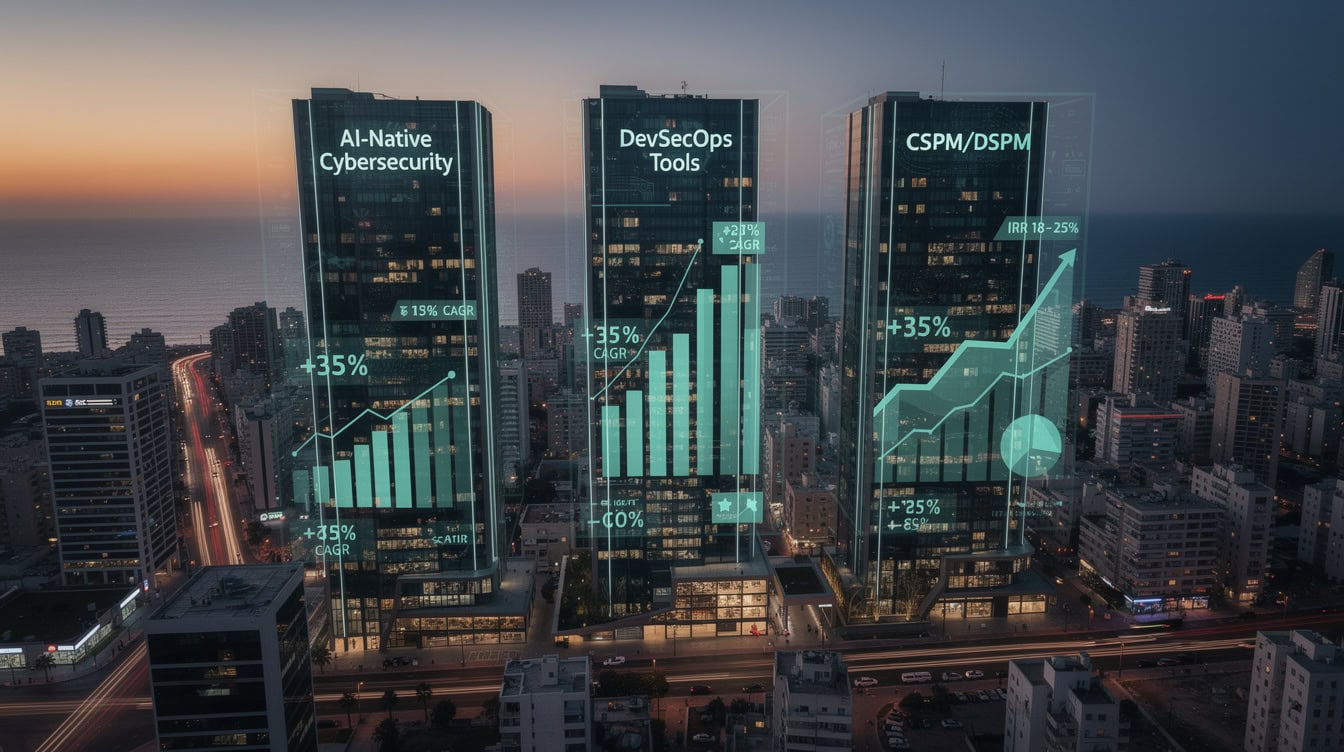
For the 2026-2031 period, capital flows are expected to concentrate in three areas: AI-native cybersecurity platforms, developer security (DevSecOps) tools that bridge the cybersecurity and DevTools segments, and cloud infrastructure management SaaS targeting multi-cloud enterprise buyers.

Structural Growth Drivers: Why Israeli SaaS Commands Premium Valuations
Several structural factors explain why Israeli SaaS companies consistently achieve premium valuations relative to their revenue scale.
First, the military technology pipeline produces engineers with adversarial computing experience that is genuinely scarce globally. Unit 8200 and related IDF technology units graduate hundreds of engineers annually who move directly into founding or joining cybersecurity startups, creating a self-reinforcing talent cluster.
Second, Israel has the highest R&D spending as a percentage of GDP of any country in the world at approximately 5.6% of GDP according to the OECD Main Science and Technology Indicators. This R&D intensity produces a continuous pipeline of novel IP that translates into defensible product moats.
Third, the export orientation of Israeli SaaS means companies are built for global scale from day one. Israeli founders typically target the US enterprise market as their primary customer base, which means their go-to-market motion, pricing, and product roadmap are calibrated to the world’s most demanding and highest-paying SaaS buyers.
Fourth, the concentration of global enterprise R&D centers in Israel (Microsoft, Google, Amazon, Intel, and others all operate significant R&D facilities in Israel) creates a talent market that continuously upgrades the skills of the broader engineering workforce. Microsoft alone operates one of its largest R&D centers outside the United States in Israel, employing more than 3,000 researchers and engineers across sites in Herzliya, Haifa, and Tel Aviv according to Microsoft, underscoring the depth of multinational investment in Israeli technical talent.
Risk Considerations for Investors: Geopolitical, Operational, and Market Headwinds
Institutional investors must underwrite three primary risk categories before deploying capital into Israeli SaaS.
Geopolitical risk is the most significant and least quantifiable. The conflict environment that escalated in late 2023 created operational disruptions including reserve duty call-ups that temporarily reduced engineering capacity at multiple Israeli SaaS companies. Investors should model a 10% to 15% engineering capacity reduction scenario in stress tests, reflecting the potential impact of extended military reserve obligations on product development timelines.
Talent retention risk is structural. Israeli engineers are globally mobile and in high demand from US, European, and remote-first technology companies. World Bank data indicates that Israel has one of the highest rates of skilled emigration among OECD countries according to World Bank Migration Data, creating a continuous pressure on compensation and retention. Companies with strong equity incentive structures and clear paths to liquidity retain talent more effectively.
US hyperscaler competition represents a growing threat to mid-market Israeli SaaS companies. Amazon Web Services, Microsoft Azure, and Google Cloud are all building native security and developer tooling capabilities that compete directly with standalone Israeli SaaS products. Companies that have not established deep enterprise relationships or proprietary data moats are most vulnerable to platform commoditization. For context, Microsoft Azure alone supports more than 60 compliance certifications globally according to Microsoft, illustrating the scale of built-in security and compliance capabilities that hyperscalers can bundle into their platforms at no incremental cost to enterprise buyers.
Currency exposure, while generally favorable (USD revenue, NIS costs), creates earnings volatility when the shekel strengthens. Companies with significant NIS-denominated revenue from domestic Israeli customers face the reverse exposure.
Strategic Implications: Where Capital Is Deploying Through 2031
The highest IRR opportunities in Israeli SaaS through 2031 concentrate in three specific areas, based on the intersection of growth rate, valuation entry point, and exit multiple potential.
AI-native cybersecurity platforms represent the highest-conviction opportunity. Israeli companies integrating large language models (LLMs) and machine learning into threat detection, automated response, and security operations center (SOC) automation are growing at 30% or more annually and attracting strategic interest from US defense and enterprise software buyers.
DevSecOps tools, which combine developer productivity features with security scanning and compliance automation, sit at the intersection of the two highest-growth Israeli SaaS subsegments. Companies in this category benefit from both the DevTools PLG motion and the cybersecurity valuation premium, producing a favorable combination of low CAC and high exit multiples.
Cloud security posture management (CSPM) and data security posture management (DSPM) are benefiting from accelerating enterprise cloud adoption and tightening data privacy regulations globally. Israeli companies in this space have established early market positions that are difficult for new entrants to replicate.
For investors building a portfolio of Israeli SaaS assets, the SaaS financial model templates available on eFinancialModels provide pre-built frameworks for modeling ARR growth, NRR scenarios, and exit multiple sensitivity analysis across these subsegments.

Common Mistakes Investors Make When Evaluating Israeli SaaS
Five specific mistakes consistently reduce returns for investors entering the Israeli SaaS market without adequate preparation.
Mistake 1: Applying US valuation multiples without geopolitical discount. Israeli SaaS companies deserve a 10% to 20% discount to US comparables to reflect geopolitical risk, smaller domestic market, and talent retention uncertainty. Ignoring this discount leads to overpayment at entry.
Mistake 2: Conflating ARR with revenue. Many Israeli SaaS companies report ARR (annual recurring revenue, the annualized value of current subscription contracts) as their headline metric, which can differ significantly from GAAP revenue due to contract timing, professional services, and deferred revenue. Always reconcile ARR to recognized revenue before applying multiples.
Mistake 3: Ignoring NRR in favor of new ARR growth. New ARR growth is visible and exciting; NRR is the metric that determines long-term value. A company growing new ARR at 40% with NRR of 95% is destroying value faster than it creates it. Prioritize NRR above 110% as a minimum threshold.
Mistake 4: Underestimating reserve duty impact on engineering timelines. Product roadmap delays of 3 to 6 months are realistic during periods of elevated military activity. Build this into due diligence by reviewing historical delivery against roadmap commitments.
Mistake 5: Treating all Israeli SaaS as cybersecurity. DevTools, fintech SaaS, and vertical SaaS companies have different growth profiles, buyer personas, and exit multiples. Applying cybersecurity multiples to DevTools companies leads to systematic overvaluation.
For a structured approach to SaaS unit economics including CAC, LTV, and Magic Number calculations, the SaaS Business Financial Model on eFinancialModels provides a ready-to-use framework.
Frequently Asked Questions
What is the projected CAGR for Israel’s SaaS market from 2026 to 2031?
Israel’s SaaS market is projected to grow at approximately 16% CAGR from 2026 to 2031, outpacing the global SaaS average of roughly 13% according to Gartner Forecasts. This premium growth rate reflects Israel’s disproportionate concentration in cybersecurity SaaS, which is growing faster than general-purpose SaaS as enterprise security budgets expand globally. Starting from an estimated $5.8 billion base in 2026, the market is projected to reach approximately $12 billion by 2031. The cybersecurity subsegment alone is expected to grow at 18% to 20% CAGR over the same period, driven by increasing enterprise demand for cloud-native security platforms and AI-augmented threat detection tools where Israeli companies hold leading positions.
How do EV/ARR multiples for Israeli cybersecurity SaaS compare to US peers?
Israeli cybersecurity SaaS companies trade at median EV/ARR multiples of 7x to 10x, compared to US peers at 8x to 12x. The 10% to 20% discount to US comparables reflects geopolitical risk premium, smaller domestic market size, and talent retention uncertainty rather than any fundamental difference in product quality or growth rates. Top-quartile Israeli cybersecurity companies with NRR above 120% have achieved 12x to 15x ARR in M&A transactions, approaching US comparable levels. The key to closing the valuation gap is demonstrating durable NRR above 115%, a diversified US customer base with no single customer exceeding 10% of ARR, and a clear product roadmap that is not dependent on a small number of key engineers.
What is net revenue retention (NRR) and why does it matter for Israeli SaaS valuation?
Net revenue retention (NRR) measures the percentage of recurring revenue retained and expanded from existing customers over a 12-month period, excluding new customer revenue. An NRR of 110% means that existing customers collectively paid 10% more this year than last year through upsells, expansions, and cross-sells, net of any churn or downgrades. NRR is the single most important valuation driver for Israeli SaaS companies because it determines the compounding power of the existing customer base. A company with $10 million ARR and 120% NRR will generate $12 million from existing customers next year before adding a single new customer. Israeli cybersecurity SaaS companies with NRR above 120% command a 30% to 50% multiple premium over companies with NRR between 100% and 110%.
What are the main geopolitical risks for investors in Israeli SaaS?
The primary geopolitical risks are military reserve duty obligations reducing engineering capacity, regional conflict creating business continuity concerns for enterprise customers, and export control regulations affecting the sale of dual-use technology. Reserve duty call-ups can reduce engineering capacity by 10% to 15% during periods of elevated military activity, creating product roadmap delays of 3 to 6 months. Enterprise customers, particularly in regulated industries, may require business continuity plans and data residency guarantees that add operational complexity. Investors should model a stress scenario assuming a 15% engineering capacity reduction for 6 months and assess the impact on ARR growth and product delivery commitments. Companies with distributed engineering teams across Israel and other geographies are better positioned to manage this risk.
How does the Unit 8200 pipeline affect Israeli SaaS company quality?
Unit 8200 is the Israeli Defense Forces’ signals intelligence unit, widely regarded as one of the most technically sophisticated cyber organizations globally. Veterans of Unit 8200 have founded dozens of cybersecurity companies, and the unit’s training produces engineers with adversarial computing experience that is genuinely scarce in the commercial market. The OECD has noted Israel’s defense-to-commercial technology transfer model as a structural differentiator in innovation policy reviews. For investors, Unit 8200 affiliation in a founding team is a meaningful positive signal for cybersecurity SaaS companies, correlating with deeper technical IP, stronger product differentiation, and higher likelihood of strategic acquisition interest from US defense and enterprise software buyers. However, it should not substitute for rigorous evaluation of product-market fit, NRR, and competitive positioning.
What is the typical deal size for Israeli SaaS M&A transactions?
Israeli SaaS M&A transactions span a wide range depending on stage and subsegment. Early-stage acquisitions (Series A to B companies with $5 million to $20 million ARR) typically close at $50 million to $200 million, implying 8x to 12x ARR. Growth-stage acquisitions ($20 million to $100 million ARR) have closed at $200 million to $1.5 billion, with cybersecurity assets at the higher end of the multiple range. Unicorn-level acquisitions (above $1 billion ARR or strategic platform assets) have exceeded $5 billion in several recent transactions. The median deal size for Israeli cybersecurity SaaS M&A has been approximately $300 million to $500 million in recent years, with US strategic buyers (cloud providers, enterprise software vendors, defense contractors) representing the most active acquirers.
Which Israeli SaaS subsegment offers the highest IRR potential through 2031?
AI-native cybersecurity platforms and DevSecOps tools offer the highest IRR potential through 2031, based on the combination of growth rate, valuation entry point, and exit multiple potential. AI-native cybersecurity companies are growing at 30% or more annually and attracting strategic interest from US buyers at 12x to 18x ARR. DevSecOps tools, which combine developer productivity features with security scanning, benefit from both the DevTools product-led growth motion (low CAC) and the cybersecurity valuation premium (high exit multiples). Investors entering at Series B valuations of 6x to 8x ARR in these subsegments have a realistic path to 3x to 5x returns over a 4 to 6 year hold period, assuming NRR above 115% and continued US enterprise demand for cloud-native security solutions. For modeling these scenarios, the SaaS Financial Model (5-Year) Up to 4 Pricing Tiers provides a structured framework for sensitivity analysis.
Conclusion: Investment Outlook for Israeli Cybersecurity and DevTools SaaS
Israel’s SaaS market offers a rare combination of premium growth rates, defensible IP moats, and export-oriented revenue models that justify above-market valuation multiples for the right assets. The cybersecurity and DevTools subsegments are the primary value drivers through 2031, with AI-native platforms and DevSecOps tools representing the highest-conviction opportunities for investors willing to underwrite geopolitical and talent retention risk.
The investment thesis is straightforward: buy companies with NRR above 115%, US-concentrated revenue, and founding teams with deep technical IP, at entry multiples that reflect the geopolitical discount rather than US comparable levels. The exit path is well-established through US strategic M&A, with a secondary option via NASDAQ or TASE dual-listing for larger assets.
I recommend downloading the SaaS Financial Model Bundle from eFinancialModels, which includes pre-built ARR growth models, NRR scenario analysis, and exit multiple sensitivity tables calibrated for high-growth SaaS companies, making it the right starting point for building an investment-grade model for Israeli cybersecurity or DevTools SaaS assets.