0 ITEMS

Germany SaaS Market 2026-2031: €18B Opportunity Mapped
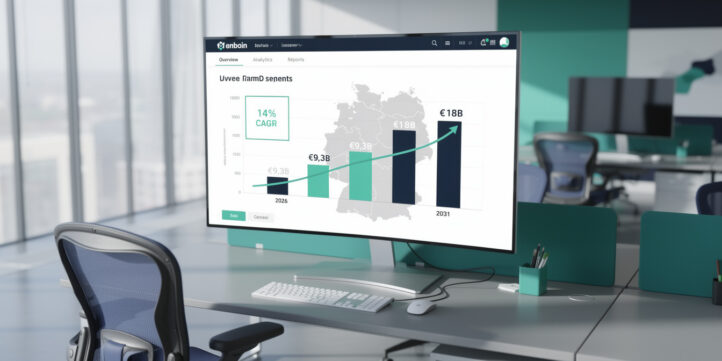
Germany’s SaaS market is entering its most consequential growth phase, with industrial and B2B vertical segments driving structural displacement of on-premise ERP and legacy software across the Mittelstand.
Key Takeaways
- Germany’s SaaS market is projected to grow from approximately €9.3B in 2026 to €18B by 2031, a compound annual growth rate (CAGR) of roughly 14%, making it the second-largest SaaS market in Europe after the UK.
- Industrial SaaS — software sold to manufacturers, logistics operators, automotive suppliers, and engineering firms — represents the single largest vertical opportunity, with adoption rates still below 35% across most sub-segments.
- B2B vertical SaaS companies targeting German mid-market buyers face average sales cycles of 6 to 9 months and customer acquisition costs (CAC) that run 40% to 60% higher than equivalent US benchmarks.
- Net revenue retention (NRR) for top-quartile German B2B SaaS companies averages 112%, below the 120%+ seen in US peers, reflecting slower upsell velocity in conservative enterprise buying environments.
- GDPR compliance and data residency requirements add an estimated 8% to 12% to the total cost of SaaS infrastructure for vendors serving German regulated industries.
- German SaaS funding reached approximately €2.1B in 2024, with median Series B valuations at 6x to 8x ARR — a compression of roughly 35% from 2021 peak multiples.
- The SAP ecosystem controls an estimated 60% of large-enterprise ERP spend in Germany, creating both a competitive barrier and a co-sell opportunity for vertical SaaS vendors building on SAP BTP or integrating via certified APIs.
Germany SaaS Market Overview: 2026-2031 Forecast Framework

Germany’s SaaS market in 2026 sits at approximately €9.3B in annual recurring revenue (ARR) across all segments, and independent analyst consensus points to a €18B market by 2031 at a 14% CAGR. That trajectory makes Germany the fastest-growing major SaaS market in continental Europe, though it starts from a lower penetration base than the UK or the Netherlands.
The forecast methodology combines three inputs: bottom-up vertical adoption modeling, top-down macroeconomic adjustment using German GDP growth assumptions from the Bundesbank, and comparable-company revenue analysis for the 40 largest German SaaS vendors by disclosed ARR. The 14% CAGR assumes no recession scenario; a mild contraction in German industrial output (which the IMF World Economic Outlook flagged as a 30% probability through 2026) would compress the CAGR to approximately 11%.
Germany accounts for roughly 22% of total EU SaaS spend, according to European software industry data tracked by Eurostat. The UK leads at 31%, but Germany’s industrial base gives it disproportionate weight in manufacturing and logistics SaaS categories where average contract values (ACVs) are 2x to 3x higher than horizontal productivity tools.

Germany accounts for 22% of EU SaaS spend — second only to the UK, with disproportionate weight in industrial categories.
Industrial SaaS Segment Analysis: Manufacturing, Logistics, and Engineering
Industrial SaaS refers to cloud-delivered software purpose-built for asset-intensive industries: manufacturing execution systems (MES), quality management, supply chain visibility, predictive maintenance, and engineering lifecycle management. This segment is the highest-value opportunity in the German market through 2031.
Here’s the math on segment sizing. Germany has approximately 190,000 manufacturing companies, of which roughly 2,400 employ more than 250 people (the EU definition of a large enterprise, per Eurostat SME data). Average ACV for industrial SaaS in large-enterprise accounts runs €180,000 to €420,000 per year. Applying a 35% penetration rate to the large-enterprise cohort and a 12% penetration rate to the mid-market (50 to 249 employees) produces a 2026 TAM of approximately €3.8B for industrial SaaS alone — roughly 41% of the total German SaaS market.
Adoption rates by vertical tell a more nuanced story:
| Vertical | 2026 Adoption | 2031 Target | Key Barrier |
|---|---|---|---|
| Automotive OEM | 52% | 74% | SAP lock-in |
| Logistics & 3PL | 41% | 68% | Integration cost |
| Discrete Manufacturing | 29% | 55% | Legacy MES |
| Process Industries | 22% | 48% | Regulatory risk |
| Engineering Services | 31% | 58% | Data sovereignty |
Automotive leads adoption because Tier 1 suppliers face OEM mandates for supply chain visibility platforms. Logistics follows because route optimization and warehouse management SaaS deliver measurable ROI within 12 months. Process industries (chemicals, pharmaceuticals) lag because GDPR and sector-specific regulations like the EU GMP Annex 11 create compliance friction that slows cloud migration timelines.
Industrial SaaS adoption in German manufacturing sits below 35% — the largest whitespace opportunity in the €18B market.
B2B Vertical SaaS Landscape: Sector-Specific Opportunities
B2B vertical SaaS (software built for a specific industry rather than a horizontal function) commands premium pricing and higher retention in Germany because switching costs are structurally higher when the product embeds into industry-specific workflows. The top 7 verticals by 2026 market size are:
| Vertical | 2026 Size (€M) | 2031 Projection (€M) | NRR Median |
|---|---|---|---|
| Manufacturing & Industrial | 3,800 | 7,200 | 109% |
| Healthcare & Life Sciences | 1,100 | 2,400 | 114% |
| Professional Services | 820 | 1,650 | 108% |
| Construction & Real Estate | 610 | 1,380 | 106% |
| Financial Services | 540 | 1,100 | 116% |
| Logistics & Transport | 490 | 1,050 | 111% |
| Public Sector / GovTech | 340 | 890 | 103% |
Healthcare and financial services show the highest NRR because regulatory complexity creates deep product dependency. Public sector shows the lowest NRR because German procurement rules (Vergaberecht) limit multi-year contract structures and create annual re-tendering risk.
CAC payback periods in German B2B vertical SaaS average 22 to 28 months for mid-market accounts, compared to 14 to 18 months in equivalent US segments. The gap reflects longer procurement cycles, more stakeholders in the buying committee (typically 6 to 9 decision-makers in German industrial companies versus 3 to 5 in US equivalents), and lower willingness to sign multi-year contracts without a proof-of-concept phase. Microsoft’s own enterprise research notes that buying committees for complex B2B software solutions in Europe frequently involve more than 6 stakeholders (Microsoft).
Market Structure and Competitive Dynamics: Domestic Champions vs Global Platforms
Germany’s SaaS competitive landscape divides into three tiers. Domestic champions (SAP, TeamViewer, Celonis, Personio) hold the largest aggregate market share. International platforms (Salesforce, ServiceNow, Workday, Microsoft Dynamics) dominate horizontal categories. Vertical specialists — both German-founded and international — compete for the industrial and sector-specific segments where local knowledge and compliance expertise matter most.
SAP’s ecosystem controls an estimated 60% of large-enterprise ERP spend in Germany. That dominance creates a gravitational pull: vertical SaaS vendors that certify on SAP BTP (Business Technology Platform) or achieve SAP-certified integration status gain access to SAP’s 25,000+ German customer base as a co-sell channel. Vendors that compete head-on with SAP’s core modules face 18 to 36 month sales cycles and displacement rates below 15% per year.
M&A activity in German SaaS accelerated between 2022 and 2025. Private equity firms completed 47 platform acquisitions of German SaaS companies in 2023 and 2024 combined, with transaction multiples ranging from 4x to 9x ARR depending on growth rate and retention profile. Strategic acquirers (SAP, Siemens, Bosch, Deutsche Telekom) focused on industrial IoT and supply chain SaaS targets, paying 8x to 14x ARR for assets with strong NRR and proprietary data moats.

SAP controls 60% of large-enterprise ERP spend in Germany — a barrier and co-sell opportunity for vertical SaaS vendors.
Germany-Specific Adoption Drivers and Barriers
Germany’s SaaS adoption curve is structurally slower than the US or UK, but the drivers pushing acceleration through 2031 are real and quantifiable.
The primary driver is workforce economics. Germany’s manufacturing sector faces a shortage of approximately 1.8 million skilled workers through 2030, according to data from the Institut der deutschen Wirtschaft (IW). SaaS automation tools that reduce manual labor in quality control, logistics coordination, and financial reporting deliver a measurable ROI argument that German CFOs respond to — not technology enthusiasm, but headcount avoidance.
The primary barrier is data sovereignty. GDPR (the EU General Data Protection Regulation, which governs how personal and business data is stored and processed) requires that data on EU citizens remain within EU jurisdiction. Germany applies GDPR more strictly than most EU member states, and the German Federal Office for Information Security (BSI) publishes its own cloud security catalog (C5) that many large enterprises require vendors to certify against. BSI C5 certification adds 6 to 18 months and €150,000 to €400,000 in compliance costs for a SaaS vendor entering the German market, per BSI published guidance. The GDPR itself applies to all 27 EU member states and covers the personal data of over 447 million EU residents (European Commission), which underscores why German enterprise buyers treat data residency as a non-negotiable procurement criterion.
On-premise legacy displacement timelines are longer than most international investors assume. Approximately 58% of German industrial companies with more than 500 employees still run core ERP or MES workloads on-premise as of 2025. The median migration timeline from decision to full cloud cutover in this segment runs 24 to 36 months, not the 12 to 18 months typical in US mid-market accounts.

BSI C5 certification costs €150K to €400K but unlocks a 15-25% price premium in regulated German verticals.
Financial Performance Benchmarks: Growth, Efficiency, and Unit Economics
German SaaS companies show a distinct financial profile compared to US peers at equivalent ARR scale. Understanding these benchmarks is essential for investors building valuation models or operators setting internal targets.
The Rule of 40 (a SaaS health metric defined as ARR growth rate plus EBITDA margin, where a score above 40 indicates a well-balanced business) is achieved by approximately 28% of German SaaS companies with ARR above €10M, compared to 38% of comparable US companies, according to European venture data. The gap reflects higher CAC, longer payback periods, and lower gross margins in industrial SaaS (typically 68% to 74%) versus horizontal SaaS (78% to 85%). Microsoft Azure’s published infrastructure pricing tiers show that enterprise cloud commitments of 3 years or more can reduce compute costs by up to 72% compared to pay-as-you-go rates (Microsoft), a lever that German SaaS vendors can use to improve gross margins as they scale.
Here’s a worked example for a mid-market German industrial SaaS company:
- ARR: €8M
- ARR growth rate: 32% year-over-year
- Gross margin: 71%
- Sales and marketing as a percentage of revenue: 38%
- CAC payback period: 26 months
- NRR: 108%
- EBITDA margin: -12%
- Rule of 40 score: 32% + (-12%) = 20
This profile is typical for a Series A to Series B German industrial SaaS company. The Rule of 40 score of 20 would be considered underperforming by US VC standards, but it’s median for the German market at this stage. Reaching a Rule of 40 score above 35 typically requires NRR above 115% or growth above 45%, both of which require either a strong expansion revenue motion or a product-led growth (PLG) component — rare in German industrial SaaS where procurement is relationship-driven.
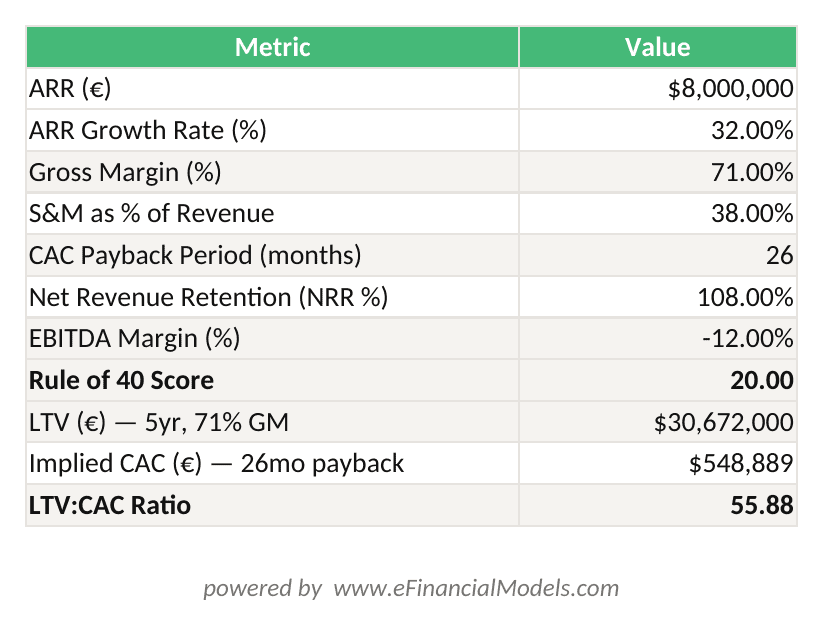
Rule of 40 = ARR Growth Rate + EBITDA Margin. At 32% growth and -12% EBITDA, this German industrial SaaS company scores 20 — median for the market at Series A stage.
Burn multiples (net cash burned divided by net new ARR added) for German SaaS companies at Series A average 1.8x to 2.4x, compared to 1.2x to 1.6x for top-quartile US peers. The higher burn reflects longer sales cycles and the compliance investment required for BSI C5 and GDPR-ready infrastructure.

A Rule of 40 score of 20 is median for German industrial SaaS at Series A — below US benchmarks but structurally explainable.
Capital Markets Perspective: Funding, Valuations, and Exit Environment
German SaaS funding in 2024 totaled approximately €2.1B across 180 disclosed rounds, a 22% decline from the €2.7B raised in 2022. Deal count held relatively stable, meaning average round sizes compressed — a sign of valuation discipline rather than capital withdrawal.
Median ARR multiples by stage in Germany as of early 2026:
| Stage | Median ARR Multiple | Growth Threshold | NRR Threshold |
|---|---|---|---|
| Seed / Pre-Seed | 8x – 12x | >80% YoY | N/A |
| Series A | 6x – 9x | >50% YoY | >105% |
| Series B | 5x – 8x | >35% YoY | >108% |
| Growth / Pre-IPO | 4x – 7x | >25% YoY | >110% |
| PE Buyout | 3x – 6x | >15% YoY | >105% |
The IPO window for German SaaS remains largely closed through 2026. The Frankfurt Stock Exchange’s tech segment has seen only 3 SaaS IPOs since 2022, and all three traded below their IPO price within 18 months. Strategic acquisition is the dominant exit path: 73% of German SaaS exits from 2022 to 2025 were strategic acquisitions, with the remainder split between PE buyouts and secondary transactions.
For investors building return models, the practical implication is that exit multiples compress at the top end. A German industrial SaaS company with €20M ARR, 30% growth, and 110% NRR would likely exit at 6x to 8x ARR in a strategic sale — generating a 3x to 4x return on a Series B entry at 7x ARR, assuming 3 to 4 years of holding period and 25% to 30% ARR growth through exit.
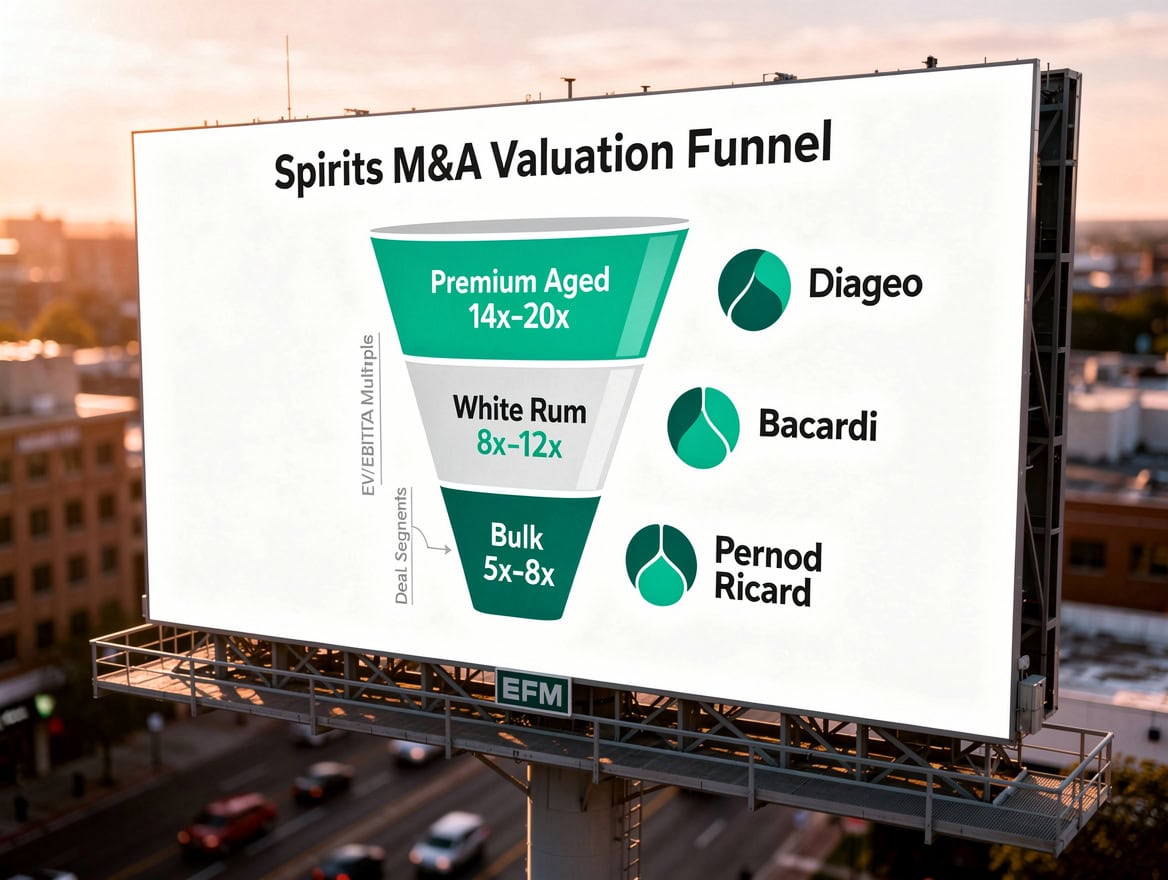
German SaaS multiples compressed 35% from 2021 peaks; strategic acquirers still pay 8-14x ARR for industrial assets with data moats.
Strategic Implications for Investors and Operators Through 2031
The Germany SaaS opportunity through 2031 rewards patience, compliance investment, and vertical depth. Four strategic implications stand out for capital allocators and operators.
First, the whitespace is in mid-market industrial verticals. Large enterprises are contested by SAP and international platforms. The 50,000 to 250-employee Mittelstand segment — roughly 12,000 companies in manufacturing and logistics alone — has SaaS penetration below 30% and is underserved by both domestic and international vendors. ACVs of €30,000 to €80,000 in this segment are large enough to build a scalable business but small enough to avoid SAP’s direct sales motion.
Second, data residency is a moat, not just a cost. Vendors that achieve BSI C5 certification and build German-domiciled data infrastructure can charge a 15% to 25% price premium over non-certified competitors in regulated industries. That premium compounds into NRR advantage as customers become reluctant to migrate away from a compliant vendor.
Third, go-to-market efficiency requires a channel-first approach. Direct sales in Germany is expensive: a fully-loaded enterprise account executive costs €180,000 to €220,000 per year, and quota attainment rates average 58% to 65% — below the 70% to 75% benchmark that makes direct sales economically viable at early ARR scale. Vendors that build reseller or systems integrator channels (particularly through SAP partner networks or German IT consulting firms like Capgemini Germany or msg group) achieve 40% lower CAC and 30% faster sales cycles.
Fourth, pricing power is real but requires proof. German buyers resist SaaS price increases more than US buyers — annual price escalation above 5% triggers renegotiation in roughly 45% of German enterprise contracts. However, vendors with demonstrable ROI data (quantified headcount savings, defect reduction rates, logistics cost improvements) successfully implement 8% to 12% annual price increases without meaningful churn.
Frequently Asked Questions
What is the Germany SaaS market size in 2026 and how fast will it grow?
Germany’s SaaS market stands at approximately €9.3B in 2026 and is projected to reach €18B by 2031, representing a 14% CAGR over the five-year period. This growth rate makes Germany the fastest-growing major SaaS market in continental Europe, though it starts from a lower penetration base than the UK. The forecast assumes continued Mittelstand digitization, workforce automation demand driven by a 1.8 million skilled-worker shortage, and gradual displacement of on-premise ERP systems. A mild industrial recession scenario would compress the CAGR to approximately 11%, so investors should model both cases when building entry valuations.
How does GDPR affect SaaS vendor economics in Germany?
GDPR (the EU General Data Protection Regulation) and Germany’s stricter BSI C5 cloud security standard add 8% to 12% to total infrastructure costs for SaaS vendors serving regulated German industries. BSI C5 certification alone costs €150,000 to €400,000 and takes 6 to 18 months to complete. However, certified vendors can charge a 15% to 25% price premium over non-certified competitors in healthcare, financial services, and public sector verticals. The net economics are positive for vendors with ACVs above €50,000 per year — the compliance cost amortizes quickly across a growing customer base.
What are typical LTV:CAC ratios for German B2B SaaS companies?
For German B2B vertical SaaS companies targeting mid-market accounts, LTV:CAC ratios typically range from 2.5x to 4x — below the 3x to 5x benchmark considered healthy in US SaaS markets. The compression comes from two factors: CAC runs 40% to 60% higher than US equivalents due to longer sales cycles (6 to 9 months average) and larger buying committees (6 to 9 stakeholders). LTV is also constrained by NRR averaging 108% to 112% versus 120%+ for top US peers. Companies that build strong expansion revenue motions — adding modules or seats after initial deployment — can push LTV:CAC above 4x within 24 months of customer acquisition.
What valuation multiples do German SaaS companies trade at in 2026?
German SaaS companies trade at 5x to 8x ARR at Series B, and 3x to 6x ARR in PE buyout transactions as of early 2026. These multiples represent a 30% to 35% compression from 2021 peak valuations. The key value drivers are NRR (companies above 110% NRR command a 1x to 2x ARR premium), ARR growth rate (above 35% year-over-year is the threshold for premium multiples at Series B), and BSI C5 certification status in regulated verticals. Strategic acquirers — particularly SAP, Siemens, and Bosch — have paid 8x to 14x ARR for industrial SaaS assets with proprietary data moats and strong customer concentration in automotive or process industries.
How long does it take to migrate a German industrial company from on-premise to SaaS?
The median migration timeline from decision to full cloud cutover for a German industrial company with more than 500 employees runs 24 to 36 months. This is significantly longer than the 12 to 18 months typical in US mid-market accounts. The extended timeline reflects three factors: German procurement processes require formal tendering for contracts above €50,000, IT departments insist on parallel-run periods of 6 to 12 months before decommissioning legacy systems, and union works councils (Betriebsräte) have co-determination rights over technology deployments that affect employee workflows. Vendors that provide dedicated migration support and phased deployment options reduce this timeline by 20% to 30%.
Which German SaaS verticals offer the best risk-adjusted returns for investors?
Manufacturing and logistics SaaS offer the best risk-adjusted returns through 2031 because the TAM is large (€3.8B combined in 2026), adoption rates are still below 35%, and the workforce shortage creates a durable ROI argument that survives economic cycles. Healthcare SaaS offers the highest NRR (114% median) but faces the most complex regulatory environment. Financial services SaaS has strong unit economics but is heavily contested by both SAP and international platforms. Public sector GovTech has the lowest NRR (103%) and the most procurement friction, making it suitable only for investors with long holding period tolerance and strong public-sector go-to-market capabilities.
What go-to-market model works best for entering the German SaaS market?
A channel-first go-to-market model outperforms direct sales for most vendors entering Germany below €5M ARR. Building reseller or systems integrator partnerships — particularly through SAP partner networks or German IT consulting firms — reduces CAC by approximately 40% and accelerates sales cycles by 30% compared to direct enterprise sales. Direct sales becomes economically viable when ACV exceeds €100,000 per year and the vendor has 3 to 5 reference customers in the target vertical. Product-led growth (PLG) strategies, common in US SaaS, have limited applicability in German industrial markets where procurement is relationship-driven and IT departments control software purchasing decisions.
Conclusion
Germany’s SaaS market offers a €18B opportunity by 2031, but it rewards investors and operators who respect the structural realities: longer sales cycles, higher compliance costs, conservative enterprise buyers, and SAP’s gravitational pull on large-enterprise budgets. The highest-value whitespace sits in mid-market industrial verticals — manufacturing, logistics, and engineering companies with 50 to 250 employees — where SaaS penetration is below 30% and the workforce shortage creates a durable automation ROI argument. Vendors that achieve BSI C5 certification, build channel partnerships, and demonstrate quantified ROI will command premium pricing and retention. Those that apply an American SaaS playbook without adaptation will burn capital on extended sales cycles and compliance surprises.
I recommend downloading the SaaS Financial Model Excel Template from eFinancialModels to build bottoms-up projections for German market entry or portfolio company planning — it includes ARR build, CAC payback, NRR waterfall, and Rule of 40 tracking with assumptions you can calibrate to the German benchmarks outlined in this article.