
0 ITEMS

Manpower Planning and Analysis Model
The Manpower Analysis Model was designed to equip HR managers and analysts with a tool to control the transition of a workforce from one year to another. This tool allows capturing of optimization efforts by an organization to reshuffle, downsize, relocate and appraise its workforce.

| Business Consulting Services, Financial Model, General Excel Financial Models, Human Resources & Headhunting |
| Budget, Business Plans, Dashboard, Performance Tracking, Tracking |


Manpower planning and analysis model
- Optimization of labor force is a growing concern for entrepreneurs and top management.
- Year on year, there must be a plan in place to show management what changes are expected in labor costs, designations and needed relocations to match the growth of the organization.
- Digitization of operations that raise productivity has led to potential reductions in manpower.
- Being able to capture and quantify all planned changes in a firm’s manpower before starting a new financial year has become critical to owners of enterprises trying to compete in markets by becoming more cost efficient and ensuring an environment that improves productive labor retention.
- This model allows HR managers to capture performance appraisal results for employees and link those to changes in their pay-scale and allowances.
- The model also allows organizations to build and maintain a pay-scale and grade system for its workforces.
- This model also allows gradually adjusting pay levels into a pre-defined scale to ensure homogeneous basic salaries and allowances based on scale levels and grades. The model will show variances of current pay structures to the scale and therefore guide pay changes towards closing those variances.
- A comprehensive dashboard was designed to give an overview to management of what changes were done in pay-scales and what is the annual labour cost analyzed by different parameters.
- The model will also highlight actions taken on an overall corporate level regarding number of promotions, dismissals, redundancies, relocations etc.
- This model can be used in-house by HR Managers to optimize their manpower planning and appraisal, and it can be used by management consultants hired for organizational restructuring to optimize manpower costs and division of work.
- The Manpower Analysis Model was designed to equip HR managers and analysts with a tool to control the transition of a workforce from one year to another.
- This tool allows capturing of optimization efforts by an organization to reshuffle, downsize, relocate and appraise its workforce.
- The model highlights the status of a workforce in a current year and what is planned for next year.
- This model will serve as the ultimate Human Resource Budget for an organization segregated by departments, grades and locations.
- The SETUP sheet:
- this includes all the predefined lists, such as department, location, and employee grades.
- This sheet also includes the pay scale applicable for different Levels across different Grades.
- The EMPLOYEE MASTER DATA sheet:
- In this sheet the detailed dataset of current employees and their benefits structure is listed.
- Such employees will then be assigned actions, such as terminations, resignations, relocations etc.
- A set of columns is then used to show the status of those employees as planned / suggested for the next year.
- The ANALYSIS AND CHART DATA sheet is used to query the data from the Employee Master Data sheet and converting it into analysis tables ready for charts.
- The DASHBOARD sheet is the final output of the model showing charts and highlights relating to labour turnover, salary/benefit changes and performance appraisal across departments, grades and locations.
- Predefined Lists
- Locations: there are up to 10 locations that can be selected for employees whether in the current employment year or the next. A location of [other] can be used in case more locations are existing in an organization, or more than one location can be grouped under one, for example, “Shops”, or “Warehouses”.
- Departments: Up to 10 key departments can be assigned to current and next year planned department for each employee. Employees can be rotated from one department to another.
- Performance measures: are part of the evaluation process fields, they range from Low to Excellent. Such keys can be renamed.
- Grades: a grading system is assumed to rank employee benefits and status. The names can also be replaced with for example Grade A, Grade B etc.
- Transition Actions: for each employee, a set of actions (up to 10) are required to define their transition into the next employment year. For example “retain” or “Dismiss – Redundant”. Any action should be defined in terms of whether this is a turnover action or not by indicating True or False in the adjacent column.
- The posted model version contains a hypothetical case study of an existing 50 employees.
- This organization decided to implement a new salary scale. The columns under the current year will show how current salary and allowances packages might not be inline with the new defined scale. While the new year adjustments have taken this into account with the proposed increments.
- The sample data demonstrates actions taken by management on the dismissal, redundancy, promotion and retention of employees along with salary increments if applicable.
- In this particular case, some employees have been made redundant with remarks as to why. The model will lock those employees from not appearing in the next year manpower list along with other dismissals due to performance.
- The case study also demonstrates how employees are being replaced with new ones to be hired by creating new employee rows with new employee file numbers.
- Found in the Employee Master Data sheet as well are columns to analyze the transition from the current year to the planned next year.
- This includes highlighting the value of increments / reductions in salaries and allowances as well as logic tests on what happened to the status of the employee.
- Such changes in pay along with logic tests will be used in the dashboard outputs to reconcile the change in pay and employee count from the current year to the next.
- The integrity of the model is also kept in-tact with fields on the current and next year status of employees being mostly linked to pre-defined lists to ensure data conformity.
- There are also columns for checking cells in the three sections of the master data:
- Audit checks for current year fields
- Audit checks for transition assumptions
- Audit checks for next year fields
File Types: .xlsx and .pdf
Similar ProductsOther customers were also interested in...


 Jason Varner
Top 16 Google Sheet Templates
This is a bundle of all the most useful and efficient google sheet templates I have built over the y... Read more
 HenrySheykin
Recruitment Agency Financial Model Excel Template
The Recruiting Agency Financial Model helps founders, agency owners, consultants, and analysts build... Read more

 Giorgos
Digital Hiring (Talent) Marketplace – 5 Year Fin...
Financial Model providing an advanced 5-year financial plan for an online, two-sided hiring platform... Read more
Human Resources Company – 10 Year Financial Mode...
10-year financial model for an HR company providing forecasts, profitability analysis, and insights ... Read more

 Anuj
Anuj
Private Equity Fund Model (Investor Cashflows)
The Private Equity Fund Cashflows Model helps LPs and GPs analyze fund cash flows, returns, and dist... Read more
All My Financial Models, Spreadsheets, Templates, ...
Lifetime access to all future templates as well! Here is a set of spreadsheets that have some of the... Read more
 Pierre-AlexandreHeur...
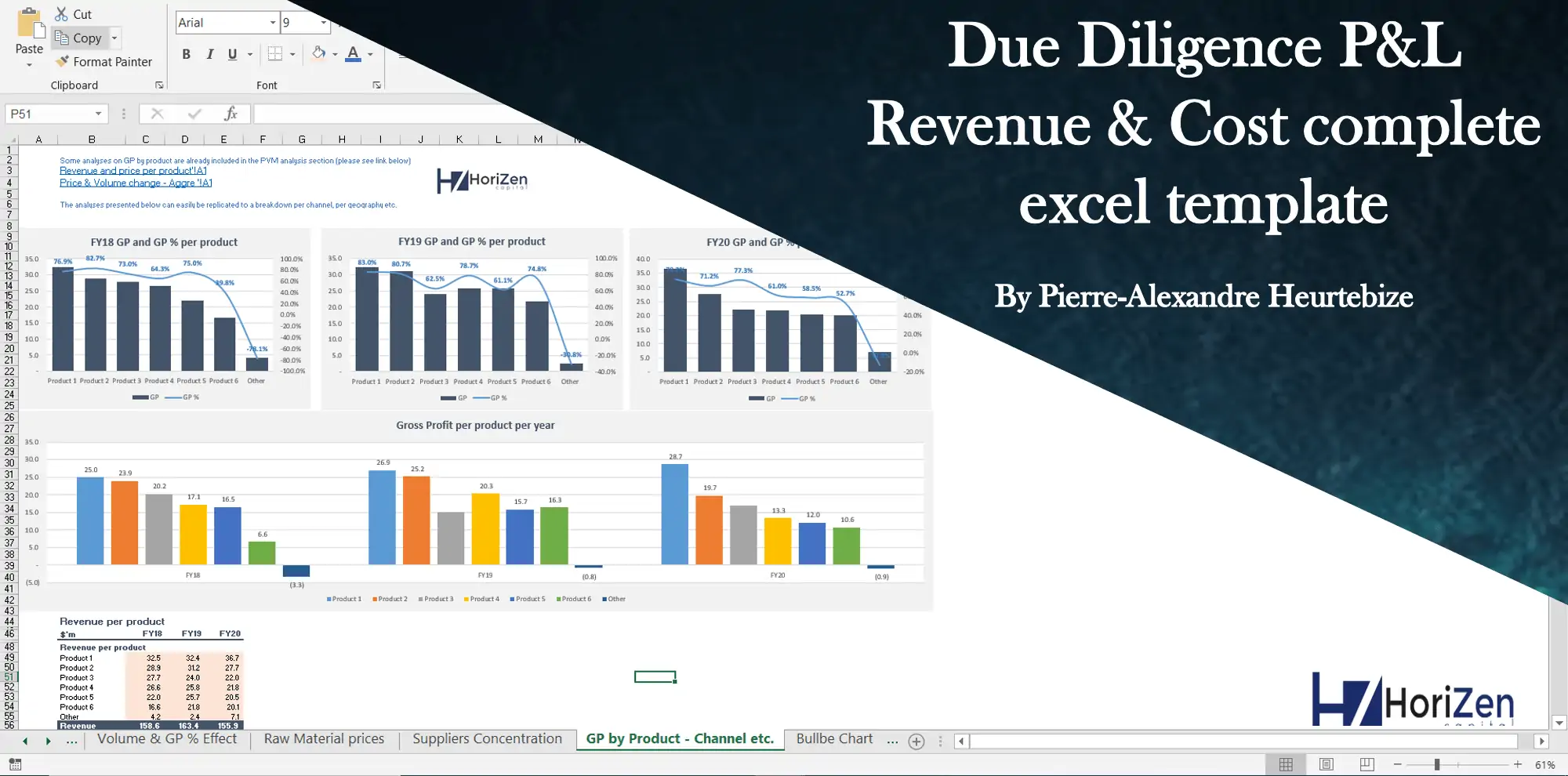
Due Diligence P&L – Exhaustive Revenue a...
Model for in depth understanding of high level profit and loss and revenue analysis. Big-4 like chec... Read more
Advanced Financial Model with DCF and Valuation
Dynamic 10-Year Financial Model, suitable for any type of business, supporting strategic planning, i... Read more
Startup Company Financial Model – 5 Year Fin...
Highly-sophisticated and user-friendly financial model for Startup Companies providing a 5-Year adva... Read more

 Andrei Okhlopkov
Due Diligence Tools and Methods
A suite of best practices to perform financial and commercial due diligence. Use it if you are consi... Read more
You must log in to submit a review.