
0 ITEMS

Warehouse Acquisition Financial Model
A professional model for warehouse (industrial building) acquisition (buy – hold – sell)


This is a detailed, well-structured and transparent cash flow model for the acquisition of a stabilized warehouse (industrial) building. The model features clear navigation, color codes, and error checks and includes the following investment stages:
1. Acquisition. The model allows you to set the acquisition date, price, fixed and variable transaction costs.
2. Renovation. The model assumes that immediately after the acquisition your warehouse will undergo a renovation program. You can set the amount and timing of various renovation CAPEX items.
3. Operation. The model features a very detailed and flexible revenue analysis based on existing and prospective tenants’ lease terms and rates, timing, and vacancy assumptions. It also builds granular opex forecasts and calculates the tax effect.
4. Sale. You can define the holding period, the cap rate, and transaction costs at exit. You can choose the method to calculate the NOI for the purposes of valuation (12 months forward, 12 months trailing, or 6+6 of each.
5. Distribution of profits between shareholders. The model calculates returns to a preferred partner if there is one in the project. It then uses a 4-hurdle carried interest waterfall to calculate the distributions between General Partner (GP) and Limited Partner (LP).
The model assumes the investment will be financed by equity and loan. The following funding structure is considered:
– Acquisition loan to finance the initial investment and renovation. You can set the interest rate, amortization period, interest-only period, arrangement, and early repayment fees. You can also choose the loan-to-value (LTV) ratio for the asset and for the renovation costs.
– Refinancing loan. The model allows for setting the date of refinancing and parameters of the new loan (interest rate, amortization period, fees, etc.). You can refinance just the old amount of the loan or take additional funding (as much as refinancing LTV allows) and distribute (cash out) any extra amounts.
– Mezzanine loan. This loan is drawn at acquisition to bridge any potential gaps in funding. Repaid at exit.
The model produces the cash flow statements at the asset’s and investor’s levels. it also calculates key profitability metrics (IRR, equity multiple, gross return, DSCR, peak equity required amount, and date) for every investor.
Sensitivities. The model includes numerous inputs which you can change to see the effect on profitability and cash flows. There is also a data table that shows the IRR and equity multiple at various exit date and cap rate assumptions. The model is accompanied by professionally designed magazine-quality charts to illustrate the findings of the analysis. File Types:
- Excel Model Template with Instructions – .xlsx
- Detailed eBook/Guide – .pdf
Similar ProductsOther customers were also interested in...


 Andrei Okhlopkov
Warehouse Development Financial Model
This is a detailed, well-structured and transparent cash flow model for the development of a stabili... Read more

Office Acquisition Financial Model
This is a detailed, well-structured and transparent cash flow model for an acquisition of a stabiliz... Read more

Office Development Financial Model
This is a detailed, well-structured and transparent cash flow model for the development of an office... Read more

 Jason Varner
Mixed-Use Real Estate Model: Leverage / JV Options
A general real estate model to plan all assumptions for up to 7 'uses' for a given property. Include... Read more

 eFinancialModels
Commercial Real Estate Valuation Model Template
A commercial real estate valuation model template assists in running a professional DCF Valuation fo... Read more

 Giorgos
Real Estate Private Equity (REPE) Financial Model
New Version Updates:• The model supports now up to 50 properties• Updated Acquisition, Financing... Read more

Real Estate Acquisition Financial Model (Commercia...
10-Year financial model for a real estate acquisition projecting revenue, operating expenses, and ca... Read more
 HenrySheykin
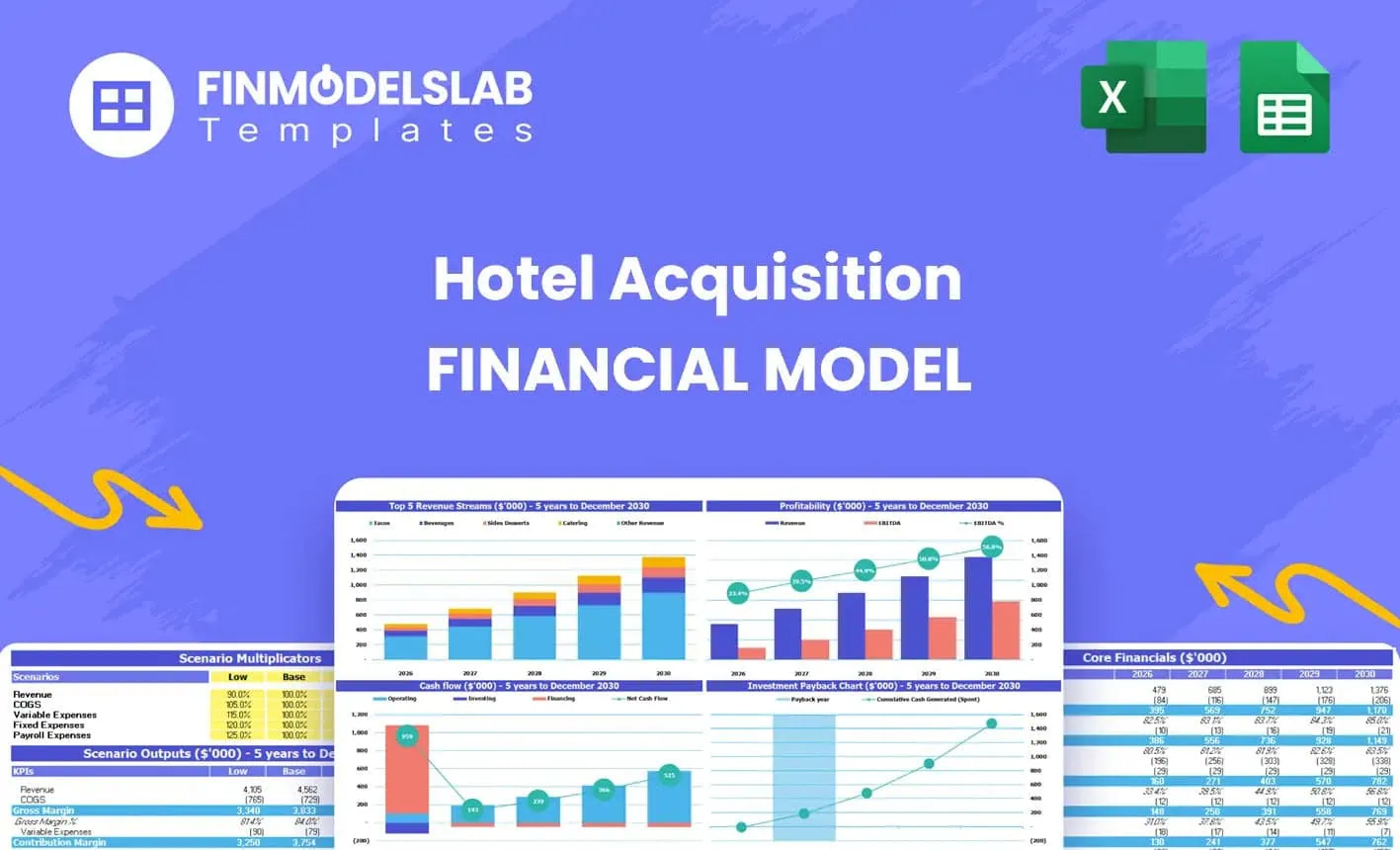
Hotel Acquisition REFM Financial Model Excel Templ...
The Hotel Acquisition Financial Model helps buyers, investors, developers, consultants, and analysts... Read more
Single Family Residential Property Investment Mode...
10-Year financial model for a single-family residential property investment projecting acquisition c... Read more
Yacht Marina Acquisition – 10 Year Financial Mod...
10-Year financial model for a yacht marina acquisition projecting revenue, operating expenses, and c... Read more
You must log in to submit a review.