
0 ITEMS

Step-By-Step Guide to Mastering Break Even Financial Model
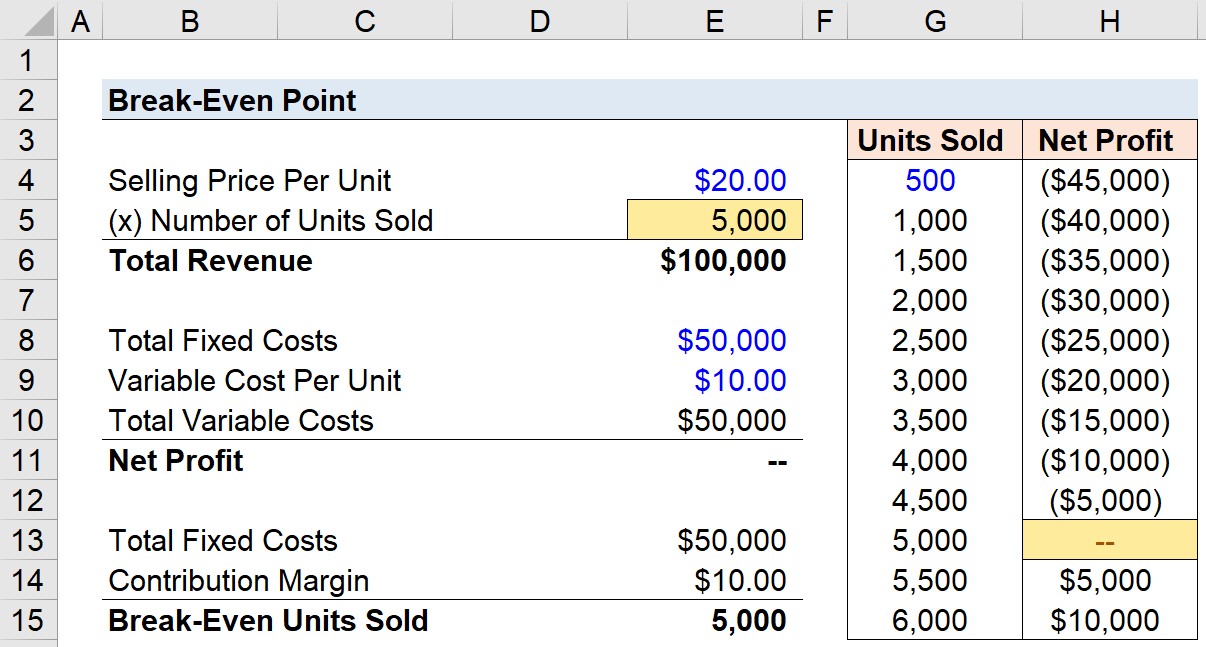
Understanding how to analyze costs and set sales targets is vital for business success.
- Breaking down fixed and variable costs helps identify your break-even point quickly.
- Calculating the right sales volume ensures your revenue covers expenses and begins generating profit.
- Pricing strategies directly influence your break-even and long-term profitability.
- Using tools like Excel or specialized software makes financial modeling more accurate and manageable.
- Regular scenario and sensitivity analysis prepare your business for market changes and risks.
Focusing on these fundamentals allows you to build a solid financial plan and steer your business toward sustainable growth.
Break-even Analysis Fundamentals
Welcome to the fundamental strategies of conducting a Break-Even Analysis. Whether you are launching a startup or managing an established business, understanding the breakeven point is crucial to financial success. A Break-Even Analysis helps you determine when your business will be able to cover all its expenses and begin making a profit.
Importance Of Break-even Point
The Break-Even Point (BEP) is essential for any business. It shows the minimum sales volume required to avoid losses. BEP helps to:
- Set sales targets
- Plan expenses
- Make informed pricing decisions
- Understand the impact of cost changes
- Measure overall business sustainability
Components Of The Break-even Formula
Three components build up the Break-Even Formula:
- Fixed Costs: Costs that do not change with sales volume.
- Variable Costs: Costs that vary directly with sales volume.
- Sale Price per Unit: The price at which you sell your product or service.
With these components, the Break-Even Formula comes to life:
BEP Units = Fixed Costs / (Sale Price per Unit – Variable Cost per Unit)
| Cost Type | Description | Example |
|---|---|---|
| Fixed Costs | Rent, salaries, insurance | $10,000 per month |
| Variable Costs | Raw materials, production | $5 per unit |
| Sale Price | Final selling price | $15 per unit |
Understanding these foundations enables businesses to navigate towards profitability with much-needed clarity and control.
Setting The Stage
Welcome to the art of mastering the Break Even Financial Model. In this guide, we’ll walk through the essentials. You’ll understand how to analyze your costs, revenues, and profits. Setting the stage is important. It means making sure we have all the parts needed for our financial puzzle. Let’s start with a solid foundation.
Defining Your Business Model
Understanding your business model is key. It’s like knowing the rules of a game before playing. Answer these questions:
- What do you sell?
- Who are your customers?
- How do you make money?
Get these down clearly and concisely. You’ll be ahead in the game.
Identifying Fixed And Variable Costs
Next, let’s talk about costs. All businesses have two types: fixed and variable.
| Fixed Costs | Variable Costs |
|---|---|
| Salaries | Raw materials |
| Rent | Packaging |
| Insurance | Shipping |
Fixed costs stay the same each month. Think rent or salaries. Variable costs change with your sales. Examples include raw materials and shipping costs.
Calculating Fixed Costs
Mastering the break-even financial model begins with a solid grasp of fixed costs. These are the expenses that don’t change, regardless of how much a business sells. Understanding these numbers is essential to determine how many products or services a business needs to sell to cover costs and start profiting. Let’s break down these costs to help any business owner or financial enthusiast gain control of their financial planning.
Analyzing Regular Expenses
Regular expenses form the core of fixed costs. They occur on a routine basis and cover essential functions of the business. Consistent tracking helps predict future financial requirements. Key expenses include rent, utilities, insurance, salaries, and loan payments. Here’s a simple way to account for these:
- Rent: Monthly office or store lease payments.
- Utilities: Gas, water, and electricity that keep the business running.
- Insurance: Necessary to protect against unforeseen events.
- Salaries: Payments to staff, which remain constant on a per-period basis.
- Loan Payments: Fixed monthly repayments on any borrowed capital.
One-time Purchase Considerations
Apart from regular expenses, businesses sometimes make significant one-time purchases. These are assets like equipment or software that contribute to long-term operations. They shouldn’t be overlooked when calculating fixed costs. Here’s how these can be accounted for:
| Asset | Cost | Lifespan | Annualized Cost |
|---|---|---|---|
| Machinery | $10,000 | 5 years | $2,000 |
| Software | $500 | 1 year | $500 |
Break these one-time purchases into annualized costs to spread the expense over its useful life. This way, it’s easier to see how they impact the business’s finances each year.
Understanding Variable Costs
When businesses dig into the nitty-gritty of financial models, variable costs often stand out. These are expenses that change with production levels. Grasping variable costs is crucial in creating a break even financial model. To master this financial tool, let’s start with two key aspects of variable costs.
Cost Variability With Production
Variable costs fluctuate based on how much a company produces. Imagine a toy factory: more toys made, more costs for materials. It’s that simple. Businesses track these changes closely. They affect the overall expenses and the break even point. Let’s break it down:
- Direct materials: Costs rise with the number of units produced.
- Direct labor: Pay for workers reflects the hours spent on production.
- Utilities: Power and water bills change with factory activity.
Visualizing this, imagine a table showing variable costs per toy as production increases.
| Number of Toys | Variable Cost per Toy ($) |
|---|---|
| 100 | 2 |
| 200 | 1.75 |
| 300 | 1.50 |
Here, we see a decline in cost per toy with higher production. This leads us to our next point.
The Role Of Economies Of Scale
Economies of scale refer to cost savings when producing more. As production spikes, variable costs per unit often drop. This results from spreading costs over more items. Here’s what it looks like:
- Buying in Bulk: Get lower prices for materials when ordering large quantities.
- Efficient Labor: Workers get better at tasks, taking less time per item made.
- Optimized Usage: Machinery runs more efficiently at higher capacities.
Applying economies of scale can massively affect the break even point. It turns high production into a strategic advantage. Small businesses can leverage this by scaling operations carefully.
Understanding these principles lights the way to mastering your break even financial model. By acknowledging the flex and flow of variable costs and harnessing the power of economies of scale, proactive planning for profits becomes possible.
Projecting Sales Volume
When crafting a break-even financial model, understanding how to project sales volume is crucial. It’s the process of estimating the number of sales a company will make. It is a foundation for the business’s financial planning. Let’s explore how to predict sales efficiently and accurately.
Market Analysis Techniques
Market analysis is the first step in projecting sales volume. This involves examining industry trends, competitive landscape, and customer preferences. Utilize these techniques:
- Competitor Benchmarks: Assess competitors’ sales to gauge market potential.
- Historical Data Analysis: Look at past sales data to forecast future trends.
- Customer Surveys: Gather feedback to understand demand.
- SWOT Analysis: Identify strengths, weaknesses, opportunities, and threats.
Forecasting Demand
To forecast demand, analyze market size and growth. Predict using these steps:
- Identify Your Audience: Know who will buy your product.
- Estimate Market Share: Calculate the share you can capture.
- Analyze Sales Channels: Understand where your product will sell best.
Implement statistical methods and software tools for precise forecasts. This helps businesses stay prepared, minimize risks, and maximize profits.
Pricing Strategies
Mastering the break-even financial model is like building a bridge to profit. Pricing strategies form the pillars of this bridge. Perfecting your approach to pricing can make the bridge strong or weak.
Determining Product Price
Choosing the right price for a product is like picking a key for a lock.
It must fit. Here are steps to find that fit:
- Calculate costs. Add up production, labor, and overhead costs.
- Research competitors. See what similar products cost.
- Know your value. Price higher for unique benefits.
- Consider perception. Set prices that reflect product quality.
- Adjust for profit margin. Decide how much above costs to price.
Using a price calculator can simplify this process. It helps find a balance. Keep in mind: Prices aren’t set in stone. You can change them as the market changes.
Impact On Break-even Point
Price changes move the break-even point.
Let’s see how:
| Price Increase | Price Decrease |
|---|---|
| Lower number of sales to break even. | Higher number of sales to break even. |
| Potential for higher profits. | Potential for more sales, but lower profit per unit. |
Remember, finding the sweet spot in pricing is key. It should cover costs and allow for profits. Customers should still see the value. Play with numbers to see different scenarios. This practice is vital for your model’s mastery.
Break-even Calculation
To grasp the essence of your business’s financial health, break-even analysis is your go-to tool. This vital calculation tells you at what point your total revenue equals your total costs. That’s where you don’t lose money but don’t make any either. It’s about finding that sweet spot where your business starts to profit.
Using The Break-even Formula
Mastering the break-even point requires a simple formula:
Break-Even Point (Units) = Fixed Costs / (Selling Price per Unit – Variable Cost per Unit).
Let’s break it down.
- Fixed Costs: These stay the same regardless of how much you sell.
- Selling Price per Unit: This is how much you sell one item for.
- Variable Cost per Unit: This cost changes based on your production volume.
Plug in your numbers and the result shows how many units you need to sell to start making a profit.
Software Tools For Break-even Analysis
Digital tools can make break-even calculations much easier. Some top software includes:
| Software | Features |
|---|---|
| Microsoft Excel | Templates and formulas for quick calculations |
| QuickBooks | Integrated financial management with break-even capabilities |
| PlanGuru | Advanced analytics including break-even analysis |
Choose the tool that fits your business needs. With the right software, monitoring and achieving your break-even point becomes a breeze.
Strategic Decision-making
Strategic Decision-Making is a critical part of any business. Managers often use the break-even financial model to make smart choices. This model tells you when costs equal income. In other words, it’s when your business starts to make a profit. Knowing this point helps managers decide on pricing, budgeting, and strategy. This guide will show how to tweak the break-even model for the best decisions. We’ll look at two main parts:
Adjusting Elements Affecting Break-even
Several factors change the break-even point. By adjusting these, you paint a true picture of your financial health. Consider these parts:
- Costs: Look at fixed and variable costs. Can any costs be cut?
- Prices: Changing the selling price affects the break-even point.
- Volume: Selling more changes the equation too.
Let’s use an example. Imagine a toy company. It costs $50,000 to make all the toys. Each toy sells for $25. The fixed monthly costs are $2,000. So, we have this table:
| Fixed Costs ($) | Variable Cost per Unit ($) | Selling Price per Unit ($) | Break-Even Quantity |
|---|---|---|---|
| 2,000 | 10 | 25 | ? |
Adjusting any number changes the break-even quantity. Knowing this helps decide how many toys to make and sell.
Scenarios And Sensitivity Analysis
A sensitivity analysis plays with different scenarios. You see how changes impact your business. Look at what-ifs. What if costs go up? What if the price drops?
Use a simple setup like this:
- List down the factors that can change (such as costs, prices, sales volume).
- Make columns for each scenario.
- Adjust the numbers to see new break-even points.
Case study: Our toy company faces higher plastic prices. So, variable costs jump to $15 per toy. They also plan a sale, dropping the price to $20. We adjust the table:
| Scenario | Variable Cost per Unit ($) | Selling Price per Unit ($) | Break-Even Quantity |
|---|---|---|---|
| Increased Costs | 15 | 25 | ? |
| Sale Price | 10 | 20 | ? |
By using this table, the company tests how situations affect profits. This prepares them for future challenges. It makes strategy decisions clearer.
Beyond The Break-even
Once you reach your break-even point, the real fun begins. Beyond the break-even, every sale contributes directly to your profit. But mastering what comes after the break-even point is crucial. It involves understanding profit margins and planning for the long term. Let’s dive into these key concepts to ensure your financial growth doesn’t just stop at breaking even.
Mastering Profit Margins
Profit margins tell you how much money you make from each sale after costs. To improve them, start by analyzing your current profits. Look at the costs of goods sold (COGS) and compare them to your revenue. Here is an example table to track progress: Add more rows as necessary
| Month | Revenue | COGS | Profit | Profit Margin |
|---|---|---|---|---|
| January | $10,000 | $6,000 | $4,000 | 40% |
Reduce costs to boost your margins. Negotiate with suppliers or find cheaper materials. Always aim to increase efficiency.
Long-term Financial Planning
After the break-even, focus on long-term goals. Build a solid plan with these steps:
- Set clear financial objectives for the future.
- Analyze market trends and demands.
- Invest in areas with growth potential.
Use an excel sheet to predict future sales and expenses. Update it monthly. Keep your plans flexible to adapt to change.
Remember, mastering these skills takes time and effort. Stay patient and consistently track your financial health.
Case Studies
Welcome to the thrilling world of financial mastery featuring real-life case studies on break-even analysis. Understanding the break-even point is crucial for businesses to thrive. Witness how various companies have harnessed the power of this financial model.
Success Stories Of Break-even Utilization
Real businesses conquer challenges using the break-even financial model. These stories inspire and educate. Let’s explore the wins:
- Startup Scalability: A tech startup used break-even analysis to plan their expansion. They kept costs under control while growing their customer base.
- Product Launch: A fashion brand set realistic sales targets for a new line after understanding their break-even point. They celebrated a successful launch.
- Service Optimization: An event management company adjusted their services to meet the break-even point quicker. They now enjoy higher profits.
Learning From Break-even Pitfalls
Some businesses stumbled before mastering the break-even model. These tales are lessons in disguise. Recognize the missteps to avoid repeating them:
- Cost Misjudgment: A retailer underestimated their overheads. Their break-even analysis was off, leading to a revenue shortfall. They now prioritize accurate cost tracking.
- Overconfidence in Sales: A software company overestimated market demand. They faced a financial strain until they adjusted their projections and aligned their strategy.
- Ignoring Market Changes: A café overlooked rising commodity prices. They refreshed their break-even calculations to maintain profitability in a volatile market.
Practical Exercises
Let’s dive into Practical Exercises to master the break-even financial model. Gain hands-on experience by creating and refining your analysis. Follow these steps, and turn theory into valuable, real-world skills.
Creating Your Own Break-even Analysis
Start with data gathering. Collect all variable and fixed costs. Then, determine your product’s price. Now, you’re set to build your own break-even analysis.
Use a simple table to organize your data:
| Product Price | Fixed Costs | Variable Costs per Unit | Break-Even Point (Units) |
|---|---|---|---|
| $20 | $1,000 | $10 | ? |
Apply the formula:
Break-Even Point (Units) = Fixed Costs / (Price - Variable Costs per Unit)
- Find total fixed costs.
- Subtract the variable cost from the product price.
- Divide the fixed costs by the result above.
Now, calculate your break-even point. This tells you how many units to sell to cover costs.
Review And Refinement Process
After drafting, review your work. Check your calculations. Are the costs accurate? Is the price reflective of the market?
Seek feedback from peers or mentors. They might spot errors or suggest improvements.
- Verify all numbers for accuracy.
- Consult with experienced professionals for better insights.
- Update your analysis with new data or recommendations.
Regular updates keep your analysis relevant. Market conditions change. Update figures to stay informed about your break-even point.
Common Mistakes To Avoid
Mastering the break-even financial model is critical for businesses of all sizes. Yet, it’s easy to stumble on certain pitfalls that can skew your analysis. Recognizing these common mistakes is the first step toward accurate financial planning. Let’s delve into the key mistakes you should keep a lookout for.
Overlooking Hidden Costs
Hidden costs often trip up even the most diligent planners. They are expenses not immediately apparent when setting up the break-even analysis. Examples include:
- Maintenance costs: These are ongoing expenses for keeping equipment in working order.
- Permits and licenses: Annual fees that might slip under the radar.
- Employee benefits: The extra costs beyond their salaries.
Always review expense records thoroughly. Identify every cost associated with producing your product or service.
Inaccurate Sales Projections
Wishful thinking can lead to inaccurate sales projections. It’s crucial to base your sales forecasts on:
- Historical data from previous sales.
- Market research to gauge demand.
- Realistic growth rates.
Ensure to adjust projections for seasonal fluctuations and market trends. Ground your projections in data, not optimism.
Future-proofing Your Model
Building a break-even financial model stands as a cornerstone for business success. Yet, the true challenge lies in ensuring its relevance over time. Future-proofing your model allows for sustained growth and financial health. It’s about preparing for change before it happens. This section delves into practical steps to keep your financial plan resilient against market shifts and internal changes.
Incorporating Market Dynamics
Markets are like the ocean—always moving. A static financial model risks becoming outdated. Start by identifying potential market shifts:
- Consumer trends that might affect demand
- Regulatory changes impacting operations
- Technological advancements offering new opportunities
Update your model based on these insights. Use real-time data to keep pace with change. Data drives informed decisions. Those decisions fortify your model against future market waves.
Staying Adaptable With Your Financial Plan
Adaptability ensures longevity. For your financial model, this means ongoing evaluation and refinement. Steps include:
- Reviewing projections regularly ensures accuracy.
- Adjusting for new business insights keeps models relevant.
- Assessing risk scenarios prepares for unforeseen events.
Remember, a financial plan is not set in stone. It’s a living document. It must evolve. This shields your business from future financial storms. Always stay one step ahead.
Frequently Asked Questions
What Is A Break-even Financial Model?
A break-even financial model calculates the point at which revenue equals costs, meaning no net loss or gain. It’s vital for assessing when a business or product becomes profitable, allowing for informed pricing and investment strategies.
How Do You Calculate Break-even Point?
To calculate the break-even point, divide the total fixed costs by the difference between the unit selling price and variable costs per unit. This yields the number of units needed to sell before making a profit.
Why Is Mastering Break-even Analysis Crucial?
Mastering break-even analysis is crucial as it informs decision-making on pricing, cost management, and investment. It helps businesses determine profitability thresholds and supports strategic planning to ensure financial viability.
What Factors Affect The Break-even Analysis?
Factors affecting break-even analysis include sales volume, product pricing, fixed costs, and variable costs. Changes in these factors can shift the break-even point, impacting overall business sustainability and strategy.
Conclusion
Wrapping up, mastering the break-even financial model is crucial for business sustainability and growth. By following the steps in this guide, you pave the way for informed decision-making. Let this knowledge empower your financial strategy and steer your enterprise to success.
Ready to take control? Start analyzing your numbers today!



























You might also like:
- 10-Step Financial Planning Checklist for Smart Executives
- Master the Free Cash Flow Formula for Smarter Financial Decisions
- 5 Best Practices for Managing Days Receivables
- Financial Ratios Analysis and Its Importance
- What Is Financial Modeling In Excel – Crash Course
- 10 Ideas to Increase Average Revenue Per User
- Steps to Building Financial Models in Excel
- Understanding the Debt Service Coverage Ratio: An Essential Metric for Financial Analysis
- How Contribution Margin Analysis Can Drive Your Business to Financial Success
- Financial Planning for Small Business Owners – Taking an SBA Loan
- Understanding What is Yield to Maturity and Why It Matters
- Capitalized Earnings
- Break-Even
- Business Valuation
- Budgeting
- Cash Flow Analysis
- Financial Modeling for Startups and Small Businesses
- Rediscovering Financial Planning for a New Market
- Beauty Shops & Centers
- 5 Practical Tips to Help Raise Funds For Startups


