
0 ITEMS

Condo Development & Sales Model w/ 3 Tier Phasing, Waterfall, & S-Curve
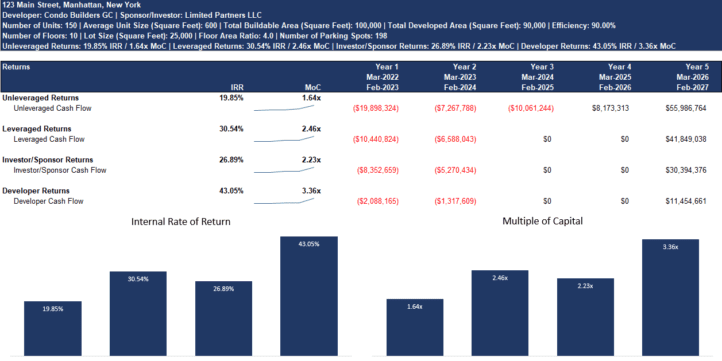
This model can be used to analyze the financial return of a for sale condo development project with parking where units and parking spots are sold through the construction process.


Video Overview:
For Sale Condo with Parking Development, Construction, and Sales Model with Up to 3 Tier Phasing and S-Curve Application with Waterfall Distribution with Return of Capital, Preferred Return, & 3 Tier Promote Structure.
This model can be used to analyze the financial return of a for-sale condo development project with parking where units and parking spots are sold through the construction process.
The model is developed to support a 3 phase construction schedule. This means that the project is built and sold through a phasing process. The model is dynamic only to use 1 or 2 phases if 3 phases are more than needed for your application. The model allows for an analysis period of up to 5 years.
The model allows for general project assumptions (unit count, parking spot count, gross developable square feet/meters, efficiency, floor area ratio, etc.) as well as unique user assumptions for the land acquisition and financing, construction phasing, construction costs, construction financing and draws, sale assumptions including velocity phasing, as well as a full return waterfall with 3 tier, promote structure including a return of capital and preferred return.
The model includes the ability to straight-line construction hard and soft costs or apply an s-curve. It has been proven to be a more accurate representation of construction cost outlays as they follow a sigmoidal curve.
The model is driven by a variety of user inputs, such as:
– Property Information: Inputs are available for general reporting information, such as the property name, address, and other geographical features, and who the developer and investors/sponsors will be. This section includes crucial information that will drive the analysis, such as unit count, total buildable area, total developed area, number of floors, floor area ratio, and number of parking spots.
– General Assumptions: This section includes organizational inputs, such as the analysis date for user version control, currency, and units of measure. The closing date input is a crucial input that drives the starting point for the beginning of capital outlays for the land acquisition.
– Land Acquisition & Financing Assumptions: This section of inputs drives the land acquisition costs and the financing of the land acquisition. Users provide the land price per square foot/meter, the closing costs as a percentage of the land price, the loan to value of the debt financing on the land acquisition, and the interest rate that will be paid on the land.
– Construction Assumptions: This section of assumptions drives the construction costs and capital outlay timing. The construction timing assumptions include the start date and duration of the construction as well as the expense distribution (straight-line or s-curve) for the capital outlays. The construction financing assumptions include the percentage of units to be pre-sold before the construction debt can begin being drawn as well as the interest rate on the construction debt. The construction cost assumptions provide the user inputs for hard, soft, FF&E, and customer acquisition costs per square foot/meter basis. This section of the model will show the costs on a per unit and aggregate basis. Please note that the parking spot costs are rolled into the per square foot/meter costs as costs are on a gross basis.
– Sale Assumptions: This section drives the revenues of the model and provides assumptions for a starting condo price per square foot/meter as well as starting parking spot price. There is also an input for a sales price growth on an annual basis, which flows into the model beginning month 2 on a monthly pro-rata basis. The payment schedule assumptions in this section provide the timing of the revenue cash flows from initial deposits, construction phase completion deposits, and the final certificate of occupancy payment for the outstanding balance.
– Selling Phase Assumptions: This section provides the phased selling assumptions for each phase (1-3) of the project. If your use case does not require 3 phases, the model will calculate on less phases if you make all sales through the inputs within 1-2 phases, whatever your specific use case requires. Inputs for each phase in this section include the duration of the selling/construction phase in months, the number of condo units sold per month, and the number of parking spots sold per month. The model will calculate the remaining number of condo units and parking spots to be sold in subsequent phases to ensure all condo units and parking spots are sold within the analysis period.
– Investment Assumptions: This section is for inputs that drive the equity contributions from the sponsor/investor as well as the development partner. This section also includes the promoted structure of the project. The waterfall promotes structure includes a return of capital, preferred return, and then a 3-tier structure, all of which are customizable to your specific use case.
This model is a useful tool in determining the returns and financial feasibility of a condo and parking development project.
Similar ProductsOther customers were also interested in...


 Eastwich Advisors
Multifamily Rehab Model (Includes Investor Returns...
Introducing the Multifamily Rehab Flip Model with Investor Returns Waterfall - a comprehensive tool ... Read more

 Jair
Real Estate – Multiphase Land Development
Raw land development projects: The model is specifically designed for analyzing and evaluating the f... Read more

 eFinancialModels
Real Estate Financial Model Templates Package
This is a collection of ready-made Excel financial model templates for real estate businesses and it... Read more
 JILL LIU
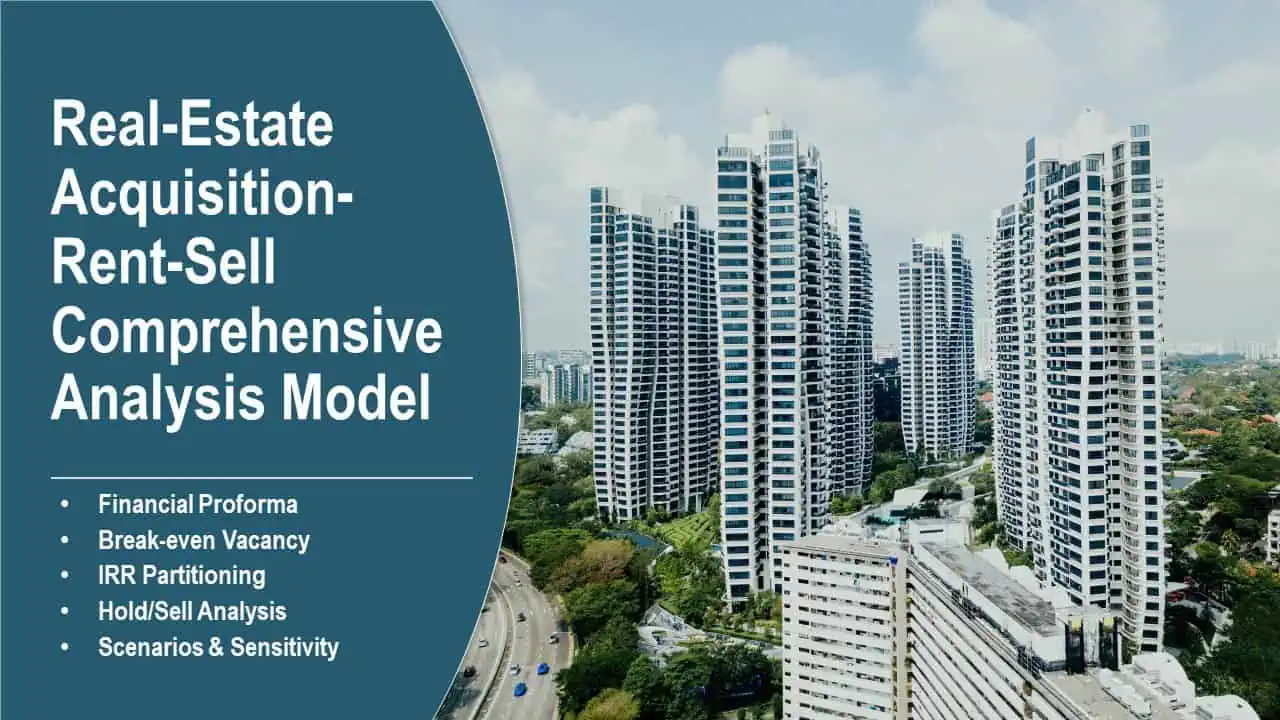
Real Estate Acquisition-Rent-Sell Comprehensive An...
An integrated, dynamic and ready-to-use Real Estate Acquisition-Rent-Sell Comprehensive Analysis Mod... Read more
 Andreas
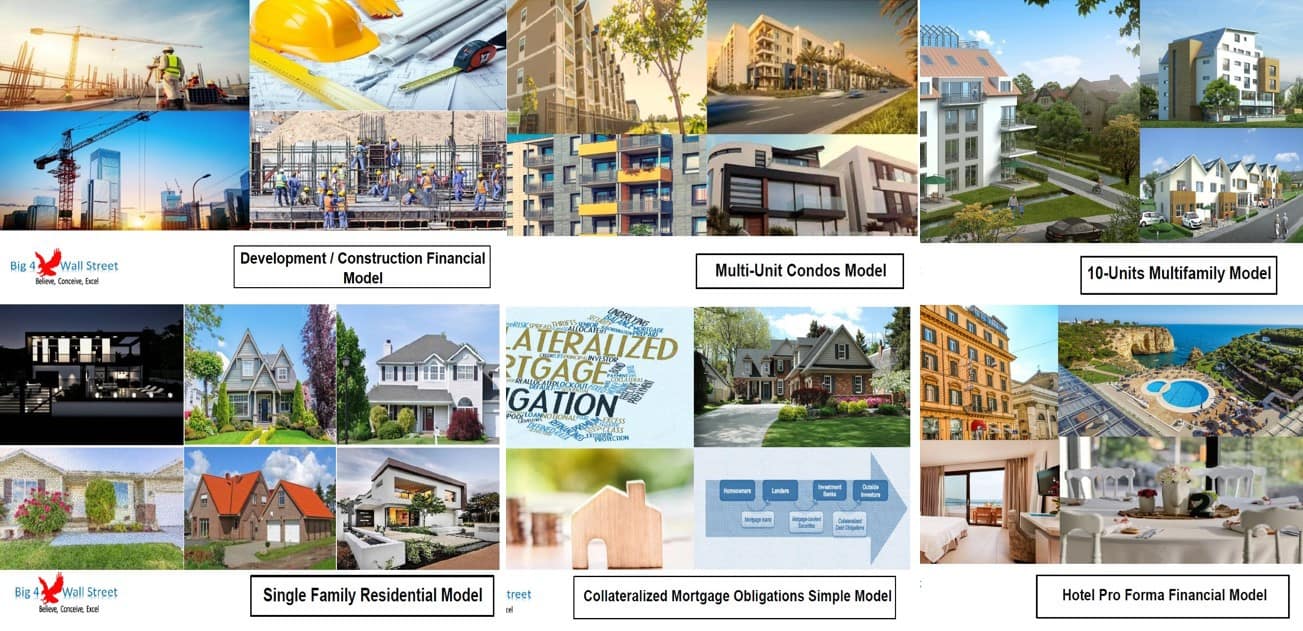
Real Estate Bundle 2 (6 models)
Planning to start a real estate endeavor but don’t know the financial implications of your investm... Read more
 Giorgos
Prefabricated Buildings Manufacturer – 10 Ye...
Financial model presenting a development scenario of a Prefabricated Buildings Factory including con... Read more

 anthony
Acquisition Model for Commercial Property
This is the Quintessential Commercial Property Acquisition Model that allows you to compare up to 20... Read more
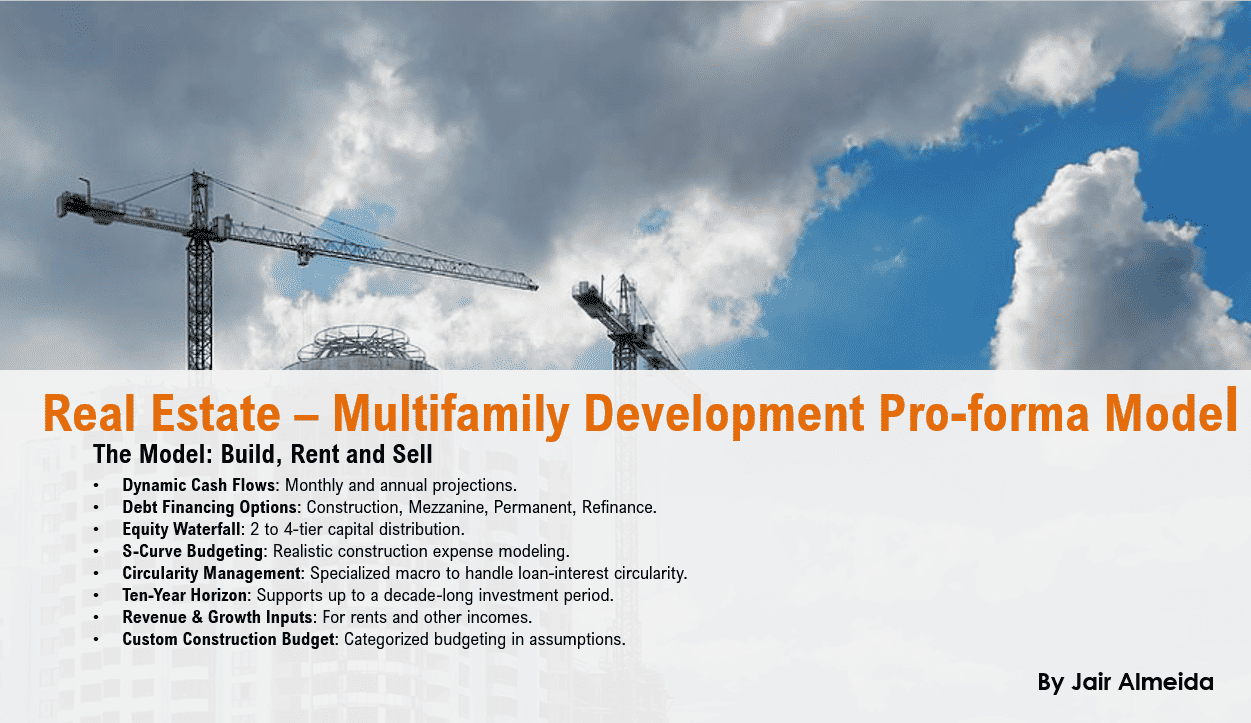
Real Estate Multi-Family Development Excel Model
Real Estate Financial Model to evaluate a development project, with Equity Waterfall and Advanced Sc... Read more
You must log in to submit a review.