
0 ITEMS

Naturopathy Center Financial Model Excel Template
The Naturopathic Clinic Financial Model Template helps practitioners, founders, consultants, and business planners turn a clinic idea into a structured financial forecast. Instead of starting with a blank spreadsheet, users can work from a ready-to-use model designed around the economics of a natural health clinic, including practitioner capacity, treatment pricing, patient volume, utilization, staffing, operating expenses, startup investment, cash flow, and profitability. It is built to support both new clinic launches and existing practices evaluating expansion, additional practitioners, new services, or improved financial controls. This template is especially useful for entrepreneurs preparing a business plan, clinic owners seeking funding, analysts reviewing a wellness business concept, and consultants building financial projections for clients. The model helps connect revenue assumptions with the practical realities of operating a naturopathic clinic, such as treatment capacity, practitioner schedules, supplement or wellness service revenue, rent, marketing, payroll, equipment, software, and administrative costs. By adjusting the editable inputs, users can see how changes in pricing, patient demand, utilization rates, or staffing affect cash flow, EBITDA, break-even timing, and long-term financial performance. The Naturopathic Clinic Financial Model supports financial planning and decision-making by bringing key outputs into a clear, organized structure. Users can review projected revenue, operating expenses, payroll, profit and loss, cash flow, investor returns, and performance metrics across a multi-year planning horizon. It also helps identify whether the clinic has enough startup capital, how long it may take to become profitable, and which assumptions have the greatest impact on results. This makes the template practical for internal budgeting, lender discussions, investor presentations, and strategic planning. Because the model is fully editable and compatible with Excel and Google Sheets, it can be adapted to different clinic sizes, service mixes, pricing strategies, geographic markets, and growth plans. Whether you are launching a solo naturopathic practice, building a multi-practitioner wellness clinic, adding nutrition or acupuncture services, or preparing a professional funding document, this financial model template gives you a structured way to test assumptions, reduce guesswork, and make more informed decisions before committing capital.
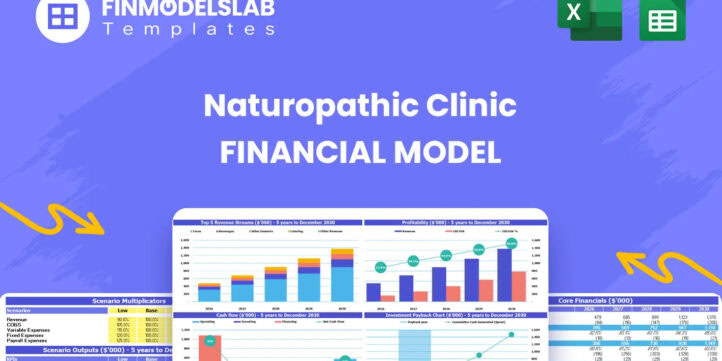


Financial Model Overview
The Naturopathic Clinic Financial Model Financial Model Template is a ready-to-use planning tool created for entrepreneurs, practitioners, clinic owners, consultants, and analysts who need a structured way to forecast the financial performance of a naturopathic clinic. It brings together the main drivers of a natural health practice, including practitioner capacity, treatment pricing, patient utilization, revenue streams, payroll, operating expenses, startup costs, cash flow, investor returns, and performance metrics. The template is designed to help users move beyond rough estimates and build a more credible financial plan for launching, funding, managing, or expanding a clinic. Because the model is editable, users can adapt the assumptions to match their own services, team structure, market, pricing, and growth strategy while still benefiting from a professionally organized framework.
All-in-One Dashboard
The all-in-one dashboard gives users a central view of the clinic’s most important financial inputs and outputs in one place. For a naturopathic clinic, this means users can quickly review assumptions such as treatment pricing, practitioner count, utilization rates, revenue growth, operating costs, EBITDA, cash flow, and funding needs without searching through multiple tabs or disconnected calculations. The dashboard helps summarize the model’s results so users can understand whether the clinic is financially viable, how much capital may be required, and how the business performs over time. It is especially useful for founders and clinic owners who want a fast, practical way to monitor the impact of changes in the model. By connecting core assumptions to key financial outputs, this section supports business planning, budgeting, stakeholder discussions, and management decision-making. It also gives non-financial users a more accessible way to interpret the forecast and focus on the numbers that matter most.
Low, Base, and High Scenario Analysis
The low, base, and high scenario analysis section allows users to test how the naturopathic clinic may perform under different operating conditions. The base case can reflect the expected plan, while the low case may assume weaker patient volume, slower ramp-up, lower utilization, or higher expenses, and the high case may reflect stronger demand, better pricing, or faster practitioner productivity. This component is useful because clinic performance is highly sensitive to patient bookings, treatment frequency, practitioner capacity, payroll structure, marketing effectiveness, and rent obligations. By comparing different outcomes, users can assess risk, identify the level of funding needed in a conservative scenario, and understand the upside if the clinic performs better than expected. The scenario analysis also helps founders prepare more robust business plans because it shows lenders, investors, and partners that the user has considered uncertainty rather than relying on a single optimistic forecast. For internal decision-making, it provides a structured way to evaluate pricing changes, hiring timing, marketing budgets, and expansion options before committing resources.
Professional Charts
The professional charts section turns financial projections into visual outputs that are easier to understand, present, and discuss. Instead of relying only on rows of numbers, users can review visual trends for revenue growth, profitability, cash balance, EBITDA, break-even progress, and other key performance measures. For a naturopathic clinic, this is valuable because stakeholders often need to see how the clinic develops from launch through ramp-up, stabilization, and potential expansion. Charts can help highlight the early investment period, the point at which revenue begins covering operating costs, and the long-term impact of increasing practitioner utilization or adding services. This component is useful for investor presentations, bank meetings, internal planning sessions, and business plan documents because it communicates the financial story clearly and professionally. It also helps users spot patterns that may be harder to see in detailed financial statements, such as seasonal cash pressure, margin improvement, or revenue concentration across service lines.
ROE Components and DuPont Analysis
The ROE components and DuPont analysis section helps users understand the drivers behind return on equity rather than looking at a single return figure in isolation. This component can break down performance into profitability, asset efficiency, and leverage-related factors, helping users see how the clinic generates returns from the capital invested in the business. For a naturopathic clinic, this is particularly helpful when evaluating whether the business is using its build-out costs, equipment, working capital, and staffing investment effectively. Inputs may include net income, equity invested, revenue, assets, and expense structure, while outputs may show how margins, asset turnover, and financing choices influence overall return. This type of analysis is useful for investor discussions because it demonstrates whether returns are being driven by sustainable operations or by changes in financing assumptions. It also helps owners compare strategic choices, such as whether to expand treatment rooms, add practitioners, invest in diagnostic equipment, or increase marketing spend, by linking those decisions to longer-term equity returns.
Revenue Inputs
The revenue inputs section is where users define the commercial assumptions that drive the clinic’s top line. For a naturopathic clinic, these inputs may include the number of naturopaths, nutritionists, acupuncturists, or other practitioners, the number of treatments or consultations each provider can deliver per month, expected utilization rates, average pricing per service, ramp-up timing, and potential recurring or add-on revenue. This section is important because the financial model’s revenue forecast depends on practical operating capacity rather than generic growth percentages alone. Users can test how hiring another practitioner, increasing utilization, adjusting session pricing, or expanding into new services affects monthly and annual revenue. The outputs from this section help generate sales forecasts, revenue by service line, gross profit, cash flow, and profitability projections. For business planning and funding, clear revenue assumptions make the forecast more defensible because users can explain exactly how patient volume and service capacity translate into income.
Bank-Ready Reports
The bank-ready reports section organizes financial outputs in a format that is easier to share with lenders, investors, advisors, and other stakeholders. These reports may include projected profit and loss, cash flow statement, balance sheet, funding needs, debt service capacity, profitability metrics, and summary financial tables. For a naturopathic clinic seeking startup financing or expansion capital, this component is valuable because lenders usually want to understand how borrowed funds will be used, whether the clinic can generate enough cash to cover obligations, and when the business is expected to stabilize. The model helps users present a structured financial case rather than a collection of disconnected assumptions. Bank-ready reporting also supports business plan submissions, grant applications, internal board reviews, and discussions with potential partners. By providing organized financial outputs, this section helps users communicate the clinic’s economics with greater clarity and professionalism, improving the quality of funding conversations and strategic decisions.
Revenue Breakdown
The revenue breakdown section provides a more detailed view of how income is generated across the clinic’s different revenue streams. A naturopathic clinic may earn revenue from naturopathic consultations, follow-up appointments, nutritionist sessions, acupuncture treatments, wellness packages, diagnostic services, group programs, supplements, or other complementary health offerings. This component helps users separate each revenue stream so they can see which services contribute most to total sales and which may require different pricing, staffing, or marketing strategies. Inputs may include price per service, monthly volume, practitioner availability, utilization, growth assumptions, and product margins where applicable. Outputs can show revenue by category, monthly and annual trends, and the relative contribution of each service line. This is useful for planning because not all clinic revenue has the same margin, capacity requirement, or growth potential. Understanding the revenue mix allows owners to prioritize high-value services, identify underperforming offerings, and build a more balanced and resilient clinic model.
KPI Dashboard and Performance Benchmarks
The KPI dashboard and performance benchmarks section helps users evaluate the clinic’s performance through practical operating and financial metrics. These may include revenue per practitioner, utilization rate, average revenue per treatment, gross margin, EBITDA margin, payroll as a percentage of revenue, patient capacity, cash runway, payback period, and return metrics. For a naturopathic clinic, KPIs are especially useful because they translate the financial forecast into operational targets that can be monitored over time. Users can compare projected performance against internal goals or relevant industry benchmarks to assess whether assumptions are reasonable. This component supports decision-making by showing where the clinic may need improvement, such as low utilization, excessive staffing costs, weak margins, or insufficient cash reserves. It is also valuable for investor and lender presentations because benchmarks add context to the forecast. Rather than simply showing revenue and profit, the KPI dashboard explains how efficiently the clinic is expected to operate and whether the business model is improving as it scales.
Startup Cost Planning
The startup cost planning section organizes the initial investment required to prepare the naturopathic clinic for launch. This may include clinic build-out and renovation, treatment rooms, medical and diagnostic equipment, office furniture, fixtures, lease deposits, licenses, legal fees, insurance setup, electronic health record software, website development, pre-opening marketing, initial inventory, and working capital reserves. This component is essential because many clinic founders underestimate how much cash is needed before revenue begins to stabilize. By separating one-time startup costs from ongoing operating expenses, the model helps users calculate total funding requirements more accurately and avoid early cash shortfalls. The outputs from this section can feed into the cash flow forecast, funding plan, balance sheet, and investor or lender reports. It is useful for budgeting, loan applications, capital planning, and launch readiness because it gives users a clearer picture of how much money must be secured before opening the doors and how those funds will be allocated.
Break-Even and Cash Flow Forecasting
The break-even and cash flow forecasting section helps users understand when the clinic may become financially self-sustaining and whether it has enough liquidity to reach that point. Break-even analysis can estimate the level of monthly revenue, patient volume, or practitioner utilization required to cover fixed and variable costs, including payroll, rent, marketing, supplies, administrative expenses, and other operating commitments. Cash flow forecasting then shows how money moves in and out of the business across each period, helping users identify months when the clinic may need additional working capital. This is particularly important for naturopathic clinics because the early months often involve high setup costs, marketing spend, staffing commitments, and gradual patient acquisition. The model can help users test how faster bookings, higher pricing, delayed hiring, or reduced overhead affect break-even timing and cash runway. For decision-making, this section is one of the most practical parts of the template because it shows whether the clinic can survive the ramp-up period and what actions may improve financial stability.
Profitability and Long-Term Planning
The Naturopathic Clinic Financial Model is built to support both short-term launch planning and long-term profitability analysis. Users can review how the clinic’s financial performance evolves over a multi-year period as practitioner utilization improves, service lines mature, patient retention strengthens, and operating leverage increases. The model helps connect revenue growth with the cost structure required to support that growth, including payroll, rent, supplies, marketing, administrative costs, software, insurance, and professional services. This allows users to evaluate whether the clinic can generate sustainable margins rather than simply growing sales. Long-term planning is also useful for determining when to hire additional practitioners, add treatment rooms, increase marketing, introduce premium wellness packages, or invest in new equipment. By reviewing projected profitability over several years, users can make more informed strategic decisions and prepare stronger materials for lenders, investors, or internal stakeholders.
Editable Assumptions and Customization
The template is designed to be fully editable so users can adapt the model to their own clinic concept and operating plan. A solo practitioner, a multi-provider naturopathic clinic, a wellness center with nutrition and acupuncture services, or an established practice planning expansion can each adjust the assumptions to reflect a different business structure. Users can modify pricing, provider schedules, monthly capacity, utilization rates, payroll, rent, marketing budgets, service mix, startup costs, capital expenditures, and growth assumptions. This customization is important because naturopathic clinics can vary widely by location, patient demographics, treatment philosophy, insurance or cash-pay model, and range of services. An editable structure allows users to create a more realistic forecast while still saving time compared with building a model from scratch. It also makes the model useful for ongoing planning, since assumptions can be updated as actual performance data becomes available.
Funding and Investor Preparation
The Naturopathic Clinic Financial Model helps users prepare for funding conversations by presenting the financial plan in a structured and professional way. Investors and lenders typically want to understand startup capital requirements, use of funds, revenue drivers, margins, cash flow, break-even timing, payback potential, and the risks behind the assumptions.
Similar ProductsOther customers were also interested in...

 HenrySheykin
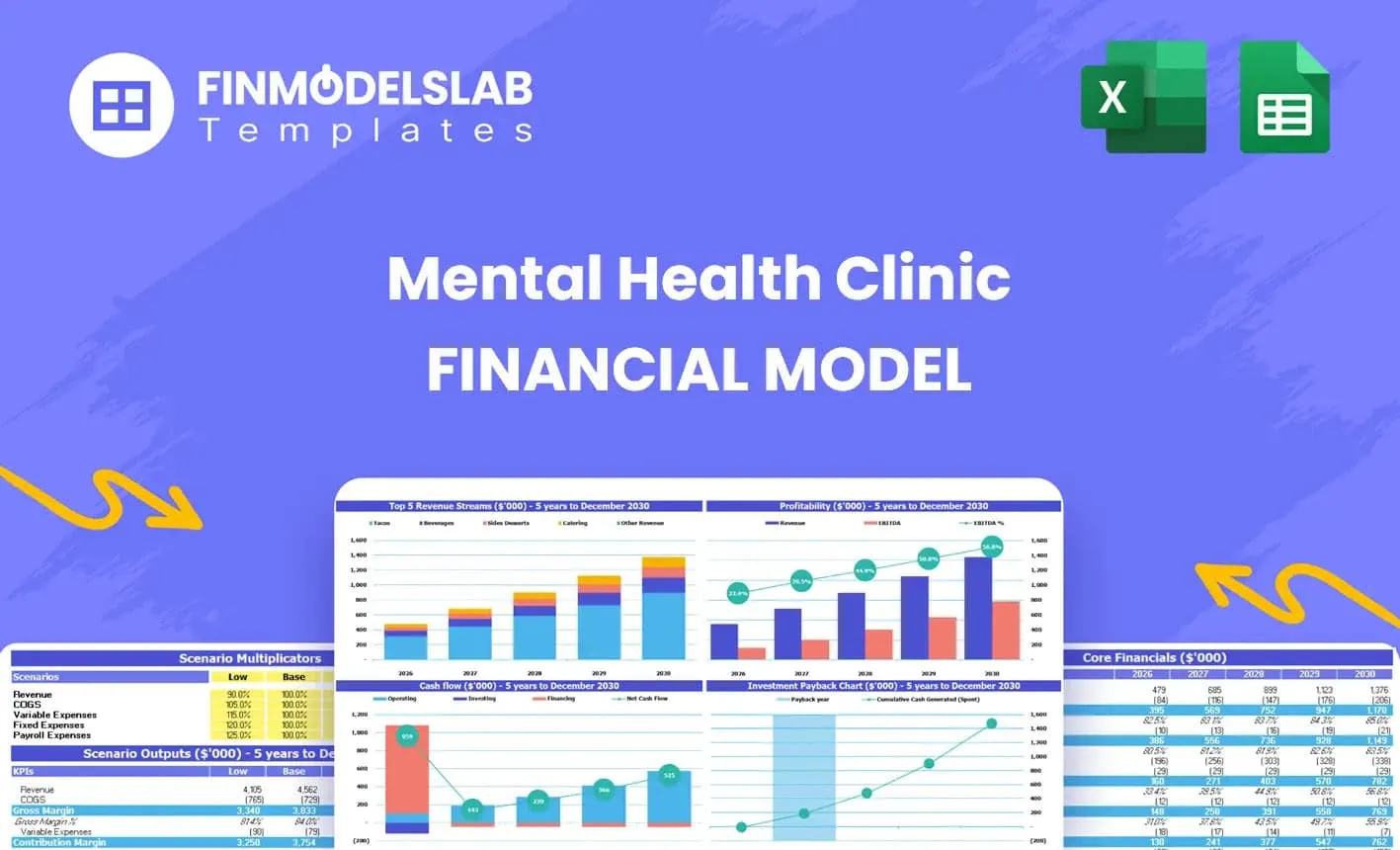
Mental Health Center Financial Model Excel Templat...
The Mental Health Clinic Financial Model helps users build a structured financial forecast for a the... Read more

Orthopedic Center Financial Model Excel Template
The Orthopedic Clinic Financial Model helps users build a structured five-year forecast for a capita... Read more
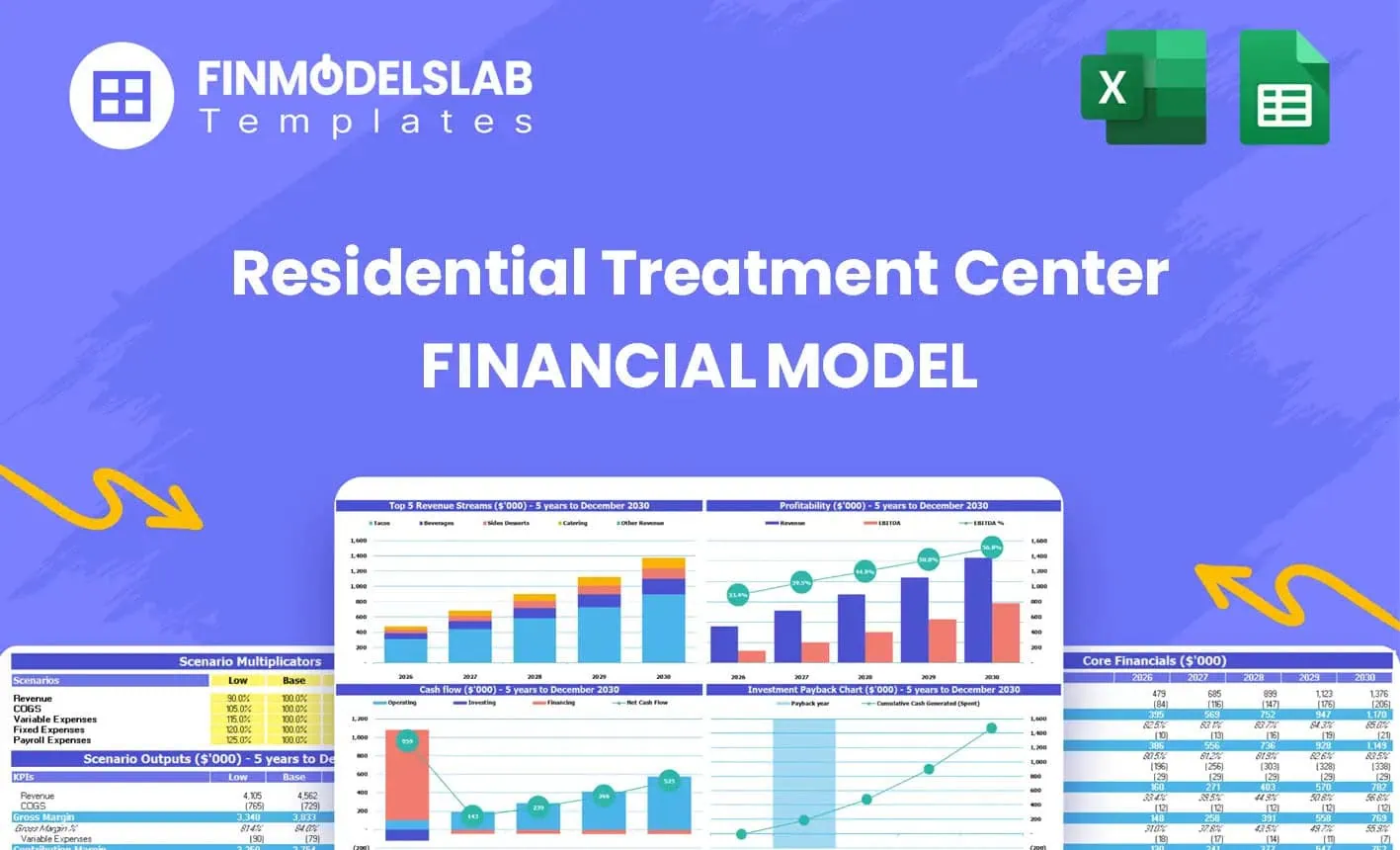
Drug Treatment Center Financial Model Excel Templa...
The Residential Treatment Center Financial Model helps users turn a live-in behavioral health, menta... Read more

Hypnotherapy Center Financial Model Excel Template
The Hypnotherapy Practice Financial Model helps users turn a wellness practice concept into a struct... Read more

Yoga Studio Financial Model Excel Template
The Yoga Studio Financial Model helps entrepreneurs, founders, studio owners, consultants, and finan... Read more
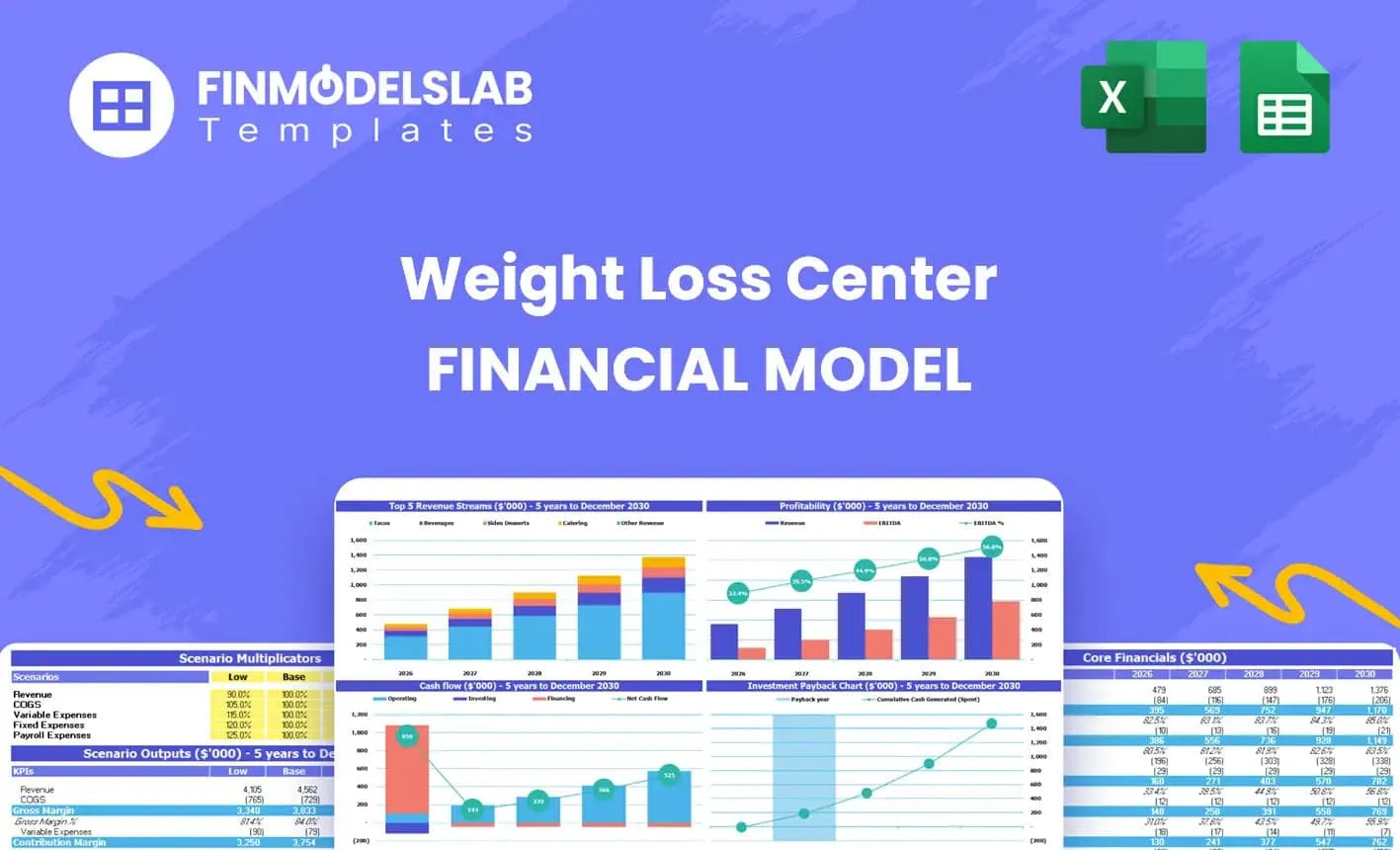
Weight Loss Center Financial Model Excel Template
The Weight Loss Center Financial Model helps entrepreneurs, clinic owners, consultants, and analysts... Read more

Sports Therapy Financial Model Excel Template
The Sports Medicine Clinic Financial Model helps users turn a clinic concept, launch plan, or expans... Read more

Tai Chi Center Financial Model Excel Template
The Martial Arts School Financial Model helps founders, school owners, consultants, and business pla... Read more
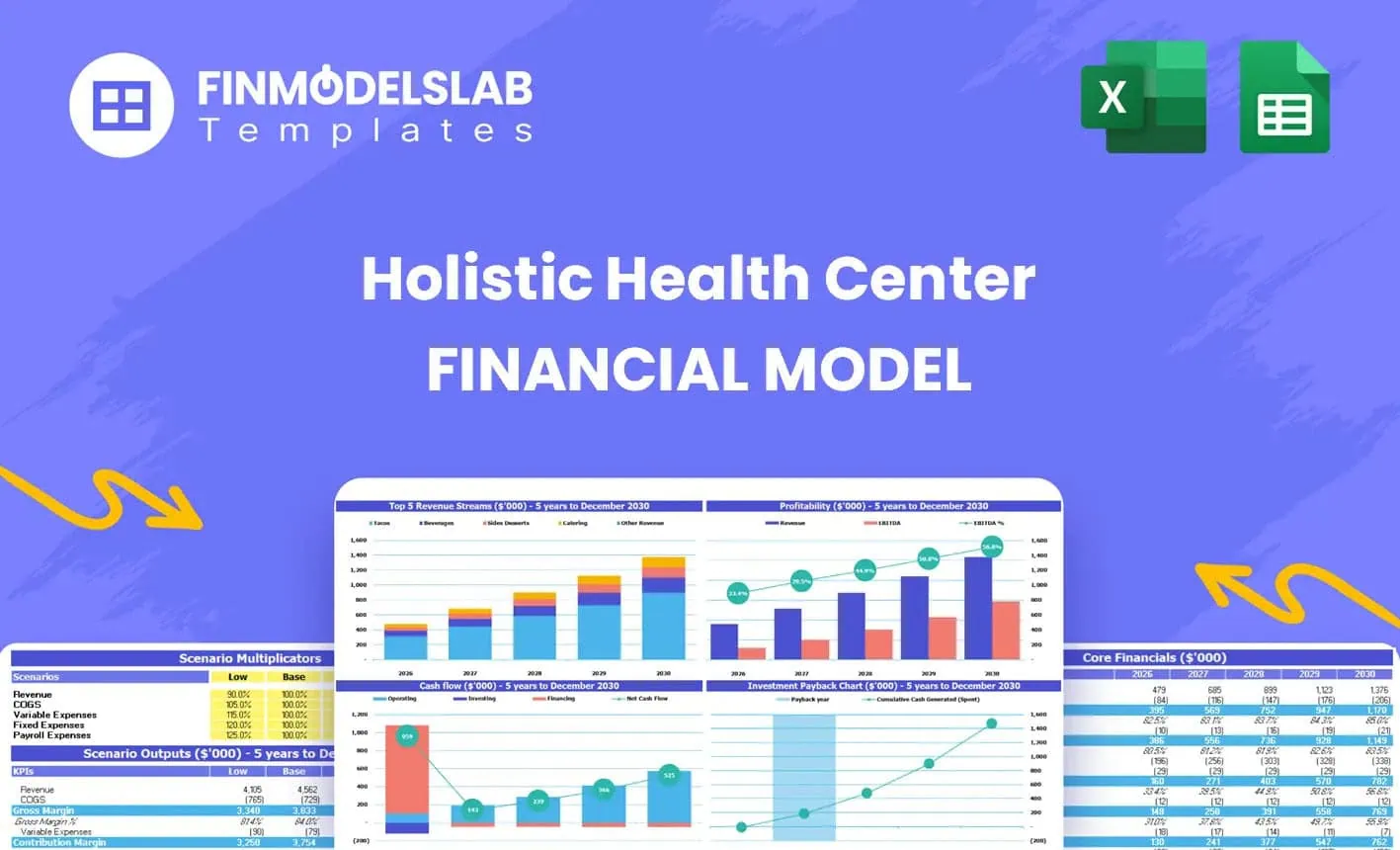
Osteopathic Center Financial Model Excel Template
The Holistic Health Center Financial Model helps entrepreneurs, founders, consultants, analysts, and... Read more

Oriental Medicine Center Financial Model Excel Tem...
The Traditional Chinese Medicine Clinic Financial Model helps entrepreneurs, clinic owners, consulta... Read more
You must log in to submit a review.