
0 ITEMS

Self Storage Acquisition REIT Financial Model Excel Template
The Self-Storage Facility Acquisition Financial Model Template helps buyers, investors, operators, consultants, and analysts evaluate the financial potential of acquiring, improving, and selling self-storage assets. Instead of starting with a blank spreadsheet, users get a ready-to-use structure designed around the economics of a self-storage acquisition strategy, including property purchases, renovation or construction budgets, sales timing, operating overhead, funding needs, and investor returns. The model is especially useful for people preparing a business plan, investment memo, lender package, acquisition analysis, or internal decision-making file. This template supports practical financial planning by connecting key assumptions to projected results. Users can adjust revenue assumptions, acquisition timelines, exit values, startup costs, operating expenses, payroll, capital investments, and financing assumptions to reflect a specific deal or portfolio strategy. Because self-storage acquisitions often involve significant upfront cash outflows before exit proceeds are realized, the model helps users understand the timing of cash needs, the pressure points in the forecast, and the level of capital required to stay funded through acquisition, renovation, stabilization, and sale. The model is built for both strategic planning and investor communication. It helps users review profitability, cash flow, break-even analysis, return metrics, revenue mix, operating performance, and scenario outcomes in a structured format. Entrepreneurs and founders can use it to test whether their acquisition concept is financially viable, while business owners and real estate professionals can use it to compare deal structures, evaluate downside risk, and present assumptions clearly to lenders, partners, and equity investors. Consultants and analysts can also adapt the template for client projects, market studies, acquisition proposals, or feasibility reviews. Fully editable and compatible with Excel and Google Sheets, the Self-Storage Facility Acquisition Financial Model Template saves time while still allowing detailed customization. It gives users a professional framework for evaluating a capital-intensive real estate strategy without building formulas, dashboards, and reports from scratch. By organizing assumptions, projections, and outputs in one model, it helps users make better decisions about pricing, deal timing, funding, staffing, expenses, and expected returns before committing capital.


Financial Model Overview
The Self-Storage Facility Acquisition Financial Model Template is a ready-to-use planning tool for evaluating the purchase, improvement, operation, and eventual sale of self-storage facilities. It is designed for entrepreneurs, acquisition teams, real estate investors, consultants, analysts, lenders, and business owners who need a structured way to understand whether a self-storage acquisition strategy can generate attractive returns. The model brings together acquisition costs, renovation budgets, revenue assumptions, operating expenses, payroll, funding requirements, exit timing, cash flow, profitability, and investor metrics in one editable forecast. This is especially useful for a fix-and-flip or value-add self-storage strategy, where significant cash may be invested long before sales proceeds are received. By replacing scattered assumptions with a connected financial model, users can evaluate specific deals, prepare funding materials, stress-test returns, and communicate the financial logic of the acquisition plan in a professional format.
All-in-One Dashboard
The all-in-one dashboard gives users a central place to review the most important inputs and outputs of the self-storage acquisition forecast. Instead of moving through multiple tabs to understand the model, users can quickly see key assumptions, projected revenue, cash flow trends, profitability indicators, capital needs, and return metrics in one organized view. This component is useful because a self-storage acquisition strategy has many moving parts, including purchase prices, renovation costs, sale values, overhead, debt or equity funding, and timing of exits. The dashboard helps translate those assumptions into a clear snapshot of the business case. Users can adjust major inputs and immediately see how changes affect projected performance, making it easier to compare acquisition targets, prepare investor discussions, or make internal decisions. For lenders and stakeholders, the dashboard also creates a concise summary that communicates the overall financial position without requiring them to interpret every underlying worksheet.
Low, Base, and High Scenario Analysis
The low, base, and high scenario analysis component helps users test how the self-storage acquisition plan may perform under different market and execution conditions. A base case can represent the expected acquisition, renovation, and exit plan, while a low case can reflect downside risks such as higher construction costs, delayed sales, lower property valuations, slower lease-up, or tighter financing. A high case can show the upside potential if acquisition pricing improves, renovation work is completed faster, exit multiples expand, or sales values exceed expectations. This component is especially important for self-storage investors because returns are often sensitive to capital timing and exit assumptions. By comparing scenarios side by side, users can evaluate whether the deal remains viable if costs rise or sales occur later than planned. It also helps founders, analysts, and consultants set realistic expectations for investors and identify which assumptions have the greatest impact on cash flow, profitability, break-even timing, and overall return on equity.
Professional Charts
The professional charts component converts the financial model’s key outputs into presentation-ready visuals. These charts may display revenue growth, expense trends, EBITDA movement, cash balance, cumulative investment, profitability, return metrics, or scenario comparisons over the forecast period. For a self-storage facility acquisition plan, charts are valuable because the financial story can be difficult to communicate through numbers alone. Many acquisition models show heavy early investment, negative cash flow during acquisition and renovation periods, and stronger results later when improved properties are sold. Visual charts make this timing easier to understand for investors, lenders, partners, and internal teams. Users can rely on these outputs for pitch decks, funding conversations, investment committee materials, or management reviews. The charts also help identify trends and pressure points, such as periods of peak cash deficit, years with meaningful EBITDA improvement, or differences between downside and upside cases. This turns the model into both an analytical tool and a communication asset.
ROE Components and DuPont Analysis
The ROE components and DuPont analysis section helps users understand what is driving return on equity rather than simply viewing a single final metric. Return on equity can be influenced by operating profitability, asset efficiency, financial leverage, acquisition timing, capital structure, and exit values. In a self-storage acquisition model, this analysis is useful because investors want to know whether returns are being generated through strong operating performance, effective use of capital, improved property values, or increased leverage. The component may break down relationships between profit margins, asset turnover, and equity financing to show how each factor contributes to the overall return profile. This gives users a deeper view of the acquisition strategy and helps identify areas for improvement. For example, if ROE is weak, the user can test whether lower purchase prices, better renovation efficiency, reduced overhead, faster exits, or different financing terms improve the outcome. This section supports investor analysis, deal review, and strategic decision-making by making the sources of return more transparent.
Revenue Inputs
The revenue inputs section allows users to define the assumptions that drive income in the self-storage facility acquisition model. For a value-add or fix-and-flip strategy, revenue may be tied to the sale of acquired and improved facilities, projected exit values, market appreciation, property-level improvements, timing of dispositions, and any operating income generated before sale. Users can input assumptions for acquisition schedules, renovation completion, sale dates, expected sales proceeds, and revenue timing by property or project. This component is important because revenue in a self-storage acquisition strategy may not occur evenly month by month. Large inflows may happen only when assets are sold, which makes timing critical for cash flow and profitability. By organizing revenue assumptions clearly, the model helps users test whether the expected exit values are sufficient to cover acquisition costs, construction budgets, payroll, overhead, financing needs, and investor return requirements. It also supports more credible planning because users can document the logic behind each revenue driver and adjust assumptions as new market data or deal information becomes available.
Bank-Ready Reports
The bank-ready reports component organizes the model’s financial outputs into a lender-friendly format that can support loan applications, financing discussions, or diligence packages. These reports may include projected income statements, cash flow forecasts, annual summaries, debt service considerations, capital requirements, funding gaps, profitability metrics, and key assumptions behind the acquisition plan. For a self-storage facility acquisition, this is especially useful because lenders often want to see how the borrower plans to fund acquisitions, manage renovation costs, withstand early cash deficits, and repay or refinance obligations. The reports help users present the financial story in a clear and professional way, showing not only the expected upside but also the timing and scale of cash needs. They can also help users prepare for lender questions about minimum cash position, project timelines, operating expenses, collateral value, and exit assumptions. By creating structured outputs, this component saves time and gives business owners, investors, and advisors a stronger foundation for financing conversations.
Revenue Breakdown
The revenue breakdown component provides a more detailed view of how projected income is built across revenue streams, properties, projects, or transaction events. In a self-storage acquisition model, this may include separate tracking for individual facility exits, interim rental income, ancillary revenue, management income, or other property-related proceeds depending on the user’s strategy. The value of this section is that it prevents total revenue from becoming a single unexplained number. Users can see which properties or revenue categories are responsible for the largest share of projected inflows and how those inflows are distributed across the forecast period. This is useful for identifying concentration risk, evaluating the importance of each acquisition, and understanding how a delayed sale or lower exit price could affect the whole plan. A detailed revenue breakdown also supports investor communication because it shows the mechanics behind top-line projections. Instead of presenting a high-level sales forecast, users can explain the timing, assumptions, and contribution of each revenue source in a way that is easier to review and defend.
KPI Dashboard
The KPI dashboard focuses on the performance metrics that matter most for a self-storage facility acquisition strategy. These may include internal rate of return, return on equity, equity multiple, payback period, EBITDA, cumulative cash flow, minimum cash position, total capital required, revenue growth, expense ratios, and other operational or investment indicators. This component helps users monitor whether the acquisition plan is meeting financial expectations and where the model may need adjustment. For example, if the payback period is too long or the minimum cash deficit is too large, users can revisit purchase prices, renovation budgets, exit timing, financing terms, or overhead assumptions. The KPI dashboard is also useful for benchmarking performance against internal targets or industry expectations. For founders, operators, consultants, and analysts, it provides a quick way to evaluate deal quality and investment readiness. For investors and lenders, it offers a concise view of the numbers they are likely to care about most when assessing risk, liquidity, profitability, and return potential.
Startup and Acquisition Cost Planning
The startup and acquisition cost planning component helps users estimate the capital required before and during the early stages of the self-storage acquisition strategy. This may include corporate startup expenses such as office setup, legal formation, technology, market research tools, initial professional fees, and administrative setup, as well as property-level costs such as purchase price, due diligence, closing costs, renovation budgets, construction work, permits, site improvements, and contingency reserves. Separating these costs is important because a self-storage acquisition company may need operating infrastructure before it begins generating meaningful revenue from property exits. This section helps users understand how much funding is required to launch the management platform, pursue acquisitions, complete improvements, and maintain operations through the investment period. It also supports budgeting and funding preparation by clarifying which costs are one-time setup expenses, which are tied to specific assets, and which may recur as the portfolio grows. With editable assumptions, users can adapt the model to a single-property acquisition, a multi-property rollout, or a broader acquisition pipeline.
Break-Even and Cash Flow Analysis
The break-even and cash flow analysis component helps users understand when the acquisition strategy begins to recover its cumulative investment and how much liquidity may be needed before that point. In self-storage acquisitions, break-even may depend less on steady monthly operating profit and more on the timing of property sales, renovation completion, and exit proceeds. This section can track cash inflows and outflows over time, including acquisition payments, construction costs, payroll, overhead, financing activity, and sale proceeds. It helps identify the month or year when cumulative cash inflows exceed cumulative costs, as well as the period of maximum cash deficit. This is critical for planning debt, equity, working capital, and contingency funding because a project can appear profitable on paper while still requiring substantial interim cash support. Users can use this component to test whether they have enough capital to execute the plan, whether acquisitions should be phased differently, whether renovation timelines need adjustment, or whether earlier exits are required to reduce funding pressure. For decision-making, this analysis gives a practical view of liquidity risk and the path to sustainable profitability.
File types:
Excel – Single-User: .xlsx
Excel – Multi-User: .xlsx
Similar ProductsOther customers were also interested in...


 HenrySheykin
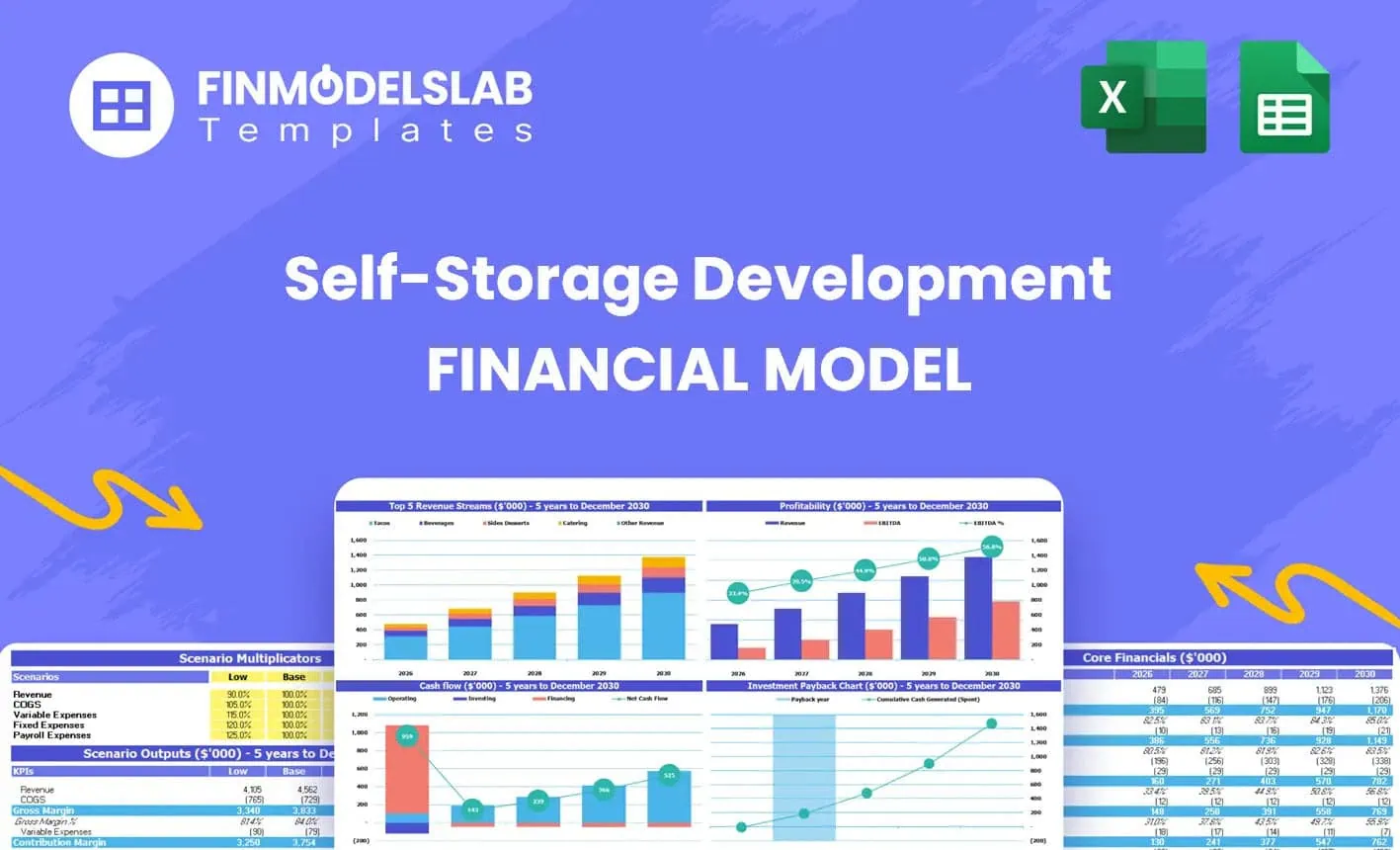
Self Storage Development REFM Financial Model Exce...
The Self-Storage Development Financial Model is a ready-to-use financial model template designed to ... Read more
 anthony
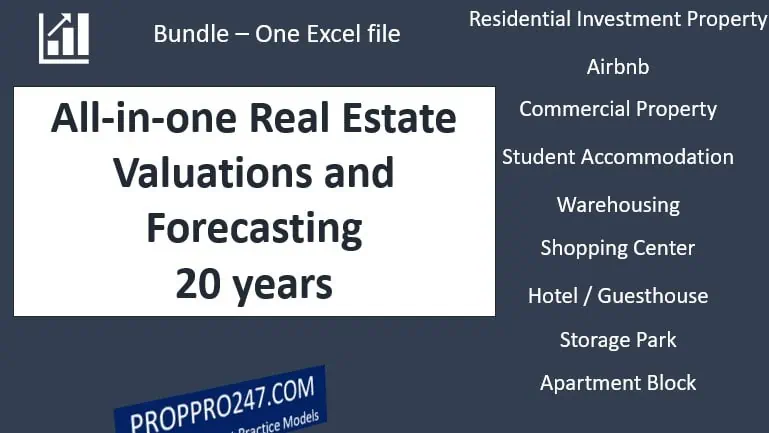
Real Estate Financial Models Excel Template –...
One Excel file for this bundle of Valuation and Financial forecasting models. Storage Parks, Hotels,... Read more

 Jason Varner
Real Estate Financial Model Bundle
This is a collection of financial model templates that provides the financial projections and valuat... Read more

 Giorgos
Self Storage Development – 10 Year Financial Mod...
Financial model presenting a development scenario for a Self Storage facility including construction... Read more
 Andreas
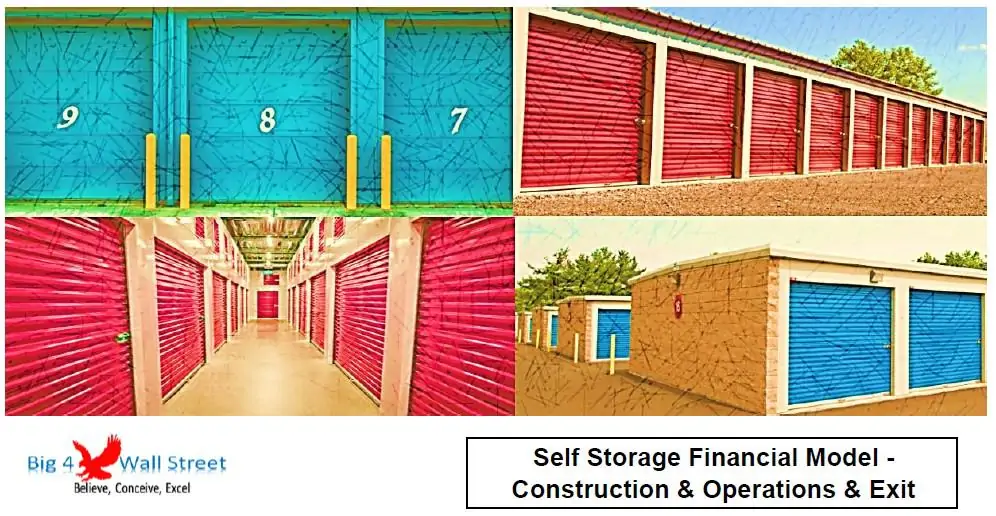
Self Storage Financial Model (Construction, Operat...
Considering investing in a self-storage facility? This might be an easier way for entry-level real e... Read more

Self Storage Acquisition – 10 Year Financial Mod...
10-Year financial model for a self-storage acquisition projecting revenue, operating expenses, and c... Read more

 David
David
Self Storage Business 10-Year 3 Statement Financia...
10 year rolling financial projection Excel model for a startup or existing business developing and o... Read more

 eFinancialModels
Self-Storage Financial Model and Opportunity Analy...
The Self-Storage Opportunity Analysis is focused to analyze the acquisition of a Self-Storage Proper... Read more
You must log in to submit a review.