
0 ITEMS

How to Protect Confidential Information Through a Non-Disclosure Agreement

Confidential information is essential for maintaining a competitive edge in many businesses, and protecting it requires careful planning.
- NDAs create a legally binding framework to prevent unauthorized disclosure of trade secrets, operational, and financial data.
- They come in two main types: mutual NDAs for reciprocal sharing and unilateral NDAs for one-way confidentiality.
- Key components include defining participants, scope of protected information, usage restrictions, duration, and legal remedies.
- Proper drafting and enforcement of NDAs help foster trust while safeguarding intellectual property and customer data.
- Regular review and employee education ensure NDAs remain effective and legally sound.
Understanding these core aspects helps you implement NDAs that effectively protect your business interests.
What is a Non-Disclosure Agreement?
A Non-Disclosure Agreement (NDA) is a legally binding contract between two or more parties. Its primary purpose is to prevent and protect sensitive information from unauthorized disclosure or use. Businesses typically use NDAs to safeguard proprietary information, trade secrets, and other valuable assets
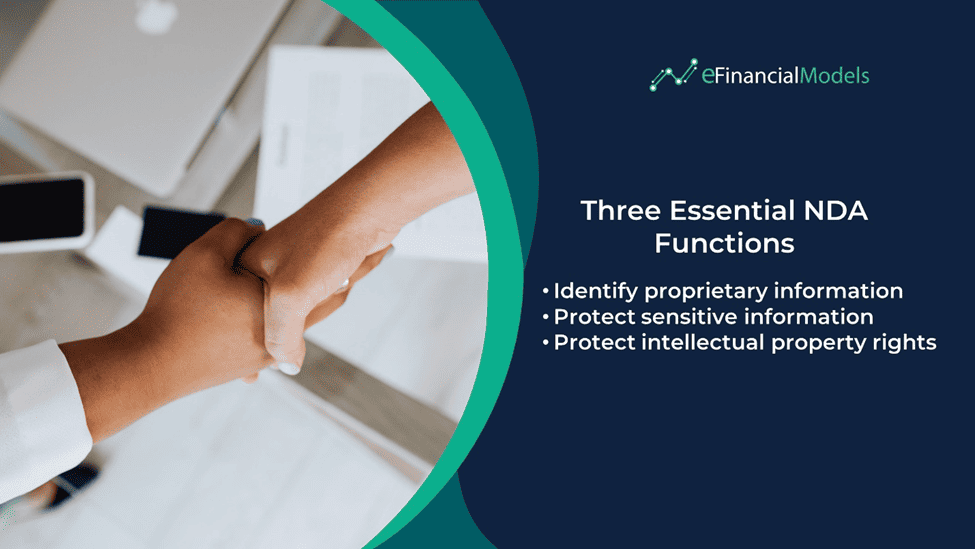
A non-disclosure agreement performs three essential functions:
- First, an NDA identifies proprietary information. It clearly defines the information that is considered confidential or proprietary.
- Second, an NDA protects sensitive information. Parties signing the agreement agree not to disclose confidential information other than the specified purposes.
- Third, an NDA protects intellectual property rights, including inventions and patents. When inventors or companies disclose their innovations to potential investors, collaborators, or employees, they may use NDAs to ensure that the recipients do not take the disclosed ideas and file for patents without authorization.
Two Types of Non-Disclosure Agreements
There are two primary types of NDAs: mutual non-disclosure agreements and unilateral non-disclosure agreements. Here’s an overview of each:
- Mutual Non-Disclosure Agreements (MNDA) typically involve two or more parties sharing confidential information with each other. In an MNDA, both parties agree not to disclose each other’s confidential information to third parties or use it for their benefit without the other party’s consent. This type of NDA is often used when there is a reciprocal exchange of sensitive information, such as during business partnerships, collaborations, mergers & acquisitions, or negotiations.
- Unilateral Non-Disclosure Agreements (UNDA) exist when only one party shares confidential information with another party, and the recipient must keep that information confidential. This type of NDA is commonly used when a company or individual shares proprietary or confidential information with employees, contractors, or potential business partners who do not need to disclose sensitive information in return.
The choice between a mutual or unilateral NDA depends on the parties’ specific needs and circumstances and the information flow’s direction.

Common Proprietary Information Protected by an NDA
The specific types of proprietary information that an NDA can protect can vary depending on the agreement’s wording and the needs of the parties involved. However, here are some common categories of proprietary information that NDAs typically aim to protect:
- Trade Secrets: This includes any confidential business information that provides a competitive advantage. Trade secrets can encompass a wide range of information, such as manufacturing processes, customer lists, pricing strategies, and formulas.
- Operational Information: This category may include details about business operations, supply chain processes, distribution methods, and any other proprietary methods used to run the business efficiently.
- Marketing Information: Companies may share marketing strategies, advertising plans, and market research data with partners or agencies. NDAs can prevent the unauthorized sharing of such information.
- Intellectual Property: This category includes patents, trademarks, copyrights, and any related information not public knowledge. NDAs can protect the disclosure of proprietary inventions, designs, software code, and creative works.
- Financial Information: NDAs can protect financial data such as revenue figures, profit margins, business plans, budget details, and investment information. It is especially important when discussing potential investments, mergers, or acquisitions.
- Customer Data: When a company shares customer lists, contact information, or other customer-related data with third parties, an NDA can help protect the confidentiality of this information.






















































Basic Elements of an NDA
The basic elements of an NDA typically include:
- Participants: This section identifies the parties involved in the agreement. The “Disclosing Party” is the entity or individual sharing confidential information, while the “Receiving Party” is the entity or individual receiving and agreeing to protect the confidential information.
- Inclusions & Exclusions: The NDA should specify what constitutes “confidential information” that is protected by the agreement. It may also include a section that outlines what information is not considered confidential or is excluded from the agreement. This helps clarify the scope of protection.
- Appropriate Uses of Information: This section defines how the Receiving Party can use the confidential information. It typically restricts the use to specific purposes or projects outlined in the agreement and may require the Receiving Party to use reasonable care to prevent unauthorized disclosure.
- Time Period: The NDA should specify the duration for which the confidentiality obligations will be in effect. It is often referred to as the “Term” or “Duration” of the agreement. It can be a specific number of years, months, or end upon the completion of a particular project.
- Remedies for Breach: In the event of a breach of the NDA, the agreement should outline the remedies available to the Disclosing Party. Common remedies include injunctive relief (to prevent further disclosure), damages (monetary compensation for losses), and other legal remedies available under applicable laws.
- Governing Law: The NDA should specify which jurisdiction’s laws govern the agreement. It determines which legal framework will interpret and enforce the NDA. Typically, this is the jurisdiction where the party initiating the NDA is based.
It’s essential to consult with legal professionals when drafting or entering into NDAs to ensure that the agreement is legally sound and protects confidential information. The specific terms and language may vary depending on the jurisdiction and the nature of the information being protected.

Sample Mutual Non-Disclosure Agreement Template

Safeguard Your Business Interest with NDAs
A well-drafted Non-Disclosure Agreement (NDA) is vital for safeguarding confidential information in today’s competitive business landscape. By establishing clear terms and expectations between parties, an NDA helps protect sensitive data and trade secrets, fostering an environment of trust and collaboration.
However, it is essential to remember that an NDA is only effective when used appropriately and in conjunction with other security measures. Regularly reviewing and updating your NDA, educating employees and partners about its importance, and enforcing its terms diligently will go a long way in ensuring the confidentiality of your valuable information.
With a strong NDA in place, you can confidently share and collaborate without fear, enabling your business to thrive in an environment of confidentiality and trust. From its clauses’ granularity to its diligent enforcement of its terms, an NDA is an indispensable tool for safeguarding your confidential information and ensuring long-term business success.
You might also like:
- How to Protect Confidential Information Through a Non-Disclosure Agreement
- 10 Tips to Develop a First Class Business Valuation Report
- 12 Funding Sources for Businesses and Startups
- Top 7 Questions to Ask Before Signing a Non-Disclosure Agreement
- 10 Best Practices in Financial Modeling
- 10 Main Elements of a Business Plan
- Financial Planning for Startups and Small Businesses
- Financial Statements – Definition, Uses, Contents and Templates
- Financial Model Templates Easy to Use
- How to Make Smart Decisions with 6 Key Financial Metrics?
- How Contribution Margin Analysis Can Drive Your Business to Financial Success
- How to Value a Business Using a Discounted Cash Flow Model
- Business Valuation Service
- Financial Model for Mobile App | Mobile App Business Plan
- Startup Financial Models
- How to Build a Capitalization Table
- Real Estate Financial Modeling in Excel
- Financial Projections Templates – The Easy Way
- How to Make a Startup Financial Plan for Fundraising?
- How to Secure Seed Financing?