0 ITEMS

Canada SaaS Market: $27.7B Today, $66B by 2031

Canada’s software-as-a-service market has crossed from emerging segment to structural pillar of the national digital economy — and the next five years will determine which vendors and investors capture the AI-driven second wave.
Key Takeaways
- Canada’s SaaS market reached US$27.7 billion in 2024 and is forecast to hit US$58.9 billion by 2030 at a 12.6% CAGR, making it the second-largest single-country SaaS market in North America (Grand View Research).
- 3 scenarios span US$54.5B (Bear, 9% CAGR) to US$79.2B (Bull, 16% CAGR) by 2031, with the Base case at US$66.3B — a US$25B spread driven by AI monetization, capital availability, and Canada–US trade.
- Shopify (US$11.56B), Constellation Software (US$10.07B), and OpenText (US$5.17B) anchor a roughly 2,000-company vendor ecosystem across 6 major hubs.
- 94% of Canadian SMBs call digital technology integral to their revenue strategy, ahead of the 87% global average (Sage, 2024).
- 85% of SaaS providers now use some form of usage-based billing as AI agents erode the traditional per-seat model.
- Quebec’s Law 25 imposes penalties up to C$25 million or 4% of global revenue — the strictest data-privacy regime in Canada and a de facto compliance baseline for all national vendors.
- Vertical SaaS grows 18–32% annually versus 12–15% for horizontal tools, making it the strongest risk-adjusted entry point for new market participants.
How Big Is Canada’s SaaS Market Right Now?

Canada’s SaaS market reached US$27.7 billion in 2024 and sits at roughly 6.9% of the global market, according to Grand View Research. That positions Canada as the second-largest single-country SaaS market in North America, behind only the United States.
SaaS is the largest of the three cloud service models in Canada, ahead of infrastructure-as-a-service (IaaS, meaning cloud computing power and storage) and platform-as-a-service (PaaS, meaning cloud development environments). The broader Canadian cloud-computing market was US$47.9 billion in 2024 and is projected to reach US$152.3 billion by 2030 at a 20.5% CAGR, with IaaS accelerating fastest as AI workloads scale. SaaS, however, remains the most strategically important layer because it is where enterprise workflows live.
The market’s 12.6% CAGR outpaces the broader Canadian enterprise-software market, which Market Research Future estimates at roughly US$28.2 billion in 2024 growing at about 10% annually. The gap reflects the ongoing shift from perpetual software licenses to subscription and consumption models — a transition that AI is now accelerating rather than slowing.
| Metric | 2024 | 2025 | 2030 | CAGR |
|---|---|---|---|---|
| Canada SaaS (US$B) | 27.7 | 32.5 | 58.9 | 12.6% |
| Canada Cloud (US$B) | 47.9 | 57.7 | 152.3 | 20.5% |
| Canada Enterprise Software (US$B) | 28.2 | 31.1 | 50.1 | ~10% |
| Canada share of global SaaS | 6.9% | — | — | — |
Source: Grand View Research; Market Research Future. 2025 values are eFinancialModels Research estimates.
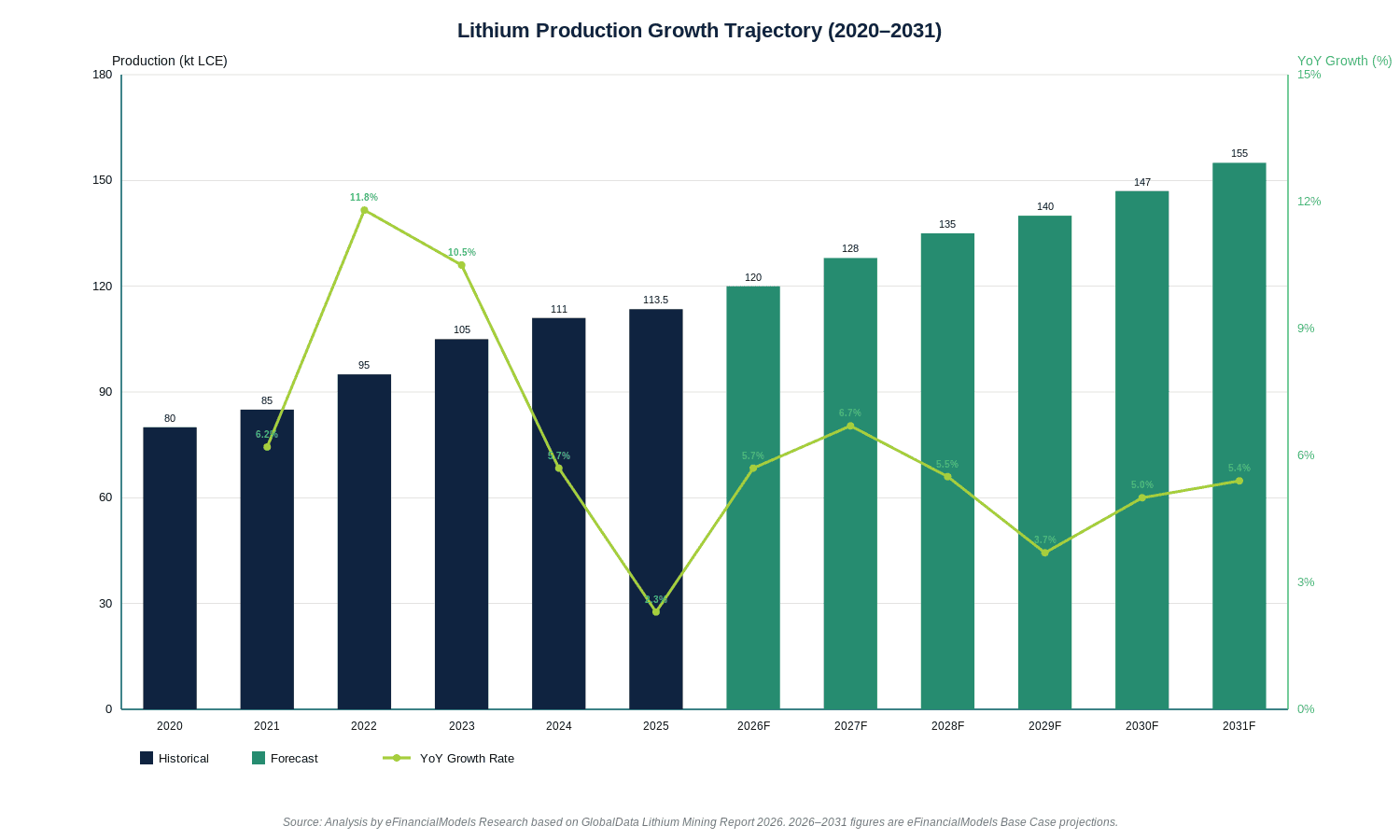
Bear case: US$54.5B at 9% CAGR. Base case: US$66.3B at 12.6%. Bull case: US$79.2B at 16%. All from a 2025 base of US$32.5B.
SaaS by Application Segment
Within the application layer, customer relationship management (CRM) — software that manages sales pipelines and customer interactions — is the largest segment at roughly 26% of SaaS spending, or about US$8.5 billion in 2025. Content and collaboration tools are the fastest-growing horizontal category at an estimated 22% CAGR, driven by persistent hybrid work. Enterprise resource planning (ERP), human capital management (HCM), and business intelligence (BI) each command high-single-digit to mid-teens shares.
The most strategically important slice is vertical SaaS: industry-specific platforms for legal, healthcare, construction, and financial services. Vertical software grows 18–32% annually versus 12–15% for horizontal tools globally, and it is precisely where Canadian vendors — led by Constellation Software’s portfolio of more than 800 vertical businesses — hold their deepest competitive advantage.
| Segment | Share | 2025 Size (US$B) | Growth Note |
|---|---|---|---|
| CRM | 26% | 8.5 | Largest; sales & marketing automation |
| Content & Collaboration | 18% | 5.9 | Fastest horizontal (~22% CAGR) |
| ERP | 14% | 4.6 | Mid-market digitization |
| HCM | 10% | 3.3 | Workforce management & compliance |
| BI & Analytics | 9% | 2.9 | Real-time decisioning |
| Vertical / Other | 23% | 7.5 | Legal, healthcare, fintech, dev tools |
Source: eFinancialModels Research based on Mordor Intelligence segment data applied to the Canadian 2025 base of US$32.5B.
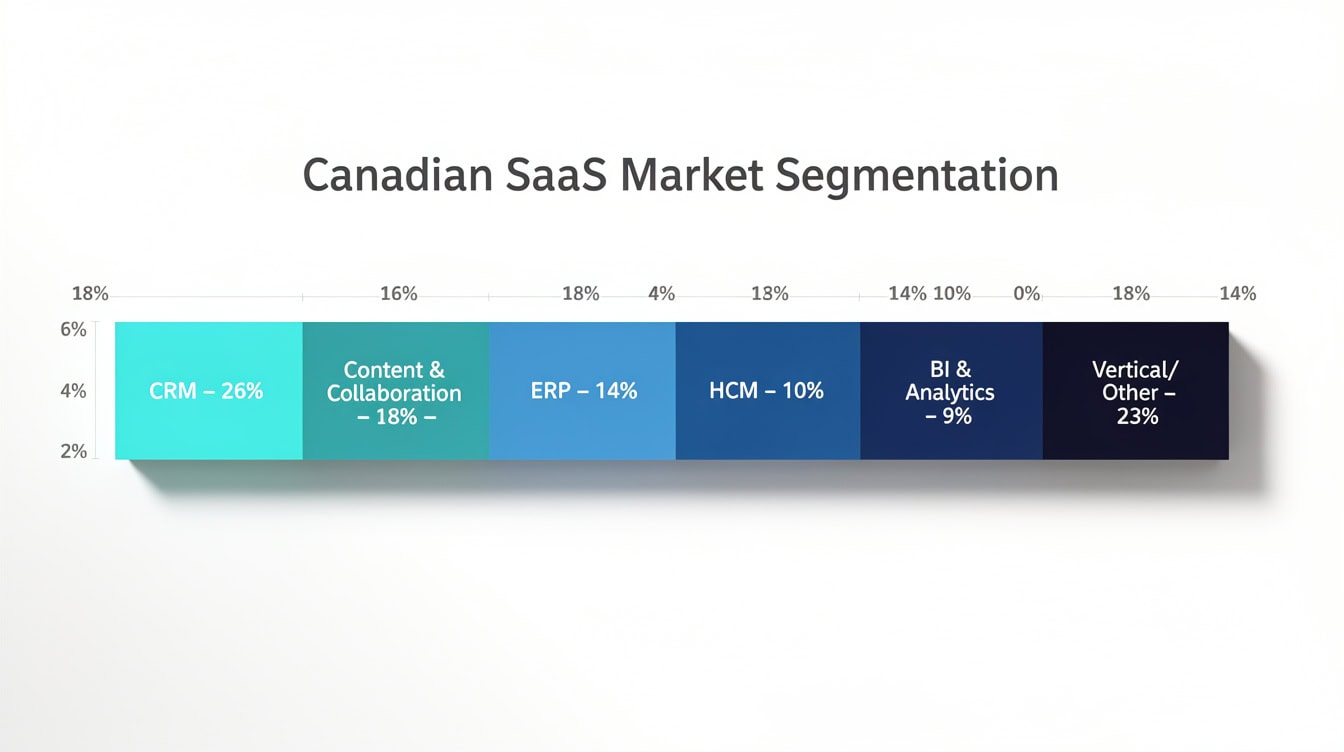
CRM leads at 26% of Canadian SaaS spending; vertical and industry-specific software (23%) is the fastest-growing strategic segment.
Canada’s SaaS Vendor Ecosystem: 2,000 Companies, 3 Champions
Canada hosts approximately 2,000 SaaS companies, ranging from globally listed champions to venture-backed scale-ups. Three companies anchor the top of the market and define its global profile.
Shopify (Ottawa) reported US$11.56 billion in FY2025 revenue, up 30% year-over-year, making it Canada’s largest pure software platform. Constellation Software (Toronto) generated US$10.07 billion in 2024 through a disciplined roll-up of more than 800 vertical-market-software businesses — one of the world’s most successful serial-acquisition models. OpenText (Waterloo) posted US$5.17 billion in FY2025 in information management and cloud content services. Below them sit scale-ups including Lightspeed Commerce (US$1.08 billion FY2025), Coveo (US$133 million FY2025 in AI search), Docebo (enterprise learning), and Kinaxis (supply-chain planning).
Geography concentrates talent and capital. CBRE’s 2025 Scoring Tech Talent report ranks Toronto third in North America, with Waterloo Region rising 11 spots to seventh, Vancouver tenth, Ottawa eleventh, Montréal fifteenth, and Calgary seventeenth. Toronto, Vancouver, and Montréal together hold about 62% of Canada’s artificial-intelligence talent, according to the same study. Toronto captures roughly 40% of Canadian venture capital; Montréal accounts for about 22% and anchors world-class AI research through the Mila institute.
Canadian venture investment ran at about C$6.5 billion across 426 deals through the first three quarters of 2024, with the ICT sector taking roughly 55% of dollars, according to the Canadian Venture Capital and Private Equity Association (CVCA). The first nine months of 2025 saw C$4.9 billion across 386 deals, with early-stage rounds notably lagging — a funding environment that now rewards capital efficiency over growth-at-all-costs.
Shopify leads at US$11.56B FY2025 revenue (+30% YoY), followed by Constellation Software at US$10.07B and OpenText at US$5.17B.
Demand Drivers: Who Is Buying SaaS in Canada?
Canadian demand for SaaS is broad, structural, and increasingly AI-led. By 2025, roughly 85% of Canadian enterprises were operating cloud-first, and about 90% of small and medium-sized enterprises (SMEs) were using cloud services for functions such as accounting, CRM, payroll, and marketing automation, according to industry surveys compiled by Made in CA.
The most telling demand signal comes from smaller businesses. Sage’s 2024 Canadian SMB digital-adoption survey found that 94% of Canadian SMBs consider digital technology integral to their revenue strategy, compared with an 87% global average. That 7-percentage-point gap signals that Canadian SMBs are not just adopting tools — they are building revenue strategies around them, which supports durable SaaS demand even through softer macro conditions.
Demand splits by buyer size: large enterprises hold about 62% of cloud spending in 2025, but SMEs are the faster-growing cohort, with projected CAGRs in the high teens. By industry, financial services, retail and e-commerce, healthcare, the public sector, and professional services lead adoption. Financial-services and healthcare buyers place a premium on data residency and Law 25-grade privacy, advantaging vendors that host in Canada. Retail and hospitality demand is well served by domestic platforms such as Shopify and Lightspeed, while the public sector is a growing, residency-sensitive buyer as sovereign-cloud capacity comes online.
| Demand Indicator | Value | Source |
|---|---|---|
| Enterprises cloud-first (2025) | ~85% | Made in CA |
| SMEs using cloud services | ~90% | Made in CA |
| SMB workloads in cloud (2024) | 63% | Made in CA |
| SMB data in cloud (2024) | 62% | Made in CA |
| SMBs: digital is revenue-critical | 94% (vs 87% global) | Sage (2024) |
SaaS Pricing and Unit Economics: The Per-Seat Model Is Breaking
Per-seat subscriptions remain the dominant pricing model in Canada, but usage- and outcome-based pricing are gaining share rapidly. Roughly 85% of SaaS providers now use some form of usage-based billing, and about 59% combine two or more pricing metrics, according to 2026 industry pricing surveys. The rise of AI agents — software programs that act as autonomous users but are not human seats — is the single biggest force reshaping the model, pushing vendors toward consumption and outcome pricing.
Unit economics (the per-customer financial metrics that determine whether a SaaS business is healthy) have tightened across the industry since the 2021 peak. The median private B2B SaaS company now records net revenue retention (NRR) of about 82%, per ChartMogul — below the 100% threshold that signals a self-growing customer base. Microsoft’s own cloud offerings illustrate the ceiling: Microsoft 365 Commercial products support up to 300 users per subscription, a hard cap that underscores why enterprise SaaS vendors must plan for seat-limit constraints in their pricing architecture. The upper quartile reaches 97%. Median customer-acquisition-cost (CAC) payback has stretched to roughly 20 months, versus 12–15 months for top performers. Only 11–30% of companies meet the Rule of 40 (growth rate plus profit margin at or above 40%), but those that do command roughly a 9.4x enterprise-value-to-revenue multiple versus 3.5x for laggards.
Worked Example: Rule of 40 Calculation
Here’s the math for a mid-market Canadian SaaS company:
- ARR growth rate: 28% year-over-year
- EBITDA margin: 8%
- Rule of 40 score: 28 + 8 = 36 (below the 40 threshold)
- Implied EV/Revenue multiple: approximately 3.5x (laggard band)
Now the same company improves NRR from 82% to 105% through expansion revenue, which lifts ARR growth to 35% with the same cost base:
- ARR growth rate: 35%
- EBITDA margin: 8%
- Rule of 40 score: 35 + 8 = 43 (clears the threshold)
- Implied EV/Revenue multiple: approximately 9.4x (top-quartile band)
The delta in enterprise value on US$20M ARR: 3.5x = US$70M versus 9.4x = US$188M — a US$118M difference driven almost entirely by retention improvement.
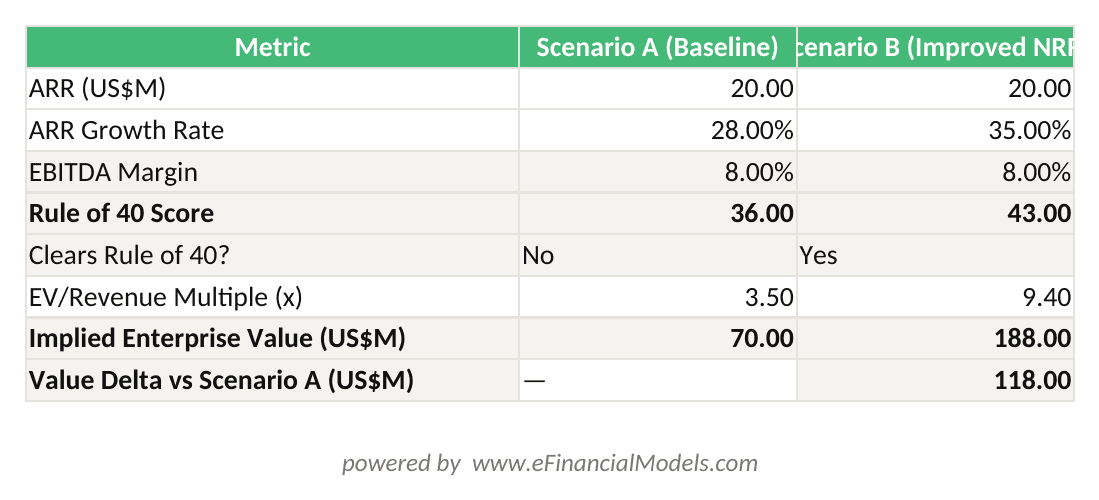
Rule of 40 = ARR Growth Rate + EBITDA Margin. Clearing 40 shifts the implied EV/Revenue multiple from 3.5x to 9.4x — a US$118M difference on US$20M ARR.
| Benchmark (2025, Global B2B SaaS) | Median | Top Quartile |
|---|---|---|
| Net Revenue Retention (NRR) | 82% | 97% |
| CAC Payback Period | ~20 months | 12–15 months |
| Meet Rule of 40 | 11–30% | 9.4x vs 3.5x EV/Revenue |
| Usage-based billing adoption | 85% | 59% combine 2+ metrics |
Source: ChartMogul, Benchmarkit, High Alpha, Monetizely (2025–2026).
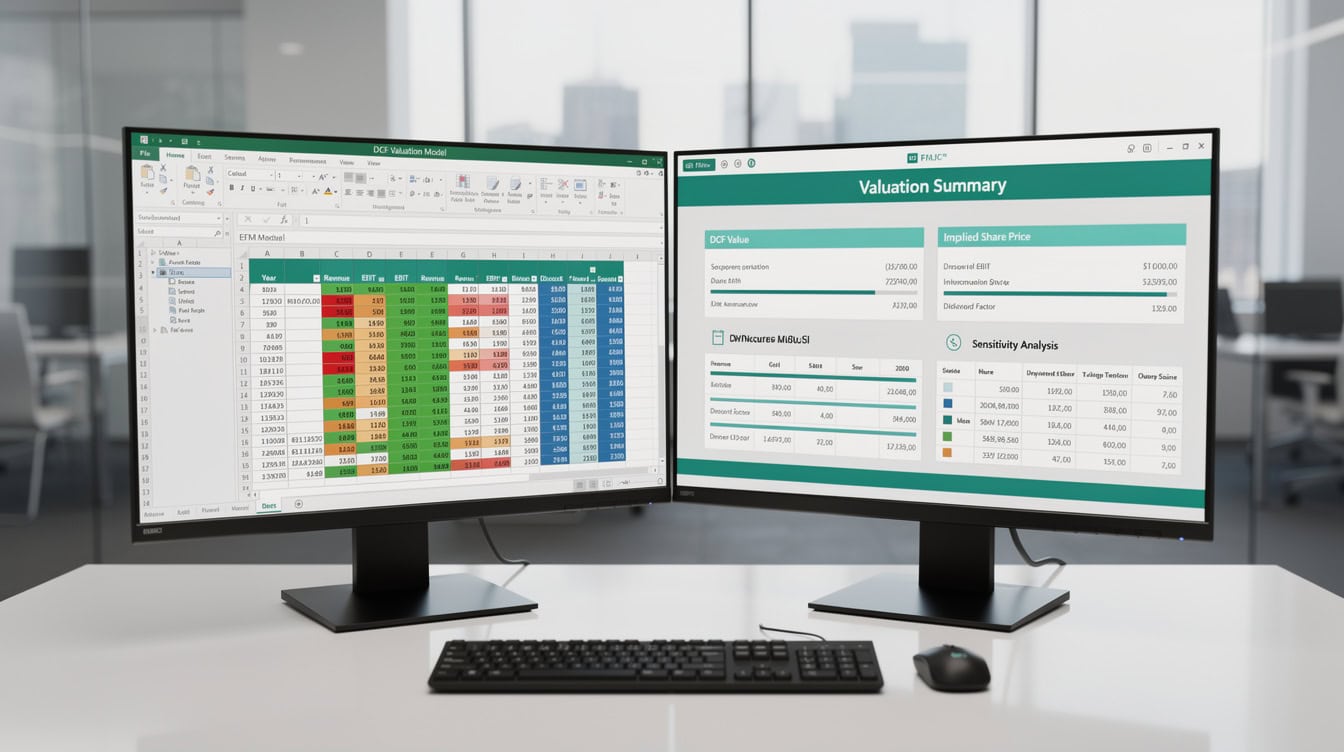
Improving NRR from 82% to 105% can lift a SaaS company’s Rule of 40 score from 36 to 43 — shifting the implied EV/Revenue multiple from 3.5x to 9.4x.
Three Scenarios for Canada SaaS in 2031
The 2026–2031 outlook hinges on four swing factors: cloud and SaaS adoption pace, AI demand and monetization, capital availability, and Canada–US trade and macro conditions. All three scenarios start from the same 2025 base of US$32.5 billion and flex the compounding rate, anchored to Grand View Research’s published 2030 figure of US$58.9 billion.
Base case (50% probability): Adoption continues at trend, AI delivers solid net-additive uplift, venture funding recovers gradually, and trade conditions stay broadly neutral. The market grows at 12.6% to reach US$66.3 billion by 2031.
Bull case (25% probability): AI adoption accelerates and is monetized cleanly through usage and outcome pricing, capital re-opens to growth software, and a constructive Canada–US trade settlement provides a tailwind. The market compounds at roughly 16% to US$79.2 billion by 2031.
Bear case (25% probability): A prolonged funding winter, AI that cannibalizes seats faster than it adds value, and trade and currency drag hold growth to about 9%, leaving the market at US$54.5 billion in 2031. Critically, even the Bear case represents healthy absolute growth from US$27.7 billion in 2024 — the downside is slower compounding, not contraction.
| Scenario | Probability | 2031 Size (US$B) | CAGR 2025–2031 | Key Drivers |
|---|---|---|---|---|
| Bear | 25% | 54.5 | ~9% | Funding winter; AI seat cannibalization; trade drag |
| Base | 50% | 66.3 | 12.6% | Trend adoption; solid AI uplift; neutral macro |
| Bull | 25% | 79.2 | ~16% | AI accelerates; funding re-opens; trade tailwind |
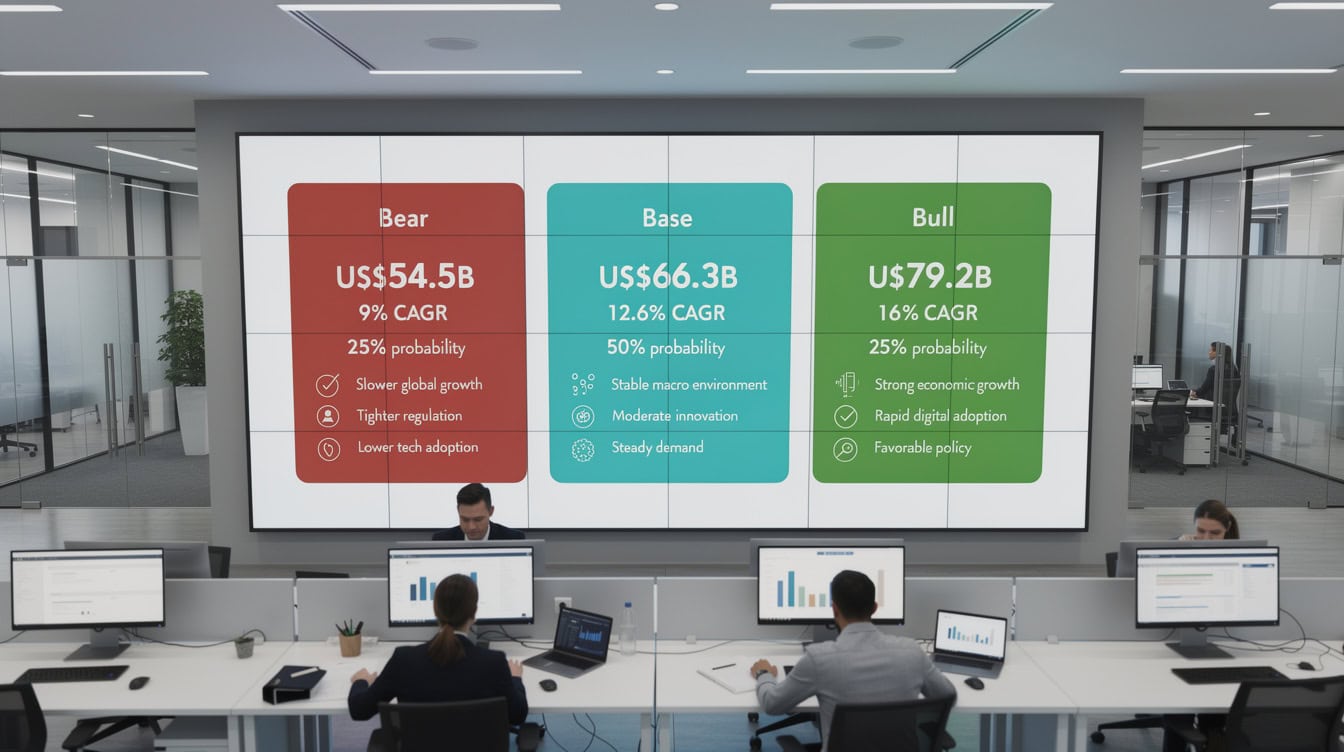
The US$25B spread between Bear and Bull cases reflects genuine uncertainty around AI monetization, capital availability, and Canada–US trade dynamics.
Technology Trends Shaping Canadian SaaS Through 2031
Three technology shifts will define the Canadian SaaS market over the forecast horizon. Each creates both opportunity and disruption risk.
AI agents replacing copilots. The agentic-AI market — autonomous software programs that complete tasks without human prompting — is projected to grow from roughly US$8–11 billion in 2026 to US$45–57 billion by 2030–2031. Vertical AI agents that deliver completed work rather than software seats are beginning to reshape a global vertical-SaaS market estimated at about US$450 billion. This is the most important structural shift for Canadian SaaS vendors: it expands the addressable market while simultaneously pressuring per-seat revenue.
Hyperscaler infrastructure build-out. Microsoft has committed approximately US$5.4 billion (C$7.5 billion) over two years to Canadian sovereign-cloud and AI capacity, and AWS has earmarked US$18.3 billion in Canada through 2037. Quebec’s 99%-hydro grid, cold climate, and sub-10-millisecond latency to the US Northeast make Canada a preferred location for low-carbon, low-latency AI data centers — a structural cost and sustainability advantage for Canadian SaaS vendors. Microsoft 365 itself supports a maximum of 300 users per business subscription, illustrating how even the world’s largest SaaS provider builds hard architectural limits into its products that shape enterprise procurement decisions.
Product-led growth and verticalization. Product-led growth (PLG) — where the product itself drives acquisition, conversion, and expansion without a traditional sales force — is now table stakes. The competitive frontier is shifting from feature breadth to proprietary data, deep workflow integration, and demonstrable outcomes. Canadian vendors with domain expertise in specific verticals can compete against larger, broader incumbents on these dimensions.

Microsoft committed US$5.4B and AWS US$18.3B to Canadian cloud infrastructure — building the foundation for AI-native SaaS growth through 2031.
Regulatory Context: Law 25, Bill C-27, and the DST
Canada’s data-protection regime is in transition, and the gaps create both compliance risk and competitive opportunity for SaaS vendors.
At the federal level, the Personal Information Protection and Electronic Documents Act (PIPEDA), enacted in 2000, remains the baseline privacy law. The proposed modernization — Bill C-27, which included a never-passed Artificial Intelligence and Data Act — died on the order paper when Parliament was prorogued in January 2025. Canada therefore has no modern federal AI statute, leaving provincial law as the binding frontier.
Quebec’s Law 25 is the dominant framework in practice. Fully in force as of September 2024, it imposes stricter consent rules, mandatory privacy-impact and transfer-impact assessments, a designated privacy officer, 72-hour breach notification, and penalties up to C$25 million or 4% of global revenue. Because it applies to any company handling the personal data of Quebec residents, most national and international SaaS vendors now treat Law 25 alongside Europe’s GDPR as their effective compliance baseline.
On tax, Canada’s Digital Services Tax (DST) — in force from June 2024 and targeting large digital-services providers — was rescinded in mid-2025 to restart trade negotiations with the United States. The episode underscores how exposed the sector is to Canada–US trade dynamics and why diversifying revenue across markets reduces single-point risk.
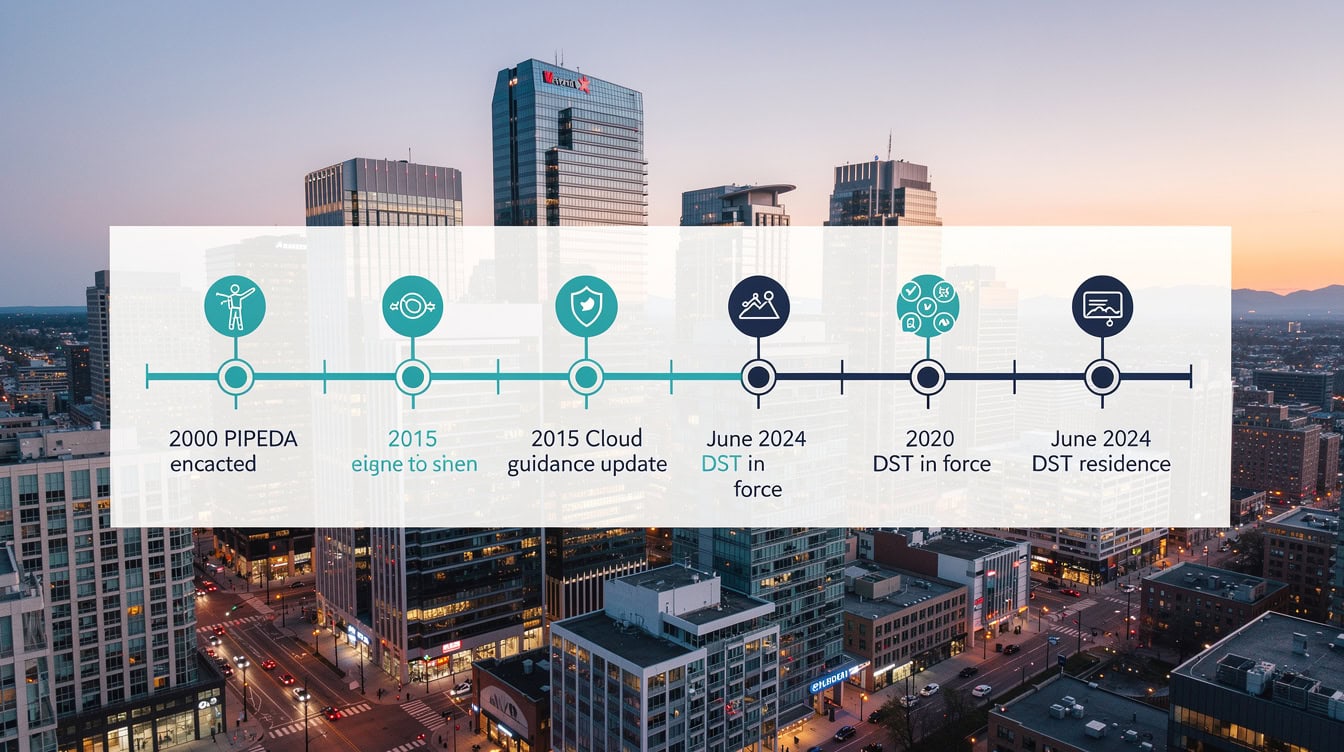
Quebec Law 25 (fully in force September 2024) is now the de facto compliance baseline for Canadian SaaS — stricter than federal PIPEDA and aligned with GDPR.
Common Pitfalls for Canadian SaaS Operators and Investors
Four specific mistakes consistently separate struggling Canadian SaaS companies from those that attract capital and scale.
1. Benchmarking against 2021 comps. The 2021 funding peak produced inflated valuations and growth-at-all-costs strategies. Operators who still target 2021-era CAC payback periods (often 30+ months) or NRR thresholds will find today’s investors unreceptive. Fix: benchmark against 2025 medians — 82% NRR, 20-month CAC payback — and target the top-quartile thresholds of 97% NRR and 15-month payback.
2. Ignoring per-seat pricing risk. AI agents act as software users but don’t consume per-seat licenses. Vendors who wait to modernize pricing until agents visibly erode revenue will face a sudden cliff. Fix: introduce usage or outcome components now, before AI substitution accelerates.
3. Treating Law 25 as a cost rather than a feature. Many vendors see Quebec’s Law 25 compliance as a burden. The vendors winning regulated-sector deals in finance, healthcare, and government are the ones that turned data residency and privacy-by-design into a sales differentiator. Fix: certify compliance, document it, and lead with it in regulated-sector pitches.
4. Underestimating correlated risks. A funding winter tends to coincide with the period when AI most aggressively reprices seats — so the companies least able to raise are often the same ones whose revenue model is under attack. Fix: stress-test the Bear case (US$54.5 billion by 2031) explicitly and prioritize mitigations that address multiple risks at once: lift NRR above 100%, modernize pricing, and preserve cash runway.
5. Building in the wrong hub. Canada’s talent and capital are concentrated: Toronto captures roughly 40% of venture capital, and Toronto, Vancouver, and Montréal together hold about 62% of AI talent. Founders who build outside these ecosystems face a structural disadvantage in hiring and fundraising. Fix: anchor in Toronto–Waterloo, Montréal, or Vancouver, and use Canada’s low-carbon infrastructure as a cost and sustainability advantage.
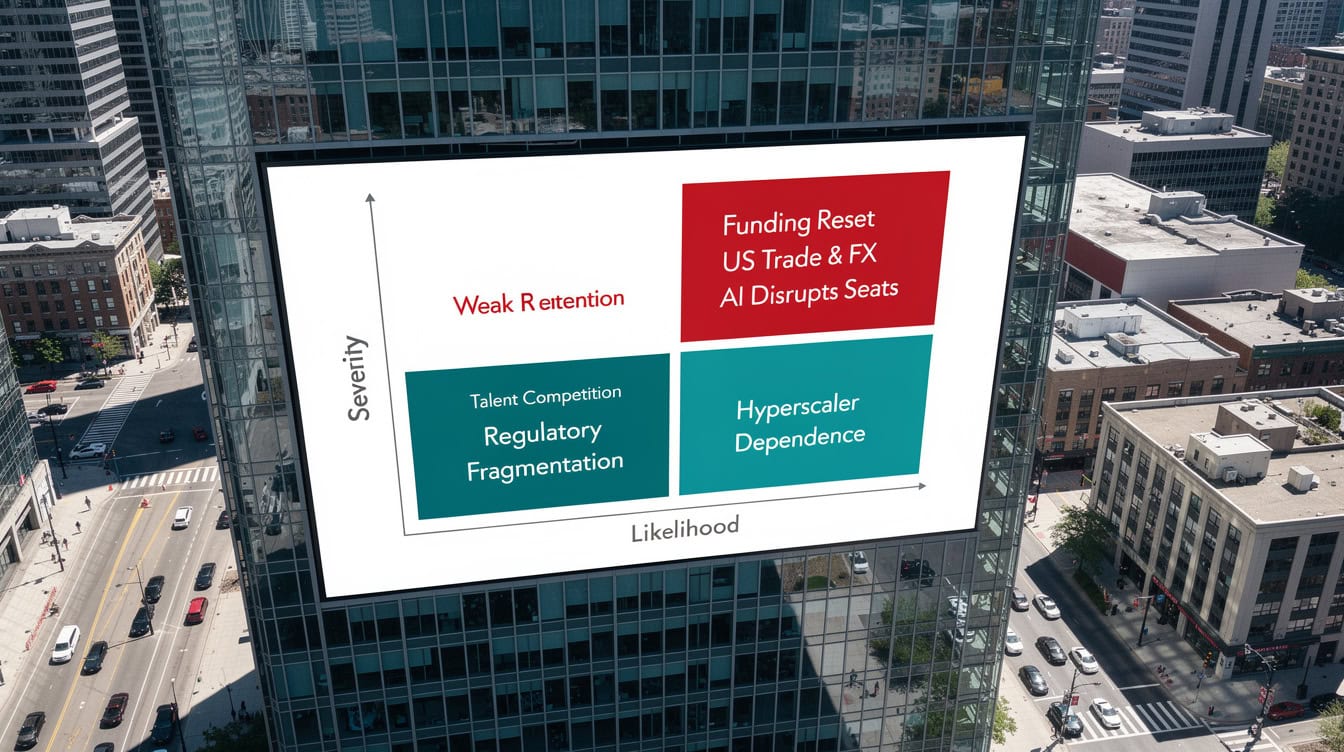
The most dangerous risk combination: capital-constrained operators with sub-100% NRR and heavy per-seat exposure to AI substitution — all three risks are correlated.
Tools and Templates for Canadian SaaS Financial Modeling
Translating market-level data into project-level cash flows requires purpose-built financial models. The scenario analysis in this study — three CAGRs applied to a US$32.5 billion base — maps directly onto the structure of a standard SaaS financial model: ARR/MRR engine, churn and expansion assumptions, CAC and payback calculations, and a three-statement output.
For founders and operators building projections, the SaaS Financial Model Excel Template from eFinancialModels provides an MRR/ARR engine, 3-statement model, LTV:CAC and cohort KPIs pre-built for exactly this kind of scenario analysis. Early-stage founders raising seed or Series A rounds will find the SaaS Startup Financial Model better suited to their stage. For freemium and product-led growth models — increasingly relevant as PLG becomes table stakes — the Freemium SaaS Financial Model includes LTV:CAC ratio tracking built in.
For teams that need to model hiring alongside revenue — critical in a talent-constrained market like Canada’s — the Hiring Plan for SaaS covers sales, customer success, R&D, and more. Browse the full SaaS financial model collection to find the right fit for your stage and business model.
Frequently Asked Questions
How large is Canada’s SaaS market in 2024 and what is the growth forecast?
Canada’s SaaS market reached US$27.7 billion in 2024, according to Grand View Research, and is forecast to grow to US$58.9 billion by 2030 at a 12.6% compound annual growth rate. That makes Canada roughly 6.9% of the global SaaS market and the second-largest single-country market in North America after the United States. eFinancialModels Research extends the trajectory to 2031, where the Base case reaches US$66.3 billion. Even the Bear case — which assumes a prolonged funding winter, AI seat cannibalization, and trade drag — reaches US$54.5 billion by 2031, underscoring how structurally embedded SaaS has become in the Canadian economy.
Which Canadian SaaS companies are the largest by revenue?
Three companies dominate by revenue. Shopify (Ottawa) reported US$11.56 billion in FY2025 revenue, up 30% year-over-year, making it Canada’s largest pure software platform. Constellation Software (Toronto) generated US$10.07 billion in 2024 through a roll-up of more than 800 vertical-market-software businesses. OpenText (Waterloo) posted US$5.17 billion in FY2025 in information management. Below them, Lightspeed Commerce reported US$1.08 billion in FY2025, and Coveo reached US$133 million in FY2025. Together these five companies illustrate the barbell structure of the Canadian SaaS market: a handful of multi-billion-dollar champions above a long tail of focused scale-ups.
What is the Rule of 40 and why does it matter for Canadian SaaS valuations?
The Rule of 40 is a SaaS benchmark that adds a company’s revenue growth rate to its profit margin. A score at or above 40 signals a healthy balance between growth and profitability. In practice, only 11–30% of private B2B SaaS companies meet this threshold globally, according to Benchmarkit and High Alpha. The valuation implication is significant: companies that clear the Rule of 40 command roughly a 9.4x enterprise-value-to-revenue multiple, versus approximately 3.5x for those below 20. For a Canadian SaaS company with US$20 million in ARR, that gap translates to a difference of roughly US$118 million in enterprise value — driven almost entirely by the combination of growth rate and margin discipline.
How does Quebec’s Law 25 affect SaaS vendors operating in Canada?
Quebec’s Law 25 is fully in force as of September 2024 and is the strictest data-privacy regime in Canada. It requires stricter consent rules, mandatory privacy-impact assessments, a designated privacy officer, 72-hour breach notification for serious incidents, and penalties up to C$25 million or 4% of global revenue — whichever is higher. Because it applies to any organization handling the personal data of Quebec residents, most national and international SaaS vendors now treat Law 25 alongside Europe’s GDPR as their effective compliance baseline. Vendors that achieve and document Law 25 compliance gain a genuine sales advantage in regulated sectors such as financial services, healthcare, and government, where data residency is a procurement criterion.
What is driving the shift from per-seat to usage-based SaaS pricing?
The primary driver is AI agents: autonomous software programs that complete tasks without human prompting but consume software resources just as human users do. Because AI agents are not human seats, per-seat pricing models fail to capture the value they generate or the costs they impose. Roughly 85% of SaaS providers already use some form of usage-based billing, and about 59% combine two or more pricing metrics, according to 2026 industry pricing surveys. Vendors that wait to modernize pricing risk a sudden revenue cliff as AI agents proliferate. The practical fix is to introduce usage or outcome components now — charging by action, token, or result delivered — before AI substitution accelerates and erodes the per-seat base.
Where is Canada’s SaaS talent concentrated, and how competitive is the market?
Canada’s SaaS talent concentrates in six hubs. CBRE’s 2025 Scoring Tech Talent report ranks Toronto third in North America, Waterloo Region seventh (up 11 spots), Vancouver tenth, Ottawa eleventh, Montréal fifteenth, and Calgary seventeenth. Toronto, Vancouver, and Montréal together hold about 62% of Canada’s AI talent. Toronto captures roughly 40% of Canadian venture capital, and Montréal anchors world-class AI research through the Mila institute. The competition for AI talent is intense: US hyperscalers including Microsoft and AWS are investing billions in Canadian infrastructure and competing directly for the same engineers. Founders who anchor in these ecosystems gain access to talent pipelines, accelerators, and investor networks that are difficult to replicate elsewhere in the country.
What are the biggest risks for Canadian SaaS companies through 2031?
Seven principal risks stand out, and the most dangerous are correlated. First, the post-2021 funding reset has left early-stage SaaS rounds lagging, with Canadian VC at C$4.9 billion in the first nine months of 2025 versus a higher 2021 peak. Second, AI agents threaten to erode per-seat revenue faster than new AI-driven value is added. Third, Canada–US trade exposure — illustrated by the Digital Services Tax episode — creates FX and tariff risk for companies with USD-denominated costs. Fourth, median NRR of 82% means most SaaS companies are shrinking their existing customer base in net terms, which compounds the capital problem. The risks are correlated: a funding winter tends to coincide with the period when AI most aggressively reprices seats, so the companies least able to raise are often the same ones whose revenue model is under attack. Stress-testing the Bear case explicitly is the most important risk-management step any Canadian SaaS operator or investor can take.
Conclusion
Canada’s SaaS market is not a speculative bet — it’s a US$27.7 billion base growing at 12.6% annually, anchored by global-scale champions, a deep talent ecosystem, and structural enterprise demand that 94% of Canadian SMBs now call revenue-critical. The 2026–2031 window will be shaped by three forces: AI monetization, capital discipline, and regulatory positioning. Vendors that combine vertical depth, usage- or outcome-based pricing, and Law 25-grade data residency will capture the best risk-adjusted share of a market that reaches US$54–79 billion by 2031 even in the Bear case.
I recommend building your financial projections on a purpose-built model rather than a generic spreadsheet. The SaaS Financial Model Excel Template from eFinancialModels gives you an MRR/ARR engine, three-statement financials, and LTV:CAC cohort tracking pre-configured for exactly the scenario analysis this study describes — so you can stress-test the Bear, Base, and Bull cases against your own unit economics before your next board meeting or investor conversation.