
0 ITEMS

Your Comprehensive Guide to Saas Financial Metrics

Understanding SaaS financial metrics is essential for tracking business health and guiding growth strategies.
- MRR provides insight into predictable subscription revenue and company stability.
- ARR offers a long-term view of recurring revenue, useful for forecasting and valuation.
- Customer Acquisition Cost (CAC) helps evaluate marketing efficiency and profitability.
- Customer Lifetime Value (CLV) indicates the potential value of retaining key customers over time.
- Churn rate reflects customer satisfaction and impacts revenue retention.
Mastering these metrics enables better decision-making and sustained SaaS growth.
Introduction To Saas Financial Metrics
Welcome to your essential guide on SaaS Financial Metrics. Understanding these numbers helps businesses succeed. We will break down what these metrics mean and why they matter.
Importance For Business Growth
SaaS Financial Metrics are vital for tracking progress. They offer clear insights into performance. You can pinpoint strengths and focus on growth areas. Consider them the navigational stars guiding your SaaS journey.
- Bold metrics signal company health.
- Real-time feedback helps adjust strategies.
- Metrics reveal trends for informed decisions.
Key Indicators For Investors
Investors love clear data. Key SaaS Metrics provide that. They measure how well a company can generate cash and grow. Investors look at these indicators to decide where to put their money.
| Metric | Significance |
|---|---|
| MRR (Monthly Recurring Revenue) | Shows stable income |
| CAC (Customer Acquisition Cost) | Tells cost to gain customers |
| LTV (Lifetime Value) | Estimates customer value |
| Churn Rate | Measures customer retention |
Monthly Recurring Revenue (MRR)
Monthly Recurring Revenue, or MRR, stands as a vital parameter in assessing the steady income a SaaS business garners from subscription-based customers. It serves as a cornerstone in the realm of SaaS financial metrics, offering a clear picture of predictable revenue streams.
Imagine a river that flows into your business every month. That river is your Monthly Recurring Revenue (MRR). This metric measures the total income your SaaS business can count on every month. It’s vital for understanding your company’s health and growth.
Calculating MRR
To find out your MRR, follow this simple formula:
MRR = Number of Customers x Average Revenue per User (ARPU)Let’s put that into practice. Say your SaaS has 100 customers. Each pays $50 a month. Your MRR would be:
MRR = 100 customers x $50 = $5,000 per month| Number of Customers | ARPU | MRR |
|---|---|---|
| 100 | $50 | $5,000 |
It gets interesting with different types of subscriptions:
- Monthly plans: Just multiply by the monthly fee.
- Annual plans: Divide the total by 12.
Remember: Do not mix currencies or subscription types without converting them first.
Patterns And Predictions
Tracking your MRR uncovers patterns. You will notice uptrends, downtrends, or plateaus in revenue.
Uptrends show growth. This is when your river flows faster. You’re earning more each month.
Downtrends signal a leak. Maybe customers are leaving, or fewer are joining.
A plateau means stability. Your monthly income stays about the same.
Understanding these patterns helps predict future revenue. Look at your MRR over several months to get the full picture.
Key points:
- Spot seasonal trends. They tell you when to expect more or fewer sign-ups.
- Identify regular customers’ contributions to your MRR.
- Make sure you’re growing by comparing your current MRR with previous months.
In essence, mastering MRR tracking means mastering the flow of your revenue stream. Get this right, and you set the stage for robust financial health in your SaaS venture.
Annual Recurring Revenue (ARR)
Understanding the Annual Recurring Revenue (ARR) is crucial for any SaaS business. This key metric reflects the predictable and repeatable revenue that a business can expect on an annual basis from its subscribers. Unlike one-time sales, ARR comes from customers who pay for your service year after year.
Benefits Over MRR
ARR provides a long-term perspective, unlike its counterpart Monthly Recurring Revenue (MRR) which offers a short-term view. Here’s why focusing on ARR can be more beneficial:
- Enhanced Forecasting: With ARR, predict future earnings with more accuracy.
- Strategic Planning: Its stability allows for confident decision-making.
- Investor Attraction: Investors favor the predictability of ARR.
- Reduced Volatility: It smoothens out seasonal variations impacting MRR.
ARR And Company Valuation
ARR is a vital metric for investors and buyers assessing the health of a SaaS business. Let’s explore its impact:
| Aspect | Impact of ARR |
|---|---|
| Valuation Foundation | ARR forms the base for calculating the company’s worth. |
| Growth Measurement | It reflects the company’s potential to expand over time. |
| Revenue Predictability | Consistent ARR signals stable future revenue streams. |
| Investment Decisions | Attracts funding with its demonstration of financial health. |
Customer Acquisition Cost (cac)
Understanding the Customer Acquisition Cost (CAC) is vital for SaaS businesses. It represents the total expense required to acquire a new customer. This includes advertising costs, sales team salaries, and any other costs related to marketing and sales efforts. Lowering the CAC can significantly increase a company’s profitability and efficiency.
Determining Cac
To calculate CAC, divide the total cost of sales and marketing by the number of new customers gained within a specific period. It’s necessary to track all the associated expenses accurately.
- Sales and marketing costs: personnel, software, advertising, and events.
- Time period: monthly, quarterly, or annually.
- New customers: count only those acquired within the chosen time frame.
Employ a simple formula for CAC calculation:
CAC = Total Sales and Marketing Costs ÷ Number of New Customers Acquired
Optimizing Marketing Spend
Reducing the CAC without compromising the quality of customer acquisition is key. Here are strategies to optimize your marketing spend:
- Target the right audience to improve ad conversions.
- Analyze performance data to identify cost-effective channels.
- Refine your sales process to increase closing rates.
- Leverage organic search through SEO to reduce paid ad reliance.
Remember, constantly test and measure the performance of different strategies. Allocate more budget to those delivering the lowest CAC.
Customer Lifetime Value (CLV)
Understanding Customer Lifetime Value (CLV) is key to any SaaS venture’s success. CLV helps predict the total revenue a business can reasonably expect from a single customer account. It takes into account a customer’s revenue value and compares it to the company’s predicted customer lifespan. Businesses use this metric to identify significant customer segments that are worth investing in over time.
Clv Calculation Methods
To accurately compute CLV, you need a reliable method. There are various ways to calculate CLV, but here are two primary approaches:
- Historical CLV: This method sums up all the gross profits from past purchases for an average customer.
- Predictive CLV: Using this approach, you forecast future profits based on a customer’s past behaviors. It uses predictive analysis and models.
Let’s look at a simple formula:
CLV = Average Value of a Sale × Number of Repeat Sales × Average Retention Time
Understanding and applying these methods helps in making informed decisions about customer acquisition and retention strategies.
Maximizing Long-term Profitability
Enhancing the CLV leads to greater profitability in the long run. Here’s how to do it:
- Offer exceptional customer service to increase retention.
- Use personalized marketing to attract high-value customers.
- Focus on selling to your most profitable customers.
- Encourage feedback and act on it to improve your product.
Each strategy is aimed at boosting customer satisfaction and loyalty, leading to repeat business—a surefire way to maximize CLV.
Churn Rate Essentials
Understanding the churn rate is key to maintaining a healthy SaaS business. It measures the rate at which customers cancel their subscriptions. A lower churn rate indicates happy, loyal users. It reveals much about product quality and customer satisfaction.
Churn Rate Impacts
Churn rate affects your business’s bottom line and growth potential. High churn rates can signal trouble, often pointing to larger issues such as poor customer service or an inadequate product. It’s critical to monitor this metric to maintain a sustainable business model. A high churn rate can:
- Decrease monthly recurring revenue (MRR)
- Erode the customer base
- Increase costs of acquiring new customers
On the other hand, a low churn rate contributes to a robust business with a steady revenue stream. Loyal customers can become advocates for your service, resulting in positive word-of-mouth and more referrals.
Strategies To Reduce Churn
Proactive strategies can substantially lower your churn rate and retain customers. Here are some effective techniques:
- Implement regular feedback loops
- Foster strong customer relations
- Offer exceptional and timely support
- Continuously improve the product with updates and new features
- Create an engaging onboarding process
Additionally, tailoring your services to meet customer needs can make a huge difference. Ensure that the user experience (UX) is intuitive and that clients see the value in your product. Regularly reviewing user engagement data helps identify areas for improvement.
Lastly, focus on customer success. Equip your team with resources to help clients achieve their goals using your product. Happy customers are less likely to churn and more likely to upgrade their subscriptions.
Cash Flow Management
Cash flow management stands at the heart of every SaaS business. It’s the process that lets companies plan, monitor, and optimize the funds they need to operate smoothly. Without proper cash flow management, even the most promising SaaS company can quickly find itself struggling to pay bills and fund growth initiatives. So, let’s delve into how forecasting and maintaining liquidity can become game-changers in your financial strategy.
Forecasting Cash Flow
Knowing what the future holds financially helps businesses stay afloat. A solid cash flow forecast is like having a financial road map. It guides companies through uncertain times. Forecasting involves:
- Historical Data Analysis: Examining past cash flows to predict future ones.
- Understanding Cycles: Anticipating seasonal trends and sales cycles.
- Adjusting for Variables: Considering new contracts, churn rates, or market shifts.
Effective forecasting requires accurate inputs, so SaaS companies must ensure their data is up-to-date and reflective of real-time changes in the business. This proactive approach helps in anticipating cash needs before they become urgent.
Maintaining Liquidity
Liquidity is the lifeline that fuels everyday operations. A business’s ability to cover short-term obligations is critical. To maintain liquidity, consider these strategies:
| Strategy | Description | Benefits |
|---|---|---|
| Monitor Receivables | Keep a close eye on when payments are due and follow up promptly. | Improves cash on hand and prevents revenue leakage. |
| Flexible Payment Terms | Offer different payment options to customers, tailored to their needs. | Encourages faster payments and reduces customer churn. |
| Control Expenses | Scrutinize regular outgoings and cut back on non-essential spending. | Conserves cash and maximizes available funds. |
To ensure continuous liquidity, regularly reviewing financial statements is paramount. Focusing on quick ratio and current ratio indicators helps businesses stay prepared for unexpected payouts. Opportunities for investment and growth emerge when liquidity is within easy reach.
Profit Margins In The Saas World
Understanding profit margins is key in the SaaS industry. These margins help companies measure success. They show how much money a SaaS company keeps after expenses. High margins can mean a healthy, thriving business. Let’s delve into why these margins are important and how to improve them.
Importance Of Healthy Margins
- Roadmap to Sustainability: Healthy margins indicate a SaaS business can cover its costs while generating profits.
- Investor Attraction: Investors prefer companies with high margins. They see potential for good returns.
- Resource for Growth: With good margins, a firm can invest in new features, marketing, and expansion.
- Competitive Edge: Companies with better margins can compete strongly in the market.
Improving Profit Margins
Review Pricing Strategies: Offer value-based pricing to align customer value and price.
Customer Retention Focus: Keep current customers happy. It costs less than finding new ones.
Automate Processes: Use software to cut costs on manual tasks. This increases efficiency.
Monitor Key Metrics: Keep an eye on customer acquisition cost (CAC) and lifetime value (LTV). These metrics help manage spend and revenue.
Optimize Product Offerings: Drop features that users don’t need. Focus on what sells well.
The Rule Of 40%
Imagine a golden rule in SaaS that can show health and potential in one glance. The Rule of 40% is that benchmark. It’s a quick way to gauge if a SaaS company is on the right track for both growth and profitability.
Understanding The Rule
The Rule of 40% is simple. It says if a company’s growth rate and profit margin add up to 40% or more, that company is in a good position. Growth plus profit equals success in this rule of thumb.
- Growth Rate – How fast the company’s revenue is increasing
- Profit Margin – What percentage of revenue is profit
For SaaS companies, measuring these metrics is key. They demonstrate sustainable success.
Balancing Growth And Profitability
A balance between growth and profitability is what the Rule of 40% seeks. Too much focus on growth may hurt profit. Similarly, only looking at profit can slow down growth.
| Growth Focus | Profit Focus |
|---|---|
| Increase revenue | Reduce costs |
| Expand market share | Improve margins |
| Invest in marketing | Streamline operations |
Keeping the balance right ensures long-term success. Invest in growth without losing sight of profit.
Capital Efficiency And Burn Rate
Understanding Capital Efficiency and Burn Rate is key for any SaaS business aiming for long-term success. These metrics speak volumes about how a company manages its resources and sustains growth. High capital efficiency indicates that a company is using its investments wisely to generate revenue, while burn rate reveals the pace at which a company is spending its cash reserves before earning a positive cash flow.
Monitoring Burn Rate
Keeping an eye on the burn rate helps businesses plan for the future and avoid cash shortfalls. This metric is crucial for maintaining a healthy financial runway. Analyzing burn rate also allows companies to make informed decisions on whether they need to reduce costs or boost funding efforts. Below are essential steps for monitoring this important metric:
- Calculate monthly expenses to understand cash outflow.
- Track revenue against costs to assess the cash burn.
- Adjust strategies before reaching critical cash thresholds.
Raising Capital Effectively
Raising capital is a necessary step for growth but must be done efficiently. A thorough plan ensures a company doesn’t give away too much equity early on or raise too little funds to support growth. Consider the following tips for effective capital raising:
- Set clear fundraising goals based on burn rate and capital efficiency.
- Present a strong value proposition to attract investors.
- Negotiate terms that favor long-term growth.
By mastering these financial metrics, SaaS companies can safeguard their financial health and accelerate their journey to profitability.
Advanced Saas Metrics
Delving deeper into the metrics that power SaaS businesses, certain measures stand out. These Advanced SaaS Metrics provide insights beyond the basics. They help forecast the future, enhance customer satisfaction, and drive robust growth. Learning to track and interpret these metrics can set your SaaS venture on a success trajectory. Explore the significance of the Quick Ratio and Net Promoter Score, and their impact on growth.
Quick Ratio For Saas
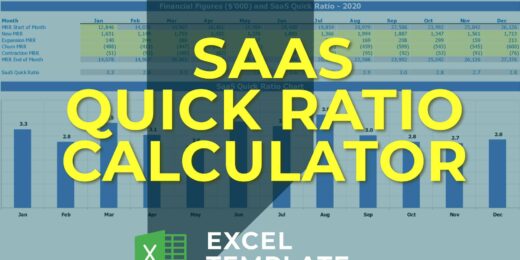
The Quick Ratio measures a SaaS company’s ability to grow revenue while managing churn. An ideal Quick Ratio is 4:1 or higher, indicating healthy growth. A figure below 1 signals trouble, as churn outweighs new MRR (Monthly Recurring Revenue). Let’s break it down:
| Component | Impact on Quick Ratio |
|---|---|
| New MRR | Increases Quick Ratio |
| Expansion MRR | Increases Quick Ratio, signifies upselling success |
| Churned MRR | Decreases Quick Ratio, signals lost revenue |
| Contraction MRR | Decreases Quick Ratio, indicates downgrades |
Track this metric monthly. It shows how product and sales strategies perform over time.
Net Promoter Score (nps) And Growth
The Net Promoter Score is a customer loyalty metric. It asks customers how likely they are to recommend the product. Scores range from -100 to 100. A positive score indicates more promoters than detractors. NPS correlates with organic growth, as happy customers often lead to referrals. Factors influencing NPS include:
- Customer service quality
- Product effectiveness
- User experience
- Brand reputation
Better scores often align with improved customer retention and increased sales. Aim for regular NPS evaluations to spot trends and address issues promptly.
Frequently Asked Questions
What Is Saas Metrics?
SaaS metrics are data points that measure and track the performance, health, and growth of a Software as a Service business. They help in making informed decisions and strategize future growth.
What Are The Key Metrics You Would Use To Evaluate The Financial Health Of A Saas Startup?
Key metrics to evaluate a SaaS startup’s financial health include Monthly Recurring Revenue (MRR), Churn Rate, Customer Acquisition Cost (CAC), Lifetime Value (LTV), and Cash Burn Rate.
What Is The Rule Of 40?
The Rule of 40 states that a company’s combined growth rate and profit margin should exceed 40% to appeal to investors and indicate healthy business performance.
What Are The Most Important Kpis And Or Metrics In A Typical Saas Business To Evaluate The Success Of An Acquisition Performance Campaign?
Key SaaS KPIs for acquisition performance include Customer Acquisition Cost (CAC), Conversion Rate, Customer Lifetime Value (CLTV), Monthly Recurring Revenue (MRR), and Churn Rate. These metrics help measure cost effectiveness, return on investment, and customer retention.
Conclusion
Understanding SaaS financial metrics is vital for the growth of any subscription-based enterprise. This guide has equipped you with the necessary tools to analyze and optimize your business’s financial health. Embrace these metrics to drive your company’s success and ensure a robust financial future.
Remember, knowledge is power—use it wisely to chart your path to peak performance in the competitive SaaS landscape.














































You might also like:
- 10 Ideas to Increase Average Revenue Per User
- Customer Acquisition Costs (CAC)
- How to Calculate Annual Recurring (ARR) Revenue for Sustainable Growth
- How to Calculate SaaS Monthly Recurring Revenue?
- How to Build a SaaS Financial Model
- 5 Steps to Create a Drop Down List Using Data Validation in Excel
- Calculating Revenue Growth Rate: A Key Metric for Business Success
- Understanding the Debt Service Coverage Ratio: An Essential Metric for Financial Analysis
- SaaS Business Financial Model
- Financial Planning for Startups and Small Businesses
- Financial Model Templates Easy to Use
- Software as a Service (SaaS)
- Annual Recurring Revenue (ARR)
- Startup Financial Models
- 5 Practical Tips to Help Raise Funds For Startups
- Best in Class Property Appraisal Methods and What to Look Out for
- How Does Solar Radiation Affect the Returns of Your Solar Park?
- Revenue Model Templates and their Characteristics
- Finding a Valuation Model for Your Business


