
0 ITEMS

Subcontractor Credit Risk & DSO Toolkit — Ageing, IFRS 9 Provisioning & Credit Limits
Days sales outstanding is the number every trade business quotes and almost every one calculates wrong. Four DSO measures including countback, an IFRS 9-style expected-loss provision, per-customer risk ratings and credit limits. Fully unlocked, 228 live formulas.
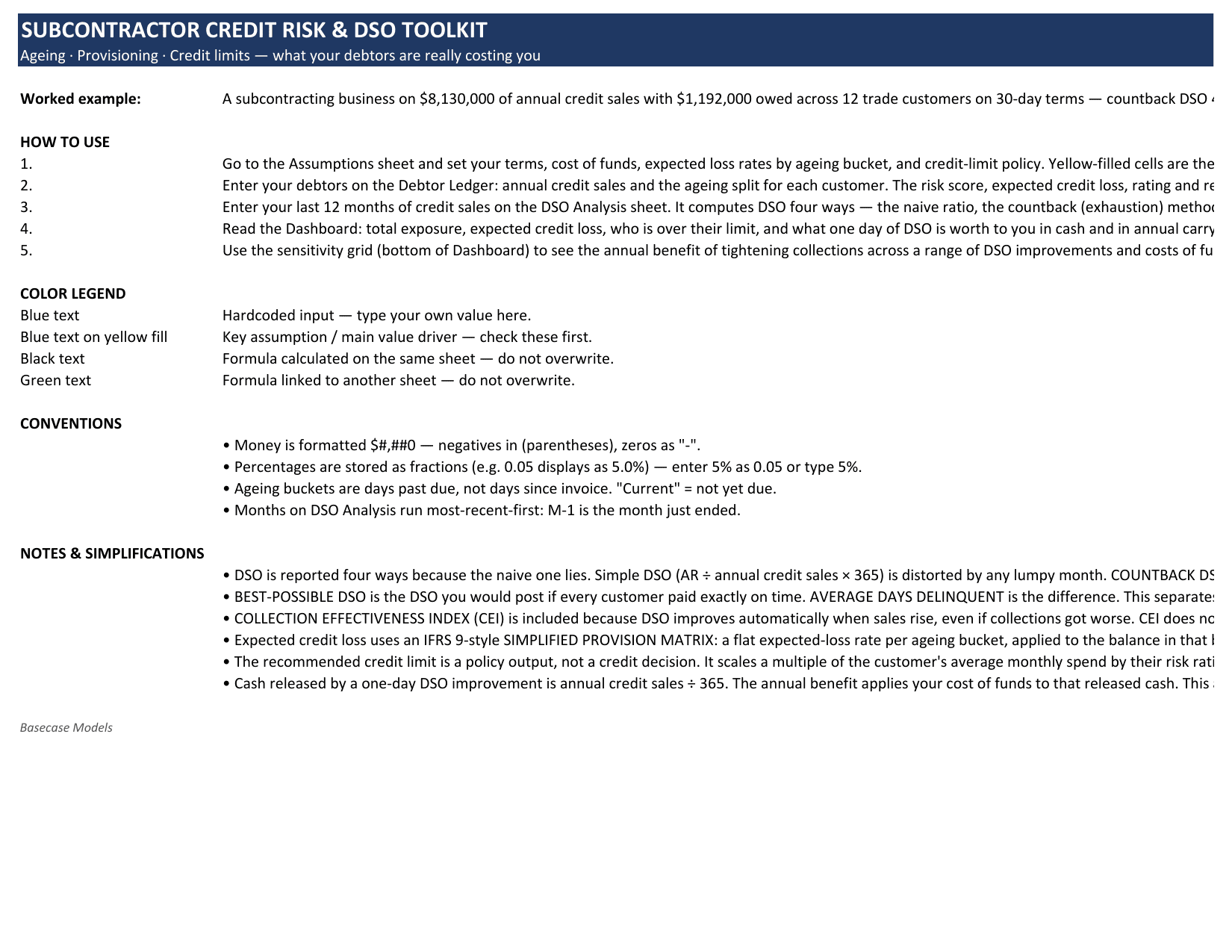
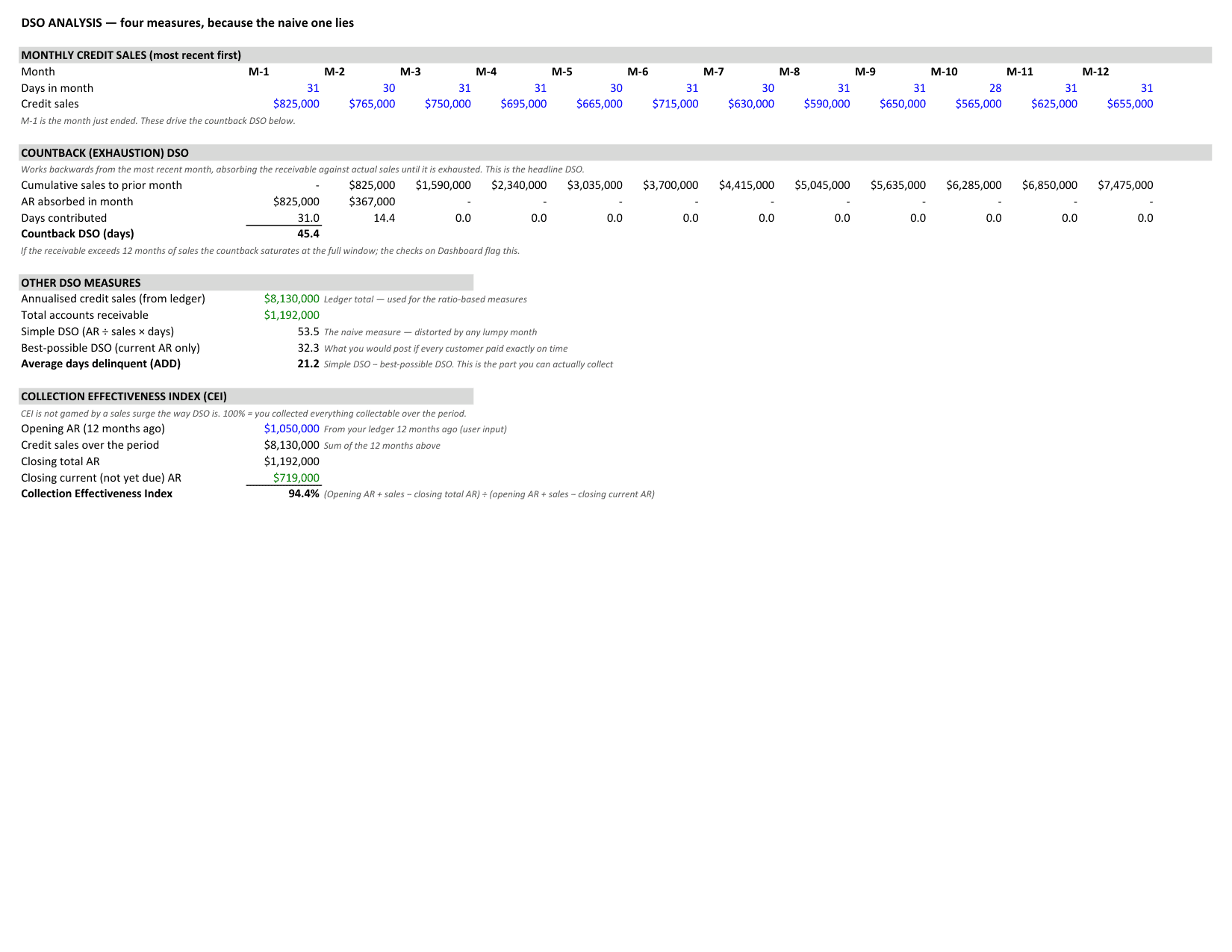
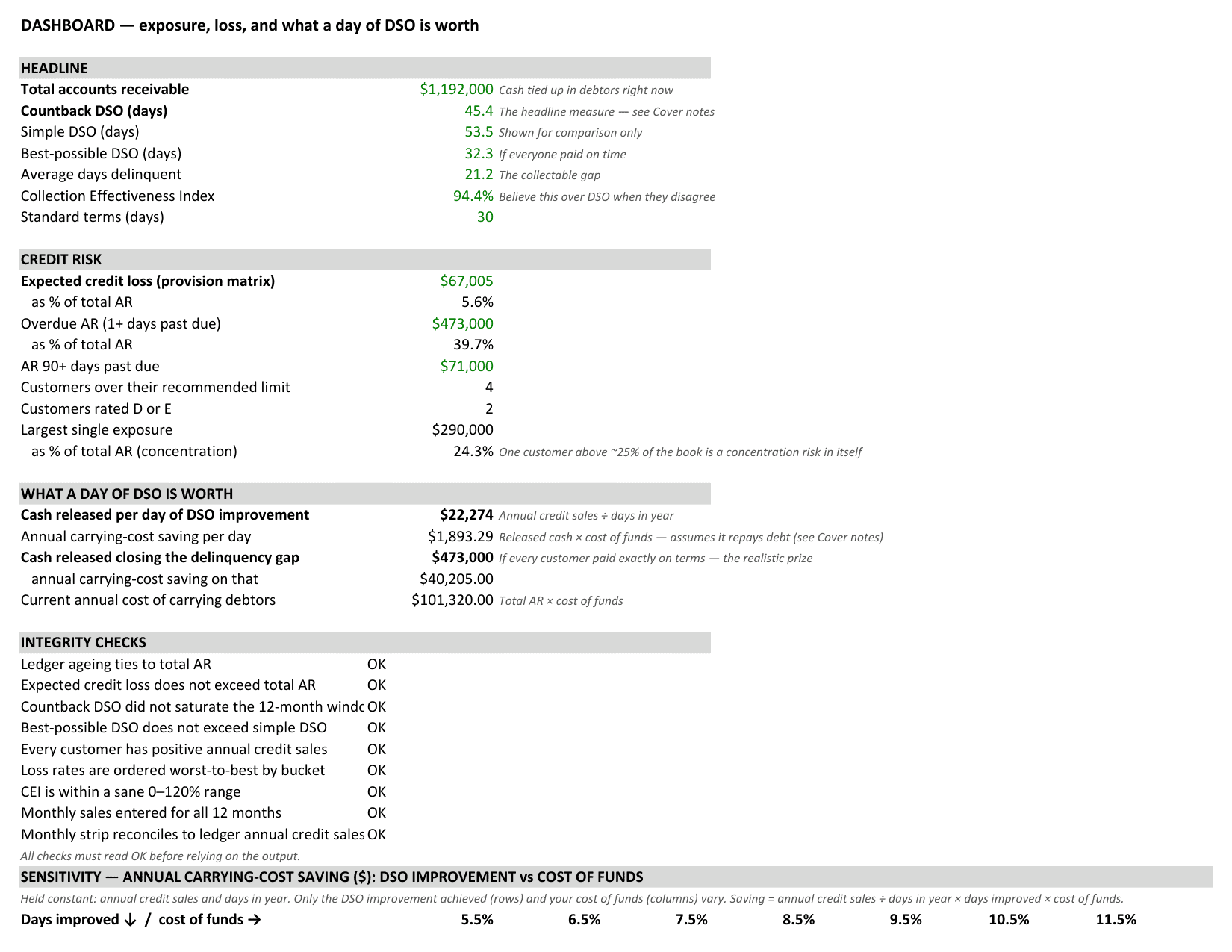
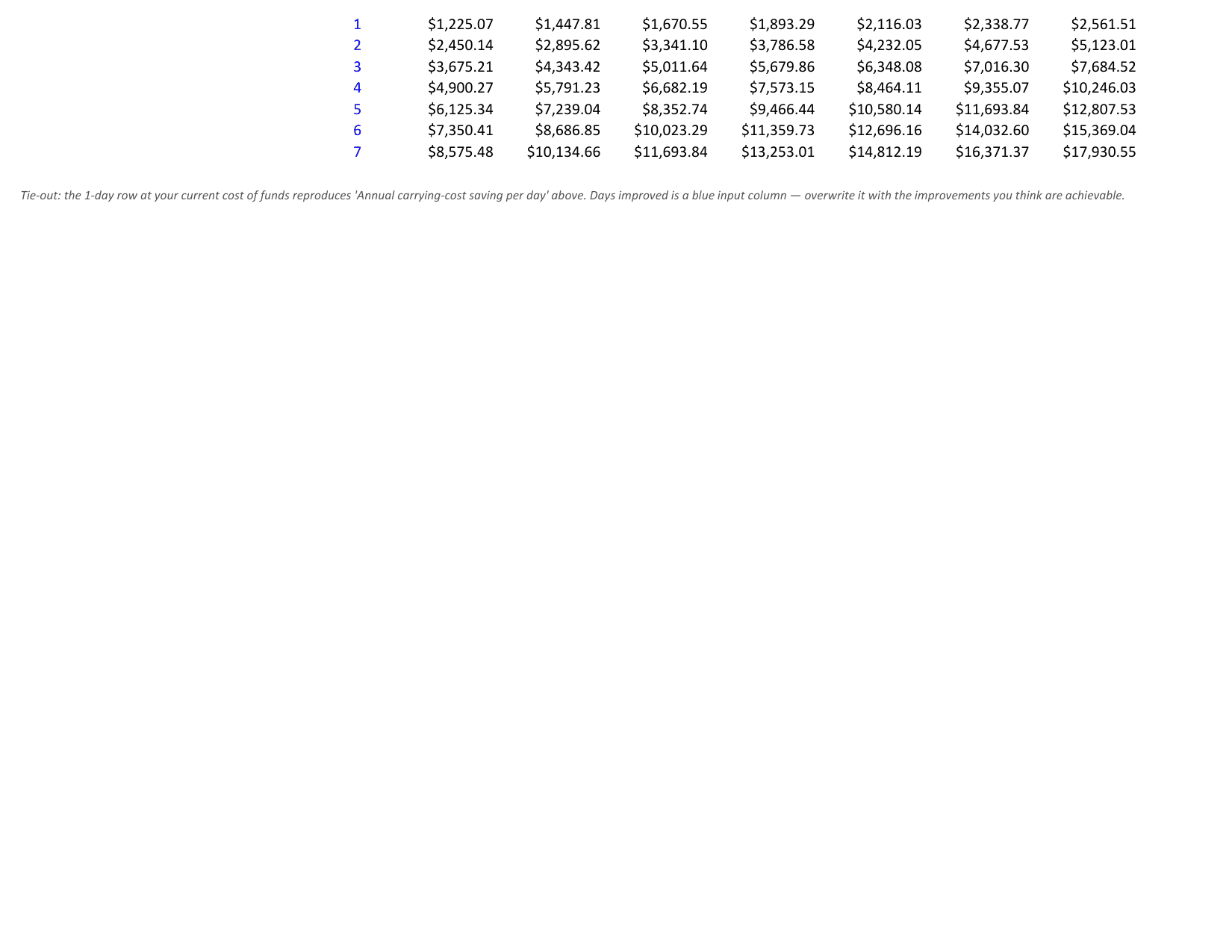
The Subcontractor Credit Risk & DSO Toolkit tells a trade or subcontracting business what its debtors are really costing it. Days sales outstanding is the number everyone quotes and almost everyone calculates wrong, so this toolkit reports it four ways and turns the debtor ledger into an actionable credit view.
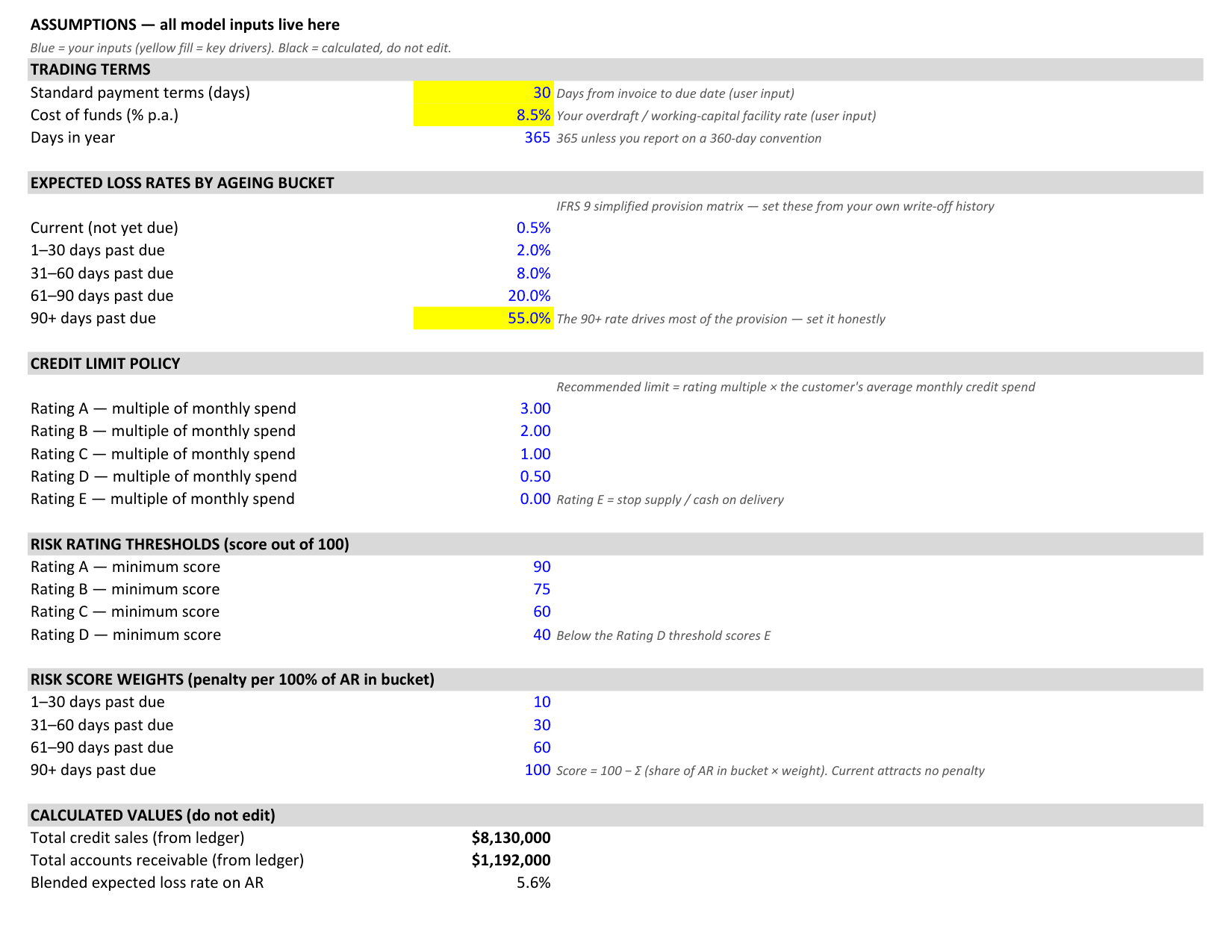
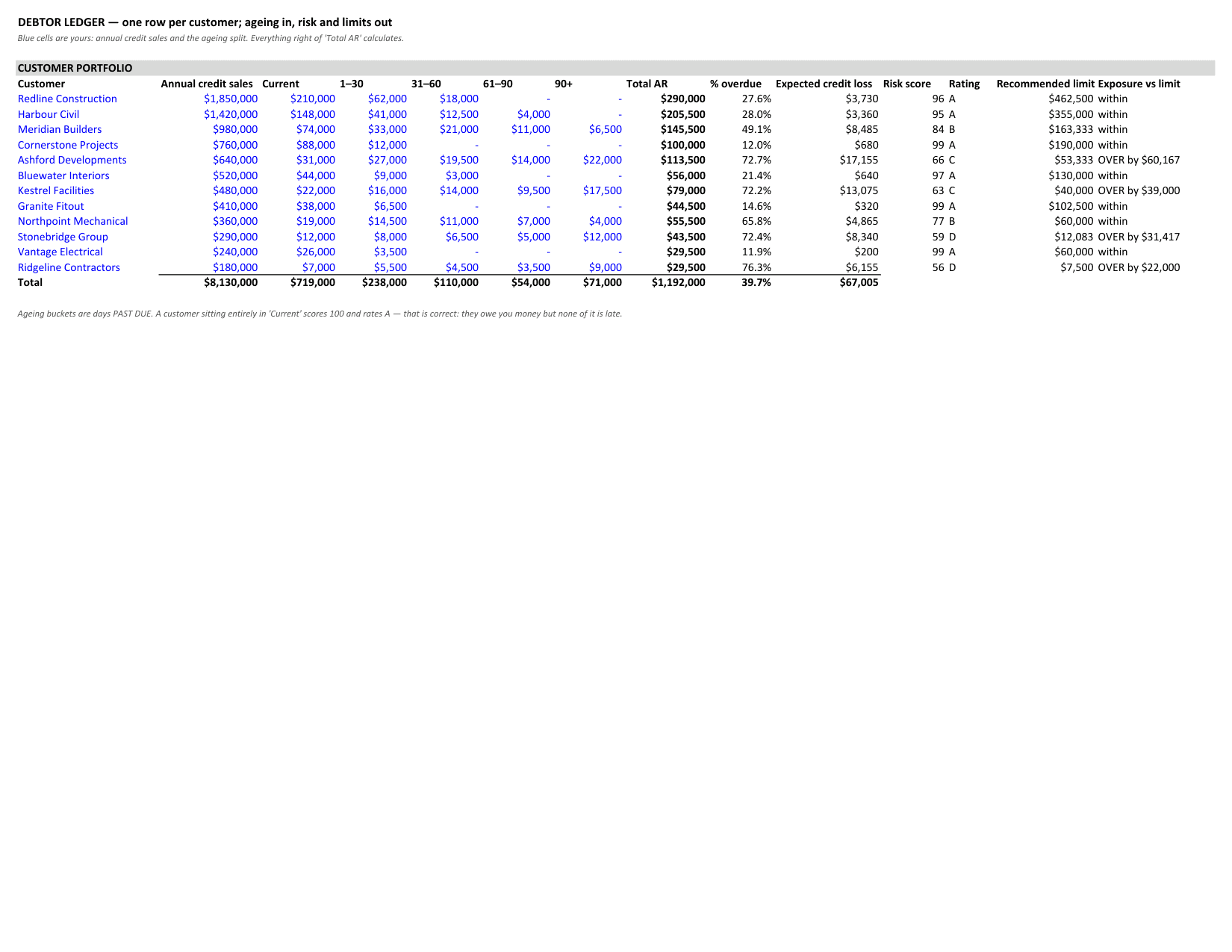
What it does: the naive DSO (receivables ÷ sales) is distorted by any lumpy month, so the headline figure here is the COUNTBACK (exhaustion) DSO that credit professionals actually use — it works backwards through real monthly sales until the receivable is exhausted. Alongside it sit best-possible DSO and average days delinquent, which separate “my terms are long” from “my customers are late” (two problems with completely different fixes), and the Collection Effectiveness Index (CEI), which — unlike DSO — is not flattered by a sales surge. Expected credit loss is computed through an IFRS 9-style simplified provision matrix: a loss rate per ageing bucket applied to the balance in it. Each customer gets a risk score, a rating, a recommended credit limit and an over-limit flag.
Main features: four DSO measures including countback; IFRS 9-style expected credit loss; per-customer risk score, rating, credit limit and over-limit flag; a “what a day of DSO is worth” cash calculation; and integrity checks — including one that catches the most common setup error, a monthly sales strip that doesn’t reconcile to the ledger. 228 live formulas, zero formula errors.
How to work with it: enter your terms, cost of funds, per-bucket loss rates and debtor ledger in the blue cells; everything else calculates. A worked example is preloaded.
Why you need it: it is honest about its limits — the provision matrix is the IFRS 9 simplified approach, and the recommended credit limit is a policy prompt, not a credit decision. Fully unlocked, every formula visible. Currency-agnostic; treat $ as your currency. For analysis only, not credit advice.
Similar ProductsOther customers were also interested in...



 eFinancialModels
Electric Vehicle (EV) Charging Station Financial M...
With this comprehensive 5- or 10-year monthly tool, investors can assess the viability of setting up... Read more

Financial Model for Mobile App | Mobile App Busine...
The Mobile App Financial Plan Template in Excel allows you to develop financial projections when lau... Read more

 HenrySheykin
Food Truck Financial Model Excel Template
The Food Truck Financial Model helps entrepreneurs, founders, business owners, consultants, and anal... Read more

Green Hydrogen Production from Wind Energy Financi...
The Green Hydrogen from Wind Financial Model aims to comprehensively forecast a horizon of 40 years ... Read more

Simple Mutual Non-Disclosure Agreement Template
Protect your business secrets with ease using our Simple Mutual Non-Disclosure Agreement Template. S... Read more

Solar Energy Financial Model
The Solar Energy Financial Model Spreadsheet Template in Excel assists you in preparing a sophistica... Read more

 Peter Graf
The Customer-Centric Financial Model for Restauran...
Starting a restaurant without a financial plan is like driving a car blindfolded. You wouldn´t do i... Read more
You must log in to submit a review.