
0 ITEMS

How to Start a Microbrewery Business?

Starting a microbrewery involves turning passion for craft beer into a viable business with careful planning.
- Market research helps identify customer preferences, industry trends, and gaps in local demand.
- A solid business plan outlines your product niche, sales channels, and operational costs.
- Financial projections are essential for understanding startup expenses, profitability, and growth potential.
- Legal structure choices and licensing set the groundwork for compliance and liability management.
- Securing capital through loans, investors, or grants is critical to funding equipment and initial operations.
Continuing will help you understand each step to confidently launch a microbrewery that stands out in a competitive market.
Microbrewery Market Snapshot: Key Market Insights
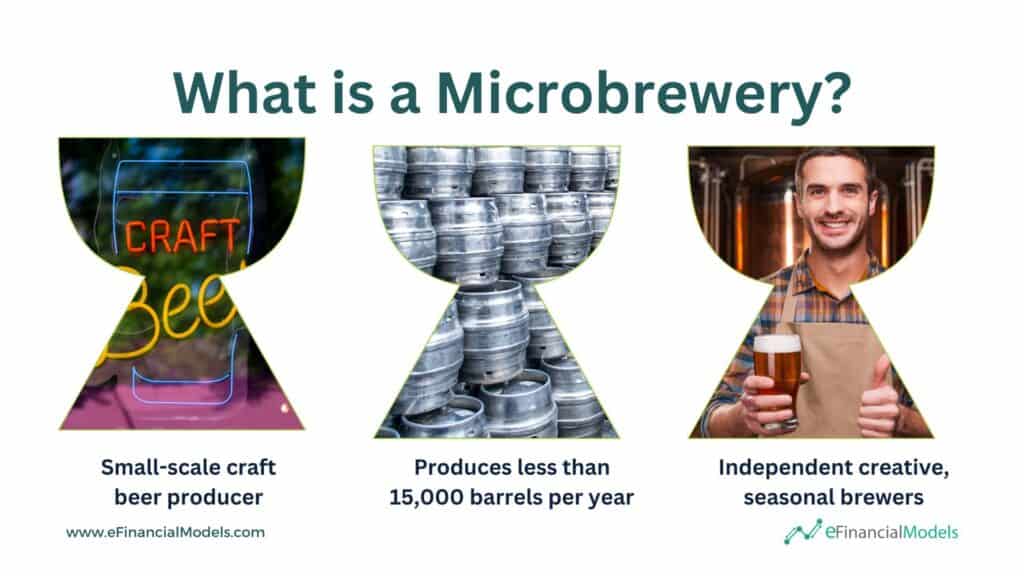
A microbrewery is a small-scale brewery that produces craft beer in limited quantities. It focuses on unique flavors, quality ingredients, and traditional brewing techniques. Unlike large breweries, microbreweries prioritize innovation and local markets. They often sell beer directly to customers through taprooms, restaurants, or distributors. Many craft beer lovers seek out microbreweries for their fresh, handcrafted brews.
In 2025, the microbrewery market will continue to grow steadily. The global craft beer market is projected to reach approximately $242.79 billion by 2033, with a compound annual growth rate (CAGR) of 9.5% from 2025 to 2033. However, the industry faces challenges such as supply chain disruptions and rising costs, prompting microbreweries to innovate and adapt. Despite these obstacles, the microbrewery sector remains resilient, focusing on quality, sustainability, and community engagement to attract discerning consumers.
Microbrewery vs. Brewery
A comparison between microbrewery vs. brewery starts with size. A microbrewery produces small batches, typically under 15,000 barrels per year, and sells most of its beer locally. It focuses on craft quality, unique flavors, and direct customer engagement, just like Sierra Nevada. In contrast, a brewery operates on a much larger scale, distributing beer nationally or globally. Large breweries like the global brewing giant Anheuser-Busch InBev emphasize efficiency, consistency, and mass production to meet high demand. It globally markets brands like Budweiser, Stella Artois, and Corona.Ownership and business models also set them apart in a microbrewery vs. brewery debate. Microbreweries are often independent, experimenting with creative recipes and seasonal brews. They thrive on taproom sales and local partnerships. Traditional breweries, however, rely on extensive supply chains, major retail distribution, and standardized recipes. While both produce beer, their approach, reach, and business focus differ significantly.
Top 10 Most Successful Microbreweries Globally
Identifying the top 10 most successful microbreweries globally involves considering factors such as production volume, reputation, and industry recognition. While precise rankings can vary, the following microbreweries are renowned for their significant impact and success in the craft beer industry:
- Sierra Nevada Brewing Co. (Chico, California, USA): Founded in 1980, it’s one of the pioneers of the American craft beer movement, known for its Pale Ale and commitment to sustainability.
- Stone Brewing (Escondido, California, USA): Established in 1996, Stone Brewing is celebrated for its bold, hoppy beers and has expanded its reach internationally.
- Founders Brewing Co. (Grand Rapids, Michigan, USA): Since 1997, Founders has gained acclaim for its diverse beer portfolio, including the popular All Day IPA.
- Deschutes Brewery (Bend, Oregon, USA): Opened in 1988, Deschutes is known for beers like Black Butte Porter and Mirror Pond Pale Ale.
- Lagunitas Brewing Company (Petaluma, California, USA): Founded in 1993, Lagunitas has a reputation for its IPA and has grown to become one of the largest craft breweries in the U.S.
- Goose Island Beer Company (Chicago, Illinois, USA): Established in 1988, Goose Island is known for its Bourbon County Stout and was one of the first craft breweries to be acquired by a major beer company.
- Ballast Point Brewing Company (San Diego, California, USA): In 1996, Ballast Point gained fame for its Sculpin IPA and has experienced significant growth.
- Dado Bier (Porto Alegre, Brazil): Founded in 1995, Dado Bier is recognized as one of Brazil’s pioneering craft breweries, offering a range of innovative beers.
- Odell Brewing Company (Fort Collins, Colorado, USA): Since 1989, Odell has been producing a variety of acclaimed beers, including its 90 Shilling Ale.
- Toppling Goliath Brewing Co. (Decorah, Iowa, USA): Established in 2009, it’s known for its highly sought-after IPAs and barrel-aged stouts.
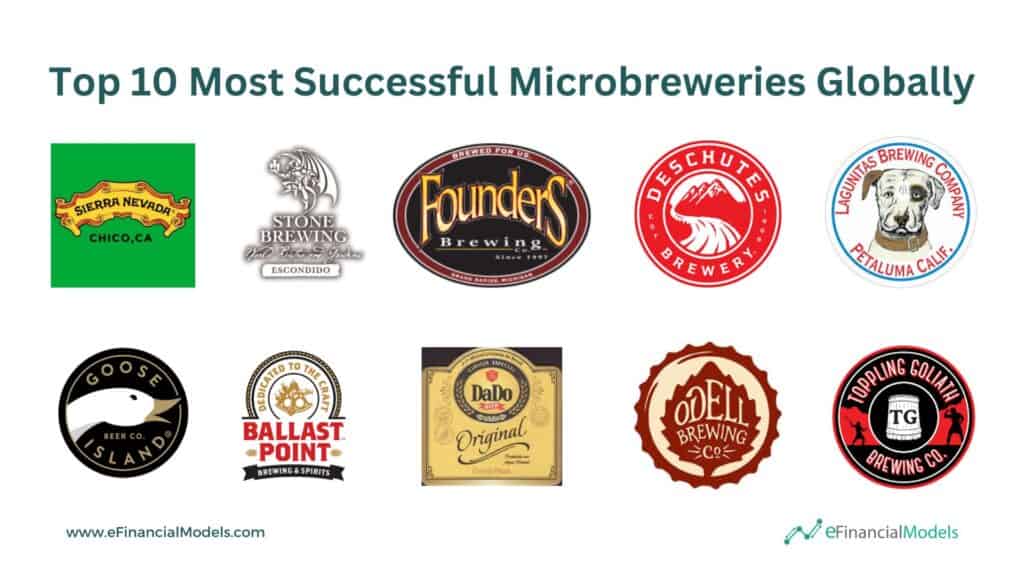
Most of the top microbreweries are in the United States due to a combination of historical, cultural, and economic factors. The U.S. has a large market size, with consumers willing to pay a premium for craft beers. It has over 9,000 craft breweries, making it one of the most competitive beer markets in the world. Furthermore, American brewing techniques and business models have inspired microbreweries worldwide, influencing breweries in Europe, South America, and Asia.




















































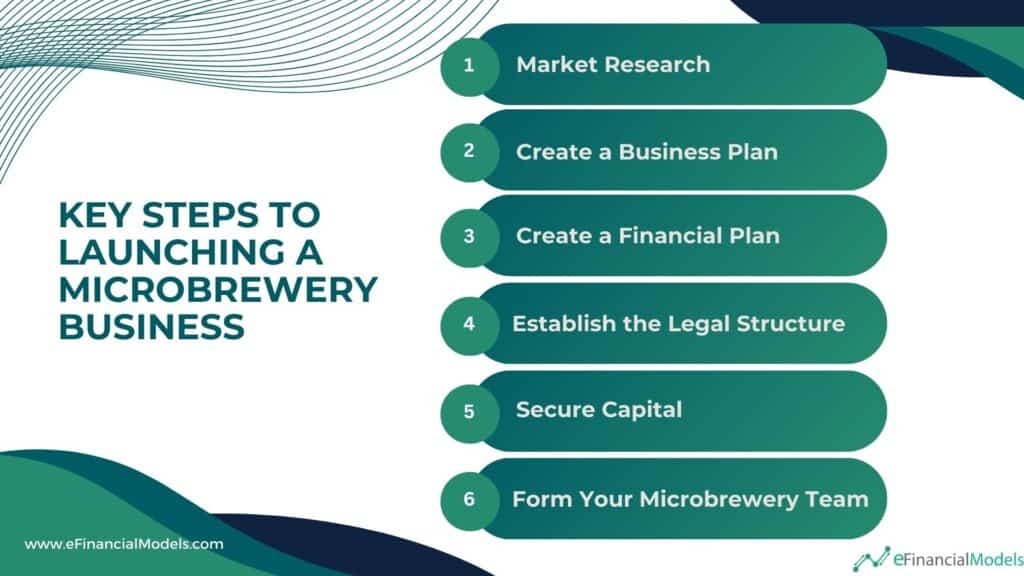
Key Steps to Launching a Microbrewery Business
Starting a microbrewery is an exciting venture that blends passion with craftsmanship. Success depends on brewing great beer, building a loyal customer base, and managing operations efficiently. Every step shapes your brand’s identity, from securing licenses to perfecting recipes. Strong financial planning ensures long-term sustainability, while creative marketing drives demand. A well-structured approach helps navigate industry challenges and seize growth opportunities.
Step 1: Market Research
Before investing in equipment and brewing supplies, a deep understanding of your target market is crucial. Craft beer drinkers have diverse tastes, and staying ahead of industry trends can give your microbrewery a competitive edge. Consumers increasingly seek unique flavors, small-batch brews, and specialty offerings such as organic or gluten-free beers.
Understanding what appeals to your target demographic will help shape your product lineup. Research other microbreweries in your area to identify gaps in the market. Are there popular styles that are missing? What kind of customer experience do competitors provide? By studying their strengths and weaknesses, you can find ways to differentiate your brewery through innovative flavors, a unique taproom experience, or a compelling brand story.
There are multiple ways to enter the craft beer market. Some microbreweries focus on direct-to-consumer sales through taprooms, while others distribute their products to bars, restaurants, and retail stores – a business-to-business (B2B) revenue model. Understanding the best approach for your business model will help define your growth strategy.
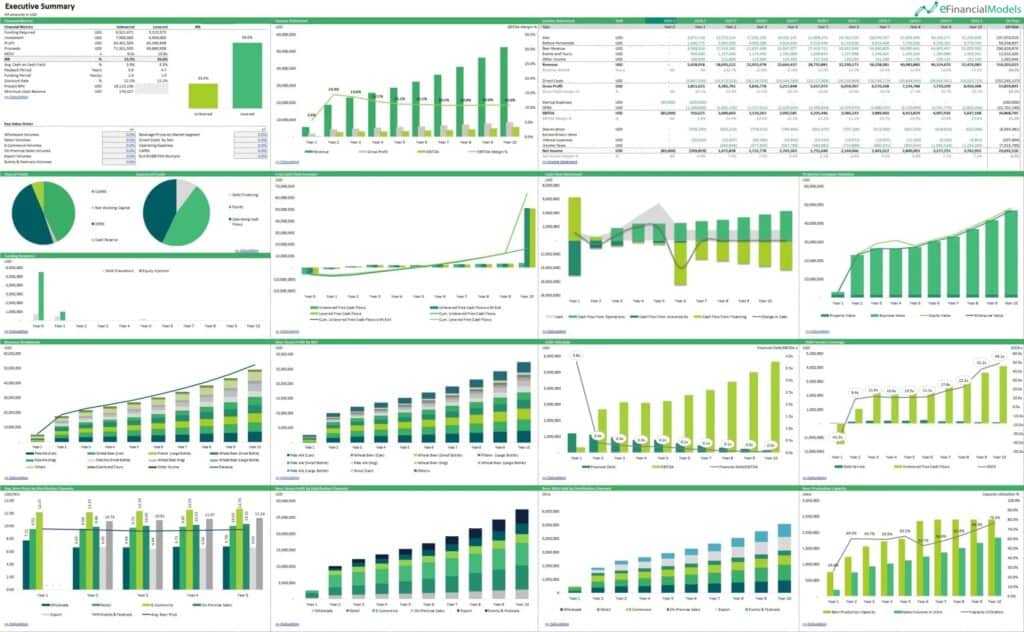
The executive summary above is from our Microbrewery Business Financial Model. It highlights key value drivers such as wholesale and retail volumes, pricing, and distribution channels. Analyzing these factors helps identify the best market entry strategy, optimal pricing, and revenue potential. Studying competitors’ product offerings and sales channels also reveals gaps and opportunities. By leveraging financial projections, you can assess demand viability, target profitable segments, and make data-driven decisions to position your microbrewery for success.
Step 2: Create a Business Plan
A winning business plan is the blueprint for your microbrewery and is crucial for securing funding and setting clear goals. Decide what makes your microbrewery unique. Will you focus on traditional lagers, experimental IPAs, or barrel-aged stouts? Defining your niche will help you stand out in a crowded market. Detail your target customer base and how you plan to reach them. Will you rely on foot traffic, online sales, or partnerships with local businesses? A well-thought-out branding and marketing strategy is essential to attracting and retaining customers.
It is essential to create a clear business plan that outlines what type of beer your microbrewery will produce—lager, IPA, stout, or seasonal brews. Define your target customers, such as local craft beer lovers, restaurants, or retailers. Explain how you plan to sell—through taproom sales, online orders, local bars, or events. List the team members you need, including a brewmaster, sales staff, and taproom manager. Finally, estimate how much beer you aim to produce and sell monthly or yearly to hit your revenue goals.
Outline the logistics of your brewery, including location, production capacity, and supply chain management. Decide whether you’ll operate as a standalone brewery, a brewpub with an in-house restaurant, or a contract brewery that produces beer for other brands. Include detailed cost estimates for equipment, ingredients, staff, rent, and utilities. Calculate pricing, expected sales volume, and break-even points to ensure financial viability. Investors and lenders will expect clear revenue projections and a timeline for profitability.
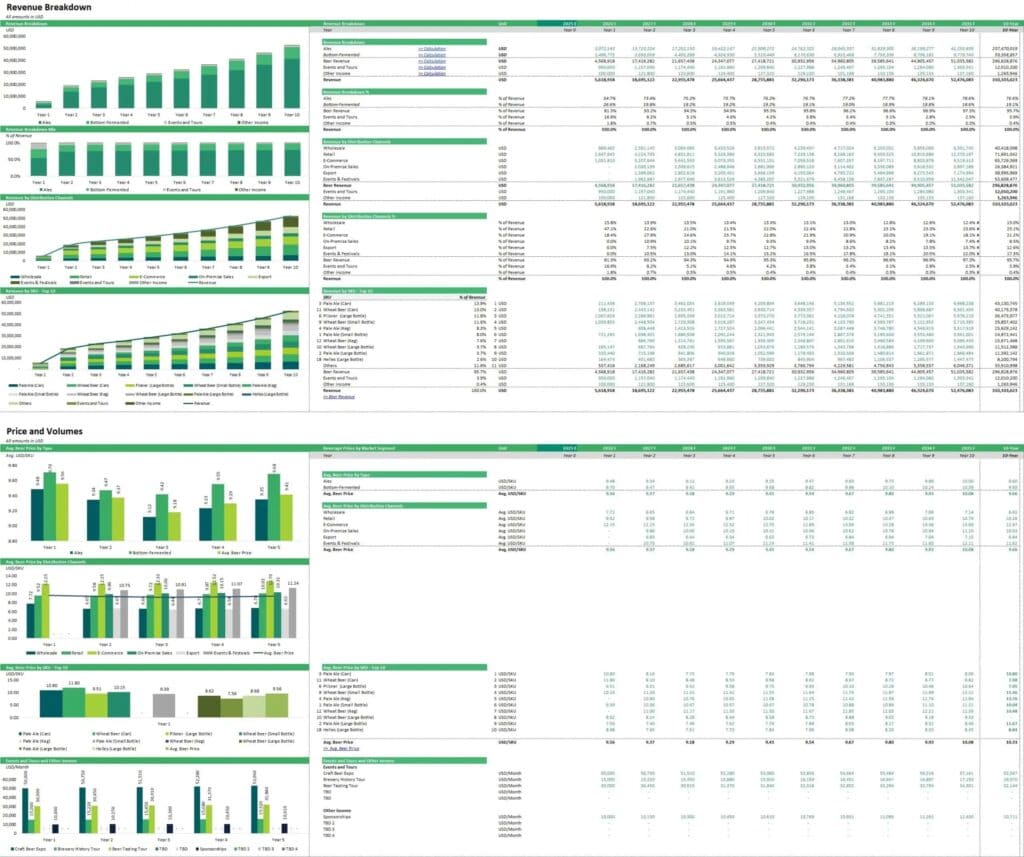
The above revenue breakdown from our Microbrewery Business Financial Model clearly shows how the business plan is structured. It shows what types of beer products will be sold, in what formats (bottles, cans, barrels), and at what prices. It also identifies target sales channels like taprooms, retail, export, and events. Volume projections and pricing trends are broken down by year, helping to set clear sales goals. You can also see which revenue streams grow the fastest and how each product contributes to total revenue. This helps define production focus, pricing strategy, and the scale of operations year by year.
Step 3: Create a Financial Plan
A financial plan translates a business plan into financial estimations to give an idea what are the costs to start a business and to analyze if this business plan can become profitable. A microbrewery financial plan should:
- Show how much beer you can produce;
- How much it costs to start;
- How much you expect to earn;
- It must break down daily operating costs;
- Reveal how much profit you make;
- Include a clear revenue forecast; -and-
- Test if the business can succeed through a simple financial feasibility check.
Production Capacity
First, it should show the production capacity – how many gallons or liters of beer you can make each month or year. It depends on your equipment, staff, and space. You must clearly define your packaging sizes—bottles, cans, or kegs—and how many units you expect to produce and sell. The production process includes brewing, fermenting, conditioning, and packaging. Each step affects your output and timeline.
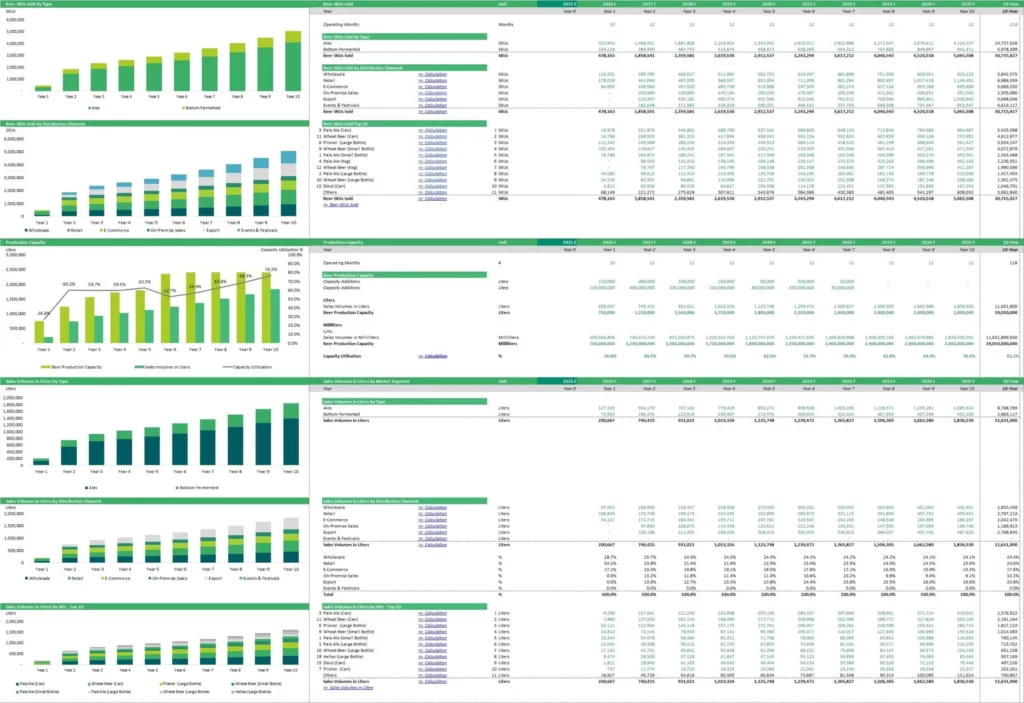
The above production capacity of our MIcrobrewery Financial Plan shows 250,000 liters in Year 1 and expanding to 1,000,000 liters by Year 5. Beer is sold in bottles, cans, and kegs across wholesale, retail, e-commerce, and on-premise channels. Sales grow steadily from 206,667 to 874,167 liters over 10 years, improving capacity utilization from 82.7% to 87.4%. CAPEX investments are made in phases to support production growth, covering equipment like brewing tanks, fermenters, and packaging lines. This setup ensures efficient scaling, diversified sales, and sustained profit potential.
Microbrewery Equipment Cost
Second, your CAPEX budget must include the microbrewery equipment cost and facility setup to get started. Microbrewery equipment cost plays a key role in a brewery’s financial plan. It directly impacts startup expenses, cash flow, and long-term profitability. From brewhouses to fermentation tanks, each piece requires careful budgeting. Microbrewery equipment cost varies widely based on factors such as production capacity, level of automation, and equipment quality. Below is a general breakdown of the key equipment costs for setting up a microbrewery:
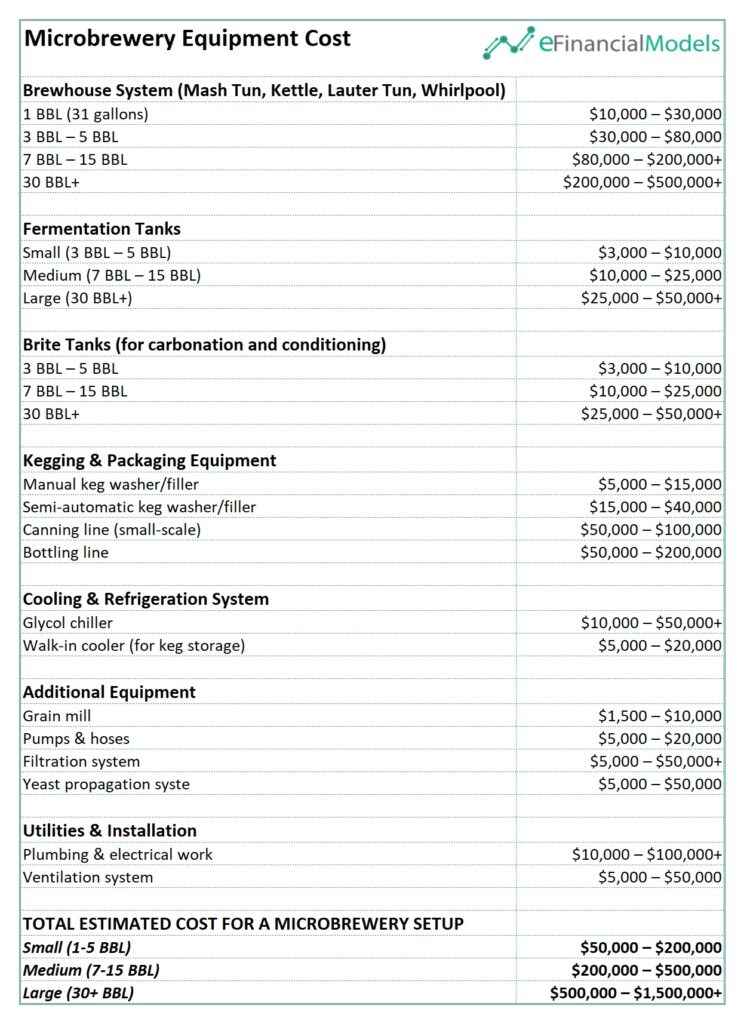
The average microbrewery equipment cost can range from $50,000 to $250,000 for a small-scale operation. Larger setups may require investments between $250,000 and $1,000,000 or more.
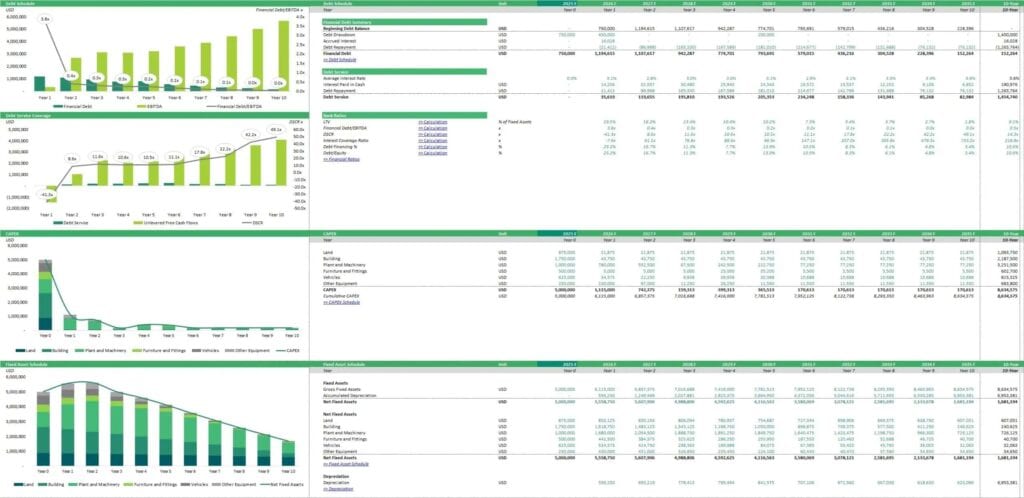
The microbrewery financial plan above highlights the importance of estimating Capital Expenditures (CAPEX)—covering land, buildings, equipment, and setup costs. These upfront investments shape cash flow, financing requirements, and profitability. Knowing your CAPEX helps secure funding, set pricing, and plan long-term growth. A well-structured business plan ensures your brewery is financially viable before you start brewing.
Revenue Forecast
A microbrewery financial plan should also forecast how much beer you’ll sell by market segments—retail, wholesale, e-commerce, and on-premise bars. Each segment pays different prices; bars and e-commerce often bring higher margins, while wholesale offers volume. Set realistic prices per liter based on the segment—higher for direct sales, lower for bulk. To expand, add taprooms and new products, or enter new regions. Growth comes from scaling production, building strong distribution, and boosting direct-to-consumer channels.
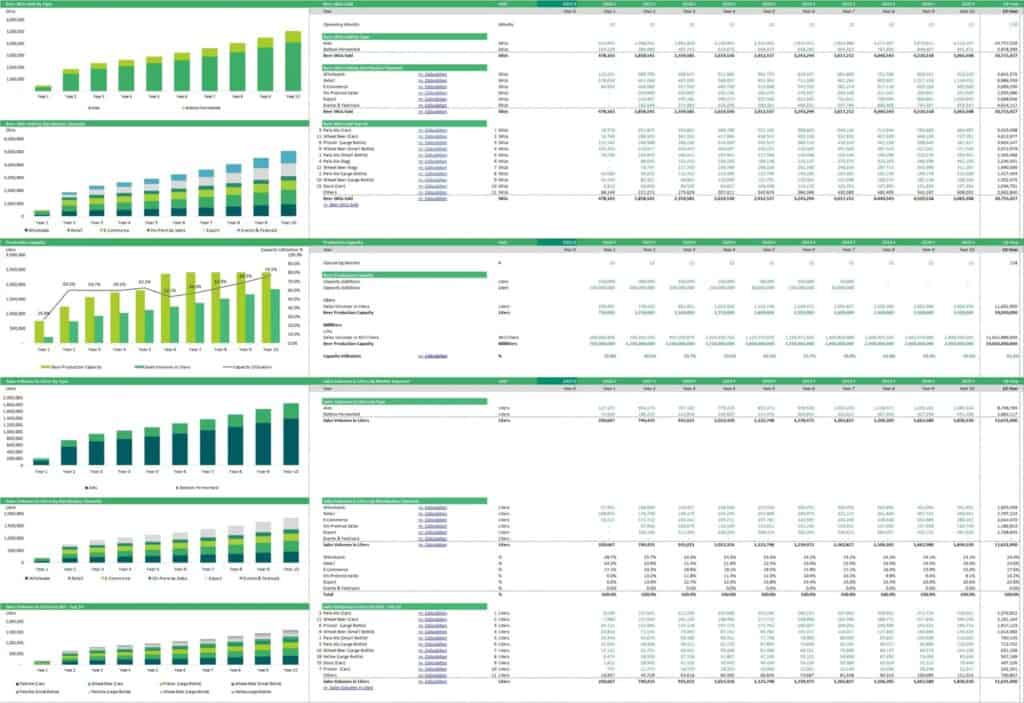
The microbrewery sales forecast above projects growth from 206,667 to 874,167 liters over 10 years, with volumes split by market segment, channel, and packaging type. Retail and wholesale lead early sales, while on-premise and e-commerce grow later, offering higher margins. Prices and growth rates vary by segment, ranging from 8–20% annually. Bottles dominate early packaging, with kegs rising as taproom and bar sales expand. This forecast supports growth through scaled production, wider distribution, and a focus on high-margin channels.
Operating Costs
Next, the financial plan should show fixed costs like rent, salaries, insurance and variable costs like ingredients, packaging, and utilities. Each bottle or keg includes malt, hops, water, packaging, and labor costs. Alcohol taxes vary by region and are often paid by the seller, though who pays can change by sales channel. Income taxes depend on profit and local laws.
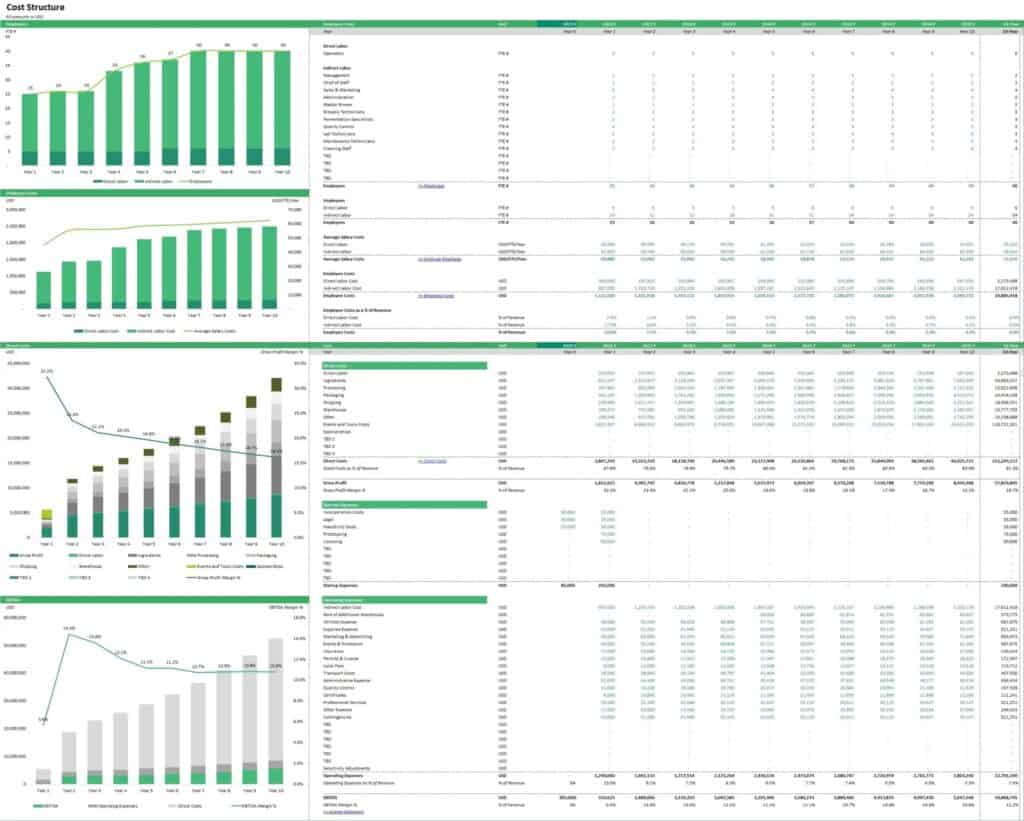
The above cost forecast shows how a microbrewery scales its spending over time. Fixed costs cover salaries and rent, while variable costs like ingredients and packaging grow with production. Staff increases from 15 to 40, with average pay between $42,000 and $53,000. Gross profit margin rises from 32.5% to over 45%, and steady EBITDA growth reflects strong cost control and smart scaling.
Profit Analysis
A microbrewery financial plan should clearly show how much profit you make per bottle or keg. This depends on your production cost, selling price, and taxes. Tax rates include alcohol excise taxes and business income tax, which vary by region but can range from 10% to 30% combined.
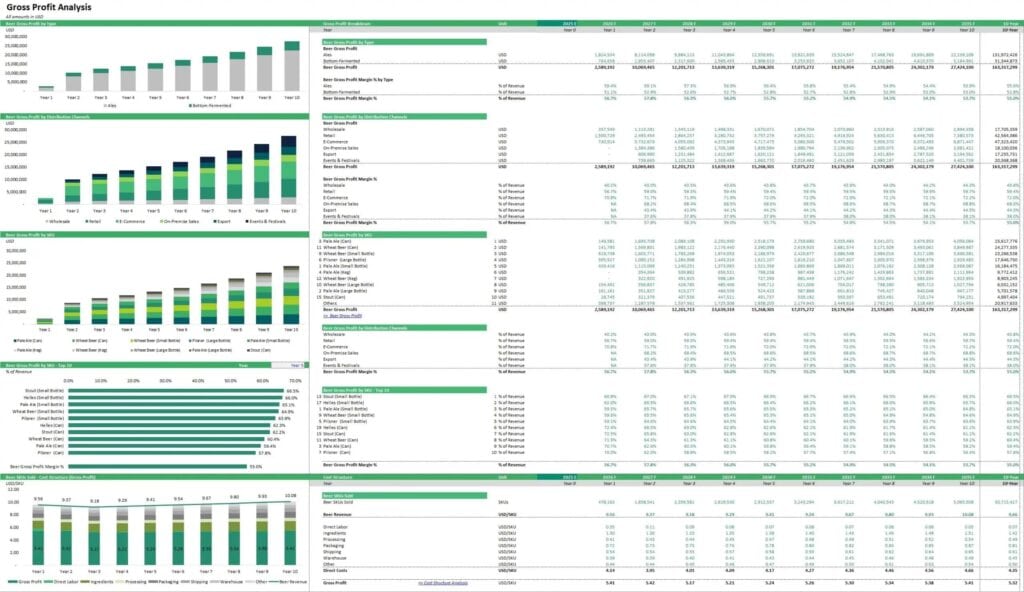
The profit analysis shows gross profit growing from $2.9M to $27M in 10 years, with margins averaging 55%—high-margin products like bottled wheat beer and export sales lead to performance. Unit profit rises from $5.41 to $6.37 while costs remain stable, showing efficient, profitable scaling.
Financial Feasibility Analysis
Last, a microbrewery financial plan should clearly show expected results through forecasted income and cash flow statements. It must highlight when the business becomes profitable and how many liters of beer are needed to break even. Cash flow projections reveal how much the business can generate each year and when production capacity must grow to meet demand. To assess financial viability, the plan should include a payback period, expected investor returns, and whether profits are strong enough to justify the investment. A solid microbrewery financial plan proves the business can grow, stay profitable, and deliver attractive returns.
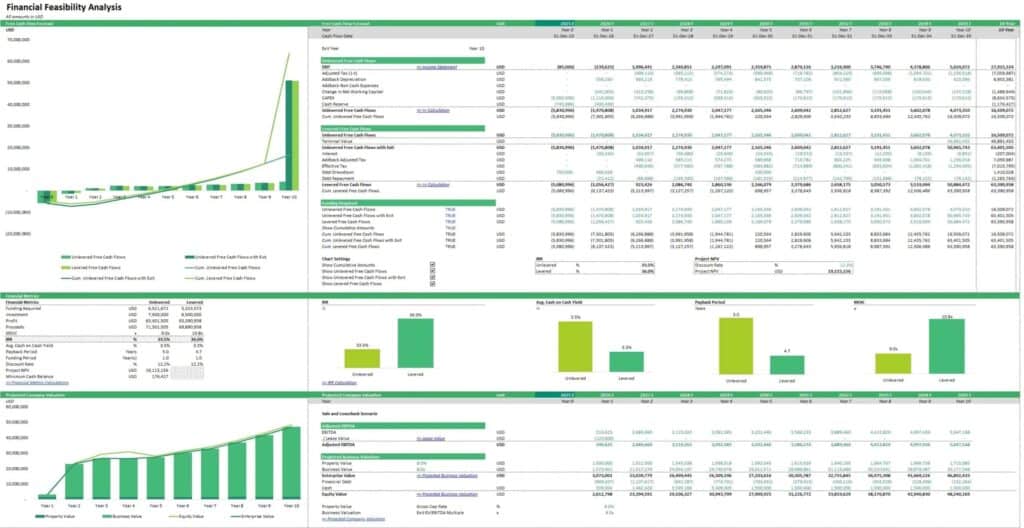
The above financial feasibility analysis shows the microbrewery becomes cash flow positive by Year 3 and generates over $27M in free cash flow by Year 10. It highlights a strong expected returns, with an Internal Rate of Return (IRR) of 33.5% (unlevered) and a 5-year payback period. The breakeven point is reached early, with rising profitability and cash yield each year. Valuation charts show steady growth in business value, proving the model’s long-term potential. The analysis confirms the business is financially viable, offers solid investor returns, and scales efficiently with timely capacity expansion. Investors and lenders need solid financial data before funding a business.
Step 4: Establish the Legal Structure
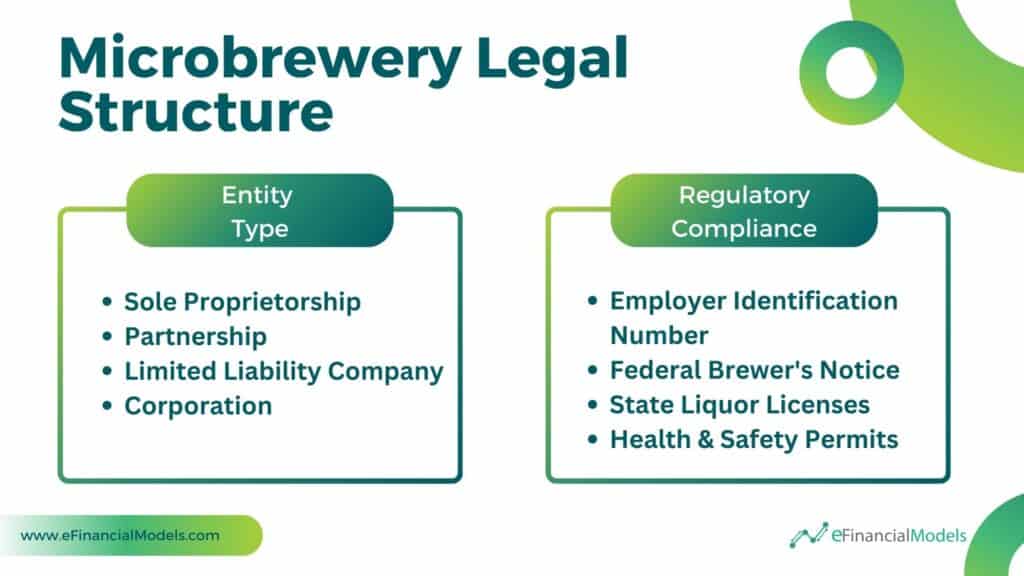
When discussing how to start a microbrewery business, numerous legal requirements and regulations are crucial to form the right business structure. Your business structure will impact your taxes, liability, and funding options. Common structures include:
- Sole proprietorship: Simple but offers no liability protection.
- Partnership: Suitable for co-founders but requires clear agreements.
- Limited Liability Company (LLC): Provides liability protection while maintaining flexibility.
- Corporation: Best for large-scale operations seeking investors.
Obtain an Employer Identification Number (EIN) from the IRS and register your business with state and local authorities. This is necessary for tax purposes and hiring employees. Brewing and selling alcohol requires various licenses, including:
- A Federal Brewer’s Notice from the Alcohol and Tobacco Tax and Trade Bureau (TTB).
- State liquor licenses for manufacturing and selling beer.
- Health and safety permits for production and taproom operations.
Before launching your microbrewery, secure all required permits. Producing and selling alcohol usually needs federal, state, and local licenses. Missing any can lead to fines or forced closure. To avoid risks, work with a legal expert who understands alcohol laws and helps you stay compliant from day one.
Step 5: Secure Capital
The next step on how to start a microbrewery business is to secure the necessary capital. Starting a microbrewery requires significant capital investment, making funding a crucial step. Several financing options are available, including:
- Bank loans: Traditional loans provide capital but require strong financial projections.
- Bootstrapping: Many founders bootstrap their business using their personal savings.
- Crowdfunding: Platforms like Kickstarter allow fans to invest in your vision.
- Investors: Angel investors and venture capital firms may be interested in high-growth breweries.
Some states offer grants and tax incentives to support small breweries—research local and federal programs to reduce startup costs.

Securing capital for a microbrewery starts with a solid financial feasibility analysis. This process estimates costs, potential revenue, and profitability. It helps identify startup expenses, operational costs, and break-even points. Investors and lenders want clear projections before committing funds. A well-prepared analysis boosts confidence in your business plan. It also highlights risks and strategies to manage them. Strong financial planning increases your chances of securing the capital to launch and grow.
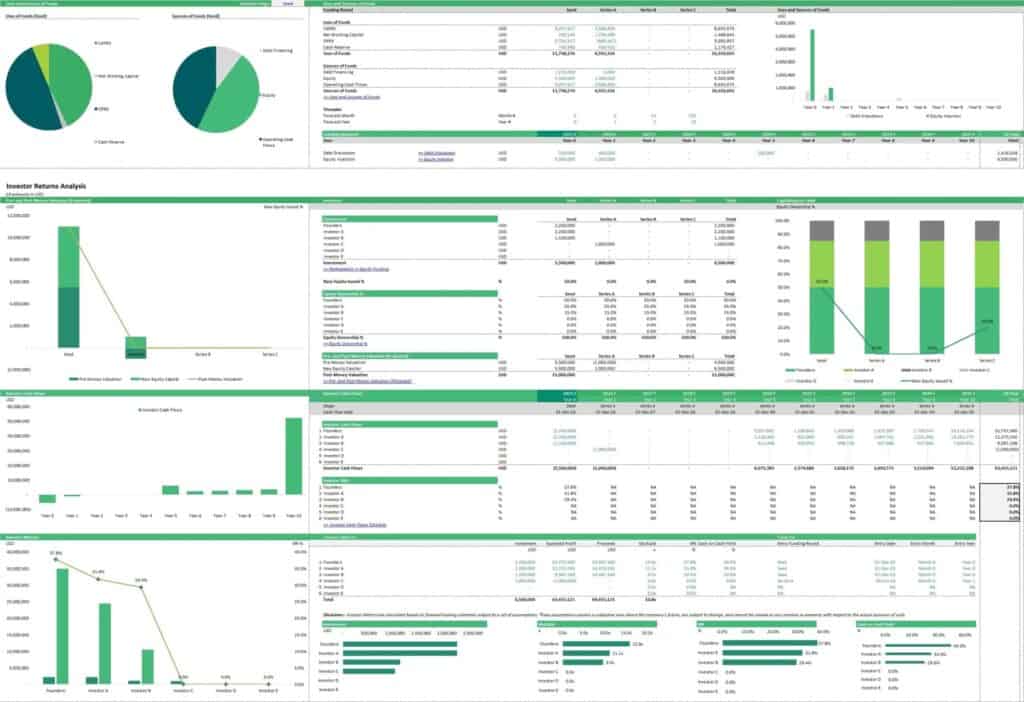
The above section of our Microbrewery Financial Model shows how funds are raised and spent. Most go to CAPEX, working capital, and startup costs, with early cash reserves supporting operations. Funding comes from equity and debt, mainly through seed and Series A rounds. Charts and timelines track where the money goes, ensuring steady growth and investor confidence.
Step 6: Form Your Microbrewery Team
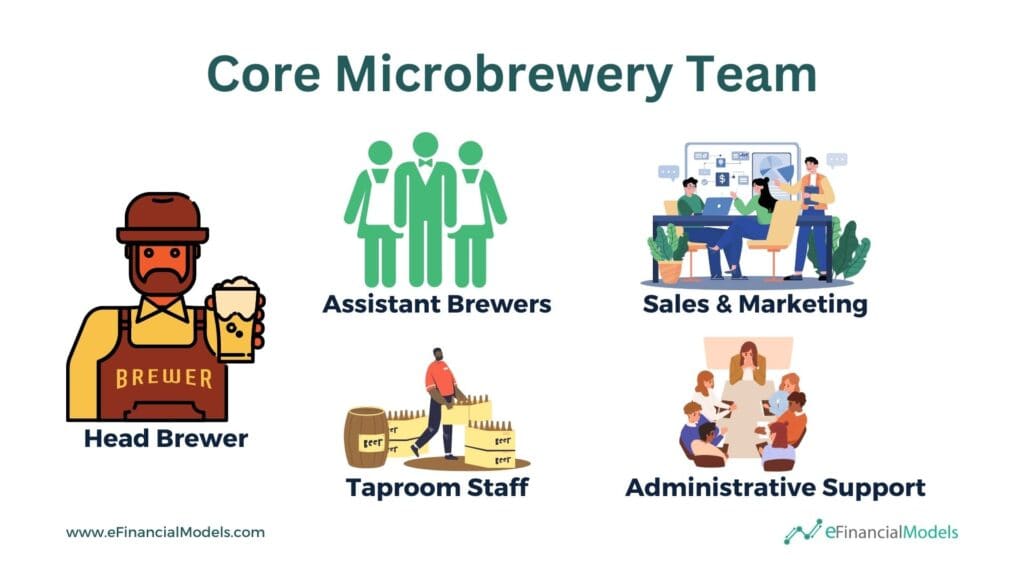
Running a successful microbrewery requires a skilled and passionate team. Your core team should include:
- A Head Brewer is responsible for recipe development and production.
- Assistant Brewers to handle day-to-day operations.
- Taproom Staff will engage with customers and manage sales.
- Sales and Marketing Personnel to promote your brand and secure distribution deals.
- Administrative Support for financial and legal management.
Craft brewing thrives on creativity and collaboration. Investing in employee training, fostering a passion for craft beer, and maintaining a positive workplace culture will help retain top talent. Some functions, such as distribution and marketing, can be outsourced to third parties. Evaluate the cost-benefit of keeping these roles in-house versus contracting professionals.
Crafting Profit: How Financial Modeling Fuels Microbrewery Success
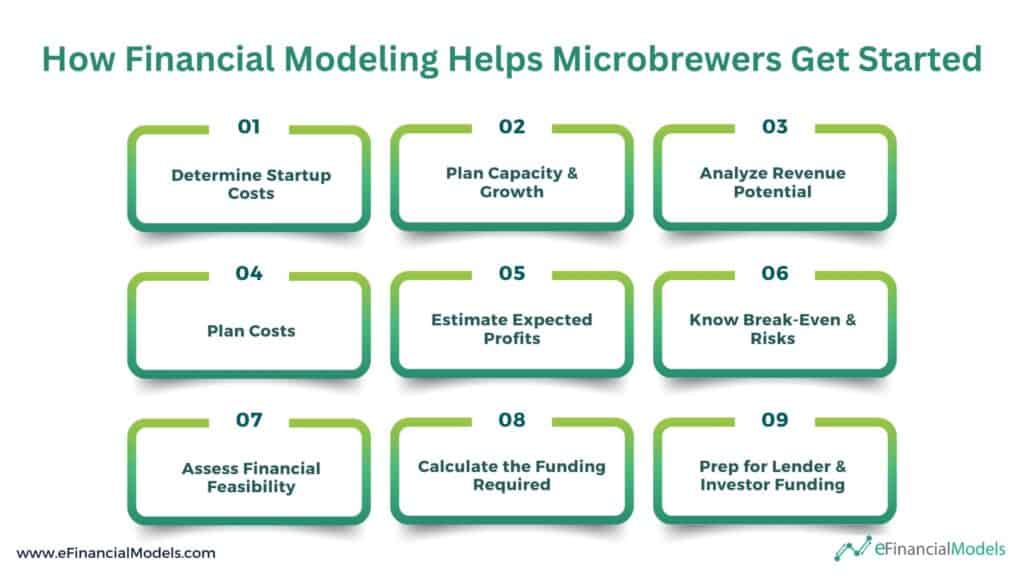
A financial model is a must-have when launching a microbrewery. It lets you map out startup costs, plan how much beer you can produce, and see how your business can grow. You can forecast revenue, track expenses, and estimate profits clearly. It shows when you’ll break even and where risks may arise. Most importantly, it helps you test if the business makes financial sense. You’ll know how much funding you need and be ready to pitch to lenders and investors confidently.
Here are some of our financial model templates where you can get started:
- Microbrewery Business Financial Model
- Microbrewery Financial Model – Dynamic 10-Year Forecast
- Microbrewery Business Financial Model (10+ Yrs. DCF and Valuation)
- Micro Distillery Business Plan Financial Model Excel Template
- Brewery Financial Model and Budget Control
- Liquor Distillery Financial Plan Template
- and many more…
Financial modeling helps microbreweries turn great beer into a great business. It forecasts costs, revenue, and profitability, guiding smart decisions on pricing, production, and expansion. With a clear financial plan, brewers can secure funding, manage cash flow, and avoid costly mistakes. Want to build a profitable microbrewery? Use financial models to map your path to success. Explore expert templates at eFinancialModels.com today!
No Downloads found
You might also like:
- 10 Tips to Develop a First Class Business Valuation Report
- Breaking down Microbrewery Startup Costs
- How to Start a Distillery Business: What You Need to Know?
- Top 5 Tips For a Good Financial Due Diligence
- 10 Main Elements of a Business Plan
- How to Write a Business Plan Step-by-Step
- 5 Steps to Create a Drop Down List Using Data Validation in Excel
- 5 Practical Tips to Help Raise Funds For Startups
- Understanding the Debt Service Coverage Ratio: An Essential Metric for Financial Analysis
- Financial Modeling for Startups and Small Businesses
- Restaurant Business
- Business Valuation
- 10-Step Financial Planning Checklist for Smart Executives
- Financial Planning for Small Business Owners – Taking an SBA Loan
- Financial Statements – Definition, Uses, Contents and Templates
- Simple Fundraising Model
- Financial Ratios Analysis and Its Importance
- Food & Beverages)
- Venture Capital vs. Private Equity: Which is Right for You
- SaaS Business Financial Model