
0 ITEMS

How Non-Financial Business Value Drivers Lead to Success

In 2008, Apple faced fierce competition in the smartphone market. While rivals focused on specs and price wars, Apple prioritized its non-financial business value drivers. Its strong brand reputation builds trust and loyalty. Customer satisfaction keeps people coming back. Skilled employees fuel innovation. High-quality products and services set it apart. Cutting-edge technology keeps it ahead of the competition. Altogether, these factors turned the iPhone into more than a product; it became a status symbol.
Successful brands don’t just rely on financial performance—they build lasting value through a key non-financial business value driver. A strong brand reputation earns trust. High customer satisfaction creates loyalty. Skilled employees fuel innovation. Quality products and services set businesses apart. Advanced technology drives efficiency and growth. This blog explores five powerful non-financial business value drivers, with real-life examples of how top brands use them to stay ahead.
What Is a Value Driver in Business?
First, we need to understand what is a value driver in business? It represents an activity that directly impacts financial success. It boosts revenue, enhances efficiency, or reduces costs. Businesses focus on these actions to increase profits and stay competitive. What is a value driver in business also represents a core element that fuels growth. It strengthens market position, attracts customers, and improves performance. Key drivers include brand reputation, product quality, and strategic partnerships. Companies prioritize these factors to scale and succeed.
A business value driver falls into two categories: financial and non-financial. Financial value drivers increase revenue, improve profitability, or reduce costs. Non-financial value drivers enhance brand reputation, customer loyalty, or growth. Both create long-term business value. They drive growth, strengthen competitive advantage, and support sustainability. Companies must balance both to succeed.
Financial vs. Non-Financial Value Drivers
To define a non-financial business value driver, we must compare it with financial value drivers.
- Financial value drivers focus on tangible assets like cash, equipment, and inventory that appear in balance sheets. These physical resources directly impact revenue and profit. In contrast, non-financial value drivers revolve around intangible assets such as brand reputation, customer loyalty, and innovation. While financial drivers boost short-term gains, non-financial drivers build long-term success. Both are essential for sustainable growth.
- Financial value drivers provide high immediate liquidity through cash, investments, and assets that quickly convert to money. They support short-term needs and financial stability. Non-financial value drivers, like brand strength and employee expertise, lack immediate liquidity but create long-term value. Companies need both to balance short-term gains and future growth.
- Financial value drivers have an active trading market, making assets like stocks and real estate easy to buy and sell. They offer quick value realization. Non-financial value drivers lack a trading market, such as brand reputation and culture. Their worth grows over time and depends on strategic investment. Both drive business success in different ways.
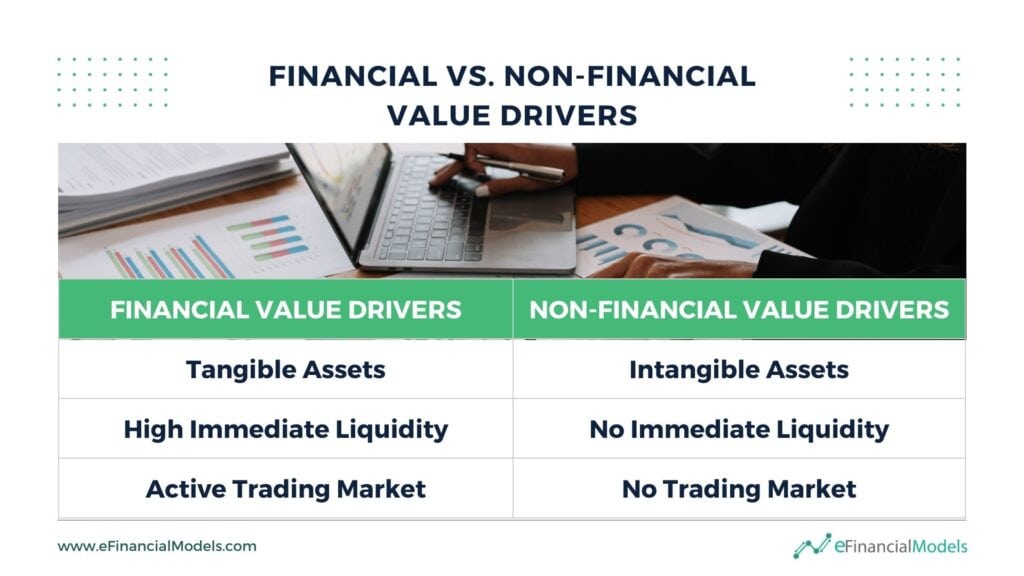
To sum it up, a non-financial business value driver don’t appear in financial statements. However, they boost a business’s growth and efficiency beyond just money. These include: brand reputation, customer satisfaction, human capital, products/services, and technology. These elements shape long-term success. While financial metrics show results, non-financial drivers reveal what fuels them.
5 Key Non-financial Value Drivers Examples Explained
Financial metrics matter to make smart decisions, but non-financial value drivers examples shape long-term success. Brand reputation, customer satisfaction, human capital, products & services, and technology create lasting competitive advantages. These factors influence growth, investor confidence, and profitability. Understanding them helps businesses build resilience and unlock new opportunities.
Brand Reputation
Brand reputation is a powerful non-financial value driver because it attracts customers, builds trust, and strengthens market position. A strong reputation increases customer loyalty, allowing businesses to charge premium prices and reduce marketing costs. It also attracts top talent and enhances partnerships, giving the company a competitive edge. Investors see reputable brands as lower risk, which can boost valuations. Unlike financial assets, a brand reputation takes years to build but can be quickly damaged. Companies that protect and enhance their brand image create long-term value, making reputation a key value drivers example of sustainable success.
Nike’s brand reputation has been a key non-financial value drivers example. Its strong image of innovation, quality, and social responsibility keeps customers loyal and willing to pay premium prices. The company’s endorsements with top athletes, like Michael Jordan, boost credibility and demand. Even during controversies, Nike’s brand strength helps it recover quickly. Investors and partners see its reputation as a competitive advantage, increasing trust and long-term value. This strong brand identity allows Nike to easily expand into new markets, proving that reputation drives business success beyond financial metrics.
Customer Satisfaction
Customer satisfaction is a key non-financial value driver example because happy customers lead to repeat business, positive reviews, and strong brand loyalty. Satisfied customers recommend products, reducing marketing costs and increasing organic growth. High satisfaction also lowers churn, improving long-term revenue stability. Companies with strong customer loyalty can charge premium prices, boosting profitability without adding costs. Additionally, happy customers enhance a brand’s reputation, attracting investors and top talent. While customer satisfaction doesn’t appear on financial statements, it directly influences revenue, margins, and overall business growth, making it a crucial driver of long-term success.
Amazon proves how customer satisfaction drives long-term value. The company prioritizes fast shipping, easy returns, and strong customer support. Happy customers keep coming back, fueling repeat sales and word-of-mouth referrals. This loyalty reduces marketing costs and strengthens Amazon’s market position. High satisfaction also allows Amazon to expand services with built-in trust, like Prime and AWS. Though customer satisfaction doesn’t appear on financial reports, it boosts retention, revenue, and brand strength. Amazon’s success shows that putting customers first creates lasting business value beyond immediate profits.
Human Capital
Human capital drives business success beyond financial numbers. Skilled employees boost productivity, innovation, and customer satisfaction. A strong team improves efficiency, adapts to change, and creates long-term value. Without top talent, even a well-funded business can struggle. Investing in people strengthens a company’s market position, brand reputation, and growth potential. While financial metrics measure past performance, human capital shapes future success.
Google’s success depends on its people, not just its technology. The company hires top engineering, AI, and marketing talent to drive innovation. Google’s culture fosters creativity, collaboration, and problem-solving. For example, its search algorithm evolved through continuous improvements by skilled teams, keeping it the global leader. Employee perks, training, and a dynamic work environment attract and retain top professionals. This investment in human capital fuels long-term growth, competitive advantage, and market leadership. Without its people, Google would be just another tech firm.
Products & Services
Quality products and services define a company’s market position. Businesses that offer unique, reliable, and well-designed solutions gain customer trust. Continuous improvement and adaptation keep a company competitive. Strong offerings build brand loyalty and revenue stability. Tesla’s electric vehicles stand out for their innovation and performance. High demand for its cars boosts revenue and market share. Continuous improvements in battery technology and self-driving features strengthen customer trust. Strong product offerings position Tesla as a leader, increasing its overall value.
Tesla’s electric vehicles (EVs) redefine the auto industry with innovation and sustainability. Their cutting-edge technology, long-range batteries, and self-driving features attract loyal customers and investors. Tesla’s focus on software updates and energy solutions strengthens its brand beyond cars. Superior products create market differentiation, boosting demand without relying solely on price. This non-financial value fuels long-term growth, making Tesla a leader in the EV market.
Technology
Technology drives business growth by improving efficiency, enhancing customer experience, and enabling innovation. For example, This non-financial value drivers example strengthens brand reputation, attracts loyal customers, and creates a competitive edge. Strong technology also boosts scalability, allowing businesses to expand faster with fewer resources. Companies that invest in cutting-edge technology gain long-term advantages, even if the benefits don’t immediately appear in financial statements.
Netflix uses advanced technology to personalize recommendations, keeping users engaged and reducing churn. Its AI-driven algorithms analyze viewing habits to suggest content, making the platform more addictive. This innovation enhances customer satisfaction and strengthens brand loyalty. By investing in streaming technology, Netflix delivers high-quality video with minimal buffering, improving the user experience. These tech-driven advantages don’t appear directly on financial statements but create long-term value.
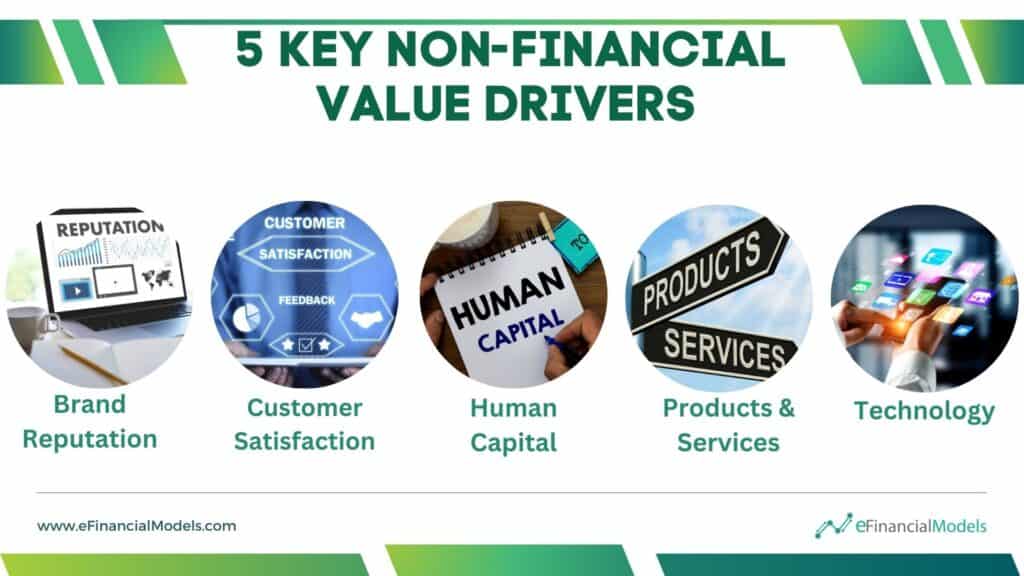
Brand reputation builds trust, customer satisfaction drives loyalty, and human capital fuels innovation. Strong products and services differentiate a business, while technology enhances efficiency and scalability. These five powerful non-financial value drivers examples shape a company’s long-term success by strengthening its market position and competitive edge. They may not appear on financial statements but create lasting value, influencing growth, profitability, and investor confidence. Prioritizing and optimizing these factors can lead to sustained business success.





















































Why Should Companies Evaluate Non-Financial Value Drivers?
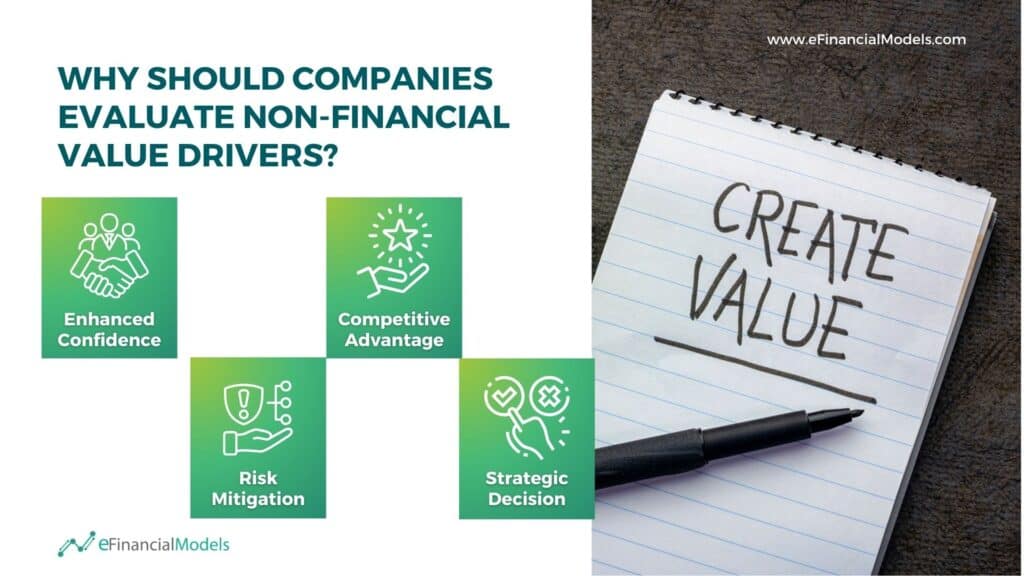
Companies must assess non-financial value drivers because they shape long-term success. Non-financial value drivers examples, like brand reputation, employee engagement, and customer satisfaction impact revenue growth and sustainability. Ignoring these elements can weaken competitive positioning and investor appeal. Businesses that track and optimize non-financial drivers gain resilience, adaptability, and stronger market influence.
- Enhanced Investor & Stakeholder Confidence: Investors and stakeholders seek more than just financial performance. They value ethical practices, innovation, and strong governance. Companies that showcase these strengths build trust and attract long-term investment. Clear reporting on non-financial drivers signals transparency, reducing uncertainty and enhancing credibility.
- Long-Term Competitive Advantage: Sustained success requires more than profits. Strong customer relationships, innovation, and ESG commitments help companies stay ahead. Businesses that invest in these areas create unique value, making it harder for competitors to replicate their success. Long-term thinking ensures relevance in an evolving market.
- Risk Mitigation: Ignoring non-financial risks can lead to reputational damage, legal issues, or operational failures. Companies that track regulatory compliance, environmental impact, and employee well-being reduce vulnerabilities. Proactive management of these risks prevents costly disruptions and ensures business stability.
- Strategic Decision-Making: Leaders need a full picture to make smart choices. Financial data alone doesn’t capture market shifts, employee morale, or brand perception. Companies that consider non-financial drivers gain deeper insights, allowing them to align strategy with long-term goals and stakeholder expectations.
Non-Financial Value Drivers Shape Long-Term Profit & Growth
Non-financial value drivers shape long-term profit margins and growth rates. Strong leadership, brand reputation, and customer loyalty improve financial performance. Efficient operations and innovation also boost revenue. These factors create lasting competitive advantages. Businesses that invest in them see steady growth and higher profitability over time. Clear results come from measurable improvements. A higher EBITDA margin signals stronger profitability. This shows that cost efficiency, pricing power, or operational improvements are working. Tracking EBITDA over time helps businesses see if non-financial value drivers are making an impact.
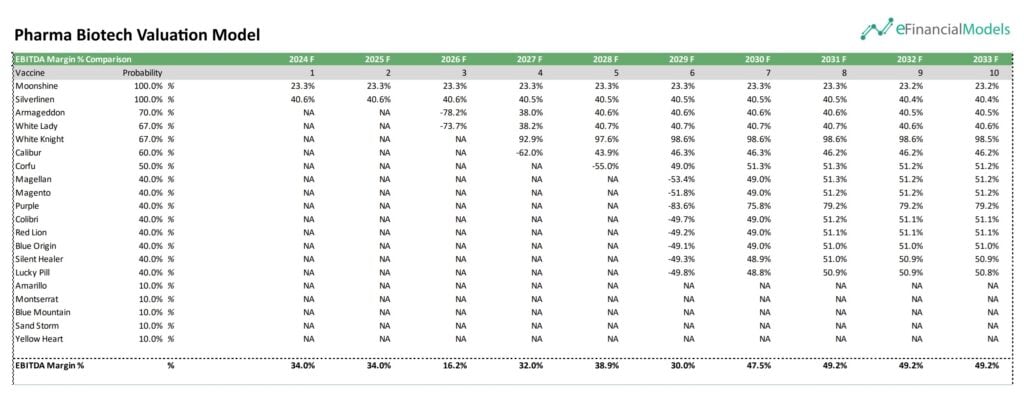
The Pharma Biotech Valuation Model chart above shows how non-financial value drivers impact EBITDA margins over time. Factors like innovation, brand strength, and regulatory approvals help sustain profitability. Vaccines with high probability ratings, like Moonshine and Silverlinen, maintain stable or improving EBITDA margins. In contrast, lower-probability vaccines show inconsistent or negative margins. This highlights how strong R&D, market positioning, and operational efficiency drive long-term financial success.
Measure Non-Financial Value with Smart Valuation Models
Non-financial business value drivers fuel long-term success by strengthening market position and driving sustainable growth. A strong brand reputation builds trust; customer satisfaction ensures repeat business and human capital fosters innovation. High-quality products and advanced technology improve efficiency and competitiveness. These factors directly impact key financial levers, leading to higher profit margins and accelerated growth.
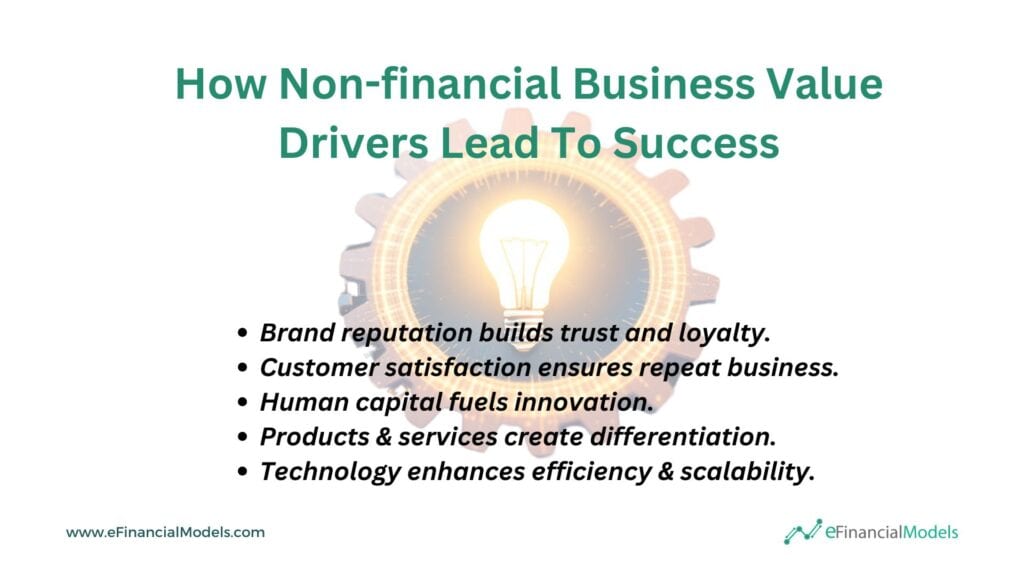
While these factors don’t appear on financial statements, they directly impact revenue and growth. Financial modeling. Valuation financial models help quantify their influence, allowing businesses to make informed strategic decisions that maximize value and long-term profitability. By recognizing and measuring these drivers, companies can strengthen their competitive edge and maximize overall value.
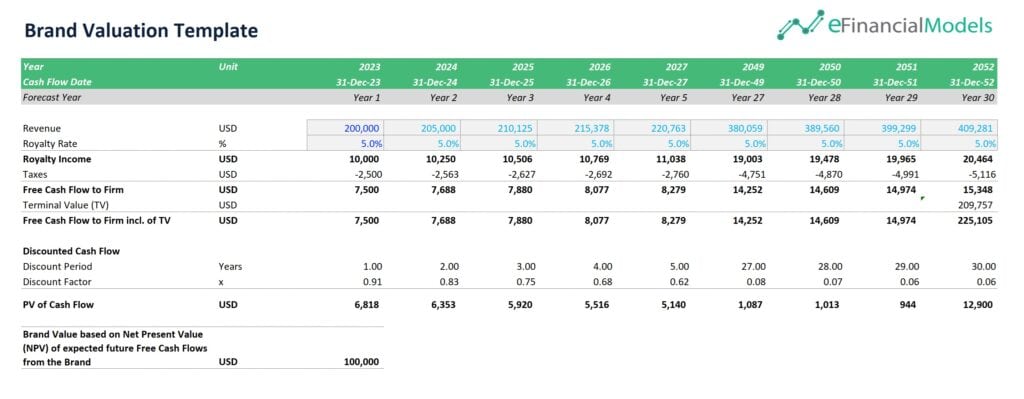
The chart above shows a Brand Valuation Template. It estimates a company’s brand value by projecting future cash flows from brand-related revenue, discounted to present value. Brand reputation influences revenue growth by attracting loyal customers and offering premium pricing. Customer Satisfaction drives repeat purchases, increasing royalty income. Human Capital—skilled employees—enhance brand strength, leading to better financial performance. Products & Services differentiate the company, ensuring steady revenue streams. Technology improves efficiency, innovation, and scalability, boosting long-term brand earnings. The model applies a royalty rate to revenue, calculates free cash flow, and discounts it to determine the brand’s net present value. A brand with a strong reputation can justify charging a higher royalty rate. This increases its overall brand value compared to brands limited to lower royalty rates.
Start leveraging financial modeling to quantify your non-financial value drivers—explore a brand valuation template today!












You might also like:
- 10 Main Elements of a Business Plan
- 10 Tips to Develop a First Class Business Valuation Report
- 5 Practical Tips to Help Raise Funds For Startups
- Financial Modeling for Startups and Small Businesses
- Financial Ratios Analysis and Its Importance
- How to Write a Business Plan Step-by-Step
- How to Value a Business Using a Discounted Cash Flow Model
- Understanding the Levelized Cost of Energy Formula
- Real Estate Financial Modeling in Excel
- Top 5 Principles of Corporate Finance
- Business Valuation
- Scenario Analysis
- Food & Beverages
- Commercial Real Estate
- Financial Planning
- Fundraising
- Financial Feasibility
- Investor Presentations
- Renewable Energy
- How to Calculate the Compound Annual Growth Rate (CAGR)
- Profitability Analysis