0 ITEMS

Hire a Financial Modeler: Costs From $2K to $50K+

Yes, you can hire someone to build your financial model, and the cost ranges from $2,000 for a simple 3-statement model to $50,000+ for complex M&A work.
Key Takeaways
- Junior financial modelers charge $50-75/hr; mid-level analysts charge $75-150/hr; senior or specialized modelers charge $150-300+/hr.
- A simple 3-statement model (income statement, balance sheet, cash flow) costs $2,000-$5,000 when outsourced professionally.
- DIY modeling from a template typically takes business owners 20-80 hours, depending on Excel proficiency and model complexity.
- Fundraising models for Series A or seed rounds cost $5,000-$15,000 from a professional; complex M&A or LBO models run $15,000-$50,000+.
- A hybrid approach, starting with a professionally built template and then hiring a modeler for review and customization, cuts total cost by 30-50% compared to a full custom build.
- 5 red flags signal a weak financial modeler: no industry-specific portfolio, inability to explain assumptions, fixed-price promises without scope definition, no references, and models that lack sensitivity analysis.
- EFM’s certified professional network vets modelers on technical standards, industry experience, and deliverable quality before listing them.
Can You Hire Someone to Build Your Financial Model?
You can absolutely hire a professional financial modeler, and for many business stages it’s the faster and lower-risk path. The financial modeling services market includes freelance analysts, boutique advisory firms, and certified professional networks like EFM’s, each with different price points, turnaround times, and quality standards.
The right answer depends on three variables: how complex your model needs to be, how quickly you need it, and whether your internal team can maintain it after delivery. A startup founder raising a $500K pre-seed round has different needs than a CFO running a 12-entity M&A consolidation.
The True Cost of DIY Financial Modeling
DIY financial modeling is not free. The template price is the smallest line item. Business owners without advanced Excel skills typically spend 20-80 hours building a model from a template, according to practitioner surveys across finance communities. At an opportunity cost of $150/hr for a founder or senior manager, that’s $3,000-$12,000 in time before a single investor sees the output.
Beyond time, three hidden costs compound the DIY risk:
Error risk. A 2013 study by Panko and Aurigemma published in the Journal of End User Computing found that as many as 88% of all non-trivial spreadsheets contain at least one formula error.
In a fundraising context, a single miscalculated burn rate or revenue projection can trigger investor skepticism that kills a round. According to Microsoft’s Excel specifications and limits, a single worksheet supports up to 1,048,576 rows and 16,384 columns.
Meaning even moderately complex models can sprawl across millions of cells where errors hide undetected.
Revision cycles. Investors and lenders routinely request 3-5 rounds of model revisions during due diligence. Each revision cycle on a self-built model adds 5-15 hours if the structure wasn’t built for flexibility from the start. Excel’s nested IF function supports up to 64 levels of nesting.
But models built without professional discipline routinely exceed readable complexity long before that limit, making revisions exponentially harder.
Credibility cost. A model that looks amateur signals to investors that the founder lacks financial rigor. According to research published by the Kauffman Foundation, financial planning quality is one of the top predictors of early-stage startup survival, and investors use model quality as a proxy for management capability.
For founders with strong Excel skills and simple projection needs, DIY with a quality template is legitimate. For anyone raising capital above $500K, running a complex operation, or facing a hard deadline, the math usually favors hiring.
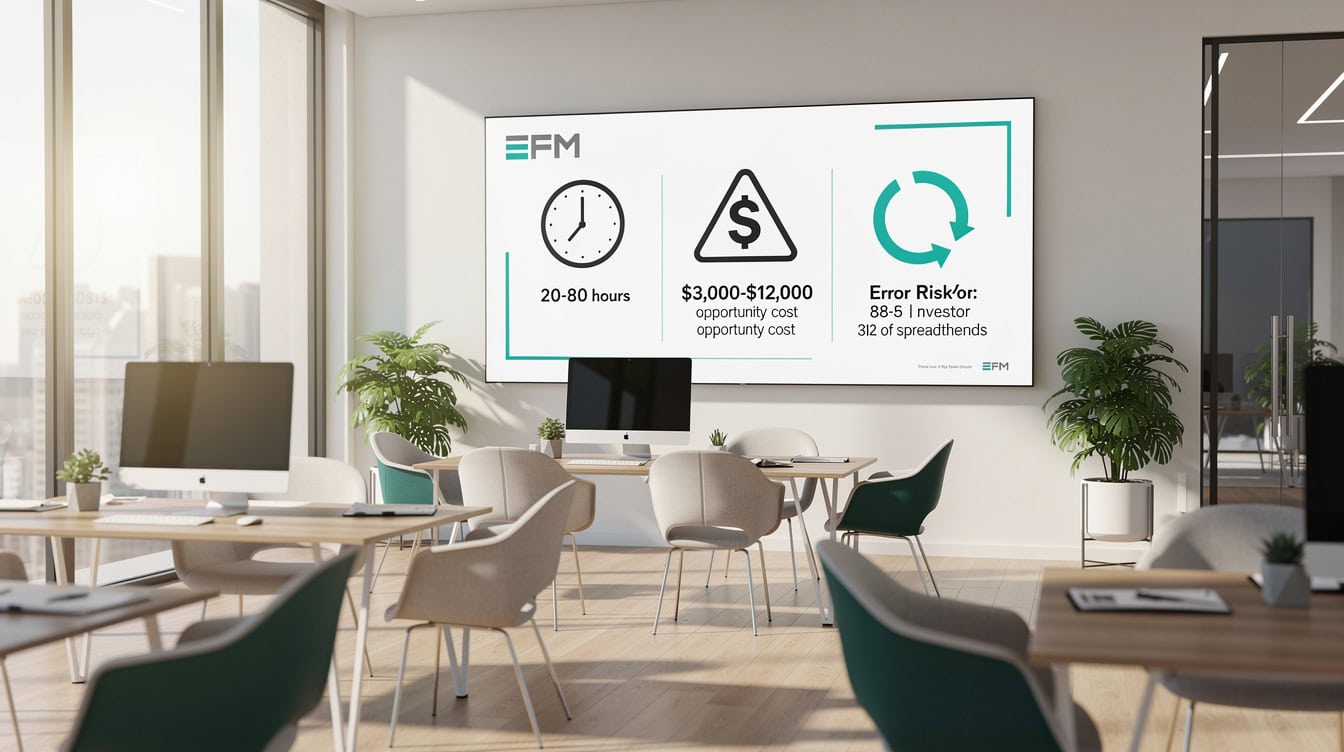
DIY modeling costs $3,000-$12,000 in founder time before accounting for error risk or revision cycles during investor due diligence.
What You Actually Pay When Hiring a Financial Modeler
Professional financial modeling fees break down along two axes: the modeler’s experience level and the complexity of the deliverable. Understanding both axes prevents you from overpaying for simple work or underpaying for complex models and getting a result that fails due diligence.
Pricing by Expertise Level
Hourly rates in the financial modeling market follow a clear tier structure:
- Junior analyst ($50-75/hr): 1-3 years of experience, competent with standard 3-statement models and basic scenario analysis. Suitable for simple projections and template customization.
- Mid-level analyst ($75-150/hr): 3-7 years of experience, handles fundraising models, SaaS metrics dashboards, and real estate pro formas. Can document assumptions and run sensitivity analysis independently.
- Senior or specialized modeler ($150-300+/hr): 7+ years, often with CFA, FMVA, or Big 4 background. Handles M&A models, LBO structures, complex multi-entity consolidations, and investor-ready deliverables under tight timelines.
Geography also affects rates. U.S.-based modelers command a 30-50% premium over equally qualified professionals in Eastern Europe or Southeast Asia, according to freelance platform rate data. Remote delivery has made geographic arbitrage a real option for non-time-sensitive projects.
Pricing by Model Complexity
| Model Type | Typical Scope | Cost Range | Timeline |
|---|---|---|---|
| 3-Statement Model | Income, balance sheet, cash flow | $2,000-$5,000 | 1-2 weeks |
| Startup/Fundraising | Revenue drivers, burn, runway | $5,000-$15,000 | 2-4 weeks |
| SaaS / Subscription | MRR, churn, LTV/CAC | $5,000-$12,000 | 2-3 weeks |
| Real Estate Pro Forma | NOI, cap rate, IRR | $3,000-$10,000 | 1-3 weeks |
| M&A / LBO Model | Acquisition, debt structure, returns | $15,000-$50,000+ | 4-8 weeks |
| Integrated Budget Model | Multi-department, rolling forecast | $8,000-$25,000 | 3-6 weeks |
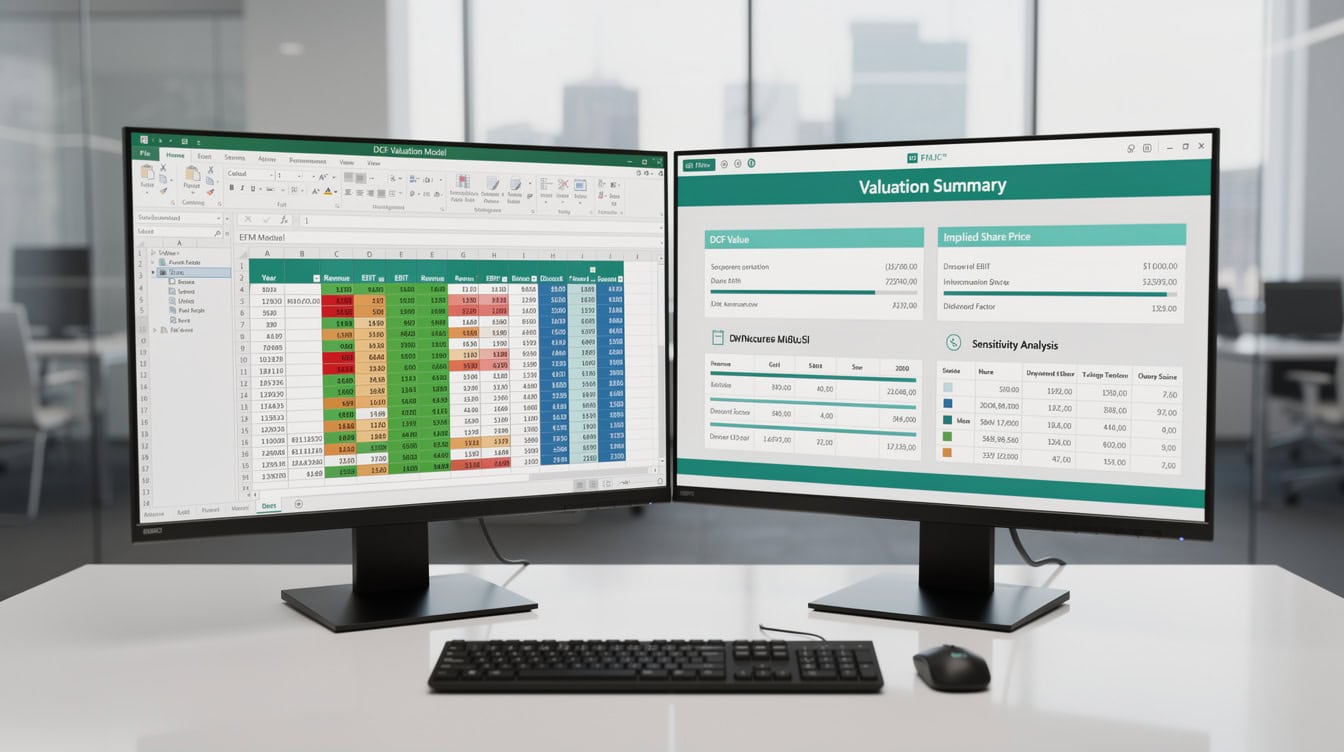
Senior modelers charge 4-6x the rate of junior analysts, but the gap in deliverable quality and investor-readiness is proportionally larger for complex models.
DIY vs. Hiring: Decision Framework
The right choice depends on your business stage, timeline, and the stakes attached to the model’s output. Use this framework to decide.
| Factor | DIY Template | Hire a Professional |
|---|---|---|
| Funding round size | Under $500K | $500K and above |
| Internal Excel skill | Advanced | Beginner to intermediate |
| Timeline | 4+ weeks | Under 3 weeks |
| Model complexity | Single revenue stream | Multi-driver, multi-entity |
| Investor scrutiny | Friends/family round | Institutional or VC |
| Ongoing maintenance | Self-sufficient | Needs training transfer |
A pre-revenue startup with a solo founder and 6 weeks before a demo day can often use a high-quality startup financial model template and invest 20-30 hours in customization. A Series B company preparing for a strategic acquisition cannot afford that path.
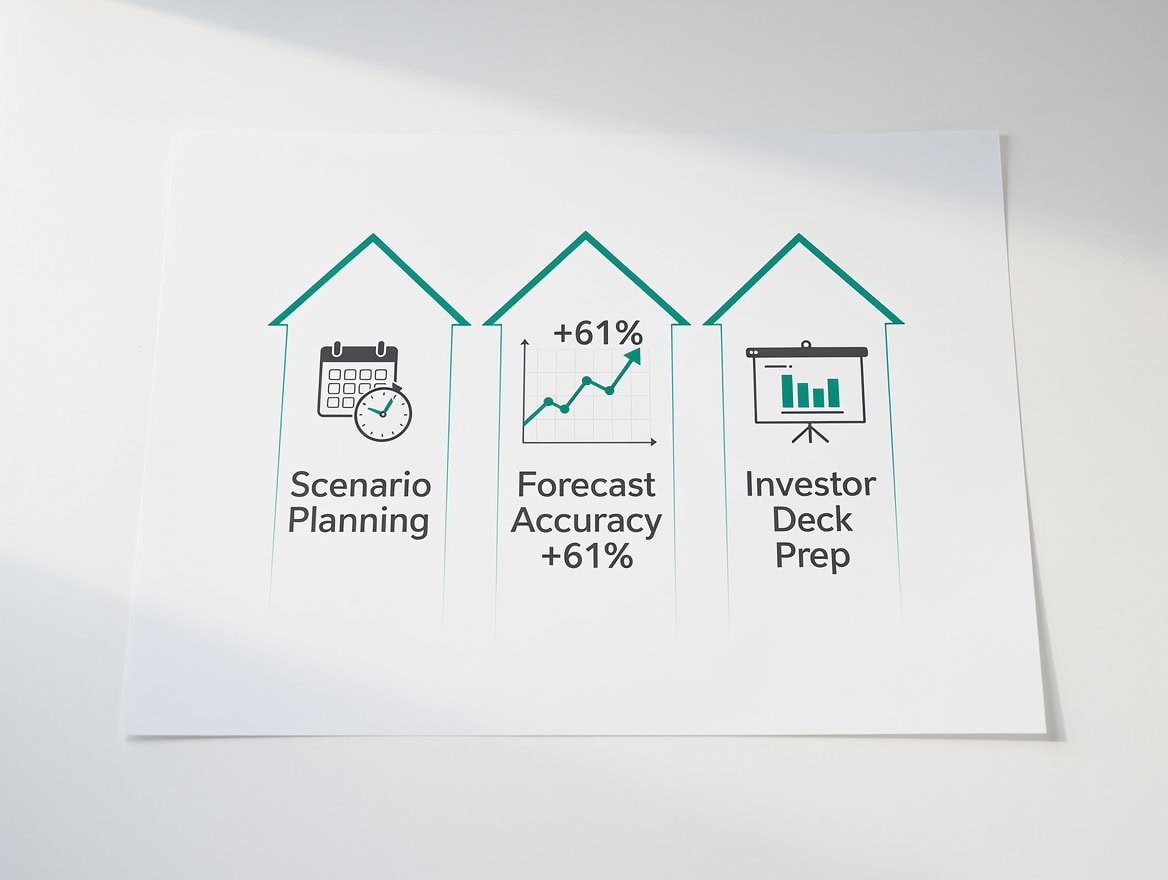
The professional path adds an assumptions workshop and structured review that the DIY path skips, which is where most investor-facing errors originate.
What Professional Modelers Deliver Beyond the Spreadsheet
A professional financial modeler doesn’t just hand you a file. The deliverable package from a qualified modeler includes six components that templates alone don’t provide:
- Assumptions documentation: Every input is sourced and justified, so investors can interrogate the logic, not just the numbers.
- Sensitivity analysis: A structured analysis (often called a data table or tornado chart) showing how outputs change when key inputs shift by 10-20%. This is standard in investor-grade models. Excel’s data tables support up to 2 input variables simultaneously.
Which is why professional modelers build multi-variable sensitivity grids using more advanced techniques beyond native Excel data tables.
- Scenario planning: Base, upside, and downside cases built into the model architecture, not bolted on as separate tabs.
- Investor-ready formatting: Clean, print-ready outputs with consistent formatting, color-coded input cells, and a summary dashboard.
- Audit trail: Named ranges, formula consistency, and no hardcoded numbers buried in formulas, so any analyst can review the model without a guided tour.
- Ongoing support: Most professional engagements include 2-4 weeks of post-delivery support for revisions and investor questions.
These deliverables matter because investors and lenders evaluate models as much for structure and transparency as for the numbers themselves. A model that can’t be stress-tested quickly signals risk.
For founders who want to understand what a complete financial model package looks like before hiring, browsing financial model templates gives a concrete reference point for professional-grade structure.
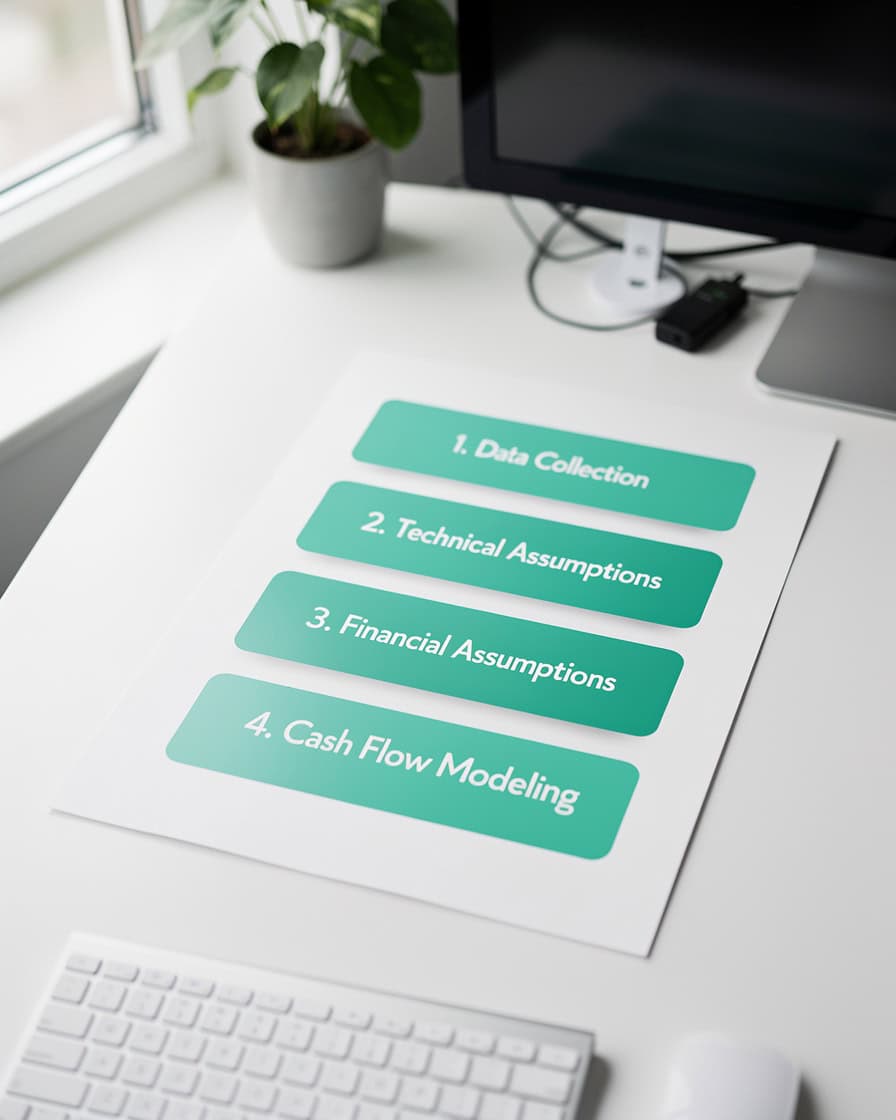
A professional engagement delivers six components beyond the spreadsheet itself, each of which investors and lenders evaluate during due diligence.
Worked Example: The Cost of a Model Error
Here’s the math on why model errors are expensive. Assume a startup raises a $3M Series A. The lead investor’s term sheet includes a 20% equity stake based on a $15M pre-money valuation. The valuation rests on a revenue projection of $4.2M in Year 2.
If the founder’s DIY model contains a compounding error in the revenue build, where monthly growth is applied to cumulative rather than incremental revenue, Year 2 revenue is overstated by 35%. The real projection is $3.1M, not $4.2M.
When the investor’s analyst catches this in due diligence:
- The pre-money valuation drops from $15M to $11M (a 27% reduction).
- The founder’s dilution increases from 20% to 27% on the same $3M raise.
- At a $50M exit, that 7-point dilution difference costs the founder $3.5M in proceeds.
The professional modeler who would have caught that error charges $8,000 for a fundraising model. The cost of not hiring: $3.5M in lost exit value.
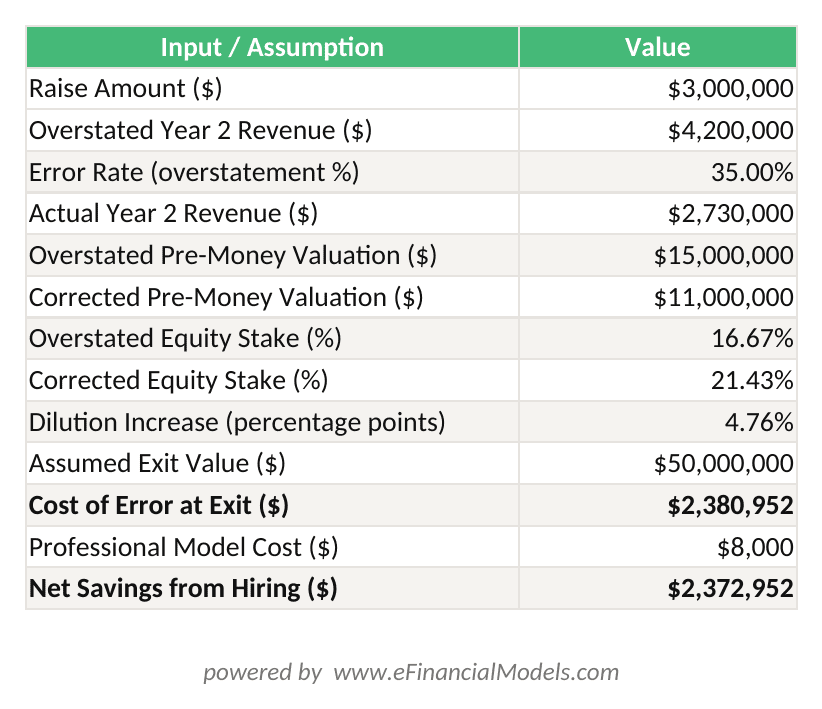
A single compounding error in the revenue build overstates Year 2 revenue by 35%, drops pre-money valuation by $4M, and costs $3.5M at a $50M exit.

A single compounding error in a revenue build reduced this founder’s pre-money valuation by $4M and cost $3.5M in exit proceeds at a $50M outcome.
How to Evaluate Financial Modelers: Red Flags and Green Lights
Not all financial modelers deliver equal quality. The market includes highly skilled professionals and generalists who overstate their capabilities. Here’s how to tell the difference.
Red flags:
- No industry-specific portfolio or case studies. A modeler who has only built retail models shouldn’t be your first choice for a SaaS fundraising model.
- Can’t explain assumptions in plain English. If a modeler can’t walk you through why they chose a specific churn rate or gross margin assumption, they’re guessing.
- Fixed-price promises without a scope definition. Legitimate modelers scope projects before quoting. A flat fee without a discovery call is a warning sign.
- No references from past clients. Any professional with 3+ years of experience should have 2-3 references available.
- Models that lack sensitivity analysis. A model without scenario planning is incomplete for any investor-facing purpose.
Green lights:
- A portfolio with models in your industry or at your business stage.
- Clear communication about what’s included and what triggers additional fees.
- A structured onboarding process that starts with a assumptions workshop.
- Familiarity with the specific investor or lender type you’re targeting (VC, PE, bank, SBA).
- References who can speak to the modeler’s responsiveness during revision cycles.
EFM’s Certified Professional Network
EFM vets financial modeling professionals before listing them on the platform. The vetting process covers three areas: technical standards, industry experience, and deliverable quality.
On the technical side, EFM evaluates modelers against best-practice standards including formula consistency, no hardcoded values in calculation cells, proper use of named ranges, and model auditability. Modelers submit sample work that EFM’s editorial team reviews against these criteria.
On industry experience, EFM categorizes professionals by sector (SaaS, real estate, manufacturing, healthcare, etc.) and by model type (3-statement, LBO, project finance, etc.), so clients can match their specific need to a modeler with a relevant track record.
On deliverable quality, EFM’s quality assurance process includes a post-delivery review option where a second certified modeler audits the output before it reaches the client. This two-reviewer approach catches structural errors that even experienced modelers occasionally introduce under deadline pressure.
For clients who want a starting point before engaging a professional, EFM’s financial projections templates provide investor-grade structure that a professional can then customize, cutting project time and cost.
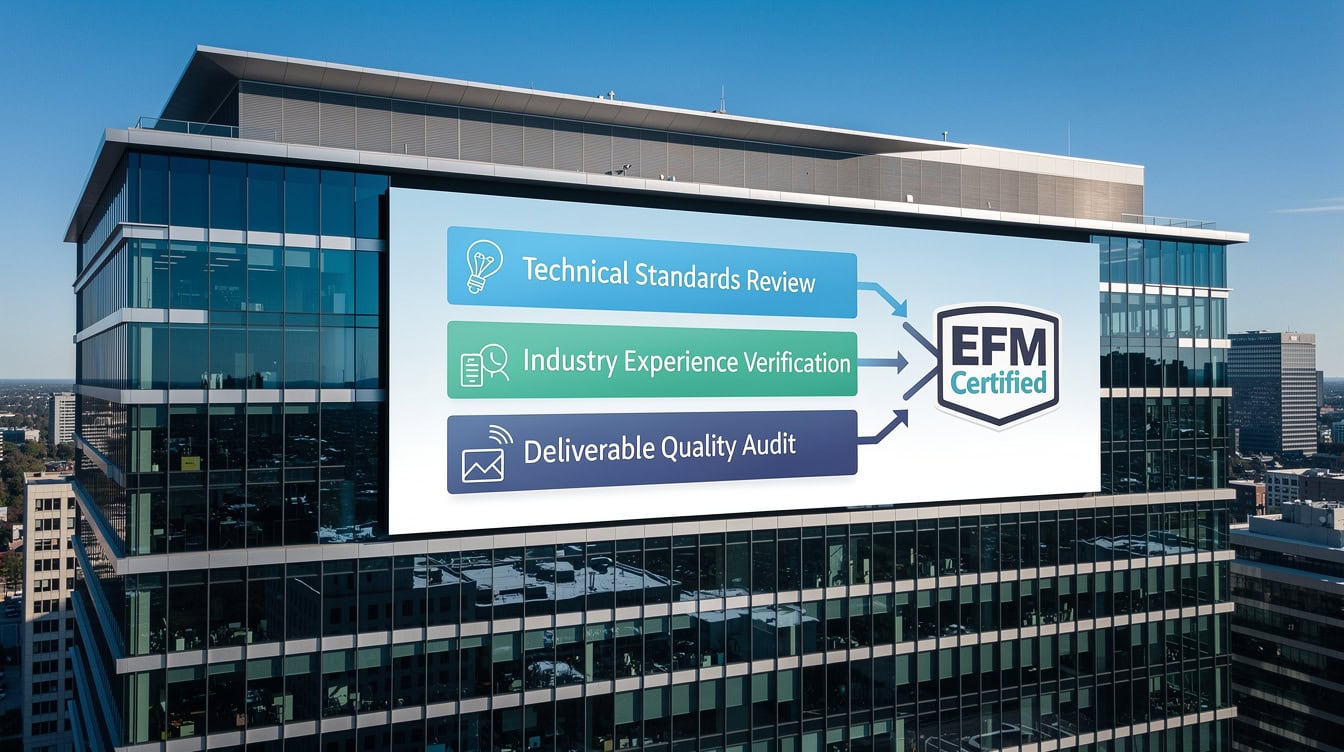
EFM’s three-stage vetting process filters for technical rigor, industry relevance, and deliverable quality before a professional joins the certified network.
Hybrid Approaches: Combining Templates with Professional Expertise
The hybrid approach is the most cost-effective path for many business stages. It works in three phases:
Phase 1: Template foundation. Start with a professionally built template matched to your business model. EFM’s 5-year financial projection templates cover most standard business types and provide the structural architecture that would otherwise take a modeler 10-20 hours to build from scratch.
Phase 2: Professional customization. Hire a mid-level modeler for 10-20 hours to customize the template to your specific revenue drivers, cost structure, and investor requirements. At $100/hr, that’s $1,000-$2,000 versus $5,000-$15,000 for a full custom build.
Phase 3: Expert review. Before any investor presentation, commission a 2-4 hour model review from a senior modeler. A review engagement typically costs $500-$1,500 and catches the structural and assumption errors that matter most in due diligence.
Total hybrid cost for a fundraising model: $1,500-$4,000, compared to $5,000-$15,000 for a full custom build. The savings are real, and the quality gap is minimal when you start with a strong template.
For teams building internal finance capabilities, EFM’s general Excel financial models provide a library of reference models that double as training tools.
Frequently Asked Questions
How much does it cost to hire someone to build a financial model?
The cost to hire a financial modeler ranges from $2,000 for a simple 3-statement model to $50,000 or more for a complex M&A or LBO model. Hourly rates run $50-75/hr for junior analysts, $75-150/hr for mid-level professionals, and $150-300+/hr for senior or specialized modelers. A typical fundraising model for a Series A round, including assumptions documentation, sensitivity analysis, and scenario planning, costs $5,000-$15,000 and takes 2-4 weeks to complete. Geography affects pricing: U.S.-based modelers typically charge 30-50% more than equally qualified professionals in Eastern Europe or Southeast Asia, and remote delivery makes geographic arbitrage accessible for most projects.
Is it worth hiring a financial modeler or should I use a template?
For raises above $500K or models with multiple revenue drivers, hiring a professional is almost always worth it. The math is straightforward: a $8,000 professional model that prevents a 7-point dilution increase on a $3M raise saves $3.5M in exit proceeds at a $50M outcome. For simpler needs, a high-quality template from a source like EFM, combined with 20-30 hours of customization, is a legitimate and cost-effective path. The decision hinges on model complexity, investor scrutiny level, and your internal Excel capability. If you’re presenting to institutional investors or lenders, professional quality is not optional.
How long does it take a professional to build a financial model?
Timelines vary by complexity. A 3-statement model takes 1-2 weeks. A fundraising or SaaS model takes 2-4 weeks. A complex M&A or LBO model takes 4-8 weeks. These timelines assume a structured onboarding process where the modeler conducts an assumptions workshop with the client in week one. Rushed timelines, where a client needs a model in under a week, typically add a 25-50% premium to the project fee. If you have a hard deadline like a board meeting or investor pitch, communicate that upfront so the modeler can assess feasibility before scoping the project.
What should a financial model include for investor due diligence?
An investor-grade financial model includes five core components: a 3-statement model (income statement, balance sheet, cash flow statement) integrated so that changes in one statement flow automatically to the others; a revenue build that shows the specific drivers behind top-line growth; an assumptions tab where every key input is documented and sourced; a sensitivity analysis showing how EBITDA, cash runway, or IRR changes when key assumptions shift by 10-20%; and a scenario planning section with base, upside, and downside cases. Investors also expect consistent formatting, color-coded input cells (typically blue for inputs, black for calculations), and no hardcoded numbers buried inside formulas.
What are the red flags when hiring a financial modeler?
Five red flags signal a weak financial modeler: no industry-specific portfolio (a retail modeler building your SaaS model is a mismatch), inability to explain assumptions in plain English during a discovery call, fixed-price quotes issued before any scope definition, no client references from the past 12 months, and sample models that lack sensitivity analysis or scenario planning. A legitimate modeler will always start with a scoping conversation, ask about your investor audience, and provide a written scope of work before accepting payment. If a modeler skips any of these steps, treat it as a signal of inexperience or poor process.
Can I start with a template and then hire someone to improve it?
Yes, and this hybrid approach is often the most cost-effective path. Start with a professionally built template that matches your business model, then hire a mid-level modeler for 10-20 hours of customization at $75-150/hr. Before any investor presentation, commission a 2-4 hour review from a senior modeler at $150-300/hr. Total cost: $1,500-$4,000, compared to $5,000-$15,000 for a full custom build. The key is starting with a template that has the right structural architecture, meaning integrated statements, a clean assumptions tab, and formula consistency, so the professional isn’t rebuilding from scratch.
How do I know if a financial modeler is qualified?
Look for three signals: relevant credentials (CFA, FMVA, or Big 4 experience are strong indicators), an industry-specific portfolio with models similar to what you need, and a structured process that starts with an assumptions workshop. Ask to see a sample model and evaluate it for formula consistency, the presence of an assumptions tab, and whether sensitivity analysis is built in. Ask for 2-3 client references and specifically ask those references about the modeler’s responsiveness during revision cycles, not just the quality of the initial delivery. EFM’s certified professional network pre-vets modelers on all three dimensions before listing them.
Conclusion
The decision to hire a financial modeler or build your own model comes down to stakes, timeline, and complexity. For simple projections and early-stage exploration, a quality template with 20-30 hours of customization is a legitimate and cost-effective choice. For fundraising above $500K, M&A work, or any model that will face institutional due diligence, the cost of a professional modeler is almost always justified by the error risk it eliminates and the credibility it adds.
I recommend starting with EFM’s startup financial model templates to establish a structural foundation, then engaging an EFM certified professional for customization and pre-pitch review. This hybrid path delivers investor-grade quality at 30-50% of the cost of a full custom build, and it leaves you with a model you can maintain and update as your business evolves.