0 ITEMS

Germany Beverage Manufacturing: Beer Falls to 78M hL

German beverage manufacturing enters the 2026–2031 period as three industries on three very different trajectories, sharing one regulatory and cost framework.
Key Takeaways
- German beer sales fell 6.0% in 2025 to 78 million hectolitres (hL), the lowest figure in the Destatis series since 1993, according to the Deutscher Brauer-Bund.
- Alcohol-free (NA) beer now holds 10% of total German beer volume and is projected to reach 14% by 2031, making Germany the world’s number-one NA beer market by volume.
- Bottled water sits at a flat plateau of approximately 12 billion liters per year, with retail value between €15–19 billion; sparkling and premium segments drive all revenue growth.
- RTD (ready-to-drink) beverages grew from roughly €0.5 billion in 2020 to €1.0–1.3 billion in 2025 and are the only structural growth pocket across all three sub-segments.
- EU Regulation 2025/40 (PPWR) applies from 12 August 2026 and mandates 25% recycled-content PET now and 30% by 2030, adding €0.01–0.03 per liter to bottling operating costs.
- The Base Case (55% probability) projects beer declining to 70.8 million hL by 2031, water flat at 12.5 billion liters, and RTD reaching €2.0–2.3 billion.
- Mid-sized brewer consolidation and rPET supply-chain investment are the two highest-conviction themes for strategic investors through 2031.
The State of German Beverage Manufacturing in 2025
Germany’s beverage sector is not one market — it is three, each with a distinct demand curve, supply structure, and regulatory exposure. Beer is in structural decline. Bottled water is at a volume plateau with a premium revenue tailwind. RTD is a fast-growing but still small category building from a low base.
German beer sales reached 78 million hL in 2025, the lowest figure since Statistisches Bundesamt (Destatis) began its series in 1993, with the Deutscher Brauer-Bund attributing the 6.0% year-on-year contraction to weak consumer sentiment and accelerating demographic shift. Adult per-capita beer consumption has fallen from approximately 105 liters per year in 2015 to approximately 85 liters in 2025 — a roughly 20% decline in a single decade — with the steepest drop among 16–24-year-olds, whose per-capita consumption roughly halved over the same period according to Deutscher Brauer-Bund reporting. Germany counted approximately 1,500 breweries in operation as of 2024 (Statista), underscoring how fragmented the supply side remains even as demand contracts.
Bottled water volume held steady at approximately 12 billion liters in 2025, with retail value ranging from €15 billion (Grand View Research) to €19 billion (Statista Outlook including out-of-home channels). The gap between those two figures reflects on-trade pricing and channel coverage differences, not a data conflict. German per-capita bottled water consumption reached approximately 156 liters per person per year in 2023 (Statista), one of the highest rates in Europe and a structural floor that supports the volume plateau thesis.
RTD retail value reached approximately €1.0–1.3 billion in 2025, up from roughly €0.5 billion in 2020. MarketResearchFuture projects 6.5% CAGR through 2035 for German RTD alcoholic beverages, and IWSR reported +2% RTD volume across the top ten RTD markets including Germany in 2024.
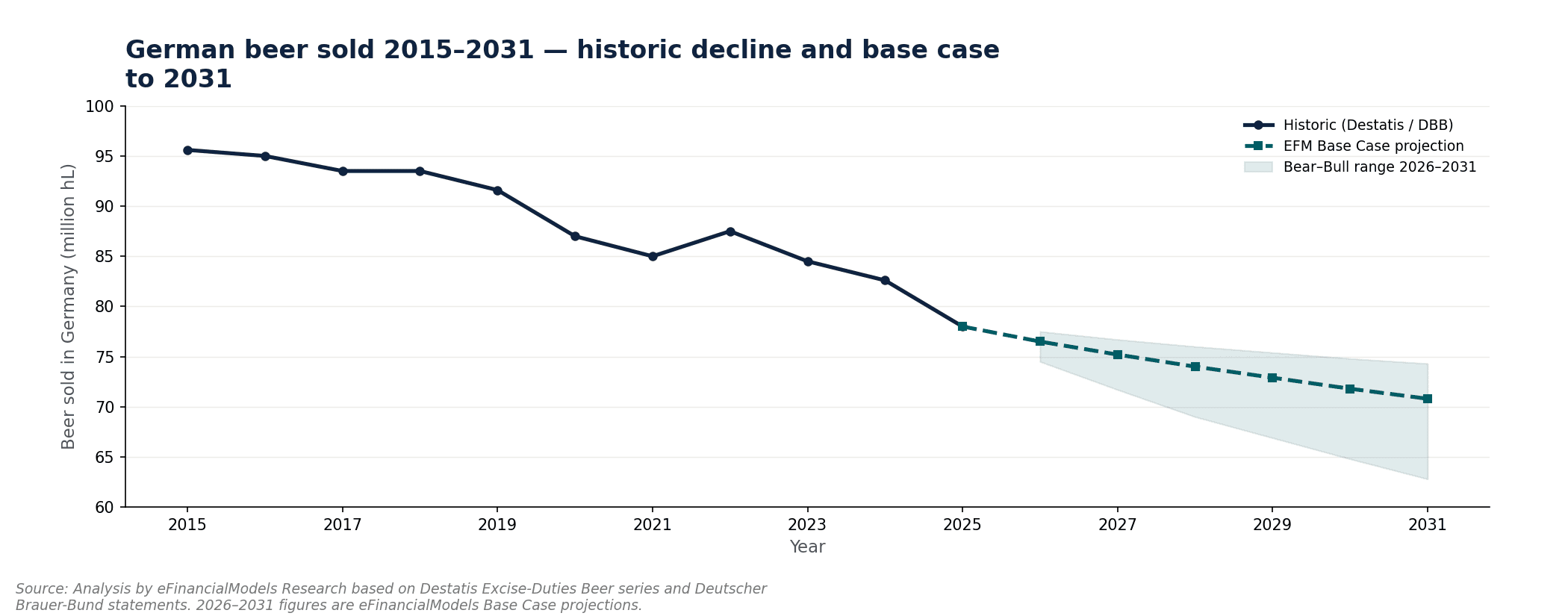
German beer production hit 78 million hL in 2025, the lowest in the Destatis series since 1993. Base Case projects 70.8M hL by 2031.
Beer: Structural Decline, Not Collapse
Beer’s decline is real and structural, but the Base Case is not a cliff — it is a long, managed slope. The Deutscher Brauer-Bund links the 2025 contraction to three converging forces: demographic shift (older cohorts who drink more beer are shrinking), the health-and-moderation movement (Gen-Z drinks measurably less alcohol), and substitution into water, sparkling soft drinks, and RTD.
The offsetting force is alcohol-free beer. Germany is the global number-one alcohol-free beer market by volume and by per-capita consumption. NA beer — defined in German law as beer at or below 0.5% ABV, including the increasingly visible 0.0% ABV sub-segment — roughly doubled its share of total German beer over the past decade, rising from approximately 5% in 2015 to approximately 10% in 2025, based on Deutscher Brauer-Bund reporting and Mintel Germany Beer Market Report 2025. Every top-eight German brewery group now produces at least one NA flagship: Bitburger 0,0%, Krombacher Alkoholfrei, Erdinger Alkoholfrei, Paulaner Weissbier Alkoholfrei, Warsteiner Alkoholfrei, Beck’s Blue, Heineken 0.0, and Carlsberg 0.0.
Bitburger Braugruppe reported a 1.5% volume gain in 2024, partly on NA-beer strength, while most group competitors declined. Radeberger Gruppe (Oetker), the market leader with approximately 15% German share across 16 brewing sites, posted sales growth of 3.6% in 2024 while volume fell 1.4% — a classic premiumisation pattern where revenue holds even as liters decline.
Brewery capacity utilisation has fallen from approximately 85% in 2015 to approximately 75% in 2025, against a total installed capacity of approximately 100–105 million hL per year. Oettinger, the discount-channel leader, closed its Mönchengladbach site in 2024 and saw volume fall 12% that year — a signal that the value tier faces the sharpest structural pressure.
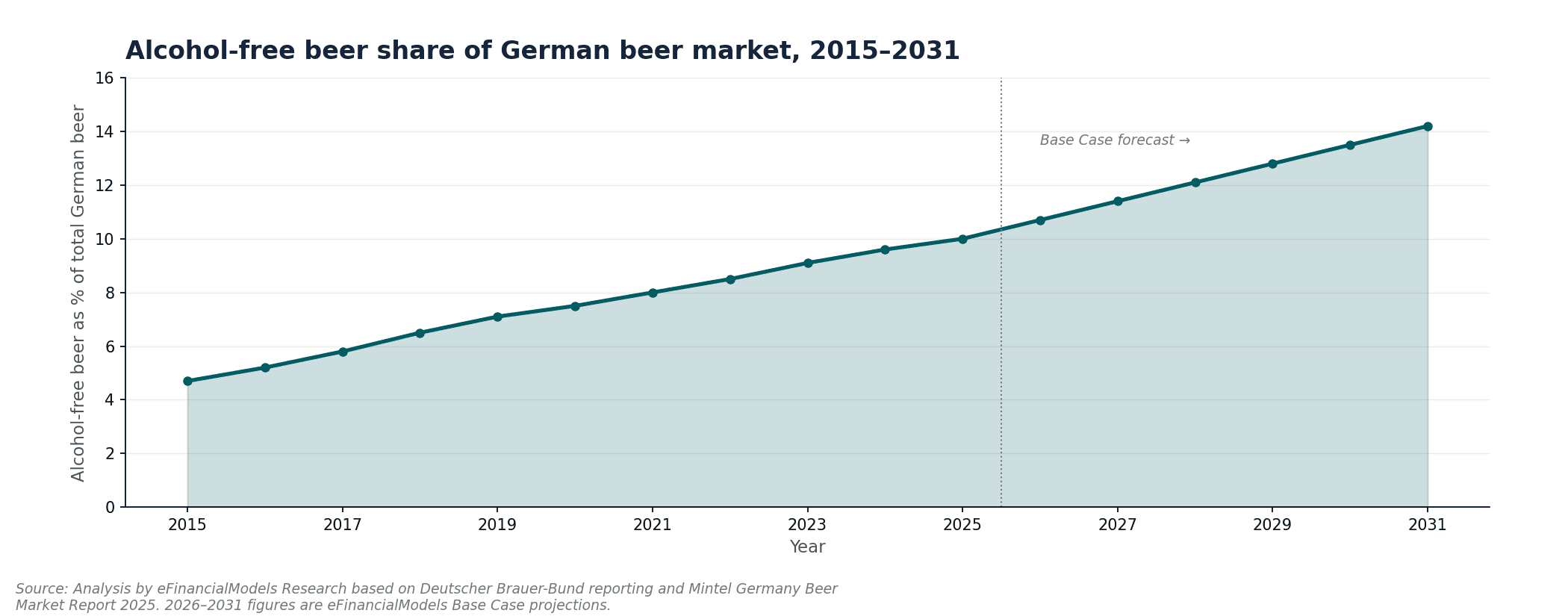
NA beer doubled its share of the German market in a decade. Germany leads the world in per-capita alcohol-free beer consumption.
Bottled Water: Premium Mix Rescues Flat Volume
Bottled water volume growth is essentially zero, but revenue is rising because the category mix is shifting toward higher-value segments. Category mix in 2025 breaks down as approximately 38% still mineral water, 32% sparkling mineral water, 17% medium sparkling, and 13% flavoured and functional waters. Sparkling and flavoured functional waters are the highest-velocity innovation pockets.
Grand View Research projects 4.3% revenue CAGR for the German bottled water market from 2026 to 2033, driven entirely by this mix shift rather than volume growth. Statista projects approximately zero percent volume CAGR through 2026.
The supply side is structurally moaty. German mineral water (Mineralwasser) must by law be bottled at the registered spring from which it is drawn, under the Mineral- und Tafelwasserverordnung (Mineral and Table Water Ordinance). Approximately 200 registered mineral springs supply the German market. The binding constraint at major springs is hydrogeological — annual extraction is capped at a fraction of natural recharge — which makes mineral water producers structurally protected against new entrants.
Branded leaders include Gerolsteiner Brunnen (approximately 11.5% market share, Vulkaneifel source), Hassia Mineralquellen (approximately 8% share, Bad Vilbel), Adelholzener Alpenquellen (approximately 6.5% share, Bavarian Alps), and Apollinaris (approximately 5.8% share, now owned by Coca-Cola Europacific Partners). Private label — Aldi’s Mineralwasser, Lidl’s Saskia and Kirchberg, Edeka’s Gut & Günstig, Rewe’s ja! — accounts for approximately 35–40% of bottled water volume.
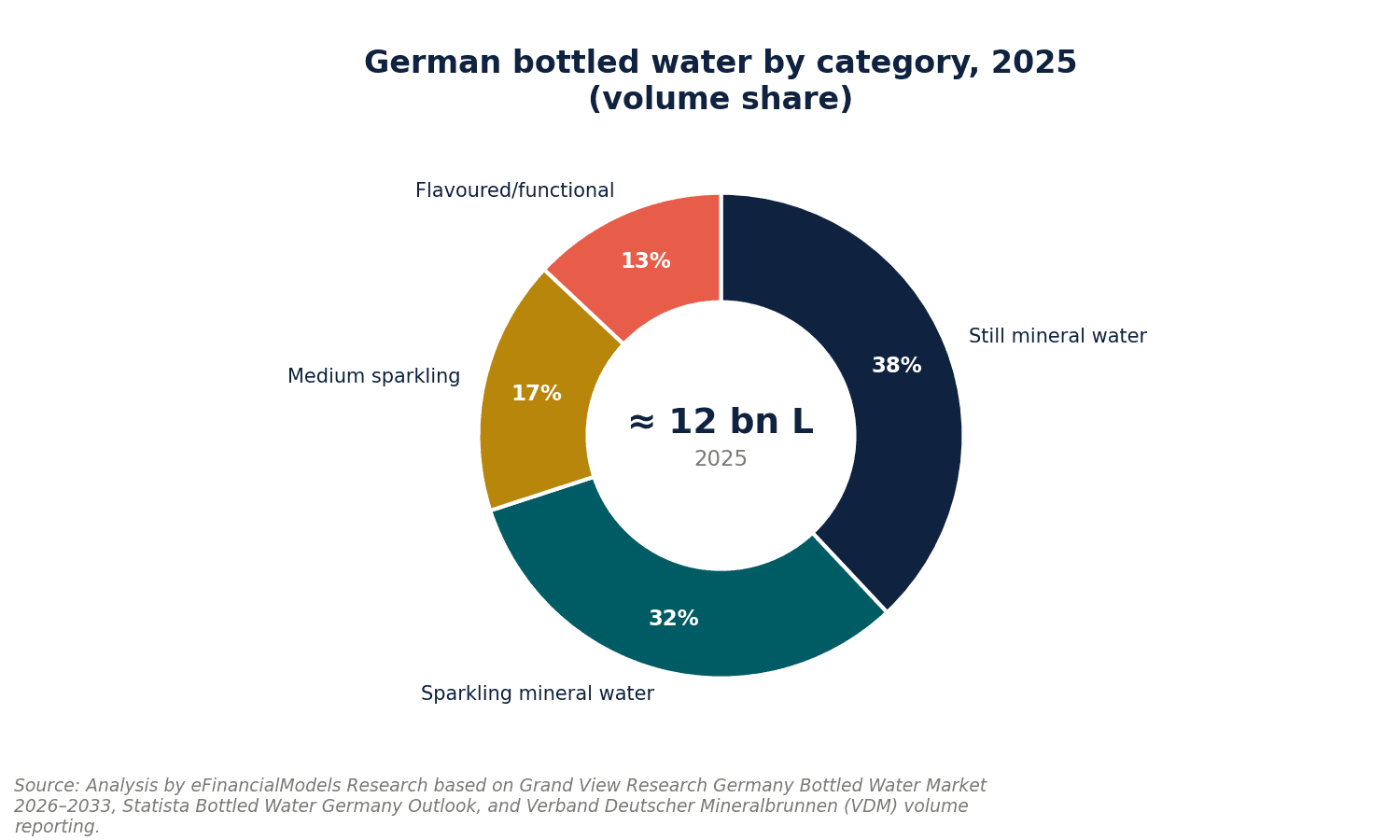
Sparkling and flavoured waters drive all revenue growth in a German bottled water market flat at 12 billion liters by volume.
RTD: The Only Structural Growth Pocket
RTD is the one sub-segment where volume and value are both growing. The German RTD category combines three sub-pockets: malt-based RTDs (the legacy segment, anchored by Schöfferhofer Grapefruit since 2007), RTD cocktails (the largest current sub-pocket at approximately €0.5–0.6 billion 2025 retail value, led by Captain Morgan & Cola, Bacardi Mojito, and Smirnoff Ice), and hard seltzers (the newest and fastest-growing, valued at approximately USD 0.65 billion in 2024 per MarketResearchFuture).
Hard seltzer — low-calorie alcoholic carbonated water — is a newer concept in Germany than in the United States or United Kingdom, and German consumers have been slower to adopt it. The category competes directly with Radler (beer mixed with lemonade or juice), which is a native German drinking occasion. White Claw’s German launch runs through Krombacher’s Drinks and More distribution subsidiary, giving Krombacher fast RTD entry without brand-building expense and giving White Claw access to Krombacher’s established retail relationships.
RTD capacity utilisation is climbing toward 75% in 2026 from below 60% in 2023, according to eFinancialModels Research analysis, as new can-filling lines at Refresco Germany and AB InBev’s Beck’s Bremen co-pack site come online.
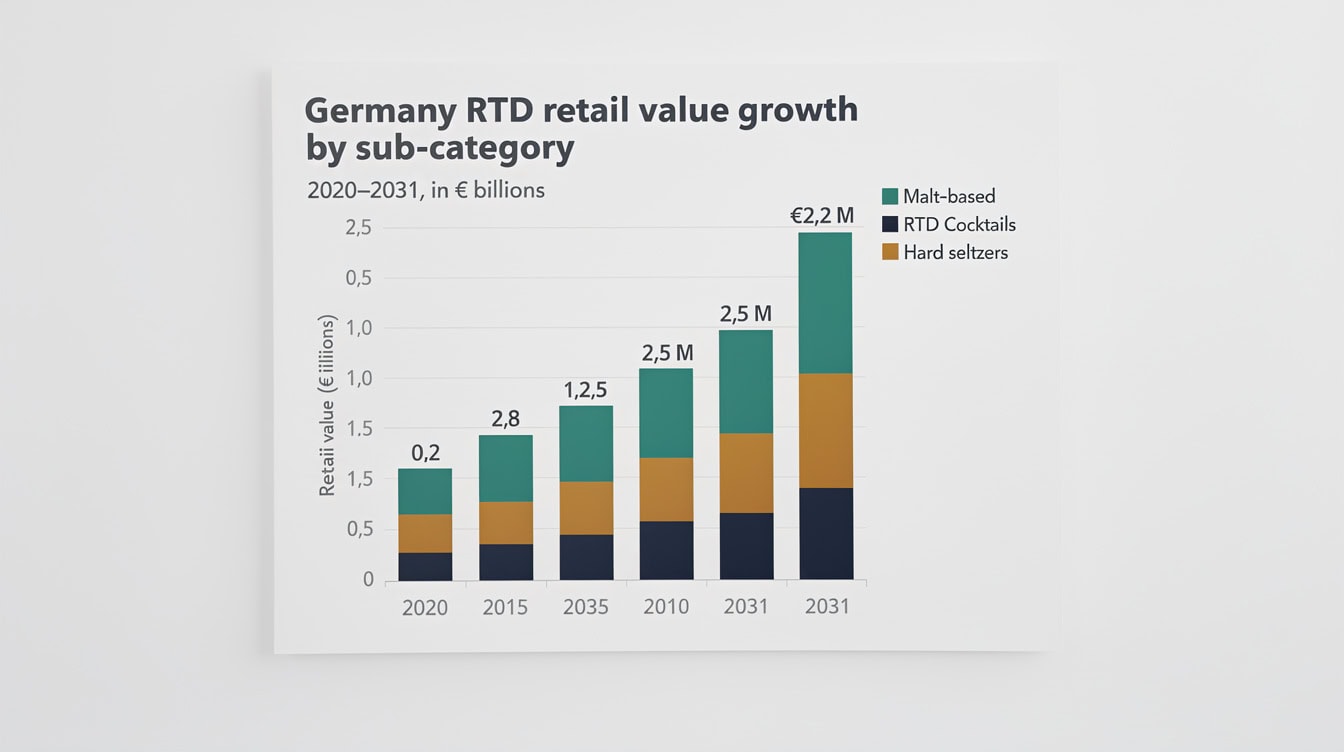
RTD is Germany’s only structural beverage growth pocket, with retail value projected to reach €2.0–2.3 billion by 2031 in the Base Case.
Three Scenarios: Bear, Base, and Bull Through 2031
The 2026–2031 outlook depends heavily on consumer sentiment, regulatory pace, and RTD adoption speed. The eFinancialModels Research Germany Beverage Manufacturing Market Study 2026–2031 assigns three probability-weighted scenarios.
| Scenario | Probability | 2031 Beer (M hL) | 2031 Water (bn L) | 2031 RTD (€ bn) |
|---|---|---|---|---|
| Bear | 25% | 66.0 | ~12.0 | ~1.5 |
| Base | 55% | 70.8 | 12.5 | 2.0–2.3 |
| Bull | 20% | 76.0 | ~13.0 | ~3.0 |
The Bear case (25% probability) assumes persistent consumer-sentiment weakness deepens beer decline to approximately 66 million hL, private label squeezes branded water margins below sustainable levels, and RTD growth slows under potential EU Beating Cancer Plan alcohol-marketing restrictions.
The Base case (55% probability) extrapolates a roughly 1.5% annual beer volume decline through 2031, landing at approximately 70.8 million hL — sharper than the 2015–2024 trend but slower than the 2025 outturn. Water sits flat at 12.5 billion liters. RTD reaches €2.0–2.3 billion.
The Bull case (20% probability) sees beer stabilise at approximately 76 million hL as NA beer drives consumer re-engagement, water benefits from PPWR-driven premium-PET differentiation, and RTD compounds at high-single-digit volume growth to nearly €3 billion.
Worked Example: Base Case Beer Revenue Projection
Here’s the math for a mid-sized brewer modeling Base Case revenue through 2031:
Step 1: Calculate 2031 projected volume
- 2025 starting volume: 78.0 million hL
- Annual decline rate (Base Case): 1.5%
- 2031 projected volume: 78.0 × (1 – 0.015)^6 = 78.0 × 0.9145 = 71.3 million hL (rounds to 70.8M hL with rounding adjustments in the full model)
Step 2: Establish baseline net revenue per hectolitre
- Average branded net revenue per hL (2025 estimate): approximately €26.70 (derived from Radeberger’s €2,084M revenue on 13.0M hL output)
Step 3: Project 2031 revenue at flat pricing
- 2031 projected branded revenue at flat pricing: 70.8M hL × €26.70 = approximately €1.89 billion for a Radeberger-scale operator
Step 4: Apply premiumisation uplift
- With 1% annual net price improvement (premiumisation): 70.8M hL × (€26.70 × 1.01^6) = approximately €2.01 billion
The premiumisation lever adds roughly €120 million in revenue for a market-leader-scale operator — which explains why every top-eight brewer is investing in NA beer and premium packaging rather than defending volume.
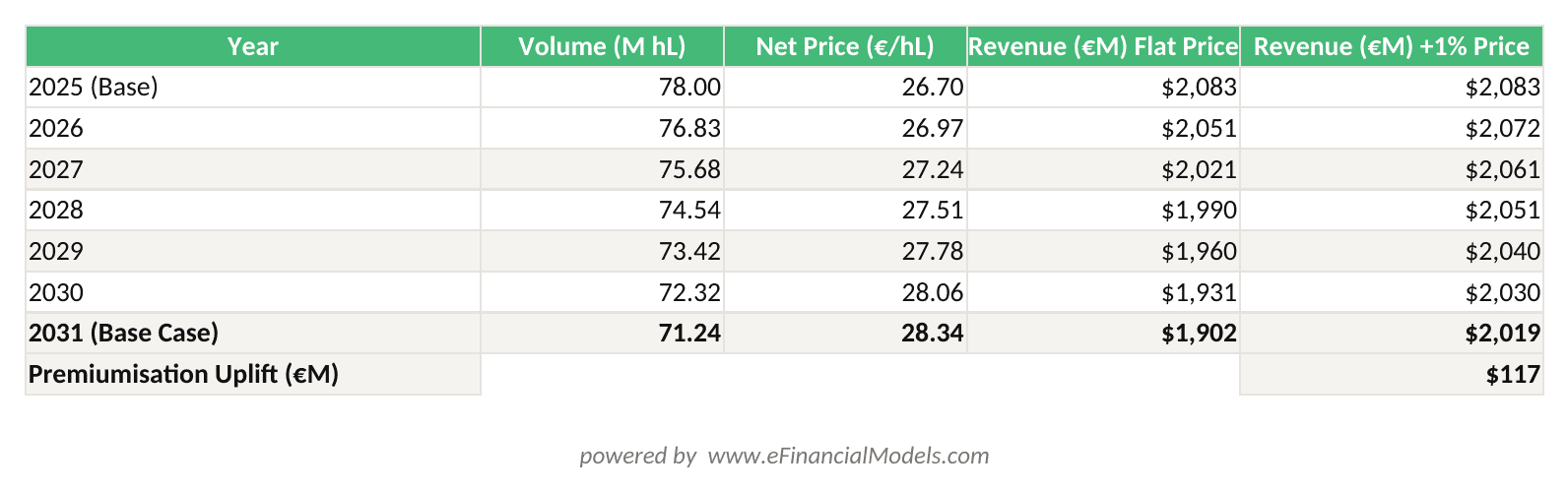
Base Case: 1.5% annual volume decline + 1% annual net price improvement. Premiumisation adds ~€120M vs. flat-price scenario by 2031.
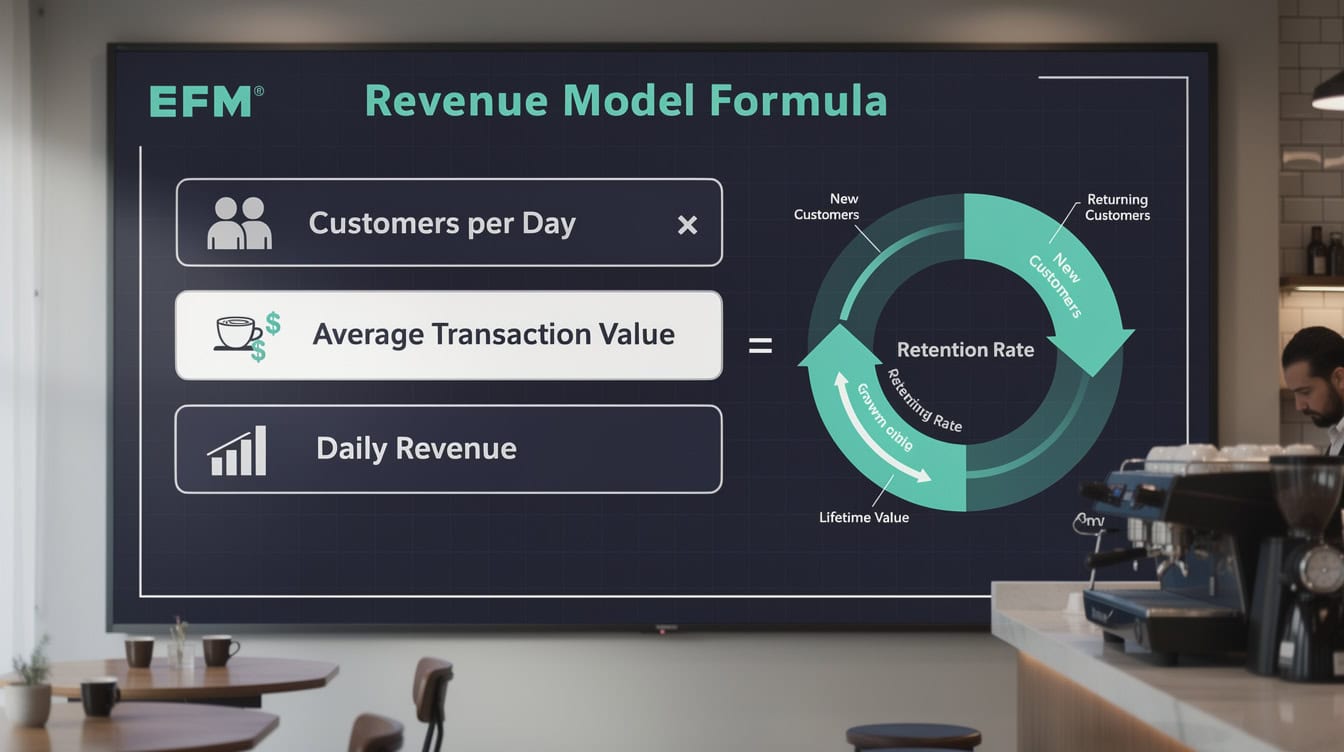
Premiumisation adds roughly €120M in revenue for a market-leader-scale brewer even as volume declines 1.5% annually.
Regulatory Framework: PPWR Reshapes Every Sub-Segment
The 2026–2031 regulatory environment is dominated by EU Regulation 2025/40, the Packaging and Packaging Waste Regulation (PPWR). PPWR entered into force on 11 February 2025 and applies from 12 August 2026. It mandates 25% recycled-content PET (rPET — post-consumer recycled polyethylene terephthalate) from 2025 and 30% from 2030, requires deposit return schemes (DRS) for all single-use plastic and metal beverage containers up to 3 liters by 1 January 2029, and sets reuse and refill targets.
Germany’s national implementing law, the draft Verpackungsrecht-Durchführungsgesetz (VerpackDG), was published in November 2025 with a Bundestag vote scheduled for the first half of 2026, according to EUR-Lex and the German federal portal.
Germany already operates the world’s highest-performing deposit return system. The German Pfand (one-way deposit of €0.25 for single-use PET bottles 0.1–3.0 L) exceeded a 97% container return rate in 2024, according to Deutsche Umwelthilfe. The Pfand expanded to milk-based drinks in January 2024, following the 2022 addition of juices, nectars, alcoholic mixed drinks, and cans.
For financial modellers, the PPWR cost layer is material: the eFinancialModels Research study estimates €0.01–0.03 per liter in additional operating cost for PPWR-compliant bottling lines, and average bottling-line capex for a PPWR-compliant brewery runs roughly 15% higher than a 2020 equivalent.
EU Regulation 2025/40 (PPWR) is the most material regulatory event for German beverage manufacturers through 2031, adding €0.01–0.03/liter to bottling costs.
Competitive Landscape: Who Wins and Who Consolidates
The competitive structure across all three sub-segments is concentrated at the top and fragmented in the mid-tier. The top four grocery retailers — Edeka, Rewe, Schwarz (Lidl, Kaufland), and Aldi — together hold approximately 78% of off-trade FMCG share, according to Lebensmittel Zeitung Top 30 Lebensmittelhandel 2024 ranking. This concentration drives private-label penetration across all three sub-segments.
| Operator | Sub-segment | 2024 Output / Share | Key Move |
|---|---|---|---|
| Radeberger (Oetker) | Beer | 13.0M hL | NA expansion; +3.6% sales |
| Bitburger | Beer | 8.7M hL | +1.5% volume on NA strength |
| Krombacher | Beer + RTD | 7.4M hL | White Claw distribution launch |
| Oettinger | Beer | 6.2M hL | -12% volume; site closure |
| Gerolsteiner | Water | ~11.5% share | PPWR-compliant bottling rollout |
| Hassia | Water | ~8% share | Flavoured water expansion |
| AB InBev (Beck’s) | Beer + RTD | 2.2M hL | Mike’s Hard Seltzer co-pack |
The highest-conviction M&A theme is mid-sized regional brewer consolidation. Family-owned brewers including Veltins, Warsteiner, König, and Diebels face a structural choice: invest in NA-beer lines and PPWR-compliant packaging at a time of declining volume, or combine with peers to share capex and rationalise capacity. The eFinancialModels Research study identifies this as the single most actionable investment thesis for strategic investors through 2031.
For the rPET supply chain, demand is structurally ahead of supply through 2028. The PPWR 30% floor from 2030 means buyers who lock multi-year rPET supply contracts now face lower spot-market exposure when the mandate tightens.
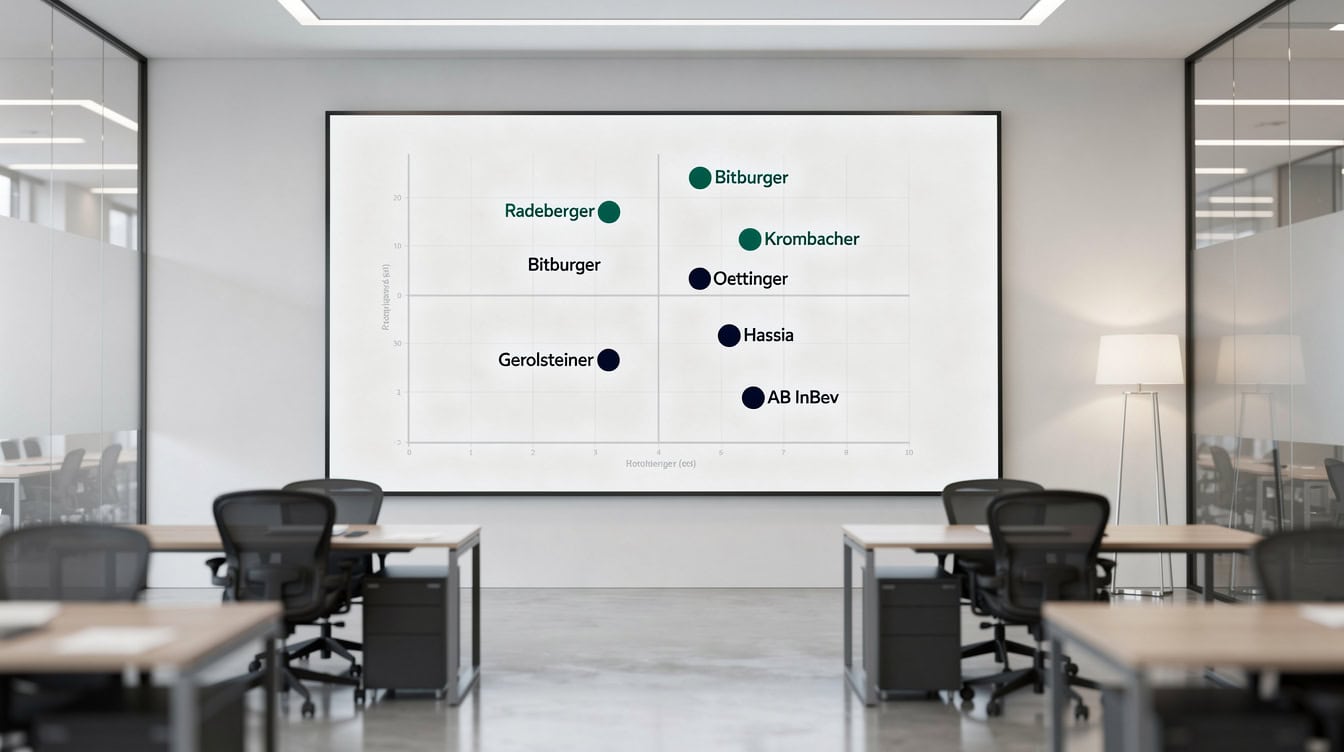
Bitburger and Krombacher gained ground in 2024 on NA beer and RTD moves; Oettinger faces the sharpest structural pressure in the discount tier.
Common Mistakes Investors and Operators Make
Five specific errors recur in financial models and investment theses for this market.
1. Treating 2025’s 6.0% beer decline as the new run rate. The Base Case projects approximately 1.5% annual decline through 2031 — sharper than the 2015–2024 trend but much slower than 2025. Modeling 6% annually produces a catastrophically pessimistic output that does not match the structural evidence.
2. Ignoring the Biersteuer small-brewery relief. The Vorläufiges Biersteuergesetz (Provisional Beer Tax Act) sets the standard beer excise at €0.787 per hL per degree Plato (°Plato is the brewing-industry measure of sugar content, which forms the tax base), but provides a sliding-scale relief of up to 50% for breweries producing below 200,000 hL per year. Mid-sized operator models routinely under-calibrate this input, overstating tax burden by a meaningful margin.
3. Conflating bottled water volume growth with revenue growth. Volume CAGR is approximately zero through 2026 (Statista), but revenue CAGR is 4.3% through 2033 (Grand View Research) because of premium mix shift. A volume-only model misses the entire revenue story.
4. Underestimating PPWR capex. Bottling-line capex for a PPWR-compliant brewery runs roughly 15% above a 2020 equivalent. Operators who use 2020 capex benchmarks in their 2026–2031 models will understate investment requirements.
5. Assuming RTD adoption mirrors the US or UK pace. German per-capita RTD consumption at approximately 5 liters in 2025 trails the United States at approximately 14 liters and the United Kingdom at approximately 9 liters. The cultural prevalence of Radler (beer mixed with lemonade) competes directly with hard seltzer for the same drinking occasion. RTD growth is real but slower than Anglo-American benchmarks suggest.
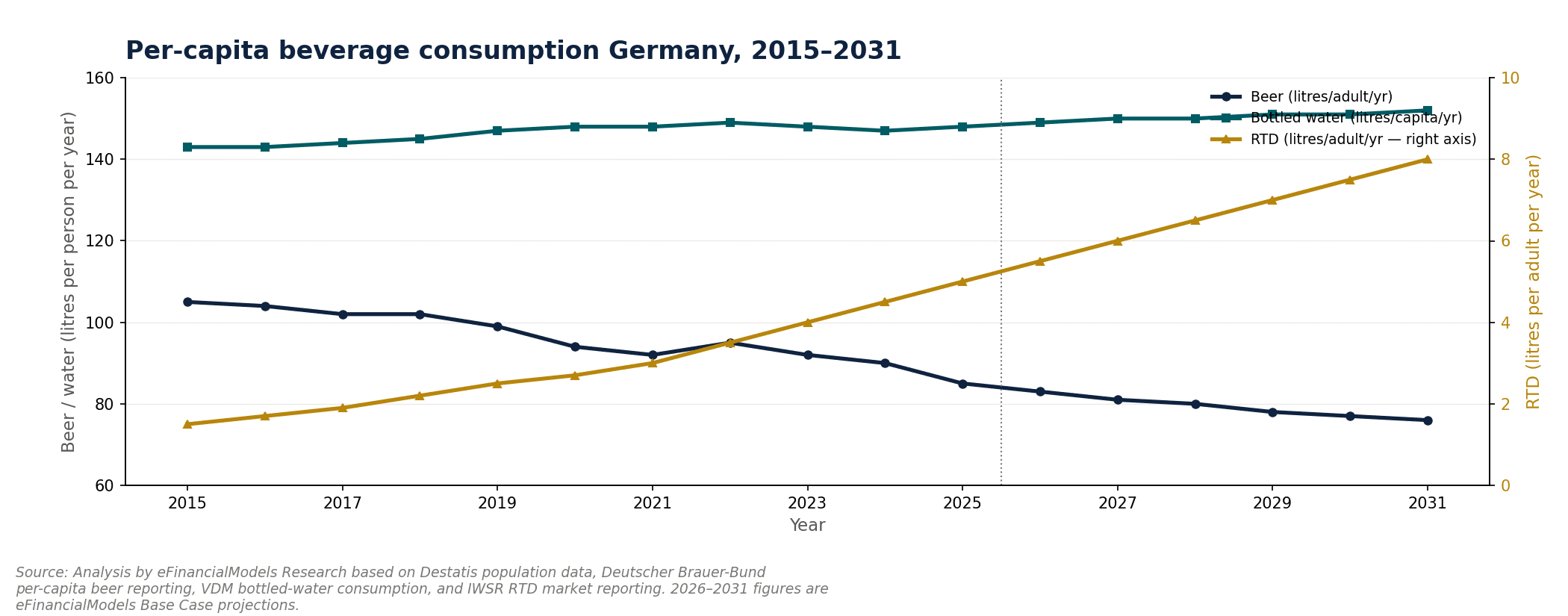
Germany’s RTD adoption lags the US by 9 liters per capita annually, reflecting the cultural dominance of Radler as the native mixed-drink occasion.
Tools and Templates for Financial Modeling
Translating the market study findings into project-level financial analysis requires models calibrated to German beverage-sector specifics. For operators and investors building bottom-up models, the Beverage Manufacturing Start-Up Financial Model and the Product Manufacturing Business Model on eFinancialModels provide the structural framework.
For food and beverage sector analysis more broadly, the Food and Beverages financial model category covers brewery, bottling, and RTD production templates. For manufacturing cost and unit-economics work, the Manufacturing Cost and Profit per Unit template is the right starting point for PPWR cost-layer modeling.
Key model inputs to calibrate for the German beverage market:
- Biersteuer rate: €0.787/hL/°Plato (standard); up to 50% relief below 200,000 hL/year
- Pfand rate: €0.25 per single-use PET bottle 0.1–3.0 L
- PPWR rPET floor: 25% now, 30% from 2030
- PPWR operating cost increment: €0.01–0.03 per liter
- Top-4 retailer FMCG share: 78% in 2025, projected 81% by 2031
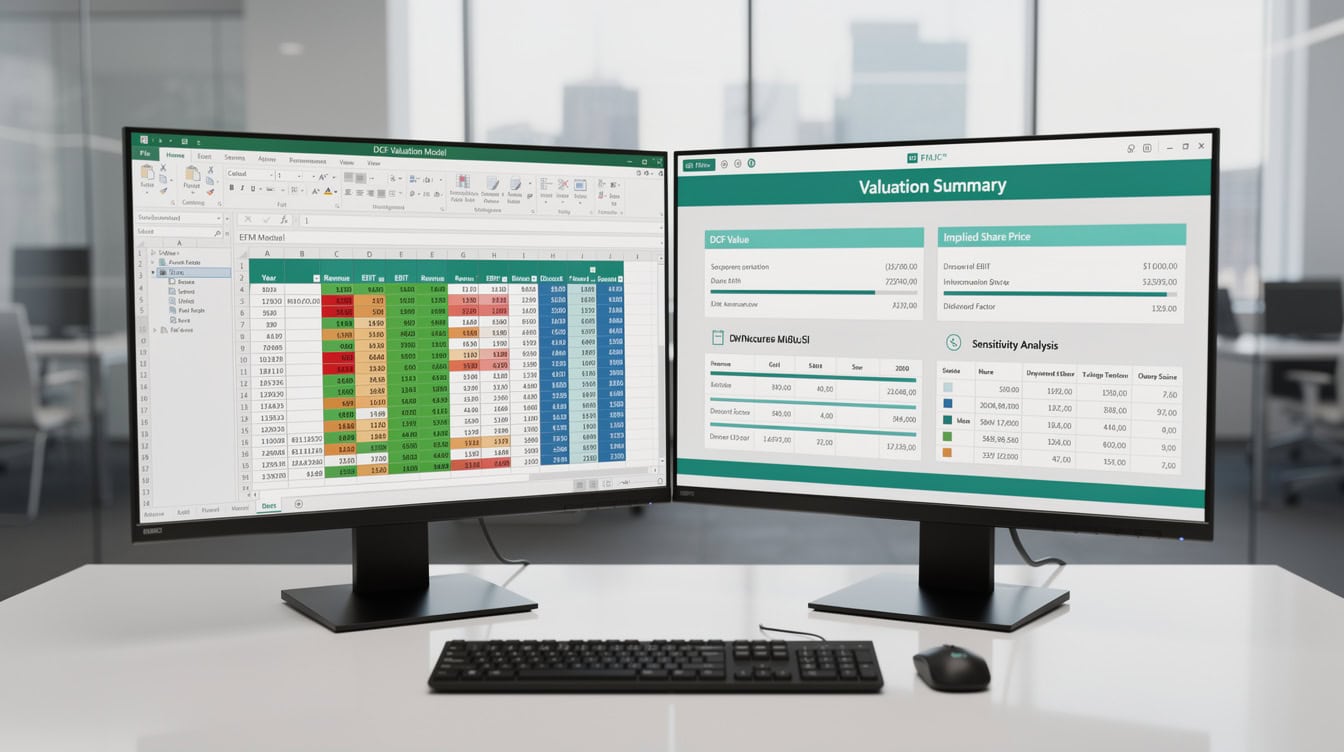
Translating market study findings into project-level models requires inputs calibrated to German-specific regulatory and cost structures.
Frequently Asked Questions
Why did German beer sales fall so sharply in 2025?
German beer sales fell 6.0% in 2025 to 78 million hL, the lowest figure since Destatis began its series in 1993. The Deutscher Brauer-Bund attributes the contraction to three converging forces: weak consumer sentiment (German real household income was under pressure through 2024–2025), demographic shift (the cohort of older adults who drink the most beer is shrinking as a share of the population), and the health-and-moderation movement among younger consumers. Gen-Z adults drink measurably less alcohol than prior generations, and per-capita beer consumption among 16–24-year-olds roughly halved between 2015 and 2025. The 2025 figure is also partly a post-pandemic normalisation: on-trade volumes recovered in 2022–2023 and then softened again as consumer confidence weakened.
What is the Pfand system and how does it affect beverage manufacturers?
The Pfand is Germany’s one-way deposit system for single-use beverage containers. Consumers pay €0.25 when they buy a drink in a single-use PET bottle (0.1–3.0 L) or €0.15 for a can, and reclaim the deposit when they return the container to a retailer. Germany’s Pfand system achieved a return rate exceeding 97% in 2024, according to Deutsche Umwelthilfe — the highest in the world. For manufacturers, the Pfand creates a logistics and working-capital obligation: they must fund the deposit float until containers are returned and reconciled through the DPG Pfandsystem clearing house. The Pfand expanded to milk-based drinks in January 2024, and EU Regulation 2025/40 (PPWR) will require deposit return schemes for all single-use plastic and metal containers up to 3 liters by 1 January 2029, extending the system’s scope further.
Is alcohol-free beer actually growing fast enough to offset beer’s overall decline?
NA beer is growing fast within the beer category, but not fast enough to offset total volume decline. In 2025, NA beer held approximately 10% of total German beer volume — roughly 7.8 million hL. The Base Case projects NA share reaching 14% by 2031, which at a projected total market of 70.8 million hL equals approximately 9.9 million hL of NA beer. So NA beer volume grows by roughly 2.1 million hL while total beer volume falls by roughly 7.2 million hL. NA beer is the only growth pocket inside the category and it is commercially important for brand health and margin, but it does not arithmetically offset the overall decline. The strategic value of NA beer is in margin defense and brand relevance, not volume replacement.
What does PPWR mean for a mid-sized German bottler’s cost structure?
EU Regulation 2025/40 (PPWR — the Packaging and Packaging Waste Regulation) entered into force on 11 February 2025 and applies from 12 August 2026. For a mid-sized German bottler, the most immediate impact is the 25% recycled-content PET (rPET) mandate, which is already in effect, rising to 30% by 2030. rPET costs more than virgin PET, and the eFinancialModels Research study estimates the PPWR cost layer at €0.01–0.03 per liter of additional operating cost for compliant bottling lines. Bottling-line capex for a PPWR-compliant brewery runs roughly 15% above a 2020 equivalent. The deposit return scheme expansion to cans by 2029 adds further logistics cost. Operators who front-load rPET supply contracts now face lower spot-market exposure when the 30% floor kicks in.
Which RTD sub-segment offers the best risk-adjusted growth opportunity in Germany?
RTD cocktails are the largest current sub-pocket at approximately €0.5–0.6 billion 2025 retail value and carry lower category-creation risk than hard seltzers, because the format (spirits plus mixer in a can) is already understood by German consumers. Hard seltzers are the fastest-growing sub-pocket but face a cultural headwind: the concept of low-calorie alcoholic carbonated water competes directly with Radler (beer mixed with lemonade or juice), which is a native German drinking occasion. MarketResearchFuture projects 6.5% CAGR for German RTD alcoholic beverages through 2035. The eFinancialModels Research study recommends that operators choose one RTD category position — zero-sugar functional, malt-based comfort, or premium-spirits-based — and invest behind it rather than spreading resources across all sub-pockets.
How concentrated is the German grocery retail market and why does it matter for beverage brands?
The top four grocery retailers — Edeka, Rewe, Schwarz Group (Lidl and Kaufland), and Aldi — together hold approximately 78% of off-trade FMCG share in Germany, according to the Lebensmittel Zeitung Top 30 Lebensmittelhandel 2024 ranking. This concentration gives retailers enormous pricing power over branded manufacturers. Private label captures approximately 35–40% of bottled water volume, approximately 15–20% of beer volume, and a rising share of RTD. For branded beverage manufacturers, the practical consequence is that the defensible commercial positions are either above the private-label price point (premium provenance, NA beer, flavoured functional water) or at the discount end where Oettinger and Sternburg compete on cost. The squeezed middle — mid-priced branded products without a clear differentiation story — faces the most structural margin pressure through 2031.
What is the beer excise tax rate in Germany and how does the small-brewery relief work?
The German federal beer excise (Biersteuer) is set by the Vorläufiges Biersteuergesetz (Provisional Beer Tax Act) at €0.787 per hL per degree Plato. Degree Plato (°Plato) is a brewing-industry measure of the original sugar content of the wort before fermentation — a standard lager at roughly 11–12°Plato would carry a tax of approximately €8.66–9.44 per hL. Breweries producing below 200,000 hL per year qualify for a sliding-scale relief of up to 50% off the standard rate. For a brewery producing 100,000 hL per year at 12°Plato, the relief could reduce the tax burden from approximately €944,000 to approximately €472,000 annually — a material input for mid-sized operator financial models. The rate has been unchanged for 2026.
Conclusion
Germany’s beverage manufacturing sector through 2031 rewards investors and operators who read the three trajectories correctly: beer in managed structural decline, water flat by volume but rising by value, and RTD compounding from a small base. The highest-conviction themes are NA beer investment, rPET supply-chain positioning ahead of the 2030 PPWR floor, and mid-sized brewer consolidation at current trading multiples.
I recommend downloading the Germany Beverage Manufacturing Market Study 2026–2031 for the full scenario model, Base Case pricing assumptions, regulatory tracker, and competitive landscape data — everything you need to build a credible investment or operating thesis for this market.