0 ITEMS

Financial Modeling: DIY vs Template vs Consultant Costs

The right path to a financial model depends on three numbers: your budget, your deadline, and your team’s Excel skill level.
Key Takeaways
- A DIY financial model built by an internal FP&A analyst costs $8,000–$40,000 in fully-loaded labor once you apply the standard 1.3x benefits multiplier to median US salaries.
- Pre-built financial model templates typically cost $50–$500 and can be customized in 4–20 hours, making them the fastest path for standard use cases.
- Big 4 financial modeling consultants charge $300–$500 per hour; boutique advisory firms run $150–$300/hr; experienced freelancers on platforms like Toptal charge $75–$200/hr.
- A simple 3-statement model takes an experienced analyst 40–80 hours to build from scratch; a complex M&A or LBO model takes 200–400 hours.
- The hidden opportunity cost of a DIY build is often the largest line item: a finance manager spending 3 weeks on a model is not running the budget cycle, closing the books, or supporting board prep.
- Error rates in self-built models are significant: a 2016 study by the European Spreadsheet Risks Interest Group found that 88% of spreadsheets contain errors, underscoring the quality risk of DIY builds.
- A hybrid approach, buying a template and hiring a freelancer for 8–12 hours of customization, often delivers the best cost-quality ratio for startups and mid-market companies.
The Three Paths to Financial Model Delivery
Every organization building a financial model faces the same three options: build it internally (DIY), purchase a pre-built template, or hire an external consultant. Each path has a distinct cost structure, time profile, and quality ceiling.
- DIY build: An internal analyst or finance manager constructs the model from a blank spreadsheet, using their own Excel skills and financial knowledge.
- Template purchase: The team buys a professionally structured model template, then customizes inputs, assumptions, and formatting to fit the business.
- Consultant hire: An external expert, ranging from a Big 4 advisory team to a solo freelancer, scopes, builds, and delivers the model.
The right choice depends on four variables: urgency, complexity, internal skill level, and budget. The sections below give you the data to score each variable.
Four variables determine the optimal path. When investor scrutiny is high, quality risk outweighs cost savings every time.
Cost Analysis: Breaking Down Total Investment by Approach
The total cost of a financial model is almost always higher than the visible sticker price. Here is what each path actually costs when you account for all inputs.
DIY Build: Fully-Loaded Labor Cost
The US Bureau of Labor Statistics reports a median annual wage of $99,890 for financial analysts (BLS Occupational Employment Statistics). Applying the standard employer cost multiplier of 1.3x for benefits, payroll taxes, and overhead, the fully-loaded annual cost reaches approximately $129,857, or roughly $62 per hour assuming 2,080 working hours per year.
A simple 3-statement model (income statement, balance sheet, cash flow statement) takes an experienced analyst 40–80 hours to build from scratch. At $62/hr fully loaded, that is $2,480–$4,960 in direct labor. A complex model, such as an M&A integration model or a multi-scenario LBO, runs 200–400 hours, putting the fully-loaded cost at $12,400–$24,800 for an analyst, or $20,000–$40,000 if a finance manager (median salary approximately $139,000 per BLS data, fully loaded at roughly $181,000/year or $87/hr) leads the build.
Add Microsoft 365 Business Standard at $12.50 per user per month and any specialized add-ins (Macros, Power Query, data feeds) that can run $500–$2,000 annually, and the software overhead is real but modest compared to labor. Microsoft Excel supports up to 64 levels of nested functions within a single formula (Microsoft), which means even highly complex DIY model logic can be expressed natively without add-ins in most cases.
Template Purchase: Low Sticker, Variable Customization Cost
Pre-built templates from professional financial modeling libraries typically range from $50 for a basic budget template to $500 for a sophisticated, industry-specific model with integrated three-statement logic, scenario toggles, and charts. Customization time for someone with intermediate Excel skills runs 4–20 hours depending on model complexity, adding $248–$1,240 in loaded labor at the analyst rate above.
Total template path cost: $300–$1,740 for most standard use cases.
Consultant Hire: Scope-Dependent, Rate-Variable
Consultant costs vary enormously by firm type and geography. The worked example below shows how quickly a consultant engagement scales.
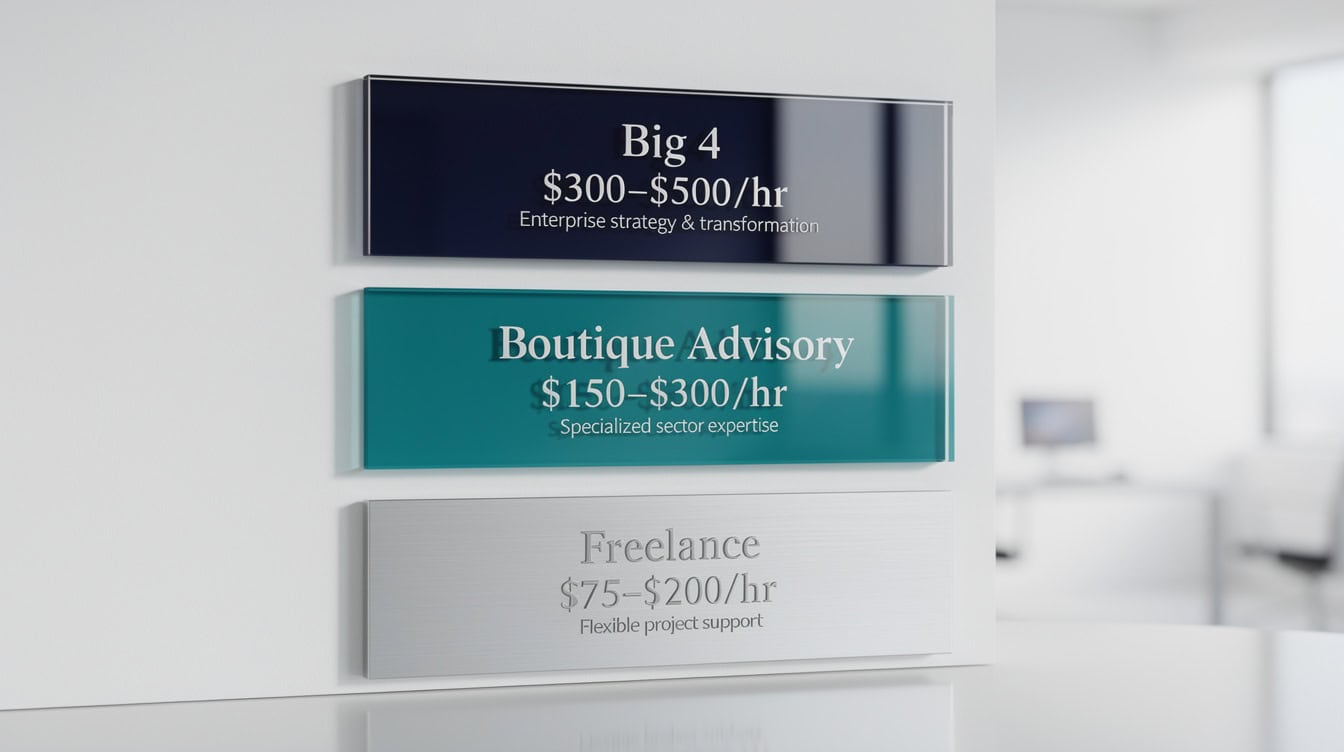
Big 4 rates reflect team overhead and audit-readiness. A boutique specialist delivers comparable quality at 40–60% of the cost.
Time-to-Completion Benchmarks Across Model Complexity Levels
Time-to-completion is the metric most buyers underestimate. The table below shows realistic ranges for each path across three complexity tiers.
| Complexity | DIY Hours | Template Hours | Consultant Weeks |
|---|---|---|---|
| Simple 3-statement | 40–80 hrs | 4–20 hrs | 1–2 weeks |
| Mid-tier (SaaS, RE) | 80–160 hrs | 20–60 hrs | 2–4 weeks |
| Complex (M&A, LBO) | 200–400 hrs | 60–120 hrs | 4–10 weeks |
Consultant timelines include scoping, data gathering, build, review cycles, and delivery. A Big 4 team typically requires 2–4 weeks from signed engagement letter to first draft, with 2–3 revision rounds adding another 1–2 weeks. Freelancers on Toptal or Upwork can often start within 48 hours and deliver a first draft in 5–10 business days for mid-tier models.
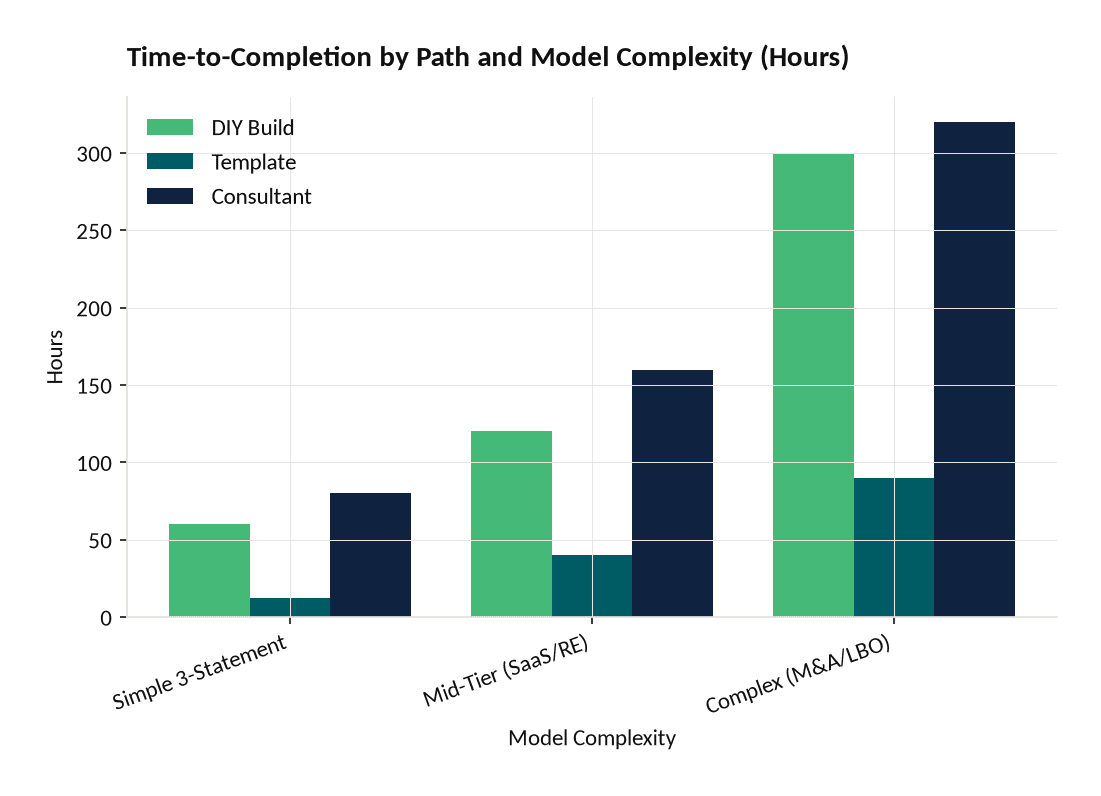
Templates cut build time by 60–80% across all complexity tiers. Consultant hours reflect full engagement scope including scoping, revisions, and delivery.
The Hidden Costs: Opportunity Cost and Fully-Loaded Internal Rates
Opportunity cost is the most underreported expense in DIY financial modeling. When a finance manager spends 3 weeks building a fundraising model, the business loses 3 weeks of that manager’s capacity for budgeting, forecasting, board reporting, and strategic analysis.
Here is the math for a concrete scenario: a finance manager earning $139,000 base salary (BLS median for financial managers, BLS) has a fully-loaded hourly rate of approximately $87. Three weeks at 40 hours per week equals 120 hours, or $10,440 in opportunity cost alone, before accounting for the direct labor on the model itself. If the model takes 160 hours total, the total opportunity cost plus direct labor reaches $13,920.
Revision cycles add another hidden layer. Industry practitioners report that financial models go through an average of 3–5 major revision rounds before investor or board sign-off. Each round can consume 8–20 hours of analyst time, adding $496–$1,240 per round at the analyst rate. Over 4 rounds, that is $1,984–$4,960 in revision labor alone.
Ongoing maintenance is a third hidden cost. A model used for monthly reporting requires 2–4 hours of updates per month. Over a 12-month period, that is 24–48 hours, or $1,488–$2,976 at the analyst rate. A single Excel workbook can contain up to 255 sheets (Microsoft), which means even the most elaborate multi-tab financial model can be maintained within a single file, reducing version-control complexity during those monthly update cycles.

A finance manager spending 3 weeks on a model loses $10,440 in opportunity cost before accounting for the build itself.
Consultant Rate Benchmarks: Big 4, Boutique, and Freelance
Consultant rates for financial modeling work vary by firm type, geography, and the seniority of the individual doing the work. The table below reflects current market rates based on publicly available data from professional services firms and freelance platforms.
| Firm Type | Rate Range | Typical Engagement | Best For |
|---|---|---|---|
| Big 4 advisory | $300–$500/hr | $50K–$200K+ | M&A, audit-ready, regulated |
| Boutique advisory | $150–$300/hr | $15K–$75K | Mid-market, industry-specific |
| Experienced freelance | $75–$200/hr | $2K–$20K | Startups, speed, flexibility |
| Offshore freelance | $25–$75/hr | $500–$5K | Budget builds, simple models |
Big 4 rates reflect team overhead, quality control processes, and the credibility premium that institutional investors and lenders often require. A boutique firm with a specialist in your industry (SaaS, real estate, healthcare) can deliver comparable quality at 40–60% of the Big 4 cost. Freelancers on Toptal, which vets the top 3% of applicants, typically charge $100–$200/hr and can match boutique quality for well-scoped projects.

Reaching advanced Excel proficiency from an intermediate baseline takes 80–120 hours of deliberate practice, per ACCA estimates.
Skill Requirements: Matching Your Team to Each Path
Not every team can successfully execute every path. Skill level is a hard constraint, not a preference.
- DIY success requires: Advanced Excel proficiency (nested IF/INDEX-MATCH/OFFSET formulas, dynamic named ranges, array formulas), understanding of GAAP accounting, and experience building integrated three-statement models. The Association of Chartered Certified Accountants estimates that reaching advanced Excel proficiency from an intermediate baseline takes 80–120 hours of deliberate practice.
- Template customization requires: Intermediate Excel skills (ability to trace precedents, modify formulas without breaking links, restructure assumption tables) and basic financial literacy. Most finance professionals with 2+ years of experience can customize a well-structured template.
- Consultant engagement requires: The ability to write a clear scope of work, provide clean historical data, and give structured feedback on drafts. No modeling skill required, but financial literacy is essential to validate outputs.
If your team lacks advanced Excel skills, a DIY build carries a high error risk. The European Spreadsheet Risks Interest Group found in a widely cited study that 88% of audited spreadsheets contained errors, and 1% of all formula cells in large spreadsheets were erroneous (EuSpRIG, 2016). For investor-facing models, that error rate is not acceptable.
88% of audited spreadsheets contain errors. For investor-facing models, that error rate is not acceptable without a structured review process.
Quality and Risk Trade-offs: Accuracy, Audit-Readiness, and Credibility
Quality differences between the three paths are real and consequential, especially when the model is investor-facing or used for a transaction.
| Quality Dimension | DIY | Template | Consultant |
|---|---|---|---|
| Error risk | High (88% of spreadsheets) | Low (pre-audited structure) | Low (review process) |
| Audit-readiness | Variable | Moderate | High (Big 4) |
| Investor credibility | Low–Moderate | Moderate | High |
| Customization depth | High | Moderate | High |
| Ongoing support | Internal only | Documentation | Engagement-dependent |
For a Series A fundraising model reviewed by institutional VCs, a consultant-built or professionally templated model carries more credibility than a founder-built spreadsheet. For an internal budget template used by a 10-person team, a well-chosen template with light customization is entirely sufficient.
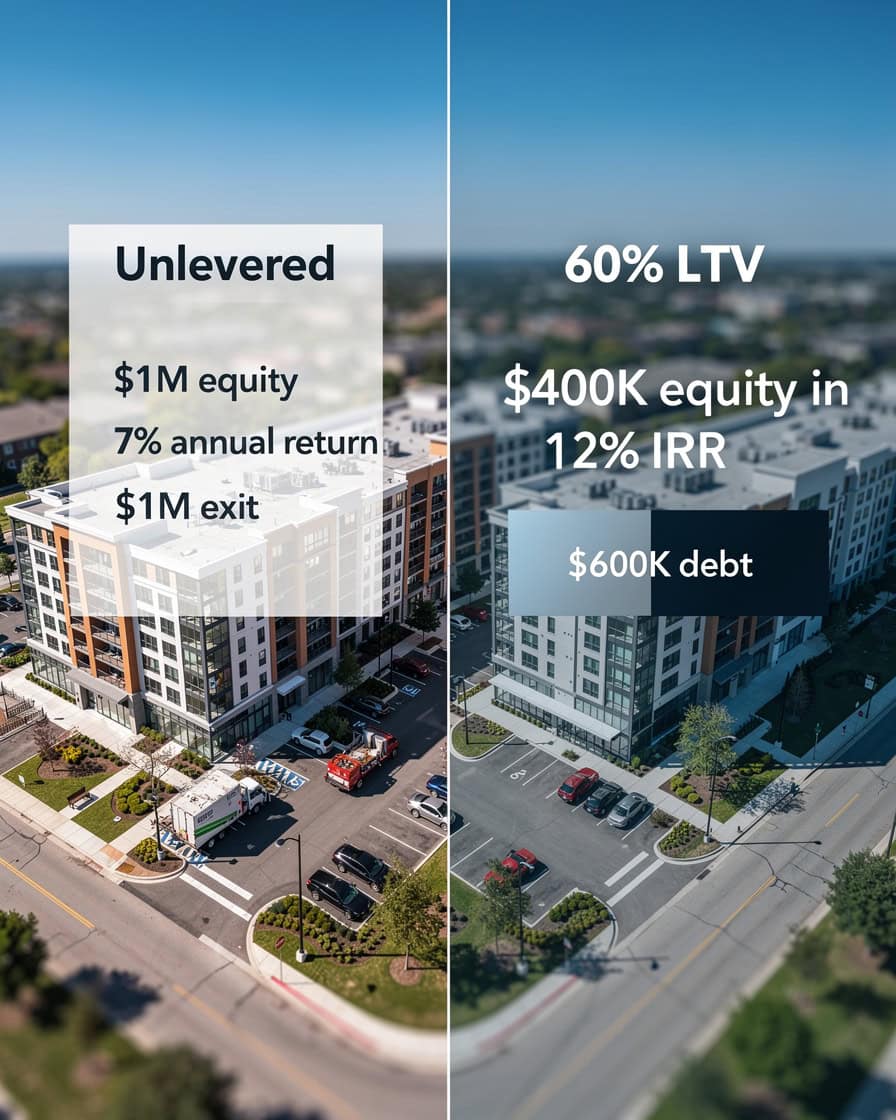
A Series A model built with a template plus freelance review costs $3,140 on average — 90% less than a Big 4 engagement for the same output.
Decision Framework: Which Path Fits Your Scenario
The right path depends on four variables scored below. Match your situation to the recommended approach.
| Scenario Variable | Choose DIY | Choose Template | Choose Consultant |
|---|---|---|---|
| Budget | Under $5K, internal capacity | Under $2K total | $10K–$200K+ |
| Timeline | 4–8 weeks available | Under 2 weeks | 2–10 weeks |
| Complexity | Simple, well-understood | Standard industry model | Complex, bespoke, regulated |
| Team skill | Advanced Excel + finance | Intermediate Excel | No modeling skill needed |
| Investor scrutiny | Internal use only | Seed/angel round | Series A+ or M&A |
If two or more columns point to the same path, that is your answer. If the columns split, the tiebreaker is investor scrutiny: when the model will be reviewed by institutional capital or used in a transaction, quality risk outweighs cost savings.
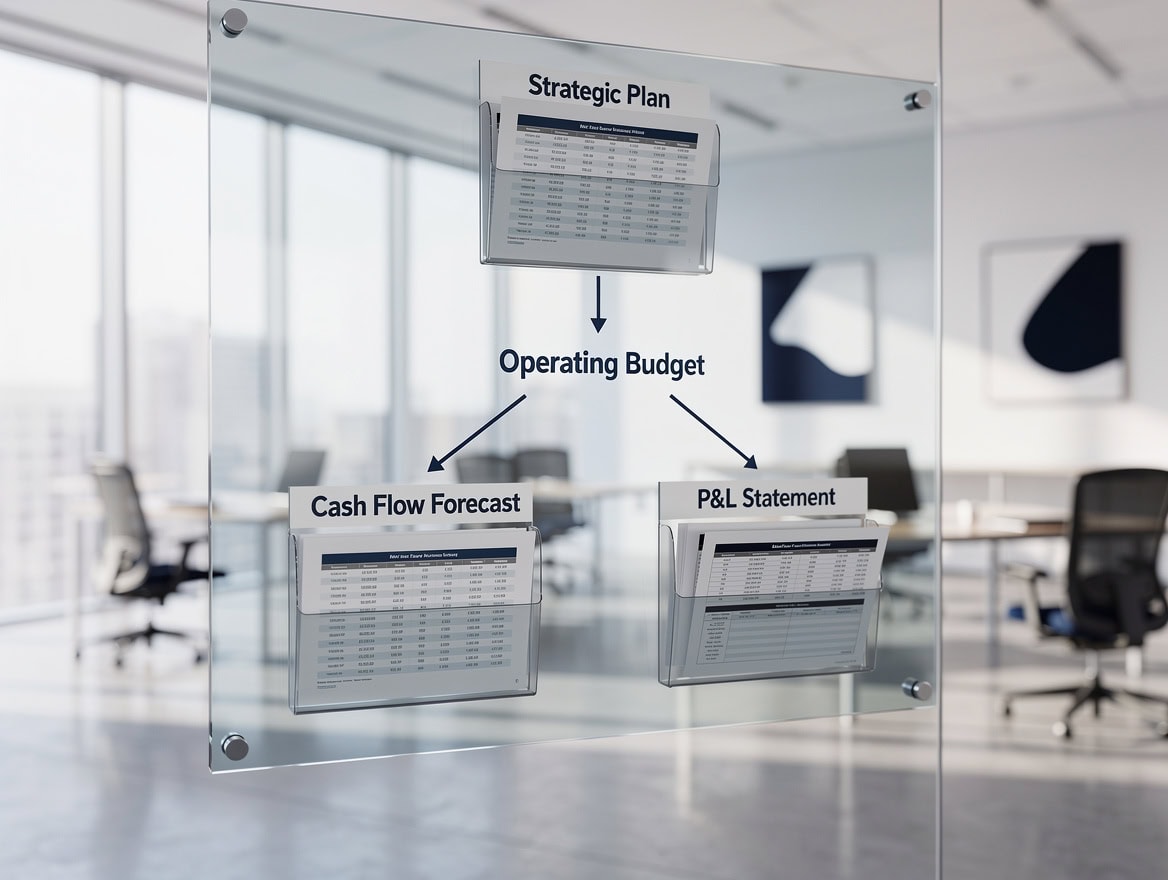
The hybrid approach delivers 80% of consultant quality at 15% of consultant cost for most startup and mid-market use cases.
Real-World Cost and Time Scenarios for Common Model Types
Three concrete scenarios illustrate how the framework plays out in practice.
Scenario 1: Series A Fundraising Model
A SaaS startup needs a 5-year integrated model with cohort-based revenue, headcount planning, and three-statement output for a $5M Series A raise.
- DIY: 120–160 hours for an experienced analyst. Fully-loaded cost: $7,440–$9,920. Timeline: 3–4 weeks. Risk: High if the analyst has not built SaaS models before.
- Template: A SaaS-specific template costs approximately $200–$400. Customization: 20–40 hours. Total cost: $1,440–$2,880. Timeline: 1–2 weeks. Risk: Moderate; investor may question bespoke assumptions.
- Consultant (boutique): $15,000–$30,000 for a 3–5 week engagement. Risk: Low. Credibility: High.
Best path: Template plus 8–12 hours of freelance review ($800–$2,400) for a total of $2,000–$3,300. Delivers 80% of consultant quality at 15% of consultant cost.
Scenario 2: Acquisition Analysis (M&A)
A private equity firm needs an LBO model with debt waterfall, management case/downside scenarios, and returns analysis for a $50M acquisition.
- DIY: 300–400 hours. Fully-loaded cost: $26,100–$34,800 at the finance manager rate. Timeline: 8–10 weeks. Risk: Very high without prior LBO experience.
- Template: LBO templates exist but require 80–120 hours of customization for a real transaction. Total cost: $5,000–$10,500. Risk: Moderate to high.
- Consultant (Big 4 or boutique): $50,000–$120,000. Timeline: 4–8 weeks. Risk: Low.
Best path: Consultant. The transaction stakes make quality risk the dominant variable.
Scenario 3: Annual Budget Template
A 50-person company needs a department-level budget template for FY2026 planning.
- DIY: 40–60 hours. Fully-loaded cost: $2,480–$3,720. Timeline: 1–2 weeks.
- Template: $50–$150 plus 4–8 hours of customization. Total cost: $298–$646. Timeline: 1–3 days.
- Consultant: Overkill. $5,000–$15,000 for a deliverable a template handles at 5% of the cost.
Best path: Template. Clear winner on cost, speed, and fit.
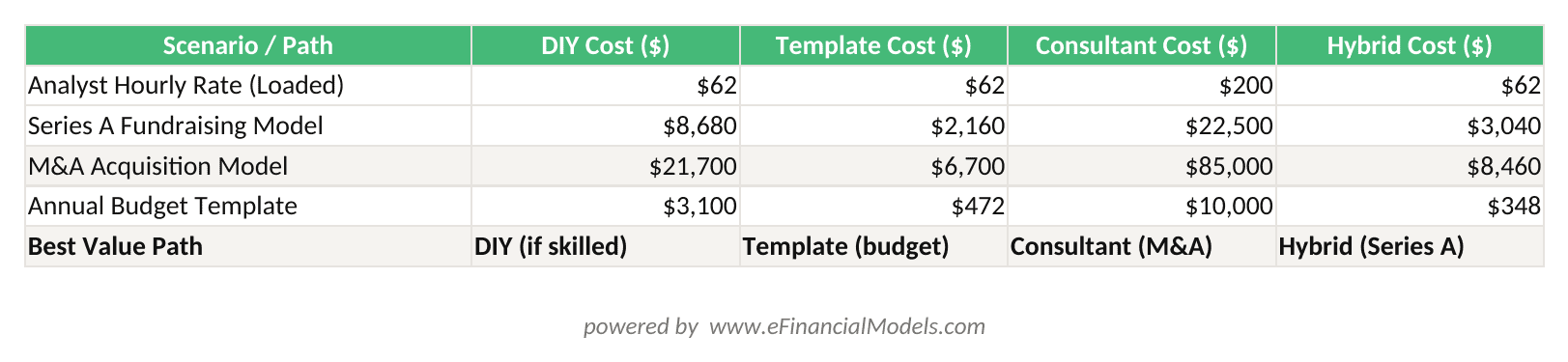
Fully-loaded DIY cost uses $62/hr analyst rate (BLS median $99,890 × 1.3x benefits ÷ 2,080 hrs). Hybrid = template + internal customization + freelance review.
When to Combine Approaches: Hybrid Strategies That Work
The most cost-effective strategy for many organizations is a hybrid: buy a professional template, customize it internally, and hire a freelancer for a focused review or build-out of the most complex module.
A practical hybrid for a Series A model: purchase a SaaS financial model template from a professional library (see EFM’s financial model template library), spend 20 hours on customization internally, then hire a Toptal freelancer for 10 hours of review and assumption validation. Total cost: $400 (template) + $1,240 (20 hrs internal) + $1,500 (10 hrs freelance at $150/hr) = $3,140. That is a Series A-quality model for under $3,200 and a 10-day timeline.
For ongoing financial projections and monthly reporting, a well-structured template with a three-statement model architecture eliminates the need to rebuild from scratch each planning cycle, compounding the time savings over 12–24 months.
Startups building their first model should also explore free financial model templates to validate the template approach before committing to a paid version.
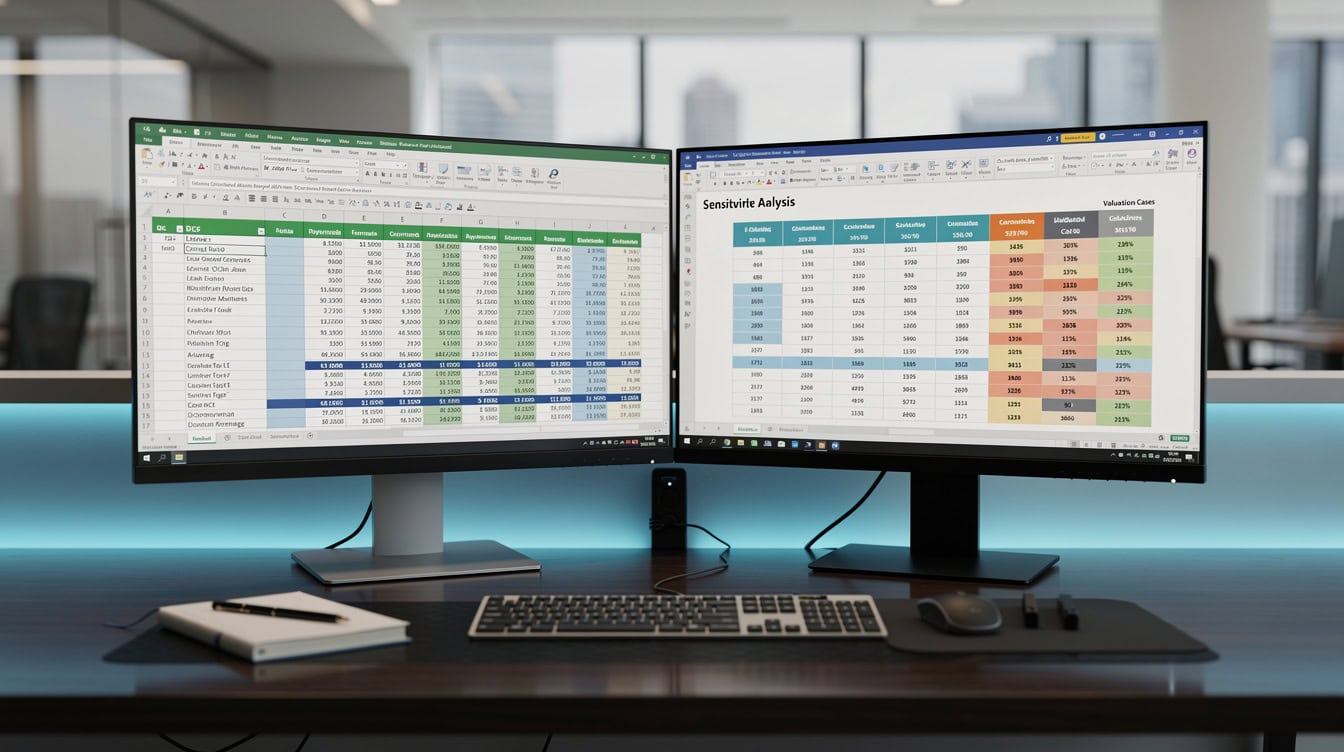
A well-structured template eliminates the need to rebuild from scratch each planning cycle, compounding time savings over 12–24 months.
Frequently Asked Questions
How much does it cost to hire someone to build a financial model?
The cost depends entirely on who you hire and what you need. A Big 4 advisory team charges $300–$500 per hour and typically scopes engagements at $50,000–$200,000 for complex transaction models. A boutique advisory firm runs $150–$300/hr with total project costs of $15,000–$75,000. An experienced freelancer on Toptal or Upwork charges $75–$200/hr, and a focused mid-tier model (SaaS 5-year plan, for example) can be delivered for $5,000–$15,000. Always define the scope in writing before agreeing to a rate: a vague scope is the primary driver of cost overruns in consultant engagements.
How long does it take to build a financial model from scratch?
Build time depends on complexity and the builder’s experience. A simple 3-statement model takes an experienced analyst 40–80 hours. A SaaS or real estate model with scenario analysis runs 80–160 hours. A full M&A or LBO model takes 200–400 hours. For a first-time builder without prior modeling experience, add 50–100% to these estimates to account for the learning curve. A professional template cuts these times by 60–80% because the structure, formulas, and formatting are already in place.
What Excel skill level do I need to customize a financial model template?
You need intermediate Excel proficiency: the ability to trace formula precedents (Ctrl+[), modify assumptions without breaking circular references, and restructure data tables. You do not need to know VBA or advanced array formulas for most templates. If you can build a VLOOKUP, write a nested IF statement, and use named ranges, you can customize most professional templates. If you cannot do those three things, budget 8–12 hours of freelance help for the customization phase rather than attempting it solo.
Are financial model templates good enough for investor presentations?
Yes, for seed and Series A rounds, a well-structured professional template customized with your actual business assumptions is entirely credible. Institutional VCs care about the quality of your assumptions and the logic of your unit economics, not whether the model was built from scratch. For later-stage rounds (Series B+) or M&A transactions, a consultant-reviewed or consultant-built model carries more credibility because it signals that an independent expert has validated the structure. The hybrid approach, template plus freelance review, bridges this gap cost-effectively.
What is the fully-loaded hourly cost of an internal FP&A analyst?
Here is the math: the US Bureau of Labor Statistics reports a median annual wage of $99,890 for financial analysts. Applying a 1.3x benefits multiplier (covering payroll taxes, health insurance, retirement contributions, and overhead) gives a fully-loaded annual cost of approximately $129,857. Dividing by 2,080 working hours per year yields a fully-loaded hourly rate of approximately $62. For a senior financial analyst or FP&A manager earning $139,000 base, the fully-loaded rate reaches approximately $87/hr. Use these figures to calculate the true cost of any internal modeling project.
How do I avoid errors in a self-built financial model?
Three practices eliminate most errors. First, separate inputs, calculations, and outputs into distinct sheets so that assumptions never live inside formula cells. Second, build a checks sheet with balance sheet balancing tests (Assets = Liabilities + Equity), cash flow reconciliation, and sum-of-parts validation. Third, have a second person trace every formula in the output section before the model goes to any external audience. The EuSpRIG study found 88% of spreadsheets contain errors; structured review processes catch the majority of them before they cause damage.
When does DIY financial modeling make sense?
DIY makes sense when three conditions are true simultaneously: your team has advanced Excel and financial modeling skills, the model is for internal use only (not investor-facing or transaction-related), and you have 4–8 weeks of analyst capacity available without displacing higher-priority work. Internal budget templates, departmental cost models, and scenario planning tools are ideal DIY candidates. Investor-facing models, acquisition analyzes, and any model that will be audited or reviewed by a third party are poor DIY candidates unless your team has professional modeling experience.
What is the hybrid approach to financial modeling?
The hybrid approach combines three steps: purchase a professional template, customize it internally with your business assumptions, and hire a freelancer for 8–12 hours of focused review and validation. This strategy delivers 80% of consultant quality at 15% of consultant cost. For a Series A model, the total cost typically runs $2,000–$3,300 with a 10-day timeline, compared to $50,000–$200,000 for a full consultant engagement.
Conclusion
The data makes the decision clear for most scenarios: templates win on cost and speed for standard use cases, consultants win on quality and credibility for high-stakes transactions, and DIY wins only when your team has the skill and the time to do it right. The hybrid approach, template plus targeted freelance review, delivers the best risk-adjusted outcome for the majority of startups and mid-market companies.
I recommend starting with EFM’s financial model template library, where you can preview templates before purchasing and compare costs directly against your build-or-hire analysis. If you need a startup financial model or a 5-year financial projection template, the library has professionally built options at a fraction of the consultant cost, ready to customize in days, not weeks.