
0 ITEMS

Beach Hotel Financial Model Excel Template
The Beach Resort Financial Model template helps entrepreneurs, resort owners, consultants, analysts, and hospitality planners turn a coastal accommodation concept into a structured five-year financial forecast. Instead of estimating resort performance with disconnected spreadsheets, users can work from a ready-made model designed around the key drivers of a beach resort, including room revenue, occupancy, average daily rates, food and beverage income, spa services, event hosting, retail sales, startup costs, operating expenses, payroll, cash flow, and profitability. Built for business planning, lender discussions, investor presentations, and internal decision-making, this financial model template gives users a practical way to understand how the resort may perform under different assumptions. It helps connect guest demand, room mix, pricing strategy, ancillary revenue, staffing levels, fixed overhead, variable costs, and capital requirements in one organized planning tool. Users can adjust the inputs to reflect their own resort size, room categories, market positioning, seasonality, cost structure, and growth expectations, making the model useful for both new beach resort launches and existing properties planning expansion. The template is especially useful for preparing funding documents because it focuses on the numbers lenders and investors typically want to review. It supports revenue assumptions, startup cost planning, operating expense forecasts, payroll planning, cash flow forecasting, profitability analysis, break-even analysis, scenario testing, and financial reporting. This helps users evaluate whether the business can remain cash-positive during slower periods, how quickly it may reach break-even, how much funding may be required before opening, and how key assumptions affect long-term returns. With editable inputs, automated calculations, and presentation-ready outputs, the Beach Resort Financial Model saves time compared to building a forecast from scratch. It is designed to work in Microsoft Excel and Google Sheets, making it accessible for founders, finance teams, consultants, and stakeholders who need a clear financial planning framework. Whether you are preparing a beach resort business plan, reviewing a hospitality investment, applying for a loan, or testing growth scenarios, the template provides a structured way to analyze the numbers and make better decisions before committing capital.
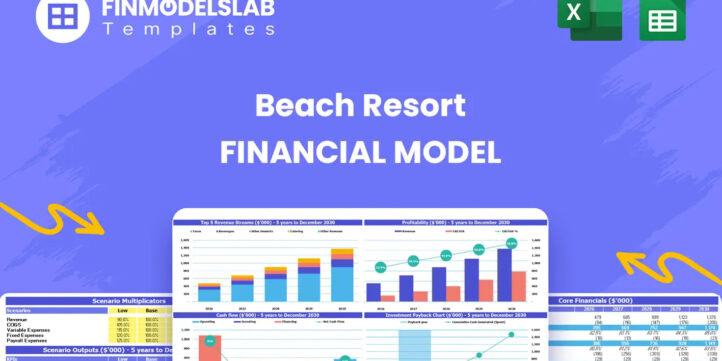


Financial Model Overview
The Beach Resort Financial Model is a ready-to-use financial model template designed to help users plan, analyze, and present the financial potential of a beach resort business. A resort has multiple moving parts, including room inventory, occupancy, average daily rates, food and beverage sales, spa services, events, retail, payroll, property costs, capital expenditures, seasonal cash flow, and investor returns. This template brings those drivers together in one structured model so entrepreneurs, owners, consultants, analysts, and business planners can replace rough estimates with a more organized forecast. It is useful for preparing a business plan, evaluating a new resort launch, expanding an existing property, discussing financing with lenders, or presenting a hospitality investment opportunity to stakeholders. The model is fully editable, compatible with Excel and Google Sheets, and built to support five-year projections, making it practical for both early-stage planning and professional financial presentations.
All-in-One Dashboard
The all-in-one dashboard gives users a central view of the most important inputs and outputs in the Beach Resort Financial Model. Instead of moving through multiple tabs to understand the business, users can review the core assumptions, projected revenue, profitability, cash position, returns, and key operating indicators from one organized area. For a beach resort, this is especially useful because financial performance depends on a combination of room occupancy, average daily rate, ancillary services, operating costs, capital investment, and seasonality. The dashboard helps connect these assumptions to visible outputs, allowing users to see how changes in room count, pricing, occupancy, food and beverage sales, spa income, or expenses affect the overall forecast. This component is valuable for business planning and decision-making because it creates a fast summary of the resort’s financial health and helps users identify whether the model supports their funding goals, operating targets, and profitability expectations.
Low Base High Scenario Analysis
The Low Base High scenario analysis section helps users test how the beach resort could perform under different market and operating conditions. A resort forecast can change significantly depending on occupancy, room pricing, guest spending, event demand, payroll levels, supplier costs, and broader tourism trends. This component allows users to compare conservative, expected, and optimistic assumptions without rebuilding the model from scratch. For example, a low case may assume weaker occupancy or reduced average daily rates, while a high case may reflect stronger demand, better pricing, higher ancillary revenue, or more efficient cost control. The outputs can show the impact on revenue, EBITDA, cash flow, profitability, and investment returns. This is useful for lenders, investors, and management teams because it demonstrates that the business has been stress-tested and that the user understands both the upside potential and downside risks of the resort plan.
Professional Charts
The professional charts component turns the financial projections into visual reports that are easier to understand and present. Beach resort forecasts often include many numbers across revenue streams, expenses, cash flow, margins, and returns, so charts help simplify the story behind the model. This section may visualize revenue growth, EBITDA performance, cash balance, expense trends, profitability, scenario comparisons, or key operating metrics over the forecast period. For business owners and consultants, these charts can support investor meetings, lender presentations, board discussions, and internal planning sessions by making the financial case more accessible. Instead of relying only on detailed statements, users can show stakeholders how the resort is expected to grow, when profitability improves, where cash flow is strongest or weakest, and which financial drivers matter most. The presentation-ready format also helps create a more polished and professional impression when sharing the model with external parties.
ROE Components and DuPont Analysis
The ROE components and DuPont analysis section helps users evaluate the drivers behind return on equity rather than looking only at a single headline return percentage. In a beach resort investment, returns may be influenced by profit margins, asset efficiency, financing structure, and the amount of equity invested in the property. This component breaks down return on equity into more meaningful parts, allowing users to understand whether performance is being driven by strong operating profitability, efficient use of assets, leverage, or a combination of factors. Inputs may include net income, revenue, assets, liabilities, equity, and other balance sheet and income statement figures generated by the model. The outputs help investors and owners evaluate whether the resort is producing attractive returns relative to the capital committed. This is especially valuable for funding discussions, investor reporting, and strategic planning because it explains why returns are improving or weakening over time.
Revenue Inputs
The revenue inputs section is where users define the commercial assumptions that drive the resort’s sales forecast. For a beach resort, revenue is typically generated from room bookings and several ancillary sources, so this section may include assumptions for room types, number of rooms, occupancy rates, weekday and weekend pricing, average daily rate, food and beverage sales, spa services, event hosting, retail income, and other guest services. Users can adjust these inputs to match their specific property concept, target market, location, and pricing strategy. The model then converts these assumptions into projected revenue over the forecast period. This component is essential because revenue assumptions are one of the first areas reviewed by investors and lenders. A clear revenue input structure helps users explain how the resort will earn money, how each stream contributes to total sales, and how growth may occur as occupancy improves, pricing increases, or additional services are introduced.
Bank-Ready Reports
The bank-ready reports section provides lender-friendly financial outputs that help users present the resort’s financial plan in a structured and professional format. Lenders typically want to see whether the business can generate enough cash flow to cover operating expenses, debt service, and seasonal fluctuations, while also maintaining a healthy cash balance. This component may include projected profit and loss statements, cash flow statements, balance sheet summaries, EBITDA, margins, debt-related metrics, and key financial ratios. It is designed to organize the forecast in a way that supports loan applications, funding requests, and due diligence reviews. For a beach resort, this is particularly important because lenders may pay close attention to seasonality, pre-opening investment, working capital, occupancy assumptions, and the ability to remain cash-positive during slower months. Bank-ready reporting helps users communicate the financial story clearly and gives stakeholders a more complete view of the resort’s expected performance.
Revenue Breakdown
The revenue breakdown section gives users a detailed view of how each revenue stream contributes to the overall financial forecast. A beach resort is rarely dependent on room revenue alone, so this component helps separate income from ocean view rooms, beachfront suites, grand villas, restaurants, bars, spa services, events, retail, and other ancillary activities. By showing revenue at a more detailed level, the model helps users identify which parts of the business create the most value and which areas may need further development. Inputs may include room inventory, occupancy, pricing, guest spending levels, monthly service revenue, and growth assumptions. Outputs may show revenue by category, revenue mix, annual growth, and the relative importance of each stream. This is useful for budgeting and strategy because it allows owners to evaluate whether they should focus on room rate optimization, food and beverage expansion, event packages, wellness services, or other high-margin activities.
KPI Dashboard
The KPI dashboard focuses on the performance metrics that matter most in a beach resort business. These may include occupancy rate, average daily rate, revenue per available room, total revenue, EBITDA, EBITDA margin, cash balance, payback period, return on equity, internal rate of return, payroll as a percentage of revenue, and other hospitality benchmarks. By organizing these metrics in one place, the KPI dashboard helps users quickly evaluate whether the resort is operating in line with expectations. It can also support ongoing monitoring after launch by comparing actual results to forecasted targets. For business planning, the KPI dashboard is useful because it translates the forecast into decision-ready indicators rather than leaving users to interpret raw financial statements alone. It helps owners, managers, consultants, and investors understand the relationship between operating performance and financial outcomes, making it easier to spot issues, explain trends, and refine assumptions.
Break-Even Analysis
The break-even analysis section helps users estimate when the beach resort can generate enough revenue to cover its fixed and variable costs. For a resort business, this is a critical planning question because the operation may require significant upfront investment before opening and may also face seasonality after launch. This component uses assumptions such as room revenue, ancillary income, cost of goods sold, payroll, property expenses, marketing, utilities, insurance, maintenance, and other overhead to calculate the point at which the business begins producing positive operating results. The output may show the break-even month, required sales level, required occupancy, or revenue needed to cover the cost structure. This is useful for entrepreneurs and lenders because it shows how quickly the resort may move from launch to sustainability. It also helps users test whether pricing, occupancy, staffing, and overhead assumptions are realistic enough to support the desired profitability timeline.
Startup Costs and Funding Requirements
The startup costs and funding requirements section helps users estimate how much capital is needed before the beach resort can begin operating. Resort launches often require substantial upfront spending, including furnishings, property improvements, landscaping, pool and outdoor areas, kitchen and bar equipment, technology systems, licensing, deposits, opening inventory, pre-opening payroll, marketing, professional fees, and working capital reserves. This component organizes those costs into a clear structure so users can build a realistic funding plan and avoid underestimating launch needs. It may also help separate one-time capital expenditures from recurring operating expenses, which is important for both budgeting and investor communication. The outputs can support loan requests, equity fundraising, owner capital planning, and feasibility analysis. By showing the required investment alongside forecasted profitability, cash flow, payback, and returns, this section helps users evaluate whether the resort opportunity is financially viable before committing resources.
File types:
Excel – Single-User: .xlsx
Excel – Multi-User: .xlsx
Similar ProductsOther customers were also interested in...



 HenrySheykin
Casino Hotel Financial Model Excel Template
The Casino Hotel Financial Model helps users build a structured five-year forecast for an integrated... Read more
Floating hotel Financial Model Excel Template
The Hotel Financial Model helps users build a structured financial forecast for a hotel business usi... Read more
Private Island Financial Model Excel Template
The Luxury Private Island Financial Model helps users turn an exclusive resort, island rental, or hi... Read more
Ski Resort Hotel Financial Model Excel Template
The Ski Lodge Financial Model Template helps entrepreneurs, hospitality founders, consultants, analy... Read more

 Giorgos
Tour Operator Financial Model – 5 Year Finan...
Financial Model providing an advanced 5-year financial plan for a startup or operating Tour Operator... Read more

Theme Park & Hotel Financial Model (Construct...
Financial model presenting a development scenario for a Theme Park & Hotel project including con... Read more

 GoGo Spreadsheets
Best Resort Financial Model
The best financial model for a Resort business. Unlock the true potential of your luxury resort with... Read more
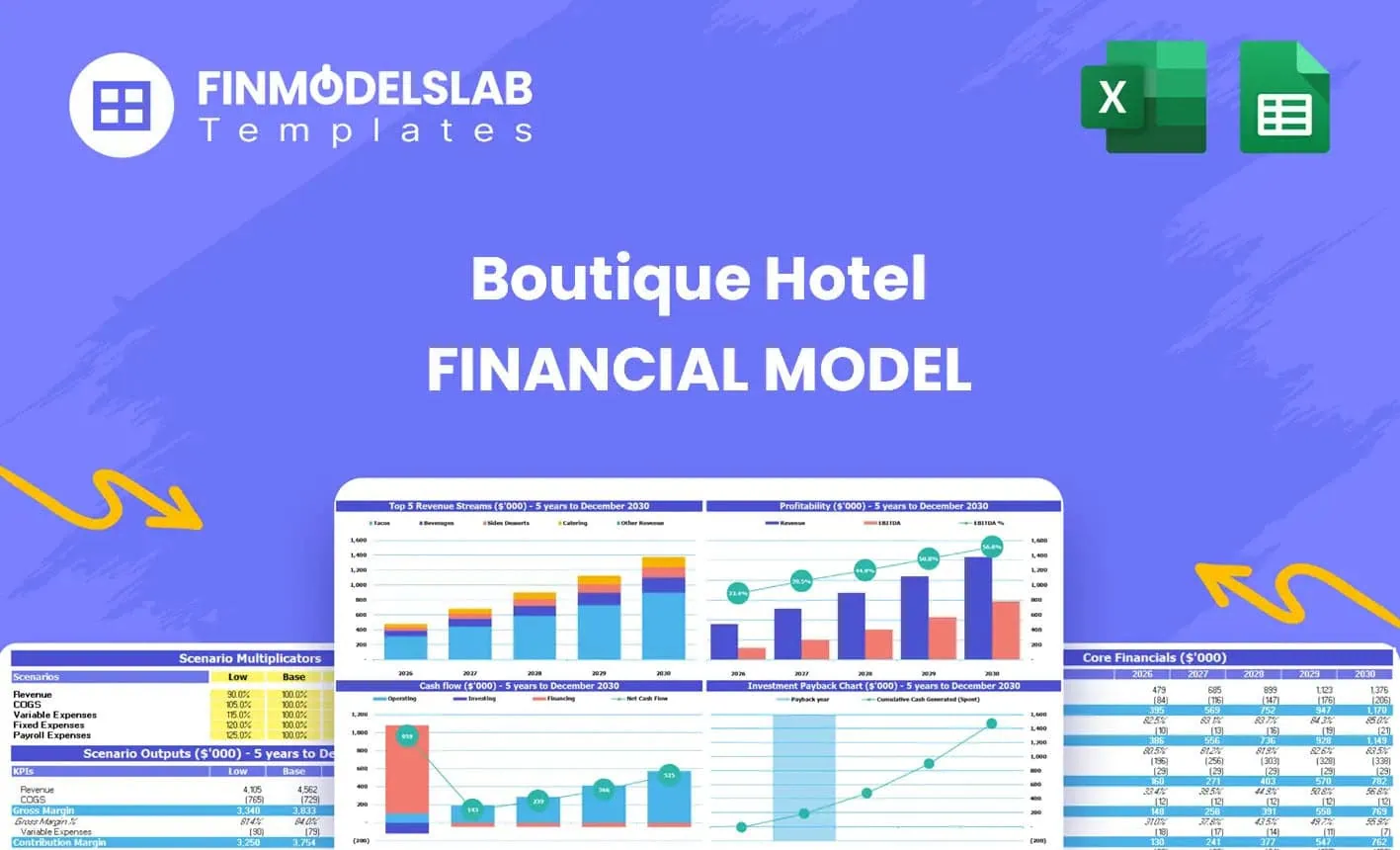
Boutique Hotel Financial Model Excel Template
The Boutique Hotel Financial Model Financial Model Template helps entrepreneurs, hotel owners, consu... Read more
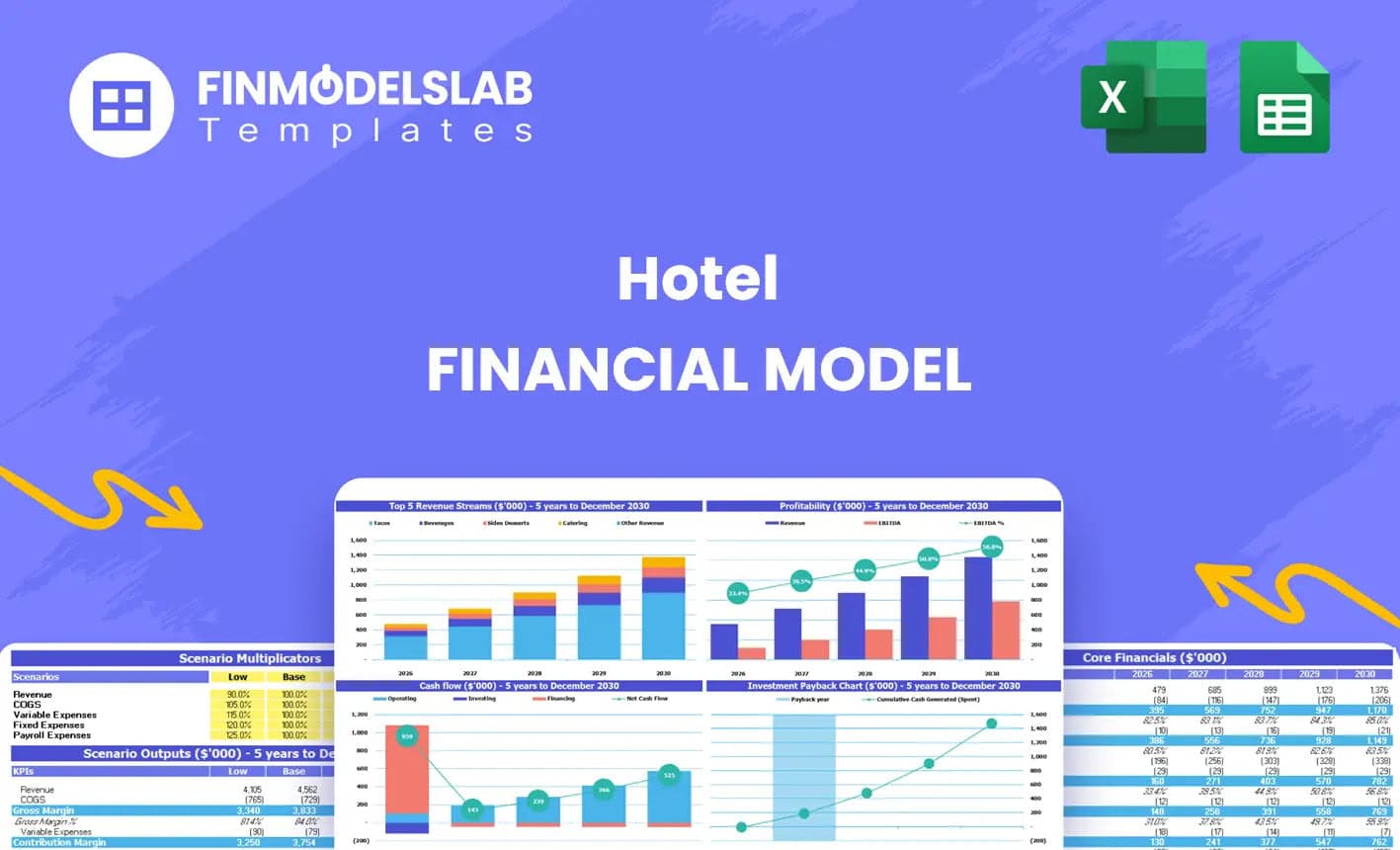
Hotel Financial Model Excel Template
The Hotel Financial Model helps users build a structured financial forecast for a hotel business usi... Read more
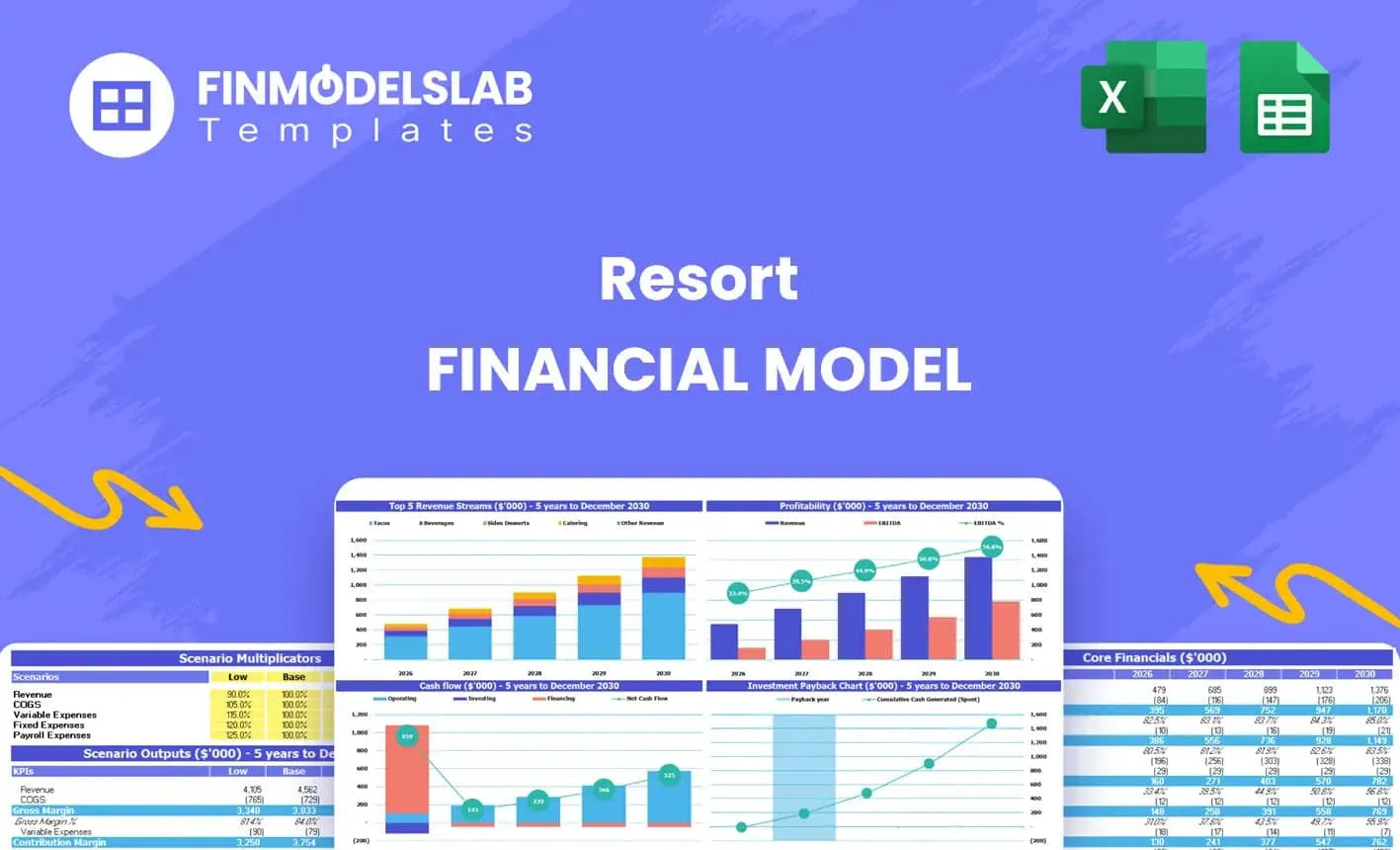
Resort Financial Model Excel Template
The Resort Financial Model Financial Model Template helps resort developers, hospitality entrepreneu... Read more
You must log in to submit a review.