0 ITEMS

Financial Model Pricing 2025: $50 Template vs $50K Custom

A financial model can cost $50 or $50,000 depending on three variables: complexity, customization, and the stakes of the decision it supports.
Key Takeaways
- Pre-built templates cost $50–$500 and suit pre-revenue founders validating an idea or preparing a first investor deck.
- DIY modeling platforms run $0–$200 per month and work best for operators who need ongoing forecasting with moderate complexity.
- Custom financial modeling services range from $2,000 to $50,000+ and are justified when fundraising rounds exceed $1M or when M&A, debt financing, or regulatory filings are involved.
- The total cost of ownership for a DIY platform at $150/month reaches $1,800 per year before accounting for 40–80 hours of setup and learning time.
- Choosing the wrong tier is expensive: an inadequate model can cost a founder a funding round worth 10–100x the price of a better model.
- A hybrid approach, starting with a $200–$400 template and hiring a consultant for a $500–$1,500 review, covers most seed-stage needs at under $2,000 total.
- 3 clear decision triggers push a buyer from Tier 1 to Tier 3: a raise above $1M, a complex capital structure, or a board-level financial audit requirement.
Why Financial Model Pricing Varies So Dramatically
Financial model pricing varies because the underlying work varies: a three-statement model (income statement, balance sheet, and cash flow statement linked together in a spreadsheet) for a single-product startup takes 8–15 hours to build, while a multi-entity SaaS model with cohort analysis, cap table integration, and scenario toggles can take 80–200 hours. Time drives cost, and complexity drives time.
Three structural factors explain most of the price range:
- Scope: A basic 3-statement model covers historical financials and a 3-year forecast. An investor-ready model adds unit economics, sensitivity analysis (a tool that shows how outputs change when one input changes), waterfall distributions, and department-level headcount planning.
- Industry specificity: A SaaS model needs monthly recurring revenue (MRR) cohort tracking, churn rates, and customer acquisition cost (CAC) payback periods. A manufacturing model needs bill-of-materials costing and inventory turnover. Generic templates rarely handle both.
- Revision cycles: Custom engagements often include 2–5 rounds of revisions. Each round adds hours and cost.
According to the U.S. Bureau of Labor Statistics, financial analysts earned a median hourly wage of $49.18 in 2023.
Boutique financial modeling consultants typically bill at $150–$400 per hour, which means a 100-hour custom model project costs $15,000–$40,000 in labor alone before any project management or software overhead.
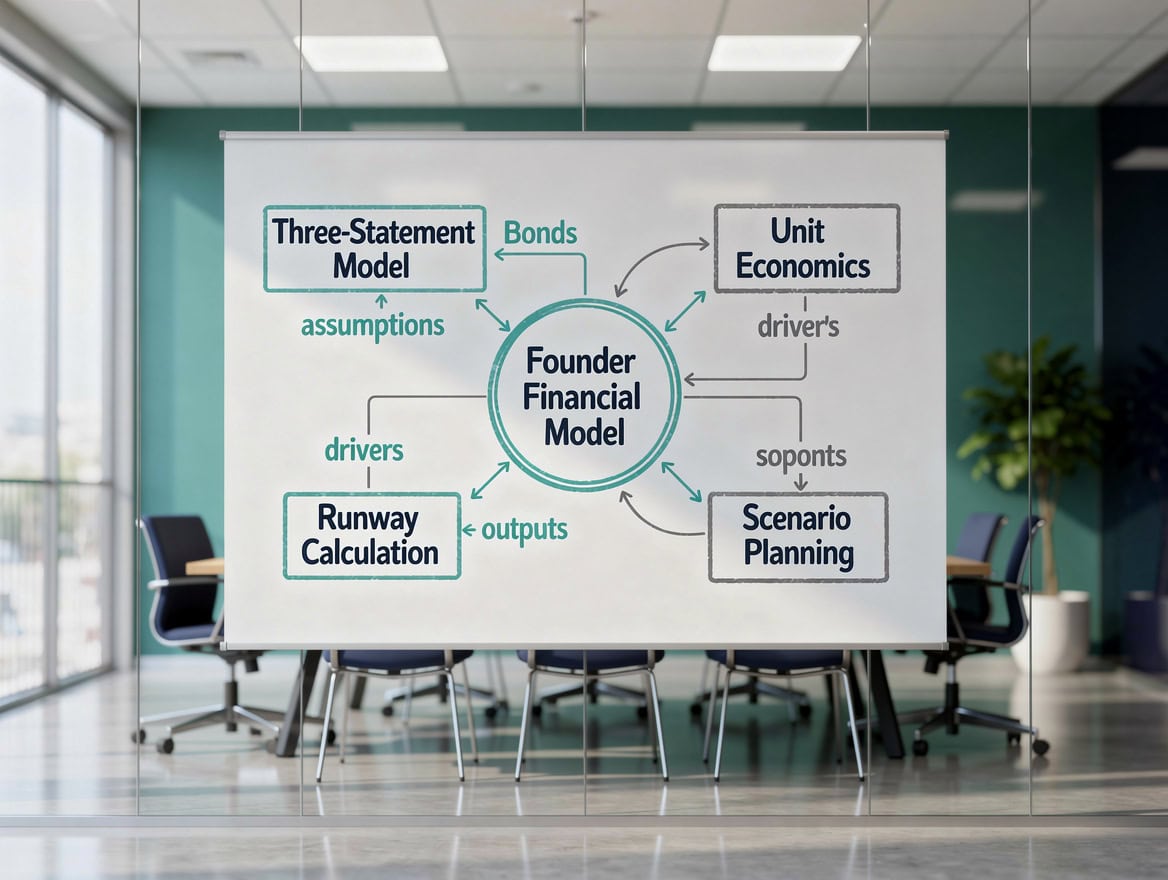
Three variables explain 90% of financial model price variation: scope, industry specificity, and revision cycles.
Tier 1: Pre-Built Templates ($50–$500)
Pre-built financial model templates are the fastest and cheapest entry point for founders, small business owners, and analysts who need a structured starting point without building from scratch. They work best when your business model is relatively standard and your financial complexity is low.
What Each Price Band Includes
| Price Range | Typical Contents | Best For |
|---|---|---|
| $50–$100 | Basic 3-statement model, 3-year forecast, minimal assumptions | Pre-revenue validation |
| $100–$250 | Industry-specific model, 5-year forecast, unit economics tab | Seed deck preparation |
| $250–$500 | Investor-ready model, scenario analysis, cap table, dashboard | Series A prep, bank financing |
At the $50–$100 level, you get a linked income statement, balance sheet, and cash flow statement with a simple assumptions tab. These templates handle straightforward businesses: a single-location restaurant, a freelance agency, or a simple e-commerce store.
The $100–$250 range adds industry-specific logic. A SaaS template at this tier includes MRR build, churn modeling, and CAC/LTV (lifetime value) ratios. A marketplace template includes take-rate modeling and gross merchandise value (GMV) tracking.
The $250–$500 tier delivers what investors actually want to see: integrated scenario toggles (base, upside, downside), a sensitivity table, a cap table showing ownership dilution across funding rounds, and a visual dashboard summarizing key metrics. EFM’s financial model templates cover over 40 industries at this tier.
Template Limitations to Know
- Templates assume a standard business structure. If your revenue model has 3+ streams with different margin profiles, you’ll spend 10–20 hours customizing.
- Most templates don’t include multi-currency support or consolidated entity modeling.
- Investor-specific formatting (e.g., a specific VC firm’s preferred layout) requires manual adjustment.

Template quality scales predictably with price: the $250-$500 tier delivers scenario analysis, cap tables, and visual dashboards that investors expect.
Tier 2: DIY Modeling Platforms ($0–$200/Month)
DIY modeling platforms are subscription-based software tools that provide guided financial modeling environments, often with built-in templates, integrations with accounting software, and collaboration features. They suit operators who need ongoing, living forecasts rather than a one-time deliverable.
Platform Pricing Comparison
| Platform | Free Tier | Mid Tier | Premium | Key Strength |
|---|---|---|---|---|
| Google Sheets | $0 | $0 | $0 | Flexibility, collaboration |
| Excel (Microsoft 365) | $0 (web) | $6.99/mo | $9.99/mo | Formula depth, industry standard |
| PlanGuru | None | $99/mo | $199/mo | 3-statement + 10-year forecasting |
| Jirav | None | ~$1,000/mo | Custom | FP&A for mid-market |
| Cube | None | Custom | Custom | Spreadsheet-native FP&A |
For most founders and small business operators, Excel or Google Sheets combined with a quality template covers 80% of use cases at near-zero platform cost. The real cost is time: reaching proficiency in financial modeling in Excel takes 20–40 hours for a non-finance professional, according to training data from financial education providers.
PlanGuru targets small businesses and nonprofits needing structured forecasting without a finance team. Its $99/month tier supports up to 3 users and includes 10-year projections, budget-vs-actual tracking, and over 30 forecasting methods.
Jirav and Cube serve mid-market companies ($5M–$100M revenue) with dedicated finance teams. Their pricing reflects enterprise-grade features: ERP integrations, department-level driver modeling, and real-time actuals syncing. These platforms are not appropriate for pre-revenue startups.
Total Annual Cost of DIY Platforms
Here’s the math for a founder choosing a $150/month platform:
- Annual subscription: $150 × 12 = $1,800
- Setup and learning time: 40 hours × $75/hour opportunity cost = $3,000
- Ongoing monthly maintenance: 5 hours/month × 12 × $75 = $4,500
- Total first-year cost: $9,300
That figure surprises most buyers who see only the subscription price. A $300 template with 8 hours of customization at the same opportunity cost rate totals $900, making templates dramatically cheaper for one-time needs.
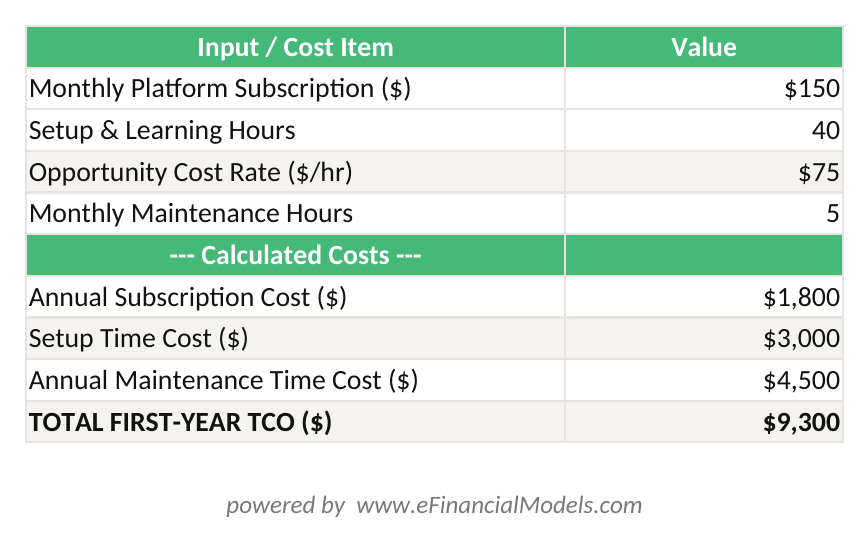
TCO = Annual Subscription + (Setup Hours × Hourly Rate) + (Monthly Maintenance Hours × 12 × Hourly Rate). At $150/mo and 40 setup hours, year-one cost reaches $9,300.

A $150/month DIY platform costs $9,300 in year one when opportunity cost of setup and maintenance time is included.
Tier 3: Custom Financial Modeling Services ($2,000–$50,000+)
Custom financial modeling services deliver a bespoke model built to your exact specifications by a professional analyst or firm. This tier is justified when the financial decision at stake is large enough that model quality directly affects the outcome.
What Drives Custom Modeling Costs
Four variables determine where your project lands in the $2,000–$50,000+ range:
- Complexity: A 3-statement model with basic forecasting costs $2,000–$5,000. A full LBO model (leveraged buyout, a model used in private equity acquisitions) with debt waterfall, returns analysis, and sensitivity tables costs $15,000–$35,000.
- Provider type: Freelance analysts charge $75–$150/hour. Boutique modeling firms charge $150–$300/hour. Big 4 accounting firms (Deloitte, PwC, EY, KPMG) charge $300–$600/hour for financial modeling engagements.
- Revision cycles: Projects with 5+ revision rounds can double the initial quote. Fix this with a detailed scope document before signing.
- Timeline: Rush projects (under 2 weeks) typically carry a 25–50% premium.
Custom Modeling Price Tiers
| Tier | Price Range | Provider | Deliverable |
|---|---|---|---|
| Entry custom | $2,000–$5,000 | Freelance analyst | 3-statement + basic forecast |
| Mid-range | $5,000–$15,000 | Boutique firm | Investor-ready model + scenarios |
| Full-service | $15,000–$35,000 | Specialized firm | Full FP&A model + data room |
| Enterprise | $35,000–$50,000+ | Big 4 / advisory | M&A, LBO, regulatory filing |
The Kauffman Foundation’s research on startup financing shows that the median seed round in the U.S. has grown significantly over the past decade, with many rounds now exceeding $1M.
At that fundraising level, a $10,000–$20,000 custom model represents less than 2% of the capital being raised, making it a rational investment.
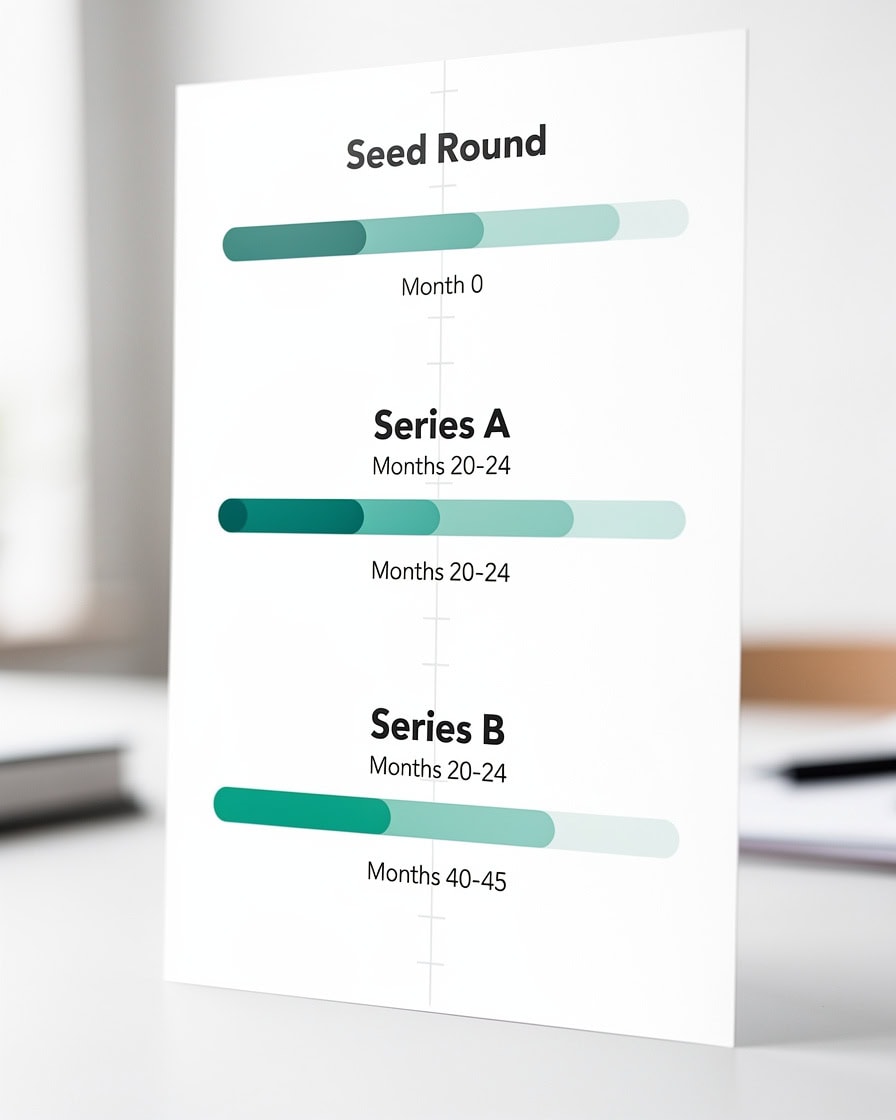
A $10,000-$20,000 custom model represents under 2% of a $1M raise, making it a rational investment for high-stakes fundraising.
Total Cost of Ownership: Beyond the Sticker Price
The sticker price of any financial modeling solution understates the true cost. Total cost of ownership (TCO) includes time, maintenance, errors, and opportunity cost.
TCO Comparison Across Tiers
| Cost Factor | Template | DIY Platform | Custom Service |
|---|---|---|---|
| Upfront cost | $50–$500 | $0–$500 setup | $2,000–$50,000+ |
| Annual subscription | $0 | $0–$2,400 | $0 (one-time) |
| Setup time (hours) | 5–20 | 20–80 | 0–10 (review only) |
| Maintenance (hrs/yr) | 10–30 | 60–120 | 5–20 (updates) |
| Error risk | Medium | Medium-High | Low |
| Scalability | Low | Medium | High |
Error risk deserves special attention. A 2013 study by Professors Reinhart and Rogoff became famous for a spreadsheet error that affected economic policy conclusions, illustrating how consequential modeling mistakes can be (Reinhart & Rogoff, “Growth in a Time of Debt,” American Economic Review, 2010, with the error identified by Herndon et al., 2013). For high-stakes decisions, professional review eliminates this risk.
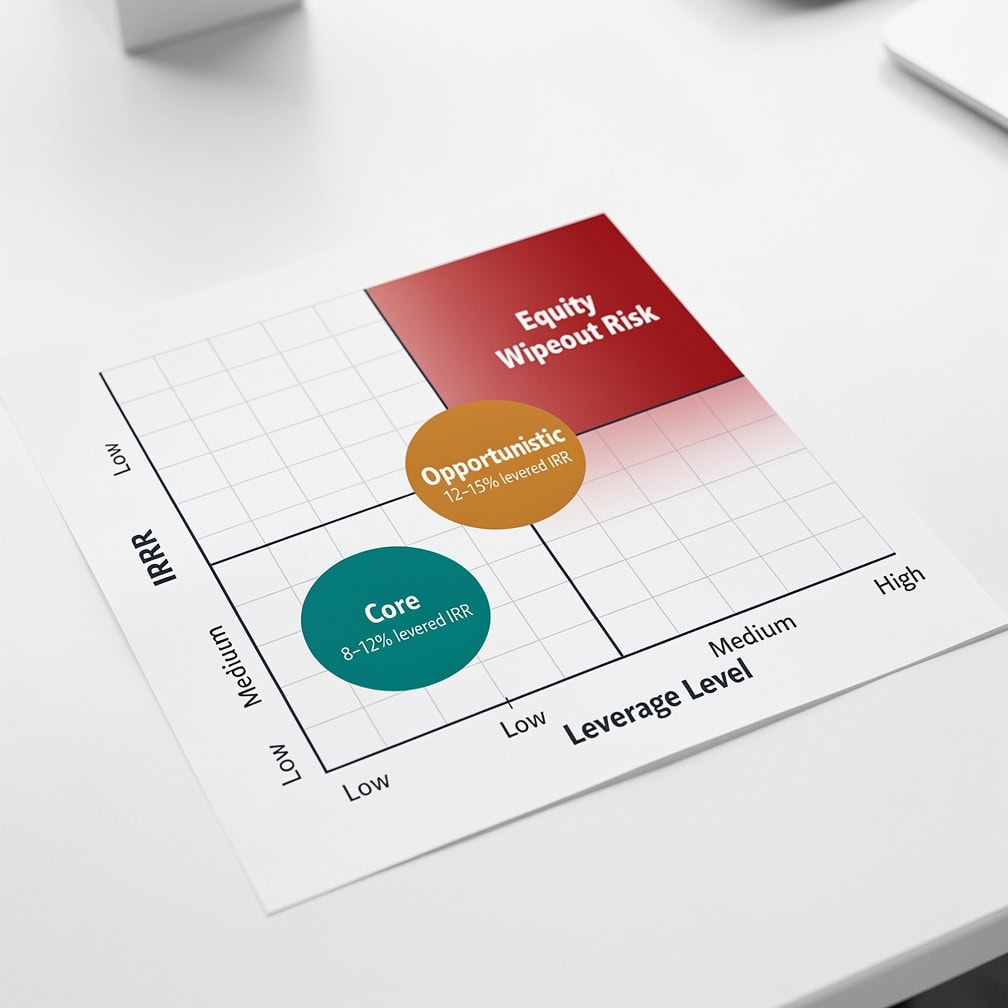
Map your situation on two axes: business complexity and decision stakes. The quadrant tells you which tier to choose.
Use-Case Matching Guide: Which Tier Fits Your Situation
The right tier depends on four factors: your fundraising stage, business complexity, timeline, and the stakes of the financial decision.
Decision Framework
Choose Tier 1 (Template) if:
- You’re pre-revenue or in the idea-validation stage
- Your raise target is under $500K
- Your business model has 1–2 revenue streams
- You have 2–4 weeks and basic Excel skills
- Budget is under $1,000
Choose Tier 2 (DIY Platform) if:
- You need a living forecast updated monthly
- Your team has a finance-literate operator
- You want accounting software integration (QuickBooks, Xero)
- Budget is $100–$200/month ongoing
- You’re not fundraising but need operational visibility
Choose Tier 3 (Custom Service) if:
- Your raise target exceeds $1M
- You’re preparing for M&A, debt financing, or a board audit
- Your business has 3+ revenue streams, multiple entities, or complex unit economics
- You need a model defensible in a data room
- Timeline is under 3 weeks (rush custom beats DIY every time)
EFM’s startup financial models and 5-year financial projection templates cover the most common Tier 1 use cases across SaaS, marketplace, e-commerce, and service businesses.
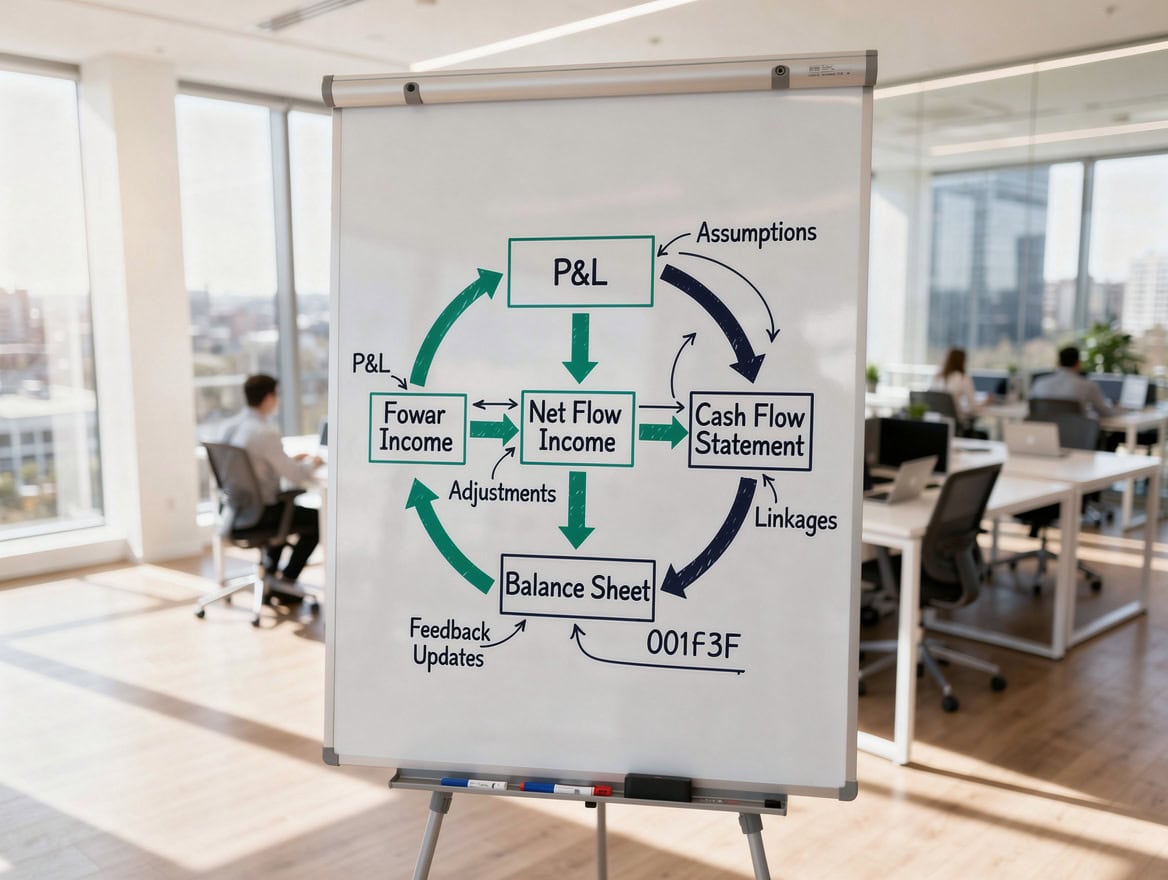
Two questions resolve 80% of tier decisions: raise size and whether you need ongoing monthly forecasting.
Hidden Costs and Red Flags in Each Pricing Tier
Every tier carries risks that don’t appear in the headline price. Knowing them in advance prevents expensive surprises.
Template red flags:
- Templates built for a different country’s accounting standards (IFRS vs. GAAP) require significant rework.
- Outdated templates (pre-2020) may lack SaaS-specific metrics now standard in investor due diligence.
- A template priced under $75 rarely includes documentation, making customization slow and error-prone.
DIY platform red flags:
- Platform lock-in: some tools store your data in proprietary formats, making export to Excel difficult.
- Feature gates: core functions like scenario modeling are often locked behind premium tiers not advertised on the pricing page.
- Integration failures: accounting software syncs break during software updates, requiring manual reconciliation.
Custom service red flags:
- Scope creep: a project quoted at $8,000 can reach $20,000 without a written scope document and change-order process.
- Deliverable ownership: confirm in writing that you own the model file and all underlying formulas.
- Black-box models: if the consultant won’t explain the logic, you can’t update or defend it to investors.

Scope creep is the most expensive hidden cost in custom modeling: a $8,000 project can reach $20,000 without a written scope document.
Hybrid Approaches: Combining Solutions for Optimal Value
The smartest buyers don’t choose one tier exclusively. They combine solutions to get professional quality at template prices.
The most effective hybrid for seed-stage founders: purchase a $200–$400 investor-ready template, customize it yourself over 10–15 hours, then hire a freelance financial modeler for a 3–5 hour review at $150–$250/hour. Total cost: $650–$1,650. Quality: close to a $5,000 custom build.
For Series A companies, a hybrid looks different: use a DIY platform for monthly operational forecasting (ongoing visibility), then commission a custom model specifically for the investor data room (one-time, high-quality deliverable). This separates the operational tool from the fundraising tool, optimizing each for its purpose.
EFM’s DCF model templates and three-statement models are specifically designed to serve as the starting point for this hybrid approach, with clean formula structures that a consultant can audit and extend quickly.

Template + consultant review delivers near-custom quality for $650-$1,650, the optimal approach for most seed-stage founders.
Frequently Asked Questions
How much does a financial model cost for a startup?
A financial model for a startup costs between $50 and $50,000 depending on the approach. A pre-built template from a marketplace like EFM costs $50–$500 and suits pre-revenue founders preparing a seed deck. A custom model built by a boutique firm costs $5,000–$15,000 and is appropriate for Series A fundraising above $1M. The most cost-effective path for most early-stage startups is a $200–$400 investor-ready template combined with a $500–$1,500 professional review, delivering near-custom quality for under $2,000 total. The decision should hinge on the size of the raise and the complexity of the business model, not on a preference for cheap or expensive.
What is included in a $500 financial model template?
A $500 financial model template typically includes a fully linked three-statement model (income statement, balance sheet, and cash flow statement), a 5-year monthly and annual forecast, an assumptions dashboard with toggle inputs, scenario analysis (base, upside, downside cases), a sensitivity table showing how key metrics respond to changes in growth rate or margin, a cap table showing equity dilution across funding rounds, and a visual KPI dashboard. Industry-specific templates at this price point also include sector-relevant metrics: MRR and churn for SaaS, GMV and take rate for marketplaces, or occupancy rate and RevPAR for hospitality. Documentation and a user guide are standard at this price tier.
When does it make sense to hire a custom financial modeling firm?
Hiring a custom financial modeling firm makes sense when three conditions are present: the financial decision at stake involves more than $1M, the business model is complex enough that a template requires more than 20 hours of customization, and the model will face scrutiny from sophisticated investors, lenders, or acquirers. Specific triggers include preparing for a Series A or B fundraising round, entering M&A negotiations, applying for SBA or bank debt financing above $500K, or building a model for a board-level strategic review. At these stakes, a $10,000–$20,000 custom model represents a rational insurance cost against a failed raise or a deal that falls apart in due diligence.
What are the hidden costs of DIY financial modeling platforms?
DIY financial modeling platforms advertise monthly subscription fees of $0–$200, but the true first-year cost is typically $5,000–$10,000 when you account for setup time, learning curve, and ongoing maintenance. A non-finance professional needs 20–40 hours to reach basic proficiency in a new platform. At a $75/hour opportunity cost, that’s $1,500–$3,000 in time before the model produces a single useful output. Add 5 hours per month of ongoing maintenance ($4,500/year at the same rate) and the platform’s $1,800 annual subscription, and the total first-year TCO reaches $9,300. This math makes templates dramatically cheaper for one-time fundraising needs and platforms more cost-effective only when you need monthly living forecasts over multiple years.
Can I use a template for a Series A fundraising round?
Yes, but with important caveats. A high-quality $300–$500 investor-ready template can support a Series A raise if your business model is relatively standard (single-product SaaS, straightforward e-commerce, or a service business) and you customize it thoroughly. The risk is that sophisticated Series A investors, who typically invest $2M–$15M, will probe the model’s assumptions deeply. If the template’s logic doesn’t hold up under questioning, it signals weak financial literacy. The safer approach for a Series A is the hybrid model: start with a premium template, customize it for your specific unit economics, then pay a financial modeling consultant $1,000–$3,000 to review and stress-test it before sharing with investors.
How long does it take to build a custom financial model?
A custom financial model takes 2–8 weeks to build depending on complexity and provider. A basic 3-statement model with a 5-year forecast takes 1–2 weeks with a freelance analyst. A full investor-ready model with scenario analysis, cap table, and sensitivity tables takes 3–5 weeks at a boutique firm. Enterprise-grade models for M&A or LBO analysis take 6–12 weeks at a Big 4 firm. Rush timelines (under 2 weeks) are possible but typically carry a 25–50% price premium. For founders with an imminent fundraising deadline, a premium template with a professional review is almost always faster and cheaper than a rushed custom build.
What financial model features justify paying more than $200?
Six specific features justify paying above $200 for a financial model: (1) integrated scenario analysis with toggle inputs that update all three statements simultaneously; (2) cohort-based revenue modeling for subscription or marketplace businesses; (3) a dynamic cap table that models dilution across multiple funding rounds; (4) department-level headcount planning with loaded cost calculations (salary plus benefits plus payroll tax); (5) a sensitivity table showing how IRR or net present value changes across a matrix of two key variables; and (6) multi-currency consolidation for businesses operating in more than one country. Templates below $200 rarely include more than two of these features. If your investor or lender expects all six, budget $300–$500 for a template or $5,000–$15,000 for a custom build.
Match your tier to your situation: templates for validation, platforms for operations, custom for high-stakes fundraising.
The Right Financial Model Is the One That Matches Your Stakes
Financial model pricing follows a simple logic: the cost should be proportional to the decision it supports. A $100 template is the right tool for a founder testing whether a business idea pencils out. A $20,000 custom model is the right tool for a company raising $10M from institutional investors.
The most common mistake is not overpaying. It’s underpaying at the wrong moment: using a $100 template for a $3M raise and losing the deal because the model couldn’t withstand investor scrutiny. The second most common mistake is overpaying for complexity you don’t need: commissioning a $15,000 custom model for a pre-revenue startup that needs a simple 3-year forecast.
Use the tier framework in this guide to match your situation to the right solution. Start with the stakes of the decision, then work backward to the appropriate investment in the model that supports it.
I recommend browsing EFM’s financial model templates organized by industry and use case to find a professionally built starting point that fits your budget and business model, whether you’re validating an idea at $100 or preparing a Series A data room at $500.