0 ITEMS

80 Basis Points = 0.80%: Mortgage, Savings & Bond Impact
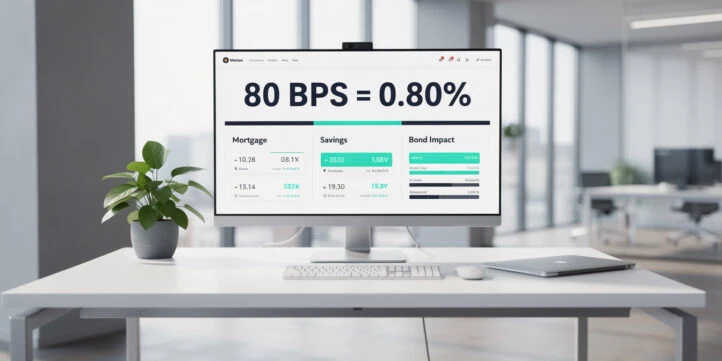
80 basis points equals exactly 0.80%, and that single number can shift your monthly mortgage payment by over $140, add hundreds to your annual savings yield, or move a bond portfolio by thousands of dollars.
Key Takeaways
- 80 basis points (bps) converts to 0.80%, or 0.008 in decimal form, using the formula: bps ÷ 10,000.
- An 80 bps rate increase on a $300,000 30-year mortgage raises the monthly payment by approximately $144 and adds roughly $51,800 in total interest over the loan life.
- A $100,000 savings account earns $800 more per year when its yield rises by 80 bps.
- The Federal Reserve typically moves rates in 25 bps increments; an 80 bps shift is roughly 3 standard moves and signals significant policy action.
- Bond prices move inversely to yields: an 80 bps yield increase on a 10-year bond with a duration of 7 years causes an approximate 5.6% price decline.
- Financial professionals use basis points instead of percentages to eliminate ambiguity, since “0.80%” could be misread as a change from 0% to 0.80% or as 80% of some base rate.
- Converting any principal to an 80 bps dollar value takes one step: multiply the principal by 0.008.
What Are 80 Basis Points in Percentage Terms?
80 basis points equals 0.80%, or 0.008 expressed as a decimal. One basis point (bps) is defined as one one-hundredth of a percentage point (0.01%), so 80 of them sum to 0.80%.
Financial professionals invented the basis point unit to remove ambiguity from rate discussions. If a trader says a yield “rose 0.8%,” a listener might wonder whether that means 0.8 percentage points or 0.8% of the existing rate. Saying “80 basis points” leaves no room for misinterpretation. The Federal Reserve, the European Central Bank, and most central banks worldwide quote all rate decisions in basis points for exactly this reason.
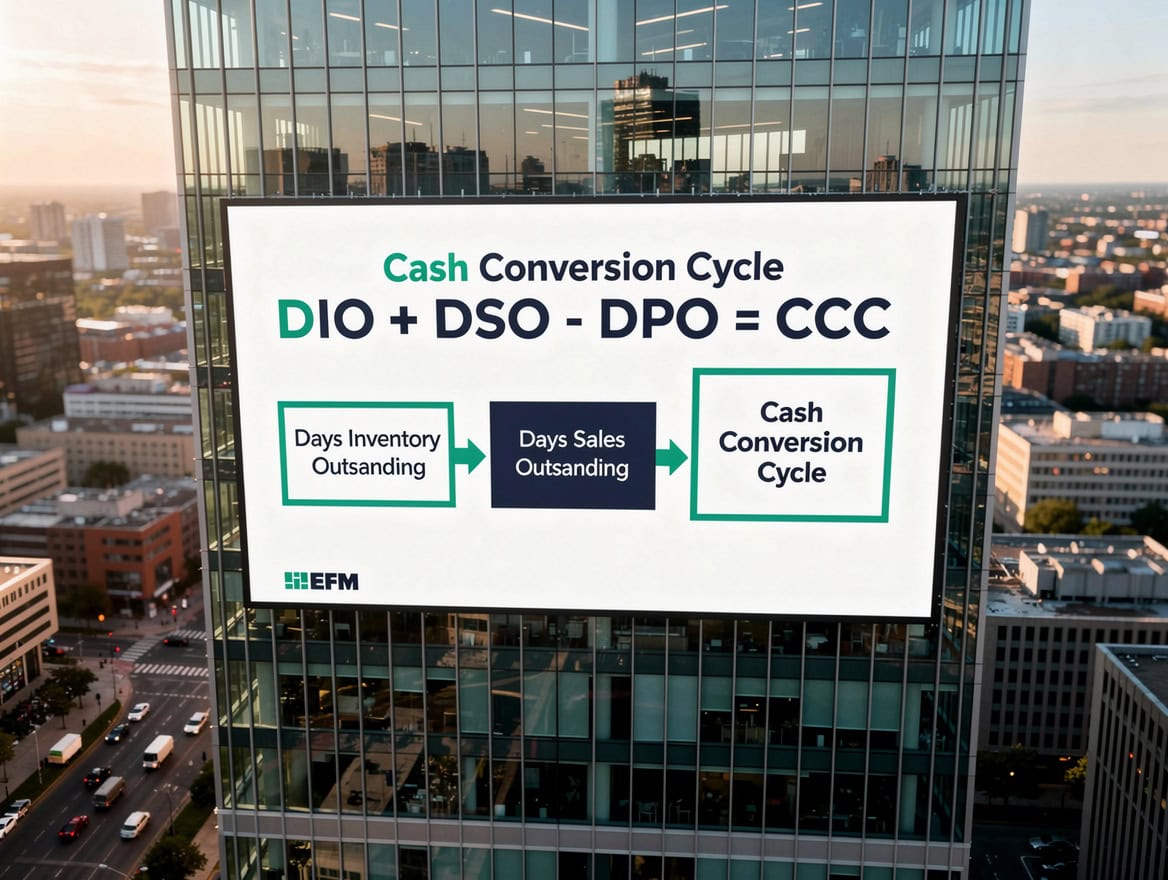
One formula, two outputs: divide by 100 for the percentage, divide by 10,000 for the decimal multiplier.
Step-by-Step: Converting 80 Basis Points to a Percentage
Converting basis points to a percentage requires one arithmetic step: divide the number of basis points by 100. Converting to a decimal requires dividing by 10,000.
Here’s the math:
- Basis points to percentage: 80 ÷ 100 = 0.80%
- Basis points to decimal: 80 ÷ 10,000 = 0.008
- Dollar value on any principal: Principal × 0.008
Worked example on a $50,000 balance:
- $50,000 × 0.008 = $400 per year
That $400 is the annual interest difference a $50,000 account holder sees when a savings rate moves by 80 bps. The same formula applies to any financial product, from mortgages to bond coupons.
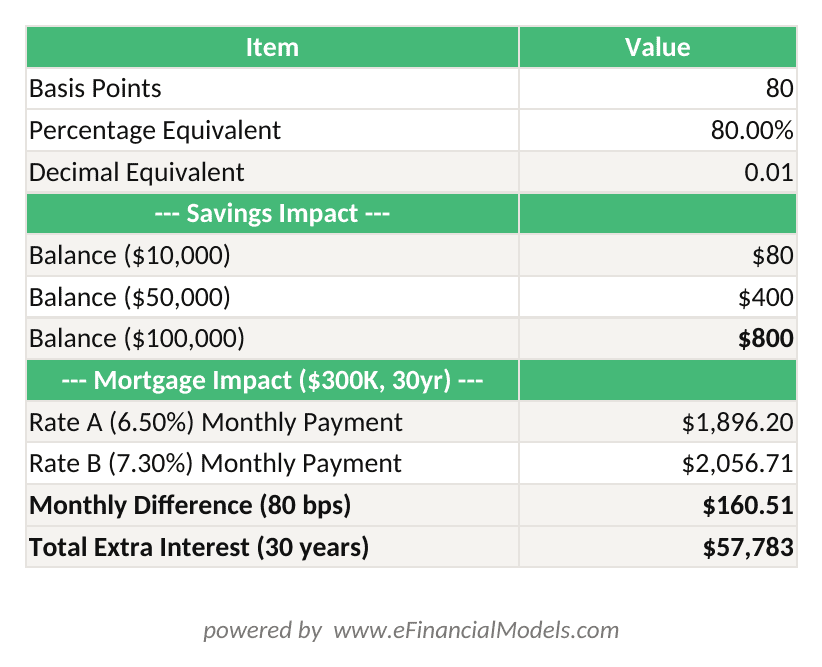
80 bps = 0.80% = 0.008 decimal: this sheet calculates the annual dollar impact on any balance and the monthly mortgage payment difference.
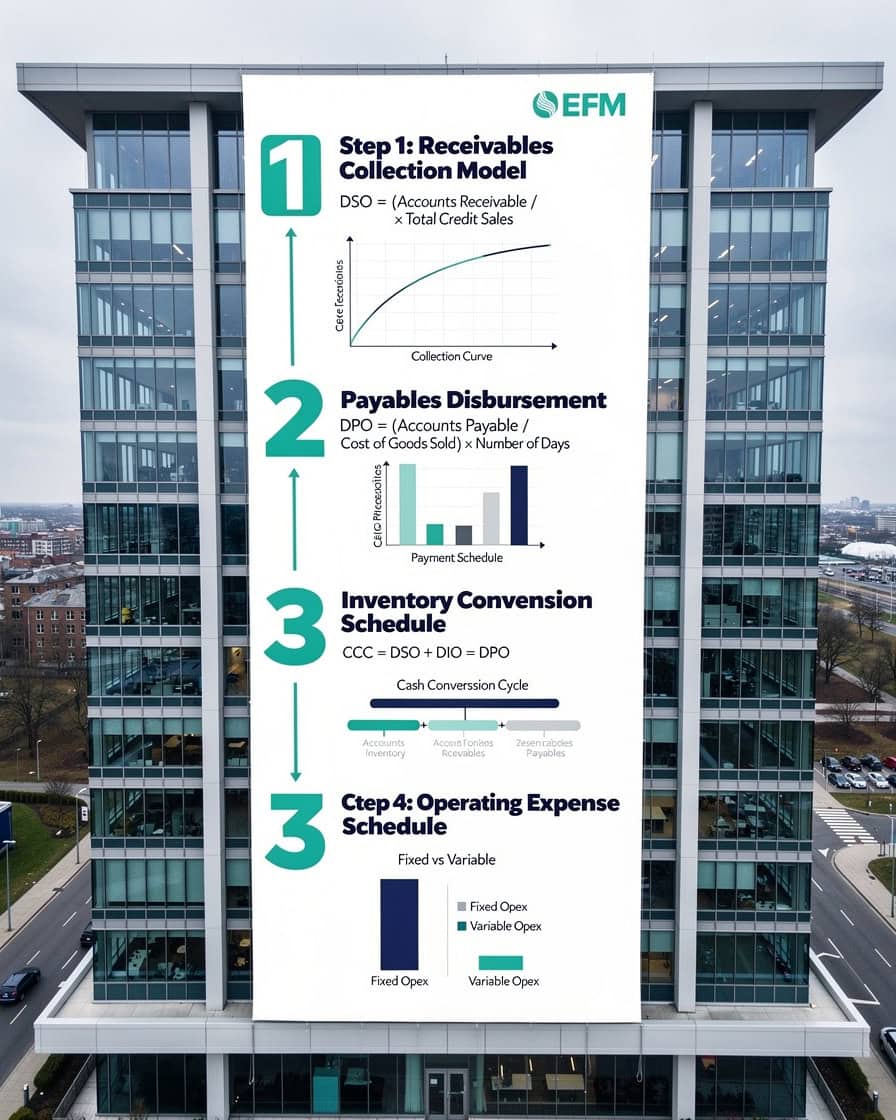
Three steps to any 80 bps dollar value: identify the principal, multiply by 0.008, read the result.
80 Basis Points Impact on Mortgage Payments
An 80 bps difference in mortgage rate produces a meaningful and lasting change in monthly payments and total interest paid. On a $300,000 30-year fixed mortgage, moving from a 6.50% rate to 7.30% (an 80 bps increase) raises the monthly payment from approximately $1,896 to $2,040, a difference of $144 per month.
Here’s the full calculation breakdown:
- Loan amount: $300,000
- Term: 360 months (30 years)
- Rate A: 6.50% annual = 0.5417% monthly
- Rate B: 7.30% annual = 0.6083% monthly
- Monthly payment formula: M = P × r(1+r)^n ÷ (1+r)^n − 1
- Payment at 6.50%: $300,000 × 0.005417 × (1.005417)^360 ÷ (1.005417)^360 − 1 ≈ $1,896
- Payment at 7.30%: ≈ $2,040
- Monthly difference: $144
- Total interest at 6.50% over 30 years: ≈ $382,560
- Total interest at 7.30% over 30 years: ≈ $434,400
- Total additional interest from 80 bps: ≈ $51,840
Scaled to other loan sizes, the impact grows proportionally. On a $500,000 mortgage, the same 80 bps shift adds roughly $240 per month and over $86,000 in total interest. A 30-year fixed-rate mortgage amortizes over 360 monthly payments (Consumer Financial Protection Bureau), meaning even a fraction-of-a-percent rate difference compounds across every one of those payments into a five-figure total cost difference. The Federal Reserve’s own consumer education resources confirm that even small rate differences compound dramatically over a 30-year term (Federal Reserve Consumer Resources).
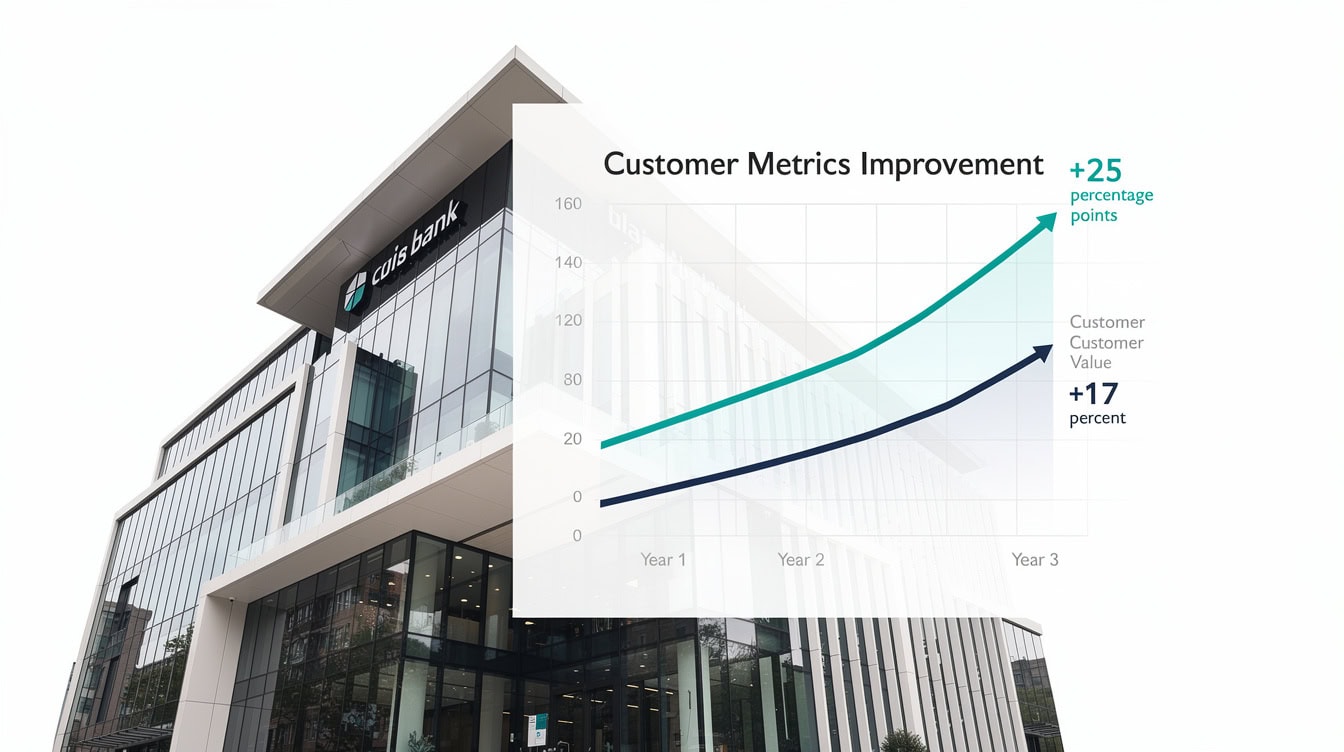
An 80 bps mortgage rate increase costs $144 more per month and $51,840 more over 30 years on a $300,000 loan.
How 80 bps Affects Your Savings and Investment Returns
An 80 bps yield increase on a savings account or money market fund translates directly into more dollars earned each year, with the impact scaling linearly with balance size. Here are the annual dollar gains at three common balance levels:
| Balance | 80 bps Annual Gain | Monthly Gain |
|---|---|---|
| $10,000 | $80 | $6.67 |
| $50,000 | $400 | $33.33 |
| $100,000 | $800 | $66.67 |
For investment portfolios, the compounding effect matters more than the single-year figure. A $100,000 portfolio earning 5.80% instead of 5.00% (an 80 bps difference) grows to approximately $183,900 versus $170,800 over 10 years, a gap of $13,100. The U.S. Securities and Exchange Commission’s compound interest calculator (investor.gov) demonstrates how yield differences of less than 1% produce five-figure divergences over a decade.
For context on how savings rates move, the Federal Deposit Insurance Corporation (FDIC) publishes weekly national average deposit rates at (fdic.gov), showing that the spread between the highest-yield and average savings accounts has historically exceeded 100 bps, making an 80 bps difference a realistic and consequential gap for savers. The FDIC insures deposits at member banks up to $250,000 per depositor, per insured bank, per ownership category (FDIC Deposit Insurance Coverage), which means savers can confidently chase that 80 bps yield advantage across multiple institutions without sacrificing deposit protection.
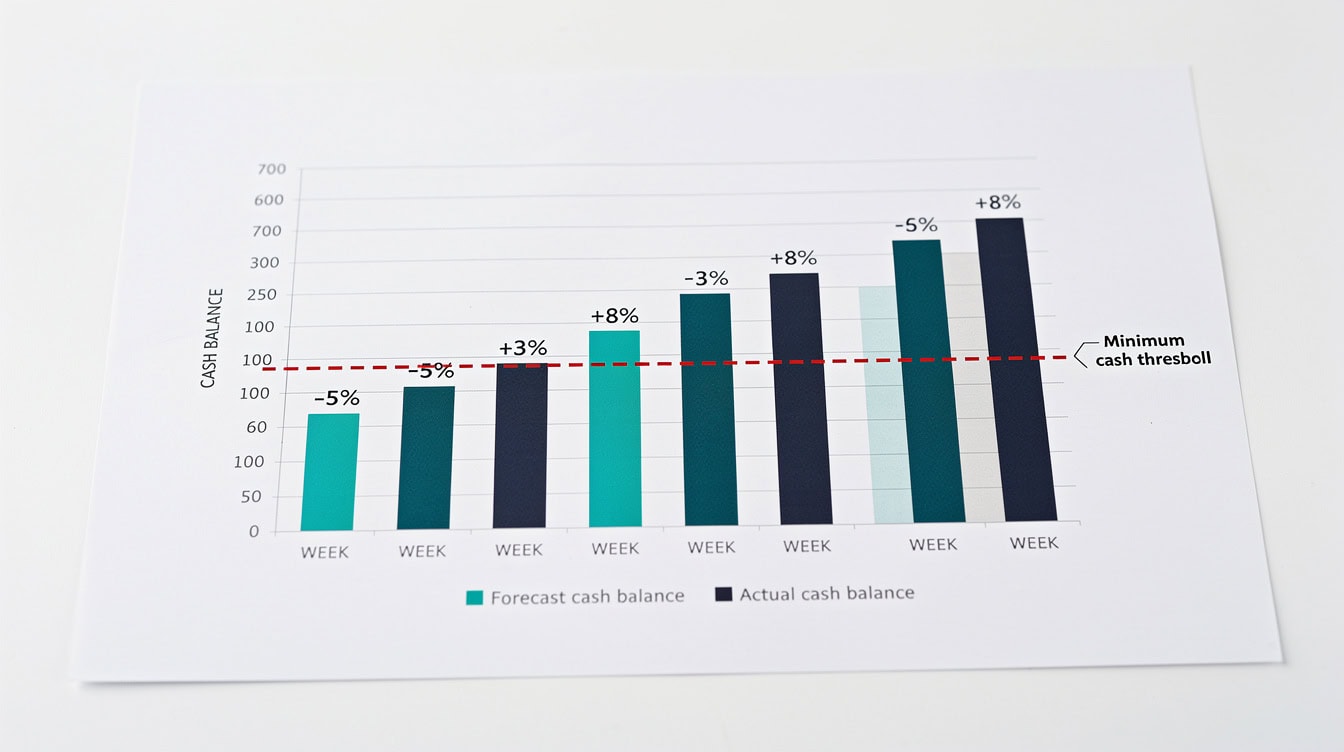
A $100,000 savings balance earns $800 more per year when its yield rises by 80 bps.
80 Basis Points in Federal Reserve Rate Decisions
The Federal Reserve adjusts its federal funds rate in multiples of 25 basis points as a standard practice, making an 80 bps move atypical but not unprecedented. The Fed raised rates by 75 bps at four consecutive meetings in 2022, according to (Federal Reserve meeting records), the most aggressive tightening cycle since the 1980s. A cumulative 80 bps shift across two meetings (50 bps + 30 bps, or 25 bps + 55 bps) is uncommon; the Fed prefers round increments.
Other central banks have made moves closer to 80 bps. The Bank of Canada raised its overnight rate by 100 bps in July 2022 (Bank of Canada), the largest single-meeting increase in over two decades. Understanding where 80 bps sits on the spectrum of central bank actions helps investors interpret rate announcements correctly.
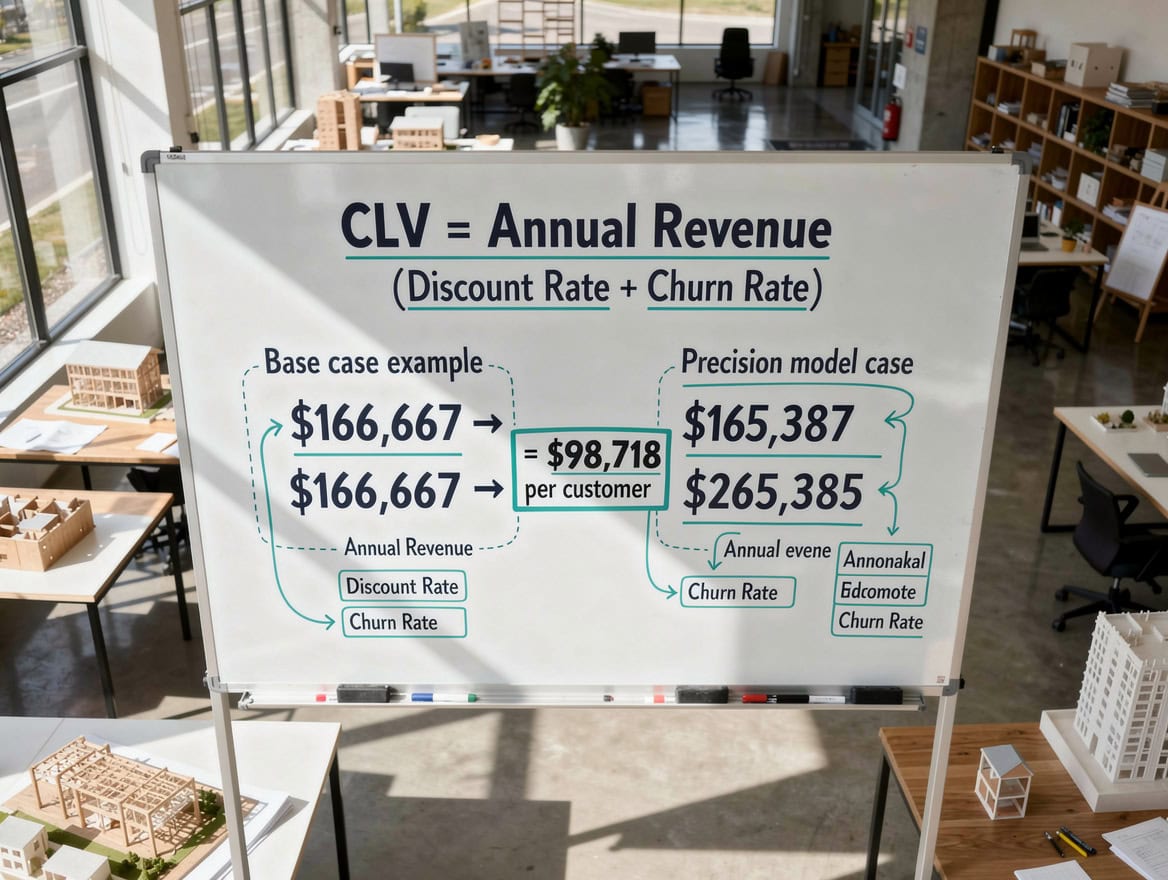
The Fed moved 75 bps at four consecutive 2022 meetings; an 80 bps cumulative shift spans roughly two standard meetings.
Comparing 80 bps to Other Common Rate Adjustments
80 bps sits between a standard double move (50 bps) and a triple move (75 bps), making it an unusual but instructive reference point. The table below shows how common rate adjustments compare in percentage terms and dollar impact on a $300,000 mortgage.
| Adjustment | Percentage | Monthly Payment Change | Annual Interest Change |
|---|---|---|---|
| 25 bps | 0.25% | +$45 | +$540 |
| 50 bps | 0.50% | +$90 | +$1,080 |
| 75 bps | 0.75% | +$135 | +$1,620 |
| 80 bps | 0.80% | +$144 | +$1,728 |
| 100 bps | 1.00% | +$180 | +$2,160 |
The Fed has moved in 25 bps increments for most of its modern history. According to Federal Reserve historical data, 50 bps moves occur during periods of elevated inflation or financial stress, while 75 bps moves are rare and signal emergency-level concern. An 80 bps cumulative shift over two meetings is therefore a meaningful policy signal, not a routine adjustment.
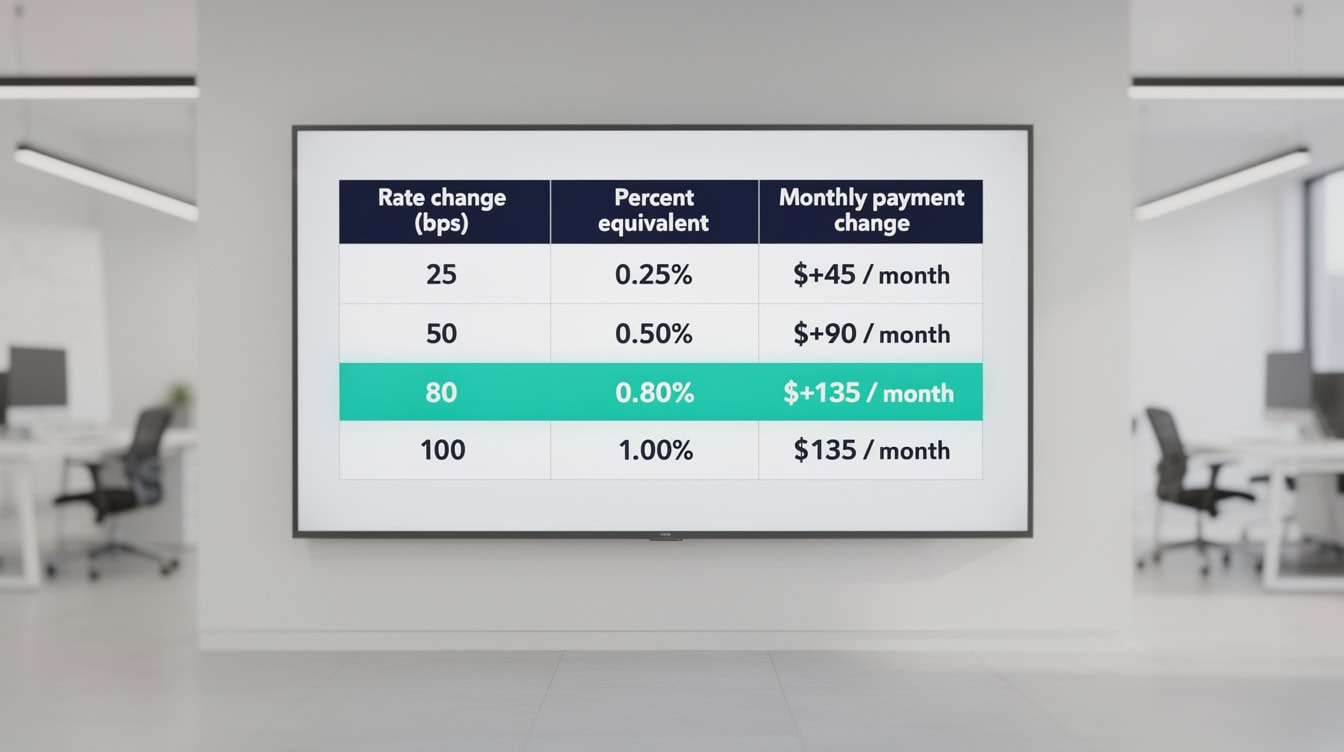
80 bps sits between a standard double move (50 bps) and triple move (75 bps) in Fed rate adjustment terms.
80 Basis Points and Bond Market Implications
Bond prices move inversely to yields: when yields rise by 80 bps, bond prices fall, and the magnitude of that fall depends on the bond’s duration. Duration (measured in years) is a measure of a bond’s sensitivity to interest rate changes; a bond with a duration of 5 years loses approximately 5% of its price for every 100 bps rise in yield.
Here’s how an 80 bps yield increase affects bonds with different durations:
- 2-year bond (duration ~1.9 years): Price falls approximately 1.52%
- 5-year bond (duration ~4.5 years): Price falls approximately 3.60%
- 10-year bond (duration ~7.0 years): Price falls approximately 5.60%
- 30-year bond (duration ~15.0 years): Price falls approximately 12.0%
Dollar example: A $100,000 position in a 10-year Treasury bond loses approximately $5,600 in market value when yields rise by 80 bps. The U.S. Treasury currently offers Series I savings bonds with composite rates that adjust every 6 months based on inflation (TreasuryDirect), making them a useful benchmark for understanding how even modest yield shifts of 80 bps ripple through fixed-income valuations. The U.S. Treasury publishes daily yield curve data at (treasurydirect.gov), which investors use to track these movements in real time.
For investors managing fixed-income portfolios, understanding the Net Present Value of future cash flows is essential when rates shift by this magnitude. The Time Value of Money, Bond, and Stock Valuation framework provides the mathematical foundation for these calculations.
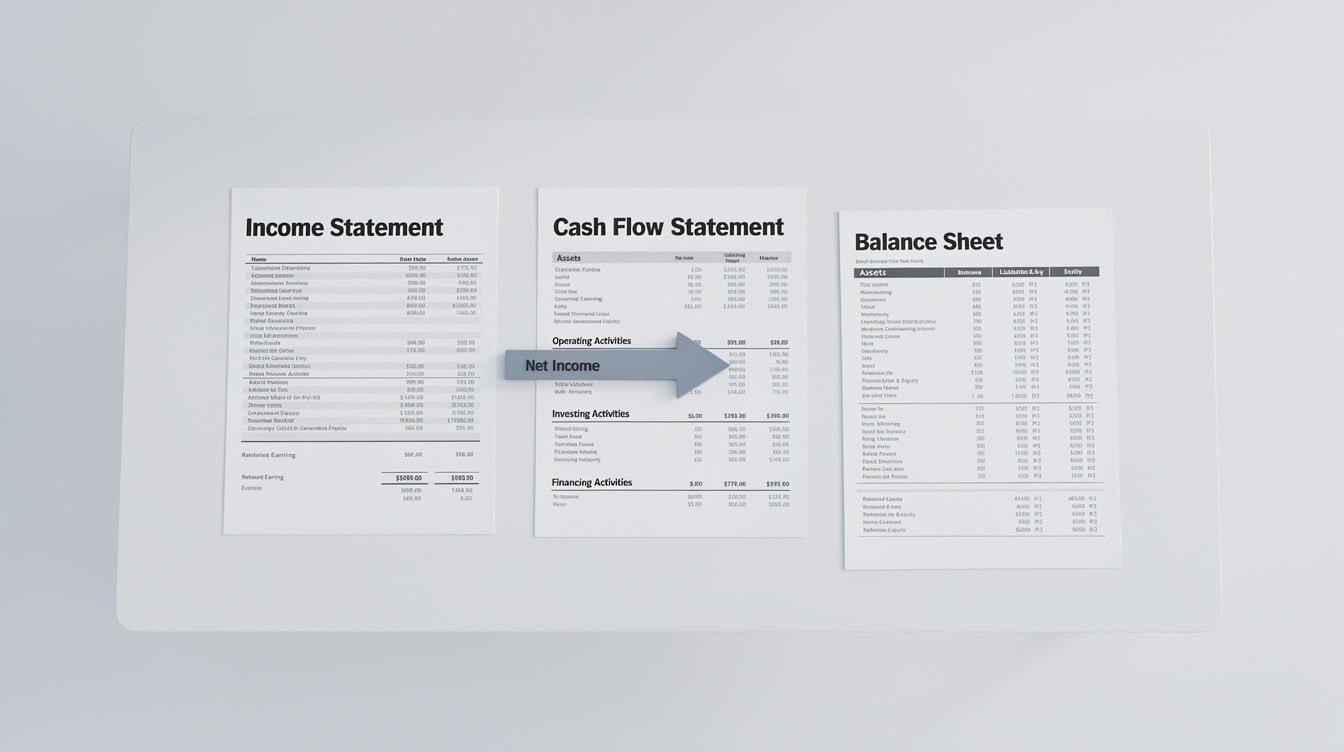
A 30-year bond loses 12% of its market value when yields rise 80 bps; a 2-year bond loses only 1.52%.
Quick Reference: Calculating 80 bps on Any Principal Amount
Calculating the dollar value of 80 bps on any amount takes one multiplication. Multiply the principal by 0.008 to get the annual dollar impact.
Formula: Dollar Impact = Principal × 0.008
| Principal | 80 bps Dollar Value |
|---|---|
| $10,000 | $80 |
| $50,000 | $400 |
| $100,000 | $800 |
| $250,000 | $2,000 |
| $500,000 | $4,000 |
| $1,000,000 | $8,000 |
This quick reference works for any financial product: savings accounts, loan balances, bond face values, or investment portfolios. For more complex scenarios involving compounding or amortization, structured frameworks provide guidance for applying rate changes to real financial decisions.
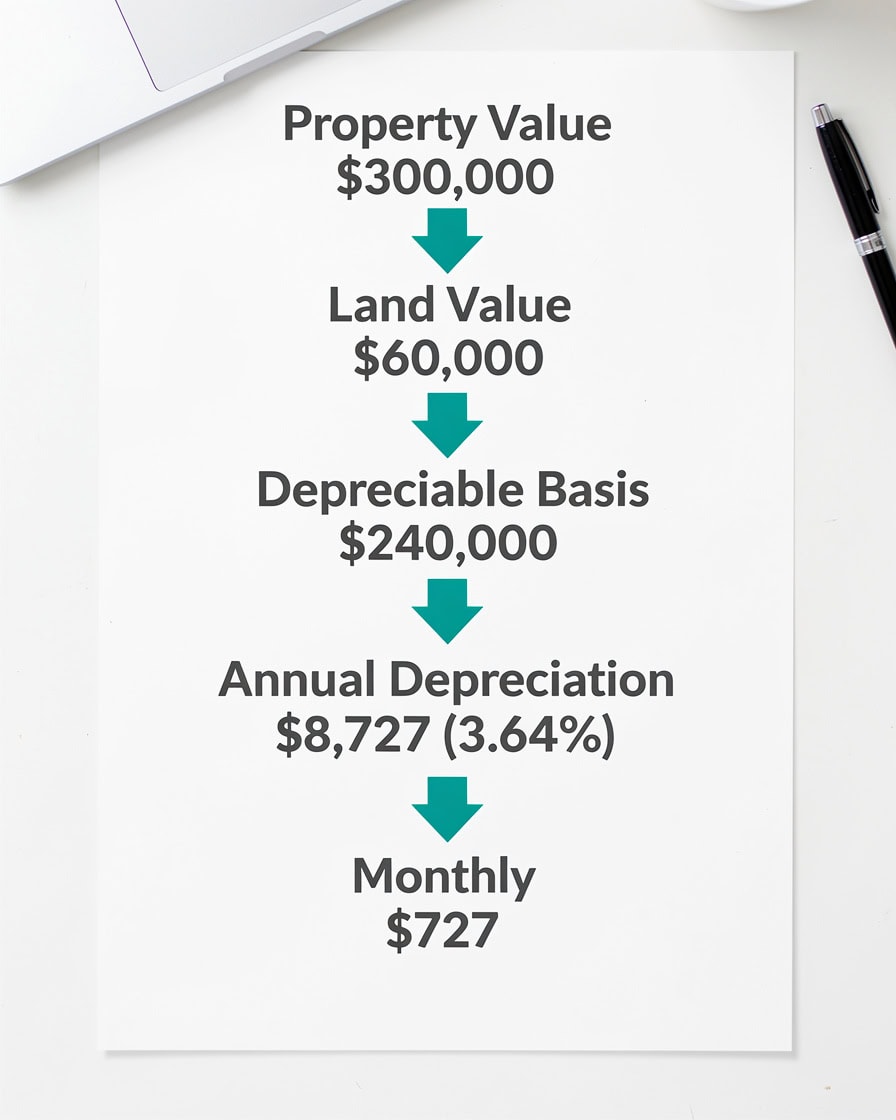
Multiply any principal by 0.008 to find its 80 bps annual dollar impact instantly.
Common Mistakes When Working with Basis Points
Most errors with basis points come from unit confusion, not math errors. Here are the 4 most frequent mistakes and how to fix them.
Mistake 1: Confusing 80 bps with 80%
Some readers see “80 basis points” and mentally round to “about 80%.” Fix: always divide by 100 first. 80 bps = 0.80%, not 80%.
Mistake 2: Applying the percentage change to the wrong base
If a bond yield rises from 4.00% to 4.80%, the change is 80 bps, not 20% (which would be 80 bps as a percentage of the original 4.00% yield). Fix: express rate changes in absolute bps, not relative percentages.
Mistake 3: Ignoring compounding on multi-year calculations
An 80 bps difference on a $100,000 investment is $800 in year one, but over 10 years with compounding, the gap exceeds $13,000. Fix: use a compound growth formula or a financial calculator for multi-year projections.
Mistake 4: Misreading Fed announcements
A headline reading “Fed raises rates 80 bps” means the federal funds rate target rose by 0.80 percentage points, not that rates are now 0.80%. Fix: always interpret bps as an absolute change added to the existing rate.
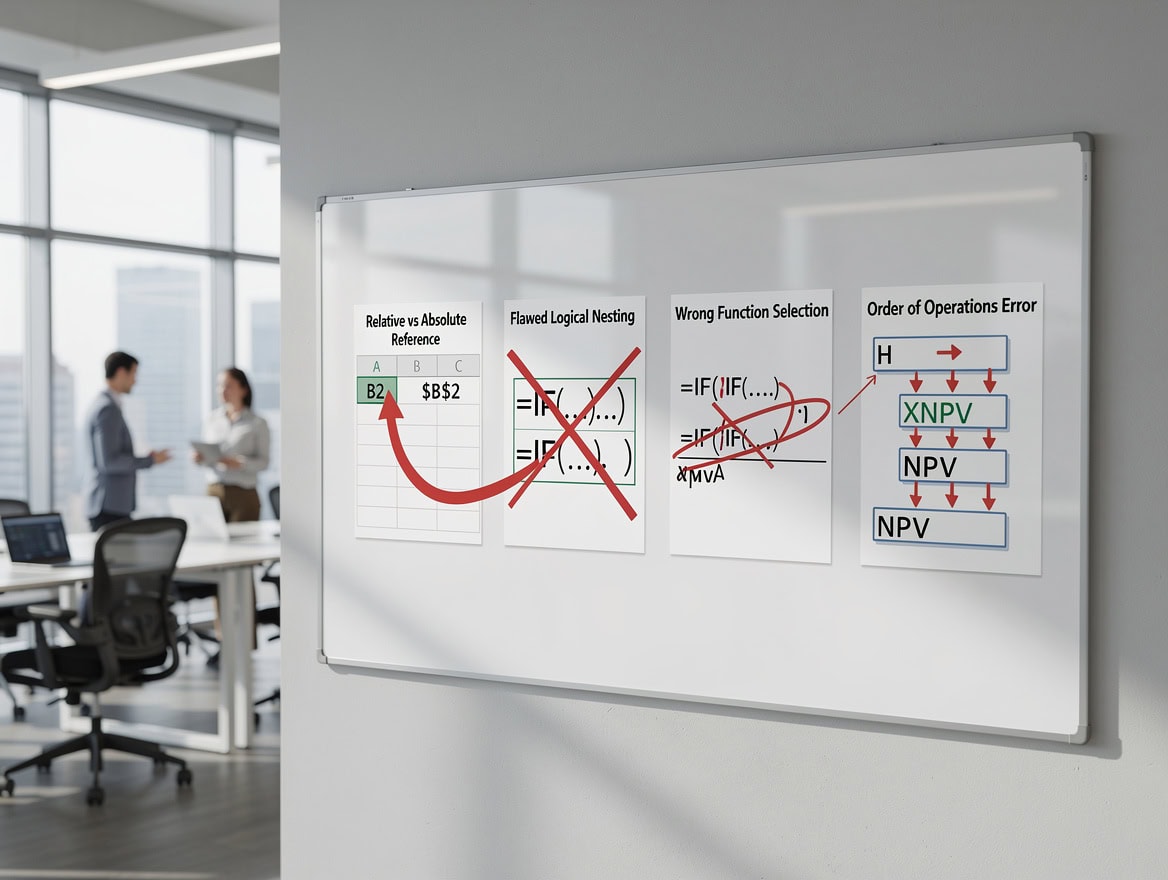
The most costly basis points mistake: reading 80 bps as 80%. Always divide by 100 first.
Frequently Asked Questions
What does 80 basis points mean in plain English?
80 basis points means a rate change of 0.80 percentage points. If your mortgage rate was 6.50% and a lender quotes you a new rate that is “80 basis points higher,” your new rate is 7.30%. The term exists because saying “0.80 percentage points” is cumbersome and can be misread. Financial professionals adopted basis points as a universal shorthand: 1 bps = 0.01%, 100 bps = 1.00%, and 80 bps = 0.80%. This convention is used by the Federal Reserve, the European Central Bank, bond traders, and mortgage lenders worldwide to ensure everyone is speaking the same language when rates move.
How much extra do I pay on a $200,000 mortgage if rates rise 80 bps?
On a $200,000 30-year fixed mortgage, an 80 bps rate increase adds approximately $96 to your monthly payment. For example, moving from 6.50% to 7.30% raises the monthly payment from roughly $1,264 to $1,360. Over the full 30-year term, that 80 bps difference costs approximately $34,560 in additional interest. The exact figure depends on your loan’s amortization schedule, but the formula is straightforward: use M = P × r(1+r)^n ÷ (1+r)^n − 1 with the monthly rate r = annual rate ÷ 12 and n = 360 months. Most mortgage calculators on bank websites accept these inputs directly.
How often does the Federal Reserve move rates by 80 basis points?
The Federal Reserve almost never moves rates by exactly 80 bps in a single meeting. The Fed’s standard increment is 25 bps, with 50 bps and 75 bps moves reserved for periods of significant economic stress. According to (Federal Reserve historical meeting records), the Fed moved by 75 bps at four consecutive meetings in 2022, the largest single-meeting increases since the 1980s. An 80 bps total shift typically accumulates across two or three meetings. Understanding this context helps investors interpret whether a cumulative 80 bps move represents gradual normalization or an accelerated tightening cycle.
What happens to bond prices when yields rise by 80 bps?
Bond prices fall when yields rise, and the size of the price drop depends on the bond’s duration. Duration is a measure of interest rate sensitivity expressed in years. For a bond with a duration of 7 years (typical for a 10-year Treasury), an 80 bps yield increase causes approximately a 5.6% price decline. On a $100,000 face-value position, that is a $5,600 loss in market value. Shorter-duration bonds lose less: a 2-year bond with a duration of roughly 1.9 years loses only about 1.52% on the same 80 bps move. This inverse relationship between price and yield is a fundamental principle of fixed-income investing, and the U.S. Treasury publishes daily yield data at (treasurydirect.gov) for tracking these shifts.
Is 80 basis points a big rate change for savings accounts?
Yes, 80 bps is a significant yield difference for savings accounts. The FDIC’s national average savings rate has historically hovered between 0.05% and 0.60% for standard accounts, while high-yield online savings accounts have offered rates exceeding 4.50% during periods of Fed tightening. An 80 bps gap between two savings products means a $100,000 depositor earns $800 more per year at the higher-rate account. Over 5 years with compounding at a 4.50% versus 3.70% rate, the difference grows to approximately $4,300. Comparing savings rates in basis points rather than percentages makes these differences easier to evaluate precisely.
Why do financial professionals use basis points instead of percentages?
Financial professionals use basis points because they eliminate a specific type of ambiguity that arises with percentage language. If a bond yield rises “by 1%,” does that mean it rose from 5.00% to 5.05% (a 1% relative increase) or from 5.00% to 6.00% (a 1 percentage point absolute increase)? Saying the yield rose “100 basis points” makes it unambiguous: the yield moved from 5.00% to 6.00%. The Federal Reserve, the Bank for International Settlements (BIS), and all major central banks use basis points in official communications for this reason. In financial contracts, loan agreements, and derivatives pricing, basis point precision prevents costly misunderstandings that could arise from percentage ambiguity.
How do I convert any number of basis points to a percentage quickly?
The conversion is a single division: divide the number of basis points by 100 to get the percentage, or divide by 10,000 to get the decimal. For 80 bps: 80 ÷ 100 = 0.80% and 80 ÷ 10,000 = 0.008. To find the dollar value on any principal, multiply the principal by the decimal: $300,000 × 0.008 = $2,400 per year in interest difference. This formula works for any financial product. For a $750,000 mortgage, 80 bps translates to $6,000 per year in additional interest at the simple interest level, though the amortized monthly payment difference accounts for the loan balance declining over time and works out to approximately $360 per month.
Conclusion
80 basis points is not an abstract number. It is $144 more per month on a $300,000 mortgage, $800 more per year on a $100,000 savings account, and a 5.6% price drop on a 10-year bond position. Knowing the conversion (80 bps = 0.80% = 0.008) and applying it to your specific balance or loan amount turns a financial headline into a personal dollar figure.
I recommend using financial modeling tools and calculators to model exactly how an 80 bps rate shift affects your investment or loan scenario, with full amortization schedules and multi-year projections built in.