0 ITEMS

3-Statement Model vs Cash Flow Projection: Which Do You Need?
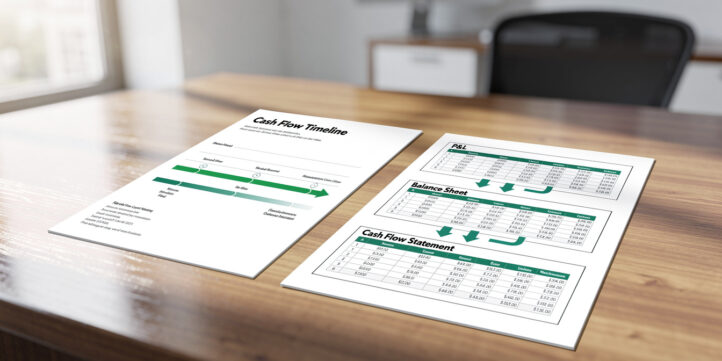
Choosing the wrong financial model wastes weeks of work and can cost you a funding round. This diagnostic framework tells you exactly which tool fits your stage, your stakeholders, and your business.
Key Takeaways
- A cash flow projection tracks money in and out over time; a 3-statement model integrates the P&L, balance sheet, and cash flow statement into one linked system, and the two serve fundamentally different purposes.
- Pre-revenue and bootstrapped founders can almost always start with a 12-to-24-month cash flow projection and upgrade later.
- Series A investors and most institutional lenders require a full 3-statement model with at least 3 years of integrated projections before committing capital.
- 5 operational triggers, including inventory, capex, debt covenants, and equity rounds, signal that a cash flow projection will fail you.
- Building a cash flow projection takes roughly 8 to 20 hours; a full 3-statement model typically requires 40 to 120 hours depending on business complexity.
- Upgrading from a simple projection to a 3-statement model is a structured process, not a rebuild from scratch, if you plan the transition correctly.
- The single biggest red flag is raising a Series A with only a cash flow projection: investors will ask for the balance sheet and you won’t have one.
Understanding the Two Core Options
A 3-statement model and a cash flow projection are not interchangeable tools. They answer different questions, serve different audiences, and require very different levels of effort to build and maintain.
Cash flow projection (also called a cash flow forecast): a forward-looking schedule that shows when cash enters and leaves the business. It answers one question: will we run out of money? It does not track assets, liabilities, equity, or profitability in an integrated way. Think of it as a bank account ledger projected into the future.
3-statement financial model: three interconnected accounting statements built as a single linked system. The income statement (P&L) shows revenue and expenses. The balance sheet shows what the company owns (assets), owes (liabilities), and the owners’ stake (equity) at a point in time. The cash flow statement reconciles the two. Changes in one statement automatically flow through to the others. This integration is what makes the 3-statement model the standard for institutional finance.
Poor cash flow management is one of the leading causes of small business failure, according to the U.S. Small Business Administration.
The right model helps you see problems before they become crises.
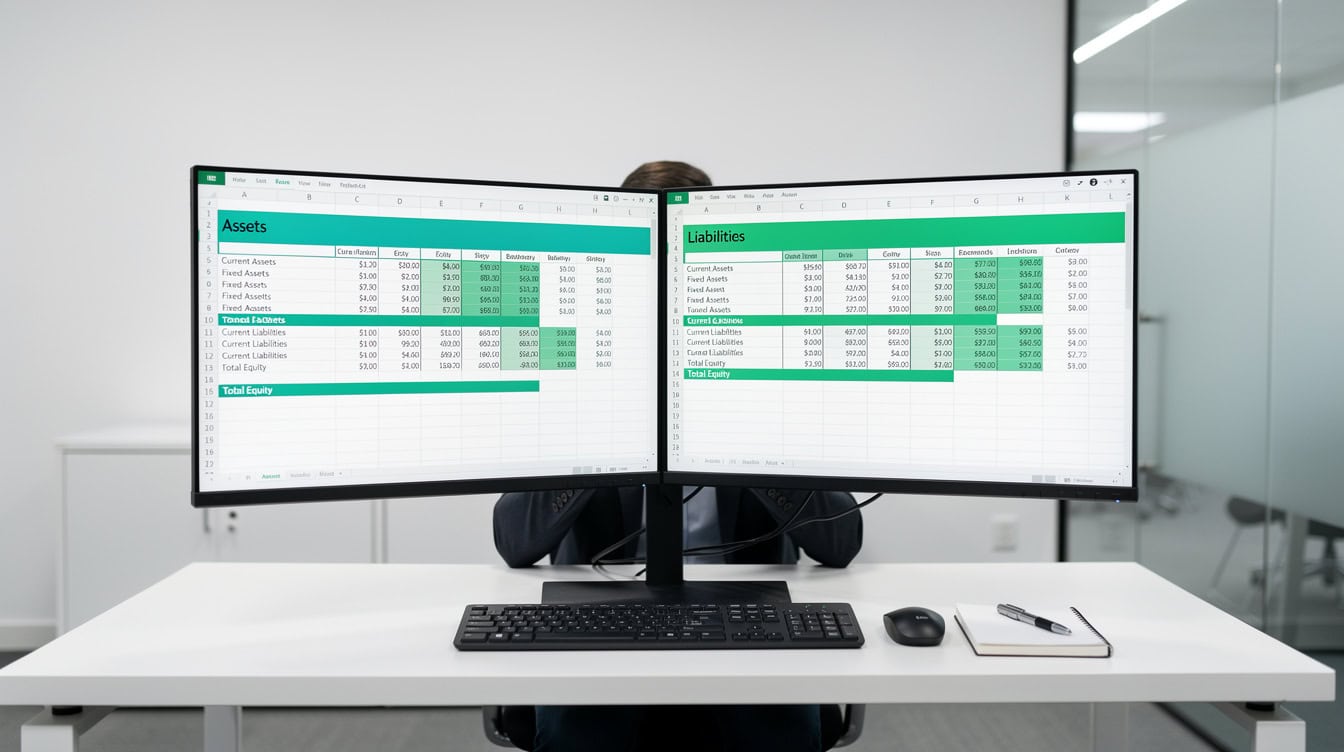
The balance sheet must balance at every period: total assets always equal total liabilities plus equity.
The Decision Framework: 5 Questions to Diagnose Your Needs
Answer these 5 questions in order. The first question that triggers a “yes” tells you which model you need.
Question 1: Who is your primary audience for this model?
If the answer is “myself, my co-founder, or an early-stage angel,” a cash flow projection is likely sufficient. If the answer is “a venture capital firm, a bank, a private equity buyer, or a board of directors,” you need a 3-statement model.
Question 2: Are you raising a Series A round or beyond?
Series A investors conduct formal due diligence (a structured review of your business’s finances, legal standing, and operations). They will request a full 3-statement model with integrated projections. A cash flow projection alone will not pass this review.
Question 3: Does your business carry inventory, significant fixed assets, or debt?
Inventory sits on the balance sheet as an asset. Fixed assets depreciate over time, affecting both the P&L and the balance sheet. Debt creates interest expense and liability entries. None of these appear correctly in a standalone cash flow projection. If you answered yes, you need the full model.
Question 4: Do you have or expect debt financing with covenants?
Loan covenants (contractual conditions tied to financial ratios, such as maintaining a minimum current ratio or debt-to-equity ratio) require balance sheet data to monitor. Banks lending more than $250,000 to small businesses typically require audited or projected financial statements, according to Federal Reserve data.
Question 5: Are you planning an acquisition, merger, or exit within 3 years?
Acquirers and their advisors use the balance sheet to assess net asset value, working capital (current assets minus current liabilities), and debt obligations. A cash flow projection cannot support this analysis.
If you answered “no” to all 5 questions, start with a cash flow projection and plan to upgrade at Series A.
Answer the 5 questions in order: the first ‘yes’ tells you which model you need.
When a Cash Flow Projection Is Sufficient
A cash flow projection is the right tool for most early-stage businesses, and choosing it deliberately is not a shortcut. It is a strategic decision.
Use a cash flow projection when:
- You are pre-revenue or in the first 6 to 12 months of operations.
- You are bootstrapping or working with friends-and-family funding under $500,000.
- Your business model is simple: a service business or SaaS startup with no physical inventory.
- You need to answer one question: how many months of runway do we have?
- You are pitching to angel investors or applying for a small business grant.
Where a cash flow projection will fail you: it cannot show a lender whether your business is profitable, it cannot track what you owe suppliers versus what customers owe you (accounts payable and receivable), and it cannot model the impact of a large equipment purchase on your balance sheet over time. The moment any of those factors matter, you need the full model.
Worked example: SaaS startup at seed stage
A SaaS founder raising a $750,000 seed round from angel investors needs to show 18 months of runway. Here is the cash flow logic:
- Monthly recurring revenue (MRR) at month 1: $8,000
- MRR growth rate: 15% per month
- Monthly operating expenses (fixed): $35,000
- Seed capital raised: $750,000
Month 1 net cash flow: $8,000 – $35,000 = -$27,000
Cumulative cash after month 1: $750,000 – $27,000 = $723,000
Month 6 MRR (compounding at 15%): $8,000 × (1.15)^5 = approximately $16,071
Month 6 net cash flow: $16,071 – $35,000 = -$18,929
At this growth rate, the founder reaches cash flow breakeven around month 11 and has sufficient runway for the full 18 months. An angel investor can evaluate this from a cash flow projection alone. No balance sheet is required at this stage.
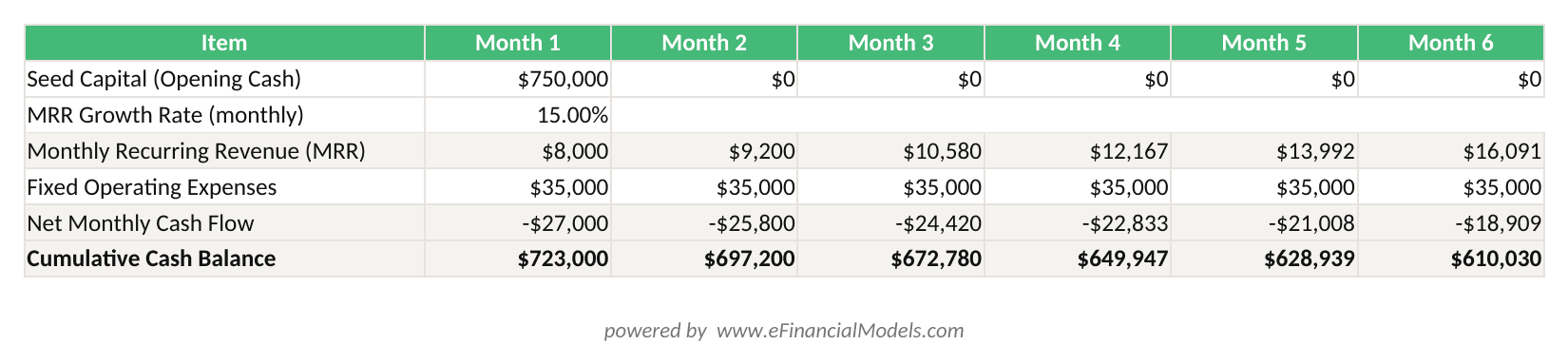
Month 1 net cash flow: $8,000 MRR minus $35,000 expenses = -$27,000. Cumulative cash reaches breakeven around month 11 at 15% monthly MRR growth.
When You Need a Full 3-Statement Model
A 3-statement model becomes necessary when your business has complexity that a cash flow projection cannot capture accurately.
Clear triggers for the full model:
- Series A fundraising: institutional venture capital firms require integrated 3-year projections with all three statements. The median Series A round in the U.S. was $10 million in recent years, according to Kauffman Foundation data.
At that capital level, investors conduct full financial due diligence.
- Bank loans above $250,000: commercial lenders assess debt service coverage ratio (DSCR), which requires net income from the P&L and debt figures from the balance sheet.
- Inventory-heavy businesses: e-commerce, manufacturing, and retail businesses must track cost of goods sold (COGS), inventory turnover, and accounts payable, all of which live on the balance sheet and P&L.
- Capital expenditures (capex): buying equipment, vehicles, or property creates depreciation schedules that affect both the P&L (depreciation expense) and the balance sheet (net asset value).
- Equity rounds with cap table implications: a cap table (the record of who owns what percentage of the company) connects to the equity section of the balance sheet. Modeling dilution requires the full model.
- Acquisition or exit planning: buyers calculate enterprise value and net working capital adjustments from balance sheet data.
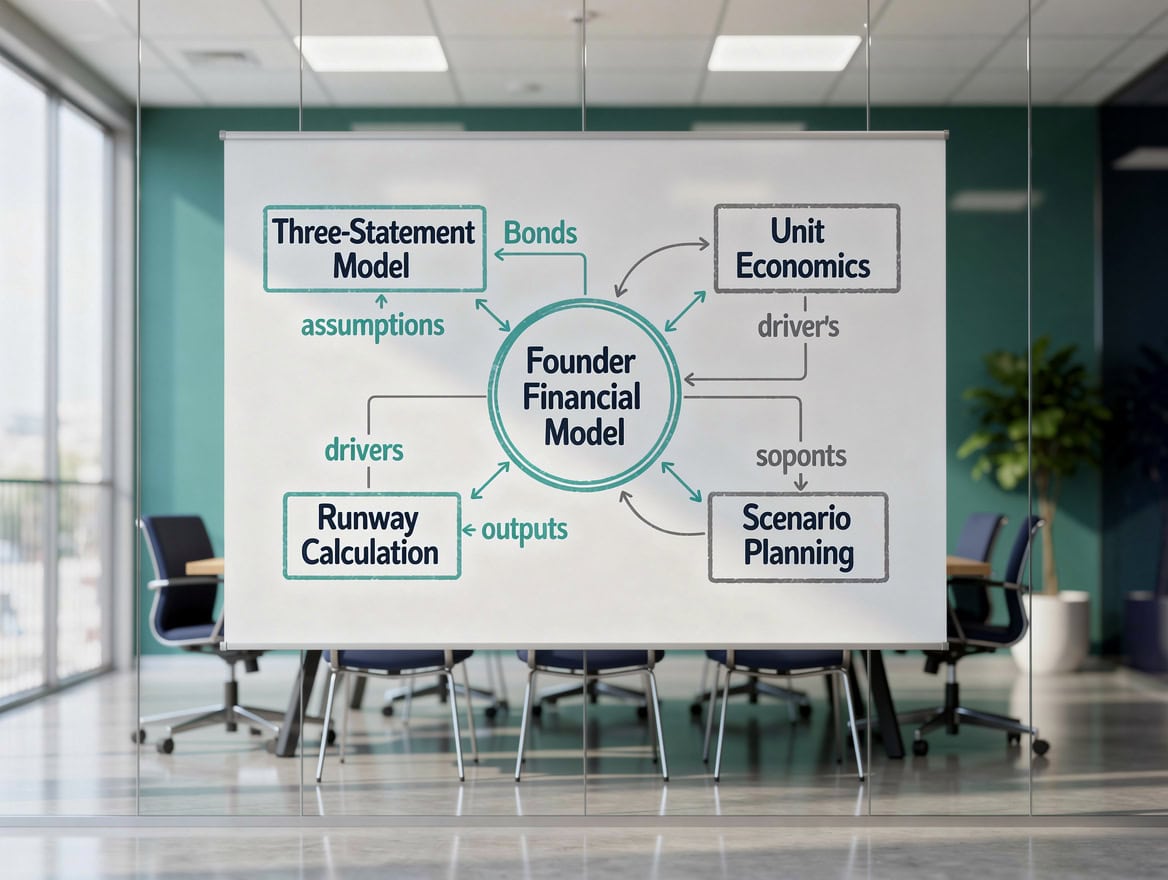
Inventory, capex, bank loans, Series A, acquisitions, and board governance all trigger the need for a full 3-statement model.
Decision Matrix by Funding Stage and Business Type
The table below maps your funding stage and business type to the recommended model, the primary stakeholder, and the estimated build time.
| Stage | Business Type | Recommended Model | Primary Stakeholder | Build Time |
|---|---|---|---|---|
| Pre-revenue / bootstrapped | Service, SaaS | Cash flow projection | Founder, angels | 8-20 hrs |
| Seed ($250K-$2M) | SaaS, marketplace | Cash flow projection | Angels, accelerators | 15-30 hrs |
| Seed (inventory/capex) | E-commerce, hardware | 3-statement model | Angels, lenders | 40-80 hrs |
| Series A ($5M-$15M) | Any | 3-statement model | VC firms, board | 60-120 hrs |
| Series B+ | Any | 3-statement model | Institutional VCs | 80-150 hrs |
| Bank loan (any stage) | Any | 3-statement model | Commercial lender | 40-80 hrs |
| Bootstrapped consulting | Professional services | Cash flow projection | Founder | 8-15 hrs |
| Acquisition target | Any | 3-statement model | Acquirer, advisors | 80-150 hrs |
Stakeholder Requirements: What Investors and Lenders Actually Expect
Different stakeholders have different minimum requirements, and knowing those requirements before you build saves you from rebuilding.
Angel investors and accelerators typically accept a 12-to-24-month cash flow projection with a clear revenue model and unit economics (the per-customer revenue and cost metrics). Y Combinator’s application, for example, asks for monthly revenue and growth rate, not a full balance sheet.
Venture capital firms at Series A and beyond require a full 3-statement model. They will stress-test your assumptions, model downside scenarios, and check that your balance sheet balances (meaning total assets equal total liabilities plus equity, always). A model that does not balance signals to investors that the founder does not understand their own financials.
Commercial banks and SBA lenders require projected income statements and balance sheets for loans above certain thresholds. The SBA 7(a) loan program guaranteed over $27 billion in loans in fiscal year 2023.
At that scale of lending activity, the program requires borrowers to submit 3 years of projected financial statements for startups.
Acquirers and private equity buyers require historical and projected 3-statement models, often with a separate working capital analysis. Working capital (current assets minus current liabilities) is a standard purchase price adjustment in M&A transactions.
Board of directors: once you have a board, they expect monthly or quarterly reporting against a 3-statement budget. A cash flow projection is not sufficient for board governance.
For a structured approach to evaluating financial decisions at each of these stages, the Capital Budgeting Decision Model from EFM provides a ready-to-use framework.
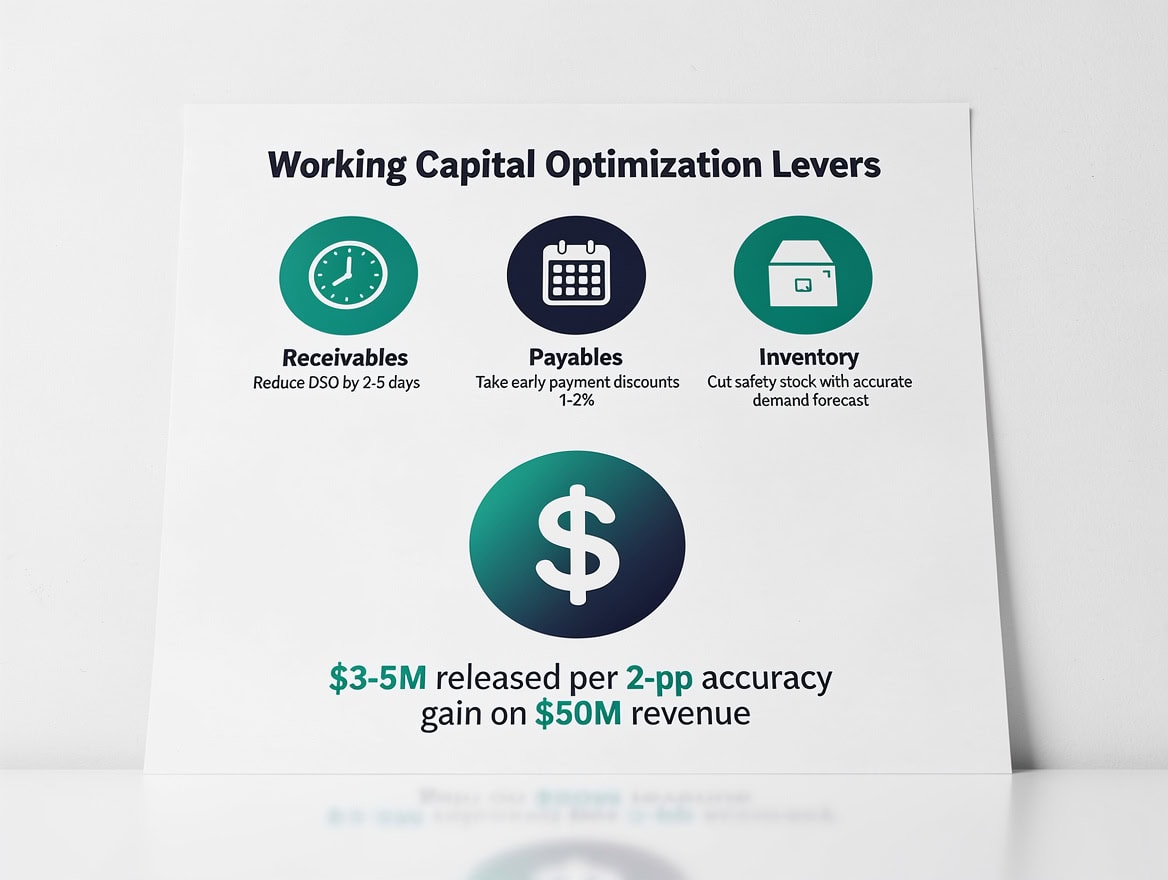
Angels accept cash flow projections; Series A VCs and commercial lenders require full 3-statement models with integrated projections.
Red Flags You’ve Chosen the Wrong Tool
These specific scenarios signal that your current model is not fit for purpose.
Red flags that you need to upgrade from cash flow projection to 3-statement model:
- A VC asks for your balance sheet and you don’t have one. This is the most common and most costly mistake at Series A. Rebuilding a 3-statement model under a 2-week due diligence deadline is extremely stressful and error-prone.
- Your bank asks for a debt service coverage ratio and you can’t calculate it. DSCR = Net Operating Income / Total Debt Service. You need net income (from the P&L) and debt payments (from the balance sheet) to compute this.
- You have inventory but no way to model stockouts or carrying costs. A cash flow projection treats inventory purchases as a single outflow. It cannot model the impact of inventory on your gross margin or working capital cycle.
- Your cash flow projection shows positive cash but your business feels like it’s losing money. This is a classic sign that accrual accounting (recording revenue when earned, not when cash is received) differs materially from your cash flows. The 3-statement model reconciles the two.
- You’re planning to hire 10+ people in the next 12 months. Headcount growth creates payroll tax liabilities, benefits accruals, and equity compensation entries that belong on the balance sheet.
Red flags that a 3-statement model is overkill:
- You are pre-revenue and spending more than 40 hours building a model instead of talking to customers.
- Your business has no inventory, no debt, and no capex, and you are raising less than $500,000.
- You are updating a complex model monthly but the assumptions change so fast that the outputs are unreliable within 30 days.
For guidance on structuring investment decisions at each stage, see The Top 5 Frameworks for Making Investment Decisions and IRR vs NPV in the Context of Financial Decision-Making.
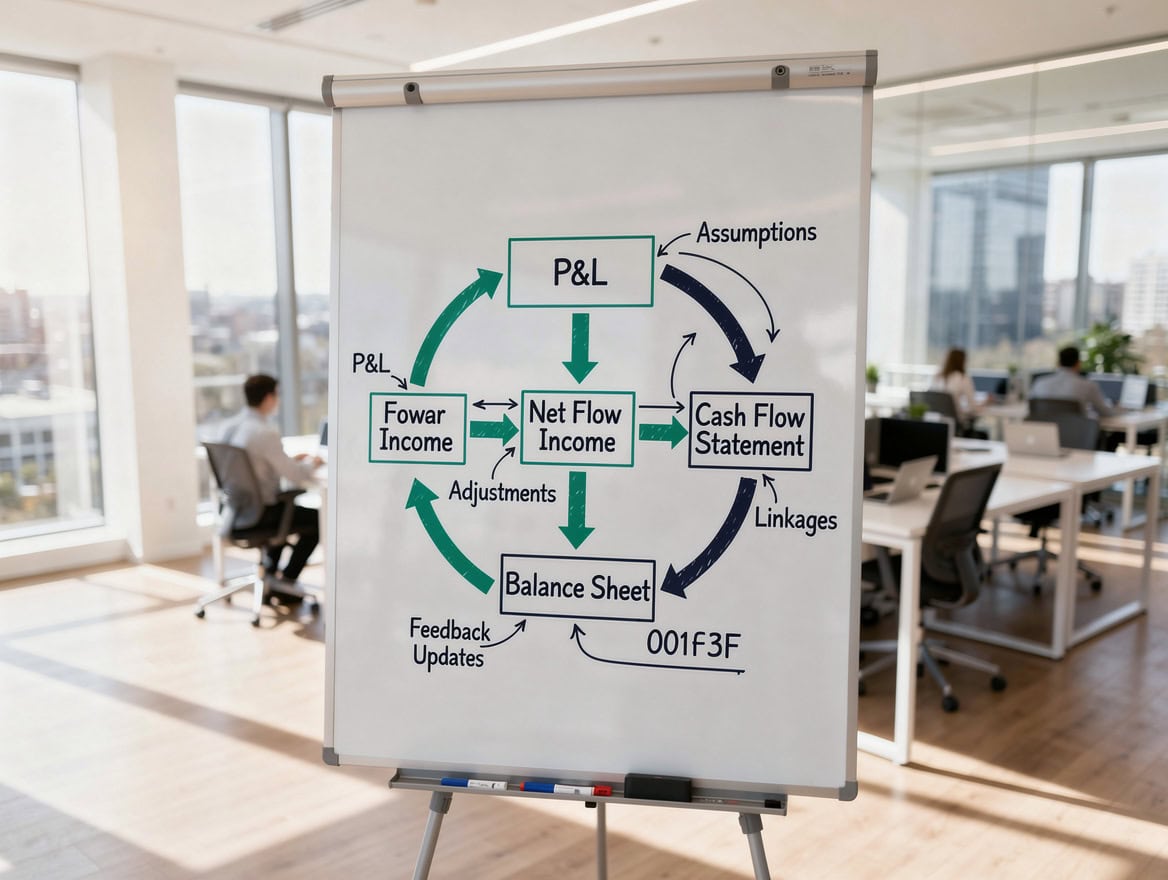
The most costly red flag: arriving at Series A due diligence with only a cash flow projection and no balance sheet.
The Upgrade Path: Transitioning from Simple to Sophisticated
Upgrading from a cash flow projection to a 3-statement model is a structured process, not a rebuild from scratch.
Step 1: Identify the trigger. Use the 5-question framework above. The most common trigger is a Series A term sheet or a bank loan application.
Step 2: Preserve your revenue and expense assumptions. Your cash flow projection already contains your revenue model, cost structure, and headcount plan. These inputs feed directly into the P&L of your 3-statement model. Do not discard them.
Step 3: Build the balance sheet opening position. Start with your current bank balance, any existing debt, and the equity you have raised to date. This is your Day 1 balance sheet.
Step 4: Add the integration logic. Net income from the P&L flows into retained earnings on the balance sheet. Depreciation from the capex schedule flows back into the cash flow statement as a non-cash add-back. Working capital changes (changes in accounts receivable, accounts payable, and inventory) bridge the P&L and the cash flow statement.
Step 5: Verify the balance sheet balances. Total assets must equal total liabilities plus equity at every period. If it does not balance, there is an error in the integration logic.
Step 6: Stress-test with scenarios. Build a base case, a downside case (revenue 30% below plan), and an upside case. Investors will ask for these.
The typical transition from a working cash flow projection to a functional 3-statement model takes an experienced financial modeler 20 to 40 hours. For a first-time founder, budget 60 to 80 hours or use a pre-built template. Microsoft Excel supports up to 64 levels of nested functions.
The typical transition from a working cash flow projection to a functional 3-statement model takes an experienced financial modeler 20 to 40 hours. For a first-time founder, budget 60 to 80 hours or use a pre-built template. Microsoft Excel supports up to 64 levels of nested functions.
This matters when building the layered conditional logic that drives scenario switching and integration checks in a 3-statement model.
For a decision-support tool that helps you evaluate complex financial choices, the Your Decision Matrix Template in Excel provides a structured scoring framework you can adapt to model selection.
Frequently Asked Questions
Do I need a 3-statement model or just a cash flow projection for my seed round?
For most seed rounds under $2 million from angel investors or accelerators, a detailed 12-to-24-month cash flow projection is sufficient. You need to show monthly revenue, expenses, and ending cash balance with clear assumptions. However, if your seed round involves institutional investors (seed-stage VC funds rather than individual angels), or if your business carries inventory or significant fixed assets, build the full 3-statement model from the start. The cost of building it early is far lower than rebuilding it under due diligence pressure. Budget 40 to 80 hours for a clean 3-statement model at seed stage.
What does it mean for a 3-statement model to “balance”?
A 3-statement model balances when total assets equal total liabilities plus equity on the balance sheet at every period. This is the fundamental accounting equation: Assets = Liabilities + Equity. If your model does not balance, it means cash is being created or destroyed somewhere in your logic without explanation. Common causes include missing depreciation entries, incorrect working capital calculations, or debt repayments that are not reflected in the liability section. Investors and lenders check for this immediately. A model that does not balance signals a fundamental error in the financial logic.
How long does it take to build a 3-statement model from scratch?
For a first-time founder with basic spreadsheet skills, building a functional 3-statement model from scratch takes 60 to 120 hours. An experienced financial analyst can build one in 20 to 40 hours. Using a pre-built template cuts that time to 10 to 20 hours of customization. The most time-consuming parts are building the revenue model with detailed assumptions, setting up the depreciation and amortization schedule, and debugging the balance sheet integration. Starting with a template designed for your industry and funding stage is almost always the right choice for founders.
Can I use a cash flow projection for a bank loan?
For small loans under $50,000 (such as microloans), some lenders accept a simple cash flow projection. For SBA 7(a) loans and most commercial loans above $250,000, lenders require projected income statements and balance sheets for at least 3 years, in addition to historical financial statements if the business has been operating. The SBA 7(a) program, which guaranteed over $27 billion in loans in fiscal year 2023, requires startup borrowers to submit full projected financial statements. A cash flow projection alone will not satisfy this requirement. Build the 3-statement model before you apply.
What is working capital and why does it matter for model selection?
Working capital is current assets minus current liabilities. Current assets include cash, accounts receivable (money customers owe you), and inventory. Current liabilities include accounts payable (money you owe suppliers) and short-term debt. Working capital matters because it measures your short-term financial health. A business can be profitable on the P&L but run out of cash if customers pay slowly (high receivables) while suppliers demand fast payment (high payables). A cash flow projection can partially capture this, but only a 3-statement model correctly models the working capital cycle and its impact on the balance sheet over time.
When should a consulting firm or service business use a 3-statement model?
A consulting or professional services firm with no inventory and no significant fixed assets can operate with a cash flow projection for most of its life. The triggers for upgrading to a 3-statement model are: applying for a bank line of credit above $250,000, bringing on a private equity partner, planning an acquisition of another firm, or reaching a revenue level where a board of directors requires formal financial reporting. Below those thresholds, a 12-month cash flow projection updated monthly is the right tool. It takes 8 to 15 hours to build and gives you the runway visibility you need.
What is the biggest mistake founders make when choosing a financial model?
The biggest mistake is building a 3-statement model prematurely, spending 80 hours on a complex model when a cash flow projection would have served the same purpose and allowed more time for customer development. The second biggest mistake is the opposite: arriving at a Series A due diligence process with only a cash flow projection and no balance sheet. The fix is to follow the 5-question diagnostic framework: identify your primary audience, your funding stage, your operational complexity, your debt situation, and your exit timeline. Those 5 answers determine your model with no guesswork.
Conclusion
The decision between a 3-statement model and a cash flow projection is not about sophistication. It is about fit. A cash flow projection is the right tool for pre-revenue founders, bootstrapped service businesses, and seed-stage companies raising from angels. A 3-statement model is required the moment you engage institutional investors, apply for a bank loan above $250,000, carry inventory, or plan an exit. Use the 5-question framework in this article to make that call in under 5 minutes, then build the right model once instead of rebuilding the wrong one under pressure.
I recommend downloading the Financial Modeling Mastery Bundle from EFM, which includes both cash flow projection templates and full 3-statement models organized by industry and funding stage, so you can start with the right structure from day one.