
0 ITEMS

Consolidation
Consolidation allows the user to see the whole picture of the business's operation. Simply put, consolidation is to combine assets, liabilities, and other financial items of two or more entities into one. Select from a variety of financial model excel templates that provide for consolidated reports in our selection below.
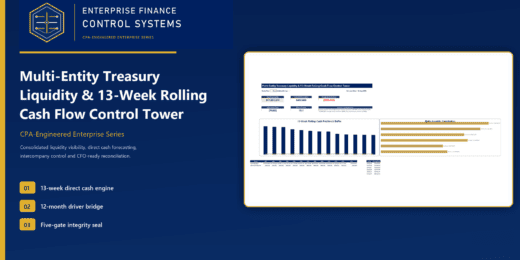

The Multi-Entity Treasury Liquidity & 13-Week Rolling Cash Flow Control…


🚀 Premium eVTOL / Urban Air Mobility Financial Model A…


Restaurant Menu Engineering & Financial Optimizer is a professional Excel…


Value a mining company the way the market does -…

Value an upstream E&P company the way the market does…

Value any multi-property REIT the way institutional analysts actually do…


A polished, investor-ready E-commerce Financial Model for DTC and marketplace…


Comprehensive editable, 5 Year 3 statement MS Excel spreadsheets for…

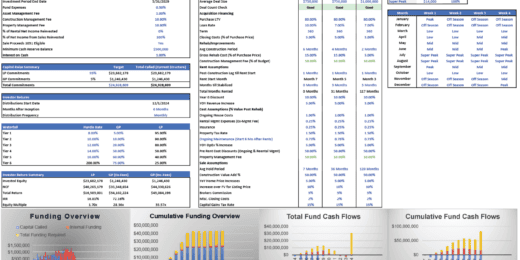

The Rental Property Investment Fund Model is a tool designed…

A comprehensive editable, MS Excel spreadsheet for tracking Restaurant finances,…


This Excel model is a highly adaptable and user-friendly tool…
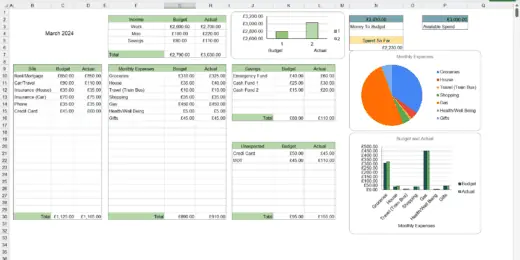
Ultimate Budget Spreadsheet, Budget Dashboard, in both Google Sheets and…

This Excel model is a highly adaptable and user-friendly tool…


Introducing our Comprehensive Excel Financial Model Template for Private Equity…


An integrated and comprehensive Blue Hydrogen Production Plant Model that…

Our sophisticated merger financial model is a versatile and powerful…





The equipment rental financial model is a comprehensive tool designed…


Enter assumptions about each individual unit of a building or…


The toolkit is an essential resource for any organization, providing…
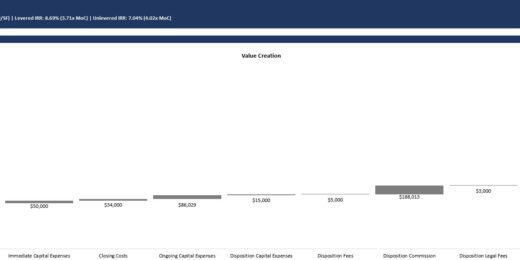

This Pro Forma Model is designed to analyze Principal Residence…
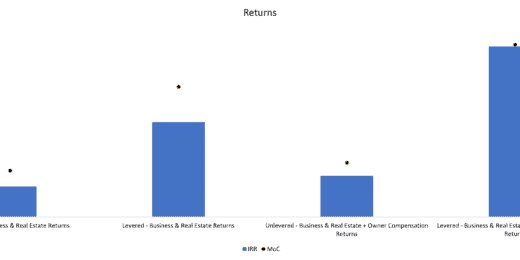
Pro Forma Models created this model to analyze the financial return…
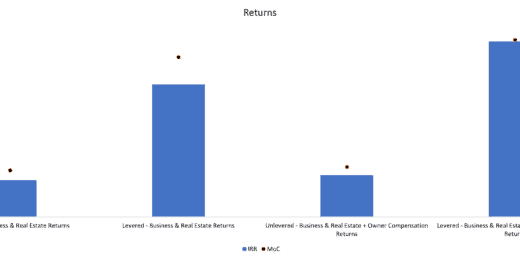
Pro Forma Models created this model to analyze the financial return…
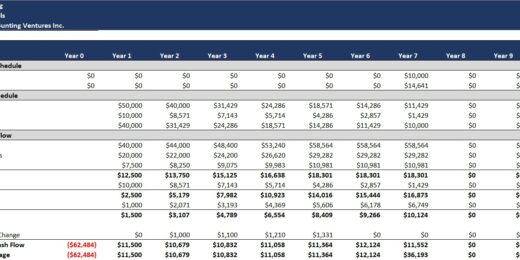
This model was developed to complete capital budgeting and analysis…


Financial Model presenting a business scenario of a Port Operator…


An investor-ready template that calculates all the variables and fixed…


The Simple Retail Chain Rollout Financial Model simulates the rollout…
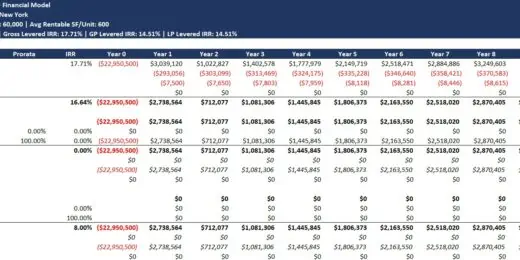
Pro Forma Models created this financial model to calculate and…

Deciding whether to invest or not in producing yellow hydrogen…

The Green Hydrogen from Wind Financial Model aims to comprehensively…

Financial Model presenting an Investment scenario of a Shipping Vessels…

Financial Model analyzing a Biopharmaceutical Company using a Risk-Adjusted NPV…

Hydrogen Gas Sales & Tolling Business Plan and Valuation Model…

IFRIC 12 Service Concession Arrangements and its impact on Financial…


This is a simple excel explanation model of Purchase Price…

This is a real case-based advanced DCF model of a…

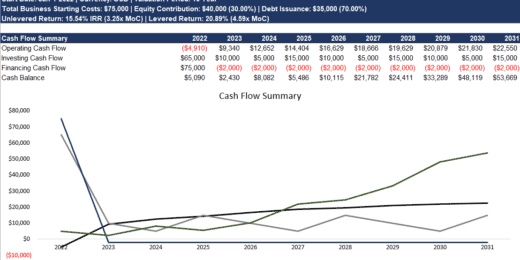
This model can be used to analyze the financial return…

This is a dynamic and advanced DCF valuation model of…

Advanced Financial Model presenting a potential Merger & Acquisition (M&A)…


Tailored financial modeling solutions to meet your unique business needs.…
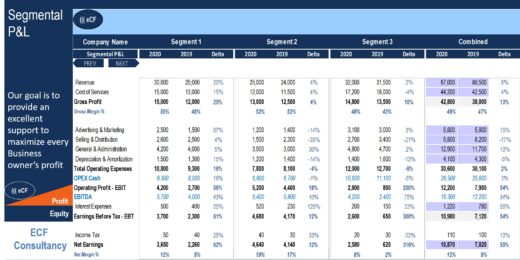

Detailed Financial model for DCF valuation on Telecom Company

This is a bundle of financial model templates best suited…

This template is a great way to plan out the…

This model lets the user define assumptions individually for up…

BPS is a Bid Modeling Tool which help to prepare…

Financial Modeling Tutorial guides user via step by step approach…

The Retail Chain Rollout Strategy Model simulates the rollout plan…

Optimize where an extra principal payment should go and see…
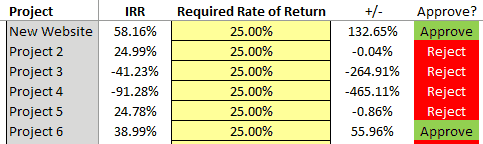
A 3-tab based template to easily enter up to 19…

Effective Financial Planning for Successful Consolidation Efforts

In today’s ever-evolving business landscape, consolidation has become an increasingly vital strategy for organizations looking to enhance their competitiveness, streamline operations, and boost financial performance. This strategy involves merging with or acquiring another company, effectively pooling resources to amplify capabilities and market reach. Whether it's through mergers and acquisitions or supply chain consolidation, the process undeniably demands a meticulous approach to financial planning. Through careful financial forecasting and strategic modeling, businesses can not only navigate potential pitfalls but also capitalize on the opportunities that consolidation presents. This article delves into the critical aspects of effective financial planning, focusing on industry-specific strategies and the indispensable role of financial models in ensuring consolidation success.
Navigating the Consolidation Landscape Effectively
Consolidation is a multi-faceted concept spanning various sectors, each with its own set of objectives and challenges. In the realm of mergers and acquisitions, consolidation represents the amalgamation of two or more companies into a single entity, aimed at achieving greater efficiency and competitive advantage. Similarly, in supply chain consolidation, businesses seek to optimize logistics and reduce costs by integrating their supply network. In both cases, consolidation is not just about merging assets but also about aligning corporate cultures, systems, and processes to realize the intended synergies. Sound financial planning forms the backbone of successful consolidation efforts. By thoroughly assessing the financial implications and projecting the future financial health post-consolidation, companies can formulate strategies that mitigate risks and enhance value creation. Financial planning in consolidation involves a comprehensive evaluation of potential cost savings, revenue enhancements, and efficiency improvements that the combined entity can achieve. Notably, it requires a meticulous analysis of financial statements, budget forecasts, and capital expenditure plans to ensure that all financial scenarios are accounted for and strategically managed. However, the path to successful consolidation is fraught with challenges. Integrating diverse financial systems and corporate cultures often proves to be a daunting task, requiring not only robust planning but effective change management strategies. Additionally, companies must contend with legacy debts and liabilities that can strain financial resources and hinder value realization. Beyond these challenges, financial forecasting amidst uncertainty poses a significant hurdle, making it crucial for organizations to be adept at scenario planning and risk management to navigate the complexities of consolidation.Monitoring Success Through Key Performance Indicators (KPIs)
Identifying and tracking critical KPIs are essential for monitoring the success of consolidation efforts. These metrics provide invaluable insights into the operational and financial health of the newly consolidated entity, guiding strategic decisions and corrective actions.- Top-Line Growth Rate: This is the first crucial KPI, reflecting the overall revenue growth of the consolidated entity. Post-consolidation, examining revenue streams is vital to ensure that the merger or acquisition leads to tangible financial growth. A stagnant or declining top-line growth can signal underlying problems that need addressing to avoid value erosion.
- EBITDA Margin: This serves as a metric of operational efficiency for the combined entities. By evaluating the consolidated EBITDA margin, companies can ascertain whether the expected efficiencies and cost savings are being realized. A declining EBITDA margin post-consolidation may necessitate a review of operational strategies and cost management practices.
- Cost Synergies Realization: Another critical indicator, focusing on the extent to which projected synergies are achieved. Successful consolidation hinges on the realization of these synergies, enabling the company to reduce costs, improve margins, and enhance overall profitability. Monitoring cost synergies ensures that the consolidation delivers on its financial promises.
- Customer Retention Rates: Post-consolidation is a sensitive KPI, highlighting customer loyalty and market acceptance. Retaining customers is crucial for sustained revenue growth and market presence. Drops in retention rates may indicate potential issues in customer satisfaction or alignment of product offerings, necessitating swift remedial actions.
The Indispensable Role of Financial Models in Consolidation Planning
Financial models are indispensable tools in the planning and execution of consolidation strategies. By creating a robust financial model, companies can simulate various scenarios, forecast financial outcomes, and make informed decisions on the viability and structuring of the consolidation. An effective financial model comprises key components that collectively paint a comprehensive financial picture. These include definitive assumptions about market conditions and operational metrics, revenue projections to estimate future cash flows, expense forecasting for accurate cost analysis, and financial statements that provide a detailed financial overview of the consolidated entity. Such models offer a structured approach to financial planning, allowing for precision in analysis and strategic forecasting. Scenario analysis plays a pivotal role in financial modeling for consolidation planning. By evaluating best-case, worst-case, and base-case scenarios, companies can anticipate potential financial outcomes and prepare contingency plans. This analysis aids in understanding the range of possible impacts that external and internal factors may have on financial performance, allowing companies to make proactive, informed decisions. Cash flow management is another critical aspect of financial modeling during the consolidation phase. Ensuring liquidity and effective cash flow management is crucial for navigating the transition phases and supporting ongoing operations. Effective financial models allow for detailed cash flow projections, helping businesses plan their working capital needs and optimize liquidity post-consolidation.Benefits of Using MS Excel Templates in Financial Planning for Consolidation
In the realm of financial planning, particularly in consolidation efforts, MS Excel templates stand out as indispensable tools for their unparalleled flexibility and customization capabilities. Organizations can tailor these templates to fit the specific needs of their consolidation, ensuring a bespoke approach to financial strategy and planning. Excel’s user-friendly features, such as built-in functions and formulas, facilitate accurate calculations and straightforward analysis, significantly reducing the complexity of financial modeling. The efficiency gains offered by Excel templates cannot be overstated. They allow for quick simulations and revisions, enabling faster and more informed decision-making. This agility is crucial in consolidation efforts, where timely responses to emerging financial insights can dramatically affect the outcome. Additionally, Excel's data integration capabilities streamline the consolidation of financial data, allowing for seamless import and export of information. This ensures that all pertinent financial data is easily accessible and conducive to collaborative analysis, fostering a more informed and synchronized approach to consolidation planning.Conclusion: Achieving Consolidation Success Through Structured Financial Planning
Bringing it all together, effective financial planning is the linchpin of successful consolidation efforts. By understanding the consolidation landscape, identifying critical KPIs, and leveraging robust financial models, companies can navigate the complexities of merging entities with strategic precision. The use of MS Excel templates further enhances this process, providing the necessary flexibility, efficiency, and integration capabilities to support informed decision-making and drive consolidation success. At eFinancialModels, we recognize the significance of structured financial planning in achieving consolidation success. Our extensive library of financial modeling templates offers a comprehensive suite of tools designed to empower businesses in their consolidation efforts. We invite you to explore our offerings and leverage our expert resources to guide your journey toward successful consolidation, enabling your business to realize its full potential in an ever-competitive landscape.FAQ
- What is consolidation in a business context? Consolidation in a business context refers to the strategy of merging with or acquiring another company to enhance competitiveness, streamline operations, and boost financial performance.
- Why is financial planning critical for consolidation? Financial planning is essential for consolidation as it helps organizations assess financial implications, project future financial health, and formulate strategies to mitigate risks and enhance value creation.
- What challenges are faced during consolidation? Key challenges include integrating diverse financial systems and corporate cultures, managing legacy debts, and conducting effective financial forecasting amidst uncertainty.
- How are KPIs used in monitoring consolidation success? KPIs provide insights into the operational and financial health of a consolidated entity, guiding strategic decisions and corrective actions to ensure successful outcomes.
- What
You might also like: