0 ITEMS

Buying a Business: Valuation, Due Diligence & Deal Structure

Buying an existing business gives you a running start that building from scratch simply cannot match — but only if you approach the purchase with the same rigor a private equity firm would apply to a $50 million deal.
Key Takeaways
- Acquired businesses survive their first 5 years at roughly twice the rate of startups, making acquisition a lower-risk path to ownership for many buyers.
- The 3 core valuation methods are asset-based, earnings multiples (typically 2x–6x EBITDA for small businesses), and discounted cash flow (DCF) — each suited to different business types.
- Financial due diligence requires at minimum 3 years of tax returns, profit-and-loss statements, and bank statements before you commit to any price.
- SBA 7(a) loans cover up to $5 million for business acquisitions with repayment terms up to 10 years, making them the most accessible financing tool for individual buyers.
- Customer concentration above 30% in a single client is a widely cited deal-risk threshold that should trigger renegotiation or a deal-kill decision.
- Most small business sales fall through before closing — often due to financing gaps, undisclosed liabilities, or seller reluctance to share documentation.
- Your first 90 days as owner determine whether employees stay, customers renew, and suppliers maintain terms — plan this period before you sign.
Why Buy Instead of Build: The Strategic Case for Business Acquisition
Buying an existing business means acquiring proven cash flow, an established customer base, trained staff, and operational systems on day one. Starting from scratch means spending 12 to 36 months building all of those things while burning capital with no revenue to offset costs.
According to the U.S. Small Business Administration, roughly 20% of new businesses fail in their first year, and about 50% close within 5 years (U.S. Small Business Administration). Acquired businesses carry meaningfully lower failure rates because the core business model has already been validated in the market.
Here’s the practical comparison:
| Factor | Buy Existing | Start From Scratch |
|---|---|---|
| Time to Revenue | Immediate | 6–24 months |
| Brand Recognition | Established | Zero |
| Customer Base | Existing | Must build |
| Staff | Trained | Must hire |
| Financing Access | Easier (assets exist) | Harder (no track record) |
| Upfront Capital | Higher purchase price | Lower initial outlay |
| Risk Profile | Operational risk | Market validation risk |
The trade-off is clear: you pay more upfront to buy a business, but you eliminate the most dangerous phase of entrepreneurship — the period before you know whether anyone will pay for what you sell.

Acquired businesses reach revenue on day one; startups typically spend 6–24 months building what an acquisition delivers immediately.
Understanding Business Valuation: What You’re Really Paying For
Business valuation is the process of determining what a company is worth based on its assets, earnings power, and future cash flow potential. Three methods dominate small business transactions, and experienced buyers use all three to triangulate a fair price.
Asset-Based Valuation
This method adds up the fair market value of all tangible assets (equipment, inventory, real estate) and subtracts liabilities. It works best for asset-heavy businesses like manufacturers or real estate holding companies. It often understates value for service businesses where the real asset is the customer relationship.
Earnings Multiple (EBITDA Multiple)
EBITDA stands for Earnings Before Interest, Taxes, Depreciation, and Amortization. It’s the most common proxy for a business’s operating cash flow. You multiply normalized EBITDA by an industry-specific multiple to arrive at enterprise value.
Small service businesses typically trade at 2x–4x EBITDA. Manufacturing businesses often command 3x–5x. Technology-enabled businesses with recurring revenue can reach 5x–8x or higher. According to BizBuySell’s annual Insight Report, the median sale price-to-cash-flow multiple for small businesses sold in the U.S. was approximately 2.8x in recent transaction data.
Discounted Cash Flow (DCF)
DCF — discounted cash flow — projects the business’s future free cash flows and discounts them back to present value using a required rate of return (the discount rate). It’s the most theoretically rigorous method but requires reliable financial forecasts. For businesses with stable, predictable revenue, DCF provides the most defensible valuation.
Worked Example: EBITDA Multiple Valuation
Suppose you’re evaluating a landscaping company with the following financials:
- Reported net income: $180,000
- Owner’s salary above market rate (add-back): $40,000
- One-time legal expense (add-back): $15,000
- Depreciation (add-back): $25,000
- Interest expense (add-back): $10,000
- Taxes (add-back): $30,000
Normalized EBITDA = $180,000 + $40,000 + $15,000 + $25,000 + $10,000 + $30,000 = $300,000
At a 3x industry multiple: $300,000 × 3 = $900,000 enterprise value
If the business carries $50,000 in debt, the equity value you’re buying is $900,000 minus $50,000 = $850,000.
Those add-backs — adjustments that normalize earnings by removing non-recurring or owner-specific expenses — are called EBITDA normalizations. Sellers will always argue for more add-backs; buyers should scrutinize each one carefully.
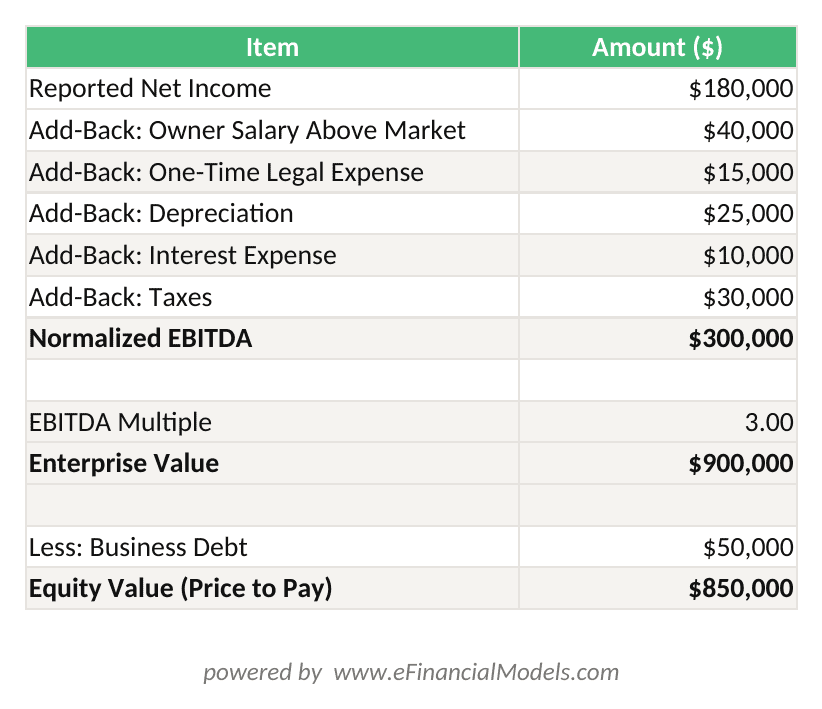
Normalized EBITDA = $300,000; at 3x multiple, enterprise value = $900,000; equity value after $50,000 debt = $850,000.
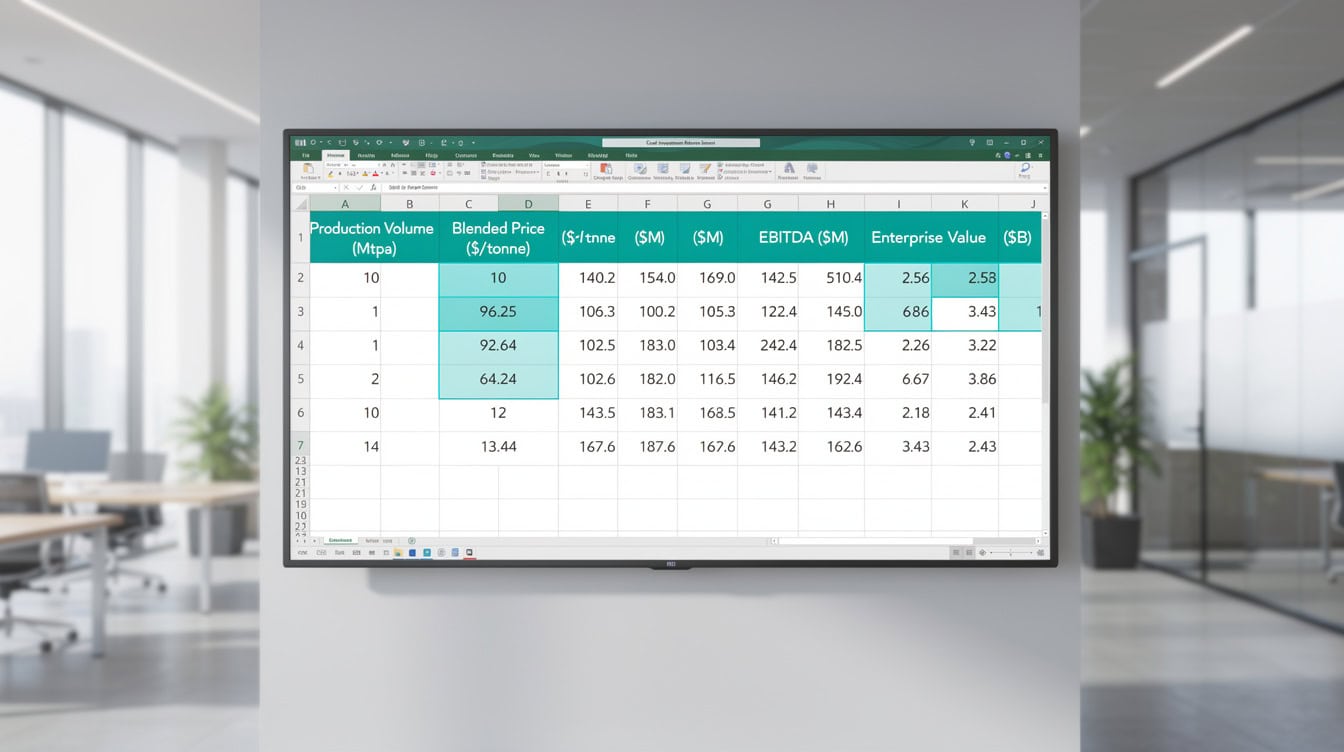
EBITDA normalization adjusts reported earnings for owner-specific and non-recurring items — the resulting figure is what buyers actually pay a multiple on.
Financial Due Diligence: The Numbers That Matter Most
Financial due diligence is the systematic verification of every financial claim the seller has made. It’s not optional — it’s the single most important step in buying a business.
Request and verify these documents for at least 3 years, ideally 5:
- Federal tax returns (business and personal if sole proprietor)
- Profit-and-loss statements (monthly, not just annual)
- Balance sheets
- Bank statements (cross-reference against P&L)
- Accounts receivable aging report
- Accounts payable schedule
- Payroll records
Beyond document collection, calculate these 4 ratios before you make any offer:
Debt Service Coverage Ratio (DSCR): Measures whether the business generates enough cash to cover loan payments. Formula: DSCR = Net Operating Income / Total Debt Service. Lenders typically require a DSCR of at least 1.25x.
U.S. Small Business Administration
A DSCR below 1.0x means the business cannot service its own acquisition debt.
Working Capital: Current assets minus current liabilities. This tells you how much cash the business needs to operate day-to-day. Insufficient working capital is one of the most common causes of post-acquisition failure.
Revenue Trend: Calculate year-over-year revenue growth for each of the last 3 years. Declining revenue is a red flag; flat revenue in a growing industry is nearly as concerning.
Customer Concentration: Divide revenue from the top customer by total revenue. If one customer represents more than 30% of sales, you’re buying a business with a single point of failure.
You can use a structured business valuation model to run these calculations systematically before making an offer.
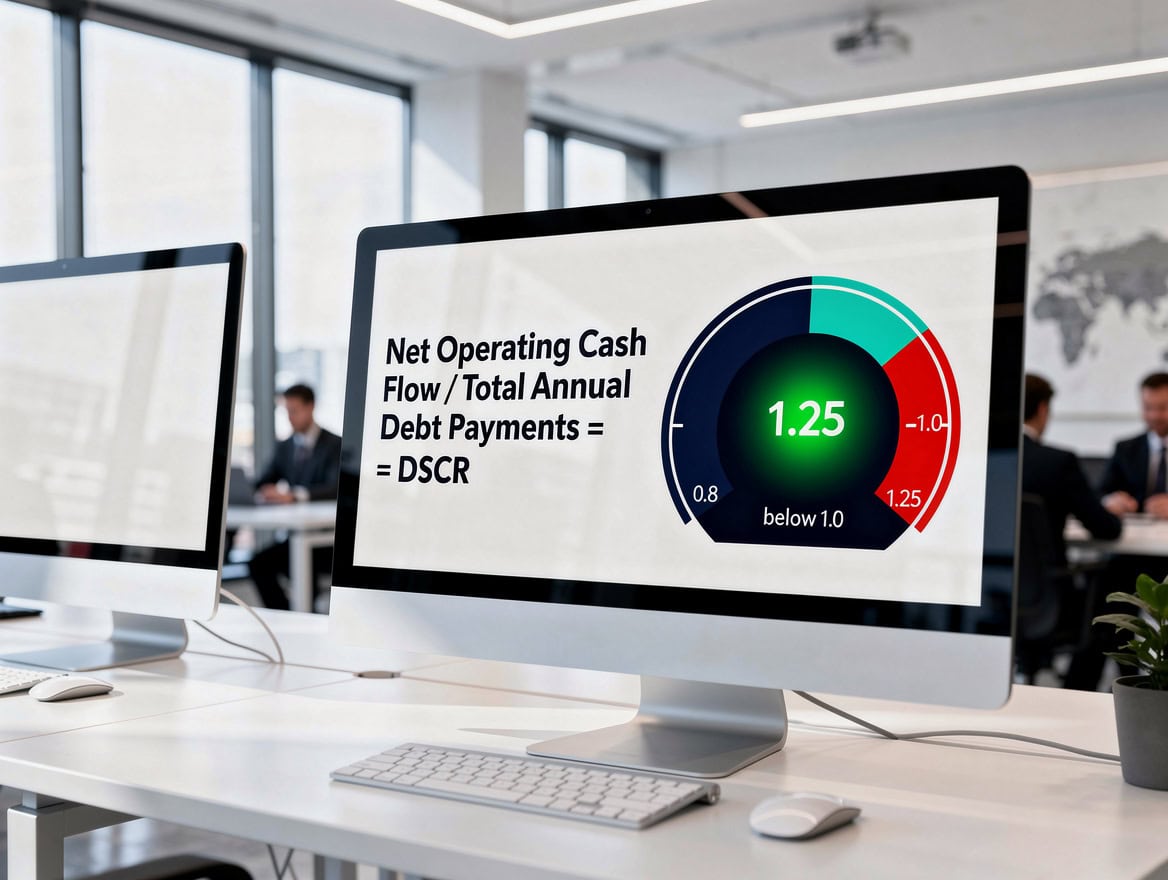
A DSCR below 1.25x and customer concentration above 30% are two of the most reliable early warning signals in business acquisition due diligence.
Operational and Legal Due Diligence: Beyond the Financials
Operational and legal due diligence uncovers risks that don’t appear on a balance sheet. Many deals that survive financial review collapse here.
Key areas to investigate:
- Lease agreements: Is the commercial lease transferable? What are the remaining terms? A business with 6 months left on its lease and a landlord who won’t renew is worth far less than it appears.
- Supplier contracts: Are key supplier relationships tied to the current owner personally? Can they be assigned?
- Employee agreements: Identify key employees and whether they have non-solicitation or non-compete agreements. Losing a key salesperson post-acquisition can devastate revenue.
- Intellectual property: Confirm the business actually owns its trademarks, domain names, proprietary software, and trade secrets — not the founder personally.
- Pending litigation: Order a litigation search. Any undisclosed lawsuit becomes your liability at closing.
- Environmental liabilities: For any business with physical operations, check for environmental compliance issues, especially if the property has been used industrially.
Hire a business attorney to review all contracts and a CPA to independently verify the financials. These professionals typically cost $5,000 to $20,000 combined for a small business transaction — a fraction of the risk they help you avoid.

Legal due diligence uncovers risks that never appear on a balance sheet — a transferable lease and clean litigation history are non-negotiable starting points.
Financing Your Business Purchase: Structure and Sources
Most individual buyers cannot pay cash for a business acquisition, and they don’t need to. Several financing structures exist specifically for this purpose.
SBA 7(a) Loans
The SBA 7(a) loan program is the most widely used financing tool for small business acquisitions. As of 2024, the SBA 7(a) program offers loans up to $5 million with repayment terms up to 10 years for business acquisitions.
U.S. Small Business Administration
Interest rates are variable, typically set at the prime rate plus a lender spread. Borrowers generally need a 10% to 20% down payment, a personal credit score above 680, and evidence that the business generates sufficient cash flow to service the debt.
SBA 504 Loans
The SBA 504 program works best when the acquisition includes significant real estate or equipment. It pairs a bank loan (50% of project cost) with an SBA-backed debenture (40%) and a buyer down payment (10%). The 504 program offers fixed interest rates on the SBA portion, which provides payment certainty over a 10- or 20-year term.
Seller Financing
Seller financing means the seller accepts a portion of the purchase price as a promissory note, paid over time from the business’s cash flow. It’s common for sellers to finance 10% to 30% of the purchase price, often at interest rates between 5% and 8% over 3 to 7 years. Seller financing signals the seller’s confidence in the business’s continued performance — and it aligns their incentive with your success during the transition.
Earn-Outs
An earn-out is a deal structure where a portion of the purchase price is contingent on the business hitting specific performance targets after closing. For example, the seller receives an additional $200,000 if revenue exceeds $1.5 million in year one post-acquisition. Earn-outs bridge valuation gaps between buyer and seller but require very precise legal drafting to avoid disputes.
For a complete picture of how to model acquisition financing scenarios, a structured business plans template can help you stress-test different capital structures before you approach lenders.

A typical small business acquisition capital stack: 70–80% SBA financing, 10–20% seller note, and 10–20% buyer equity — minimizing cash outlay while maintaining deal viability.
Negotiating the Deal: From LOI to Closing
The Letter of Intent (LOI) is a non-binding document that outlines the key terms of the proposed transaction before the parties invest in full due diligence and legal drafting. Getting the LOI right sets the tone for everything that follows.
Key LOI terms to negotiate:
- Purchase price and structure: Total consideration, allocation between assets and goodwill, and any contingent payments.
- Exclusivity period: The LOI should grant you 30 to 60 days of exclusive negotiation rights so the seller can’t shop the deal while you’re doing due diligence.
- Transition period: Define how long the seller will stay on to train you and introduce you to key customers and suppliers. 30 to 90 days is standard; complex businesses may require 6 months.
- Non-compete agreement: The seller should agree not to open a competing business within a defined geography and time period — typically 2 to 5 years within a 50-mile radius.
- Contingencies: The LOI should be contingent on satisfactory due diligence, financing approval, and lease assignment.
From LOI to closing, small business transactions typically take 60 to 120 days. According to data from the International Business Brokers Association, the average time from listing to closing for small business sales is approximately 6 to 9 months.
International Business Brokers Association
From first contact to closing typically takes 6–9 months — rushing due diligence or financing is the most common cause of post-acquisition regret.
Critical Red Flags That Should Stop a Deal
Some problems are negotiating points. Others are deal-killers. Know the difference before you spend $15,000 on due diligence.
Stop the deal if you find:
- Revenue declining 3 years in a row with no credible explanation. A business losing customers is worth less than its historical earnings suggest.
- Customer concentration above 30% in a single client with no contract locking them in post-sale.
- Tax returns that don’t match the P&L the seller provided. This is either fraud or incompetent bookkeeping — neither is acceptable.
- Undisclosed liens or judgments against the business or its assets.
- Key employees who plan to leave once the sale is announced. In service businesses, the staff often IS the business.
- Seller refuses to provide documentation or insists on a rushed timeline. Legitimate sellers have nothing to hide.
- Environmental liabilities that could trigger regulatory action or cleanup costs.
If you encounter any of these, pause the process. Consult your attorney and CPA before proceeding. Walking away from a bad deal is always cheaper than closing one.

Walking away from a bad deal is always cheaper than closing one — these 7 red flags are the most reliable signals to pause or kill an acquisition.
The Transition Period: Your First 90 Days as Owner
The first 90 days after closing determine whether the business you bought retains its value. Most post-acquisition value destruction happens in this window.
How to Execute Your First 90 Days as a New Business Owner
Follow this structured 3-phase approach to stabilize, assess, and optimize your newly acquired business:
Phase 1: Days 1–30 — Stabilize
- Meet every employee individually to understand their roles and concerns.
- Communicate clearly that their jobs are secure (if they are).
- Avoid making operational changes during this period.
- Learn how the business actually runs, not how the seller said it runs.
- Contact the top 10 customers personally to introduce yourself.
Phase 2: Days 31–60 — Assess
- Identify the 3 to 5 operational improvements with the highest impact.
- Review supplier contracts for renegotiation opportunities.
- Establish your financial reporting cadence — weekly cash flow, monthly P&L.
- Document current processes and performance baselines.
- Gather feedback from employees and key customers.
Phase 3: Days 61–90 — Optimize
- Begin implementing changes, starting with the lowest-risk, highest-return improvements.
- Maintain the seller’s transition support if it’s still available.
- Set 12-month performance targets and build your first post-acquisition budget.
- Monitor early results and adjust tactics as needed.
- Plan your next 90-day priorities.
The most common first-90-day mistake is changing too much too fast. Customers and employees chose this business under its previous model. Earn their trust before you disrupt their routines.
The first 90 days determine whether employees stay, customers renew, and suppliers maintain terms — plan this period before you sign the purchase agreement.
Building Your Business Acquisition Team
Buying a business is not a solo activity. You need specialists who do this regularly.
- Business broker: Helps source deals, negotiate terms, and manage the transaction process. Brokers typically charge 8% to 12% of the sale price, paid by the seller.
- M&A attorney: Drafts and reviews the purchase agreement, representations and warranties, and all ancillary documents. Non-negotiable for any transaction above $100,000.
- CPA or forensic accountant: Independently verifies the financial statements and identifies accounting irregularities.
- SBA lender or commercial banker: Structures the financing and guides you through the loan application process.
- Financial advisor or acquisition consultant: Helps you build the financial model, evaluate the deal economics, and stress-test your assumptions.
For modeling the deal economics yourself, a business template built specifically for acquisitions can save you significant time and reduce the risk of missing a critical calculation.

No successful acquisition is a solo effort — assembling the right team before you start looking saves time, money, and costly mistakes at closing.
Frequently Asked Questions About Buying a Business
How much money do I need to buy a business?
The minimum capital required depends on the purchase price and financing structure. For an SBA 7(a) loan, you typically need a 10% to 20% down payment plus closing costs and working capital reserves. On a $500,000 acquisition, that means $50,000 to $100,000 in equity plus roughly $20,000 to $40,000 in transaction costs and 2 to 3 months of operating expenses as a cash buffer. Total out-of-pocket for a $500,000 deal often runs $80,000 to $150,000. Seller financing can reduce the equity requirement if the seller agrees to carry part of the note, sometimes bringing your cash requirement down to 10% of the purchase price.
What is a fair EBITDA multiple for a small business?
EBITDA multiples for small businesses typically range from 2x to 6x, depending on industry, growth rate, customer concentration, and business size. Service businesses with recurring revenue (like landscaping maintenance contracts or IT managed services) command higher multiples than project-based businesses. A $300,000 EBITDA business in a stable service industry might sell for $750,000 to $1.2 million (2.5x to 4x). Businesses with EBITDA above $1 million generally attract more buyers and command higher multiples because they qualify for more financing options. Always compare the multiple to recent comparable transactions in the same industry.
How long does it take to buy a business?
From initial contact to closing, small business acquisitions typically take 6 to 9 months, according to the International Business Brokers Association. The process breaks down roughly as follows: 1 to 2 months to identify and evaluate candidates, 1 month to negotiate the LOI, 2 to 3 months for due diligence and financing, and 1 month for legal drafting and closing. Complex transactions with real estate, multiple entities, or regulatory approvals can take 12 months or longer. Rushing any phase — especially due diligence — dramatically increases the risk of a bad outcome.
What percentage of small business sales fall through before closing?
A significant portion of small business deals fail to close. Industry data from business broker associations suggests that 50% or more of businesses listed for sale never close a transaction, and of those that reach the LOI stage, a meaningful share still fall through during due diligence or financing. The most common reasons are: the buyer discovers undisclosed financial problems during due diligence, the buyer cannot secure financing, the seller gets cold feet, or the parties cannot agree on final terms after the LOI. This is why experienced buyers always maintain backup acquisition targets and never stop looking until the deal is fully closed.
What is seller financing and is it common?
Seller financing is an arrangement where the seller accepts a promissory note for a portion of the purchase price, paid by the buyer over time from the business’s cash flow. It’s common in small business transactions — many SBA lenders actually require seller financing (typically 10% of the purchase price on standby) as a condition of the loan. Seller financing terms typically run 3 to 7 years at 5% to 8% interest. It benefits buyers by reducing the upfront cash requirement and benefits sellers by making the deal financeable. It also keeps the seller financially invested in a smooth transition, since they only get paid if the business continues to perform.
How do I know if I’m overpaying for a business?
You’re overpaying if the purchase price implies a return on investment below your required rate of return after accounting for debt service. Run this test: take the normalized EBITDA, subtract annual debt service (principal plus interest on your acquisition loan), and divide by your total equity invested. If that number is below 15% to 20%, the deal economics are marginal. Also compare the asking multiple to industry benchmarks — if a landscaping business is priced at 6x EBITDA when the industry average is 3x, you need a compelling reason (proprietary contracts, dominant market position, strong growth trajectory) to justify the premium. A business valuation model helps you run these scenarios objectively.
What happens if the business underperforms after I buy it?
If the business underperforms post-acquisition, your first line of defense is the representations and warranties in the purchase agreement. If the seller misrepresented financial results, you may have legal recourse. If the underperformance reflects genuine market changes, your options are operational: cut costs, accelerate revenue initiatives, or renegotiate supplier and lease terms. This is why maintaining a cash reserve of 3 to 6 months of operating expenses at closing is critical — it gives you runway to stabilize the business before the situation becomes a crisis. Earn-out structures also provide some protection: if you structured part of the price as contingent on future performance, you simply don’t pay that portion if targets aren’t met.
Conclusion
Buying a business is one of the most consequential financial decisions you’ll make. The buyers who succeed treat it as a rigorous investment process: they validate the financials independently, stress-test the deal economics, build a qualified team, and plan the transition before they sign. The buyers who struggle skip steps, trust the seller’s numbers without verification, and underestimate how much working capital they’ll need in the first 90 days.
I recommend downloading the EFM Business Valuation template to model your target acquisition’s EBITDA, run multiple valuation scenarios, calculate your debt service coverage ratio, and project post-acquisition cash flows — before you commit a single dollar to the deal.