0 ITEMS

10 Types of Business Plans: Which Financial Model Fits Each

Choosing the wrong business plan type wastes weeks of work and can cost you the funding, loan, or partnership you’re targeting.
Key Takeaways
- There are 10 distinct business plan types, each defined by its audience, purpose, and required financial depth—not just its length.
- Startup business plans typically run 20-40 pages and require 3-5 year projected income statements, balance sheets, and cash flow statements.
- Investor pitch decks average 10-15 slides; lenders reject up to 82% of loan applications that lack adequate financial documentation, according to the U.S. Small Business Administration. Source
- Lean business plans (one-page format) suit early validation but must still include at least 3 core financial metrics: burn rate, gross margin, and monthly revenue target.
- Acquisition business plans require the most complex financial modeling, including a full due diligence model, integration cost schedule, and pro forma combined financials.
- Using a pre-built financial model template cuts plan preparation time by an estimated 60-70% compared to building projections from scratch in a blank spreadsheet.
- Matching your plan type to the right financial template is the single most effective way to ensure your projections meet stakeholder expectations on the first submission.
What Defines a Business Plan ‘Type’?
A business plan ‘type’ is defined by four variables: who reads it, what decision it supports, how much financial detail it requires, and how long it needs to be. Generic guides treat all business plans as variations of the same document. That’s the mistake. A bank loan officer evaluating debt service coverage ratio (DSCR, the ratio of net operating income to total debt service) needs completely different outputs than a venture capitalist scanning a 12-slide pitch deck for market size and unit economics.
Understanding these four variables before you write a single word saves you from the most common founder mistake: submitting a startup pitch deck to an SBA lender, or handing a 40-page strategic plan to a seed investor who wanted a one-pager. The 10 types below are organized from most to least frequently needed, with the financial components each requires spelled out in plain terms.
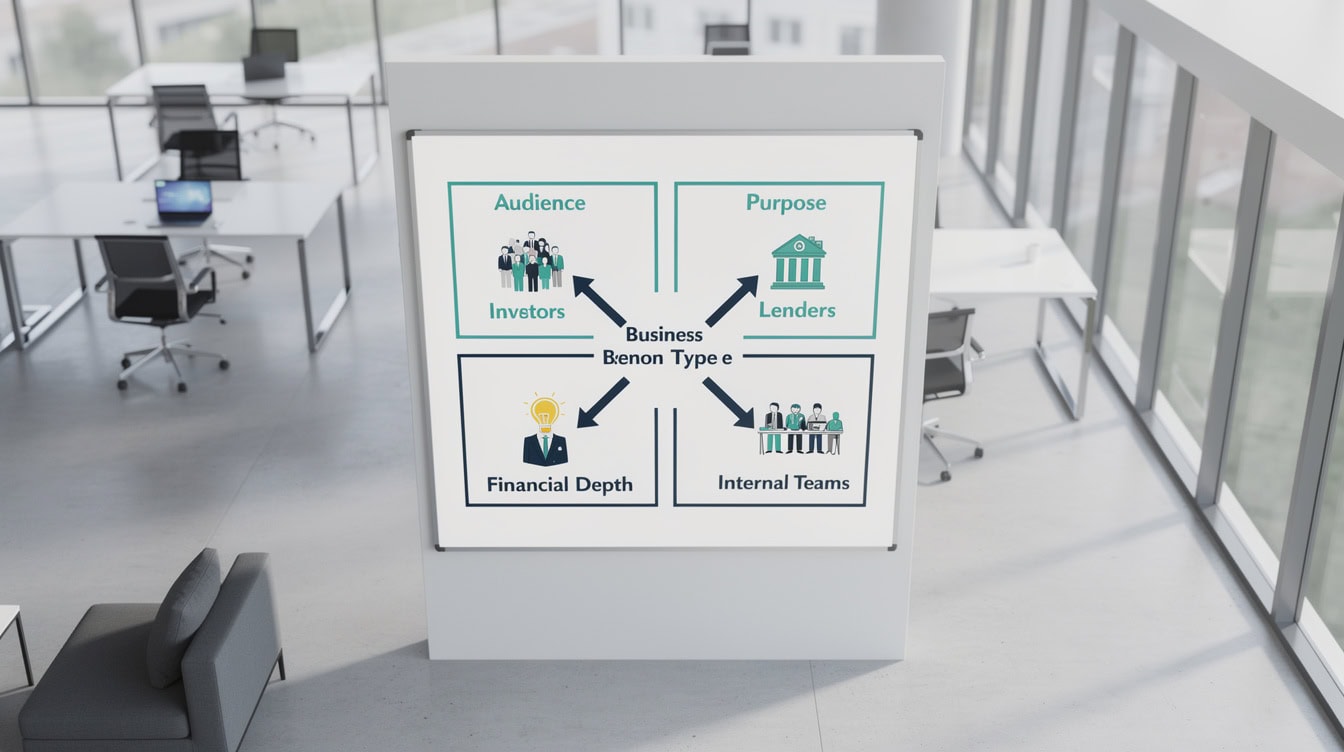
Four variables define every business plan type. Getting any one wrong means submitting the wrong document to the wrong reader.
1. Startup Business Plan
The startup business plan is the most common type and the one most founders need first. It covers your business model, market analysis, competitive landscape, team, and 3-5 year financial projections in a single document typically 20-40 pages long.
The required financial components include a projected income statement (also called a profit and loss statement, or P&L, which shows revenue minus expenses to arrive at net profit), a cash flow statement (tracking actual cash in and out each month), and a projected balance sheet (a snapshot of assets, liabilities, and equity at a future date). Investors and accelerators use this document to assess whether the business model is viable before committing capital.
A common mistake here is projecting revenue without modeling the cost structure that supports it. If your Year 2 revenue assumes 10 salespeople, your headcount and payroll costs must reflect that. EFM’s financial planning templates include integrated headcount drivers that automatically link hiring plans to the P&L, preventing this disconnect.
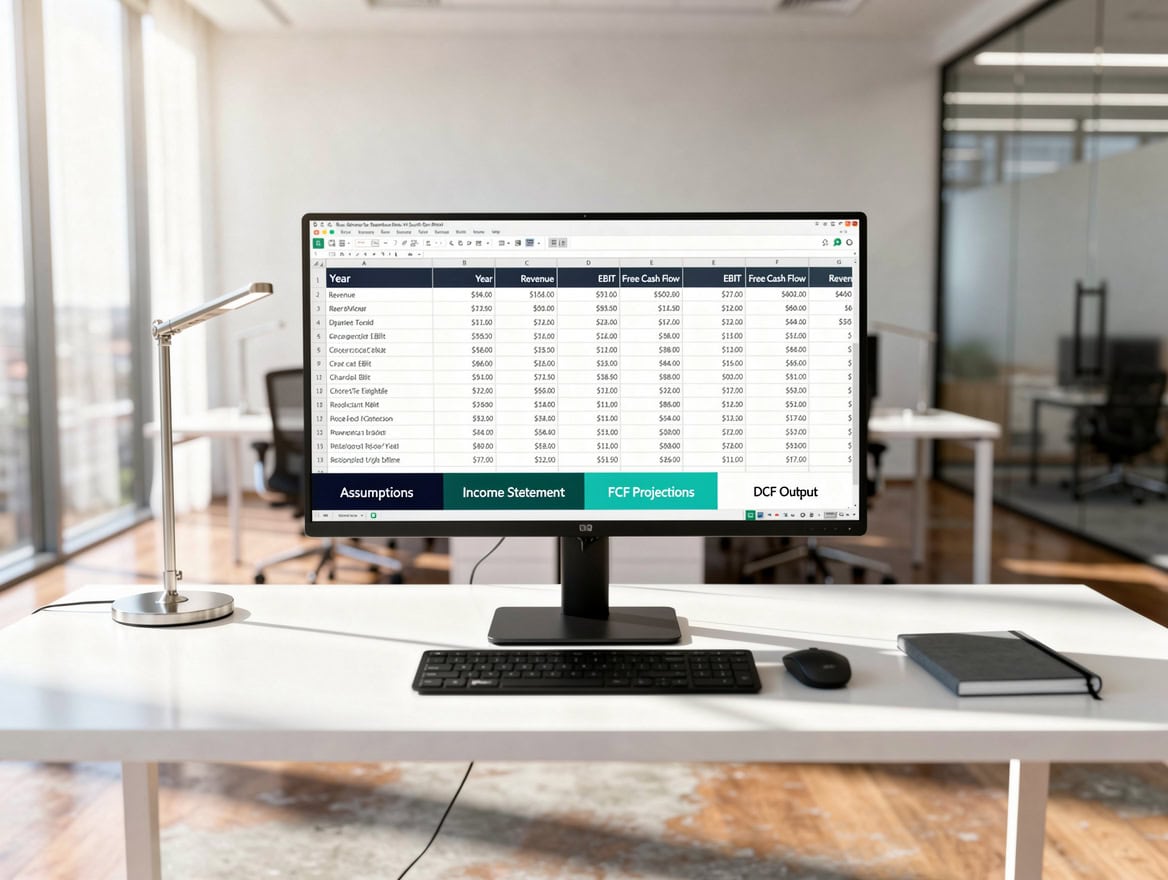
A startup business plan’s P&L must show how revenue growth outpaces cost scaling—typically reaching breakeven in Year 2 or 3.
2. Pitch Deck / Investor Business Plan
The investor pitch deck is a narrative-first document, typically 10-15 slides, designed to secure a meeting or a term sheet rather than close a deal. Financial slides in a pitch deck are highlights, not full statements: you show the revenue model, key assumptions, and a 3-year summary, not a 60-row P&L.
Investors spend an average of just 3 minutes and 44 seconds reviewing a pitch deck. Source That means your financial slide must communicate the business model’s scalability in a single glance. The metrics that matter most at seed stage are monthly recurring revenue (MRR), customer acquisition cost (CAC), lifetime value (LTV), and gross margin. At Series A, investors add EBITDA trajectory and net revenue retention.
The financial modeling mistake unique to pitch decks is presenting hockey-stick revenue curves without showing the underlying driver assumptions. Sophisticated investors immediately ask: ‘What’s your CAC, and how does it scale?’ If you can’t answer from your model, the meeting ends. EFM’s SaaS financial model includes a dedicated investor metrics dashboard with MRR, CAC, LTV, and churn built in, so your pitch deck numbers trace directly back to auditable assumptions.
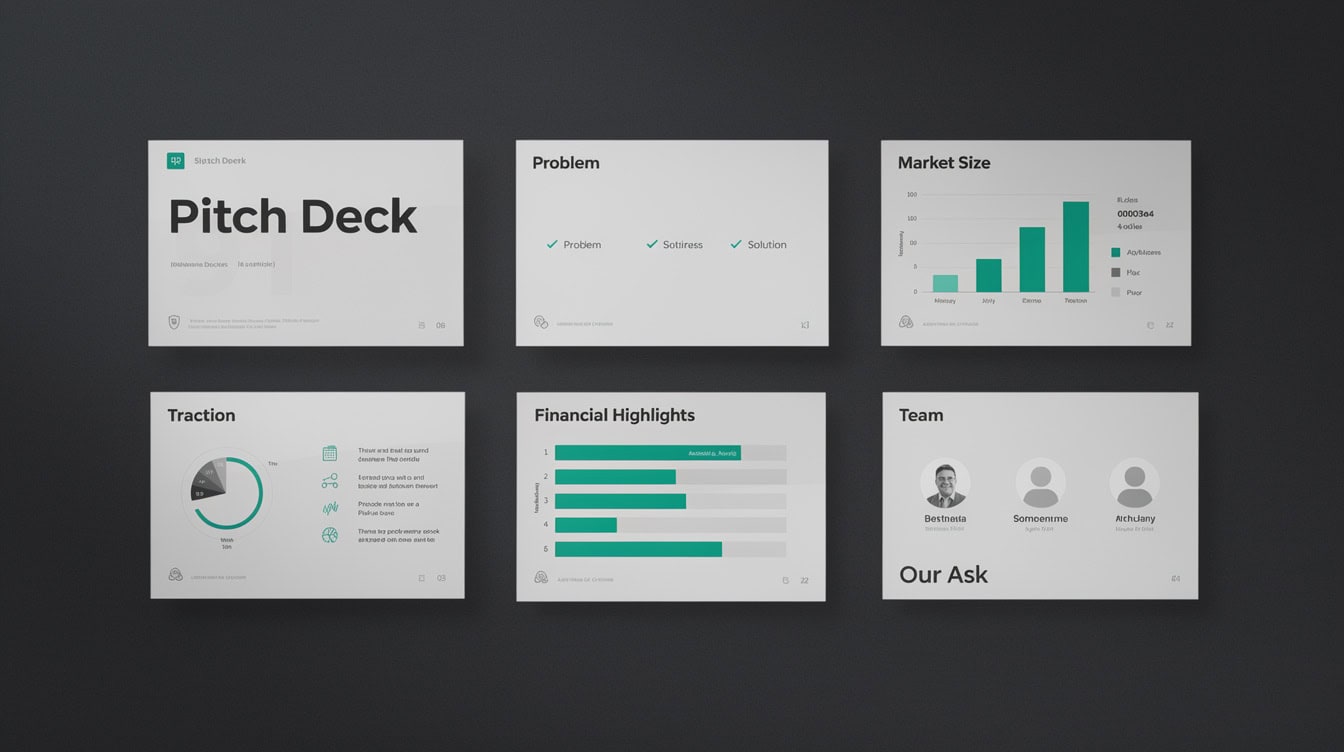
Investors spend an average of 3 minutes 44 seconds on a pitch deck—your financial slide must communicate scalability instantly.
3. Lean Business Plan
The lean business plan, popularized by the Lean Startup methodology, fits on one page and focuses on three things: your value proposition, your key metrics, and your financial targets. It’s the right tool for early-stage validation, pivots, or internal team alignment, not for external fundraising or loan applications.
The financial depth required is minimal but specific: monthly revenue target, gross margin percentage, and cash burn rate (the amount of cash your business spends each month before reaching profitability). These three numbers tell you whether the business model is worth pursuing before you invest weeks in a full plan. The lean plan is not a shortcut to avoid financial modeling; it’s a filter that tells you whether a full model is worth building.
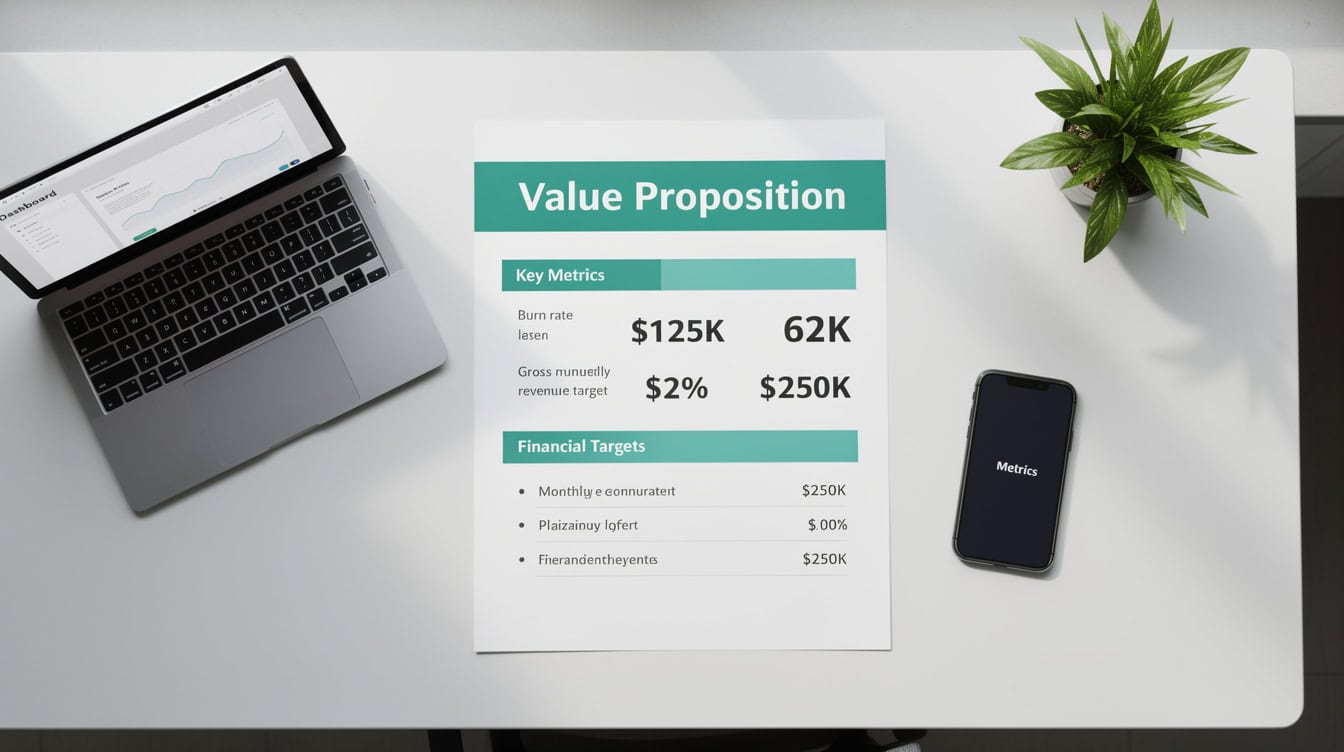
A lean plan’s three required financial metrics—burn rate, gross margin, and monthly revenue target—fit on a single page.
4. Internal Strategic Plan
The internal strategic plan is an operations roadmap for existing businesses, not a fundraising document. Its audience is your leadership team, department heads, and board, not external investors or lenders. It typically runs 15-25 pages and focuses on annual or 3-year objectives, budget allocation by department, and KPI targets.
The financial components center on departmental budgets (how much each team gets to spend), headcount plans, and variance tracking (comparing actual results to plan each month). The internal strategic plan is where financial discipline lives inside a company. Without it, departments overspend, priorities conflict, and the annual revenue target becomes a wish rather than a plan. EFM’s service business financial models include departmental budget tabs and monthly variance dashboards that make this tracking automatic.
5. Bank Loan / SBA Business Plan
The bank loan business plan is the most financially rigorous document on this list, and the one where weak projections cause the most damage. Lenders evaluate your ability to repay debt, which means they focus almost entirely on cash flow, collateral, and the debt service coverage ratio (DSCR). A DSCR below 1.25 typically triggers automatic rejection at most commercial banks.
The U.S. Small Business Administration requires loan applicants to submit 3 years of historical financial statements (if the business exists) plus 3 years of projections, including monthly cash flow for Year 1. Source The SBA 7(a) loan program, the most common small business loan program in the United States, approved 57,362 loans totaling $27.5 billion in fiscal year 2023. Source Plans that fail to show adequate DSCR or that present optimistic revenue without conservative downside scenarios are rejected at high rates. EFM’s loan-focused templates include a built-in DSCR calculator and sensitivity table that automatically flags when your projections fall below lender thresholds.
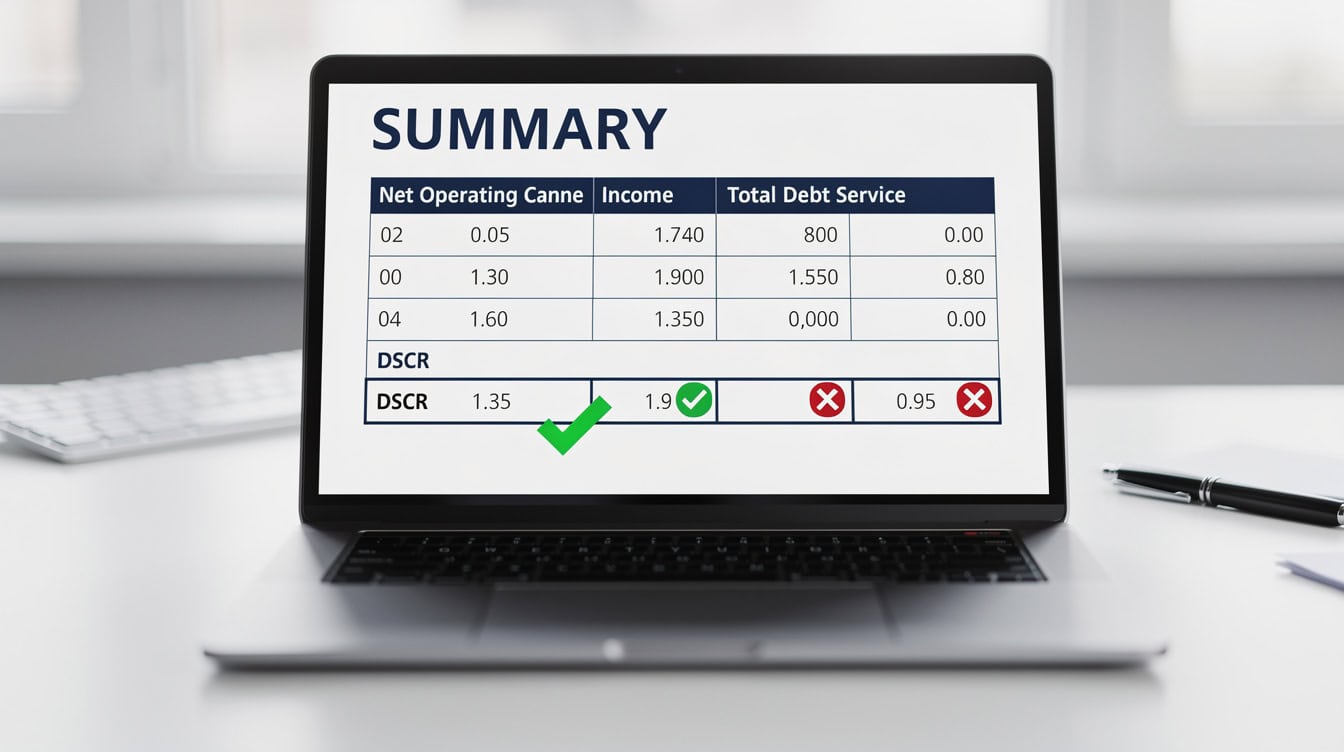
A DSCR below 1.25 triggers automatic rejection at most commercial banks—your cash flow projections must show this calculation explicitly.
6. Acquisition Business Plan
The acquisition business plan supports a buy-side transaction: you’re purchasing an existing business and need to justify the price, model the integration costs, and project combined financials. This is the most complex plan type on this list, requiring a full due diligence financial model, an integration cost schedule, and pro forma combined statements.
Key financial components include a purchase price allocation (how the acquisition price is divided among assets, goodwill, and intangibles), an earnout model (if part of the price is contingent on future performance), and a synergy analysis (projected cost savings or revenue gains from combining the two businesses). EFM’s business valuation templates include DCF (discounted cash flow) valuation, comparable company analysis, and acquisition scenario modeling in a single integrated workbook.
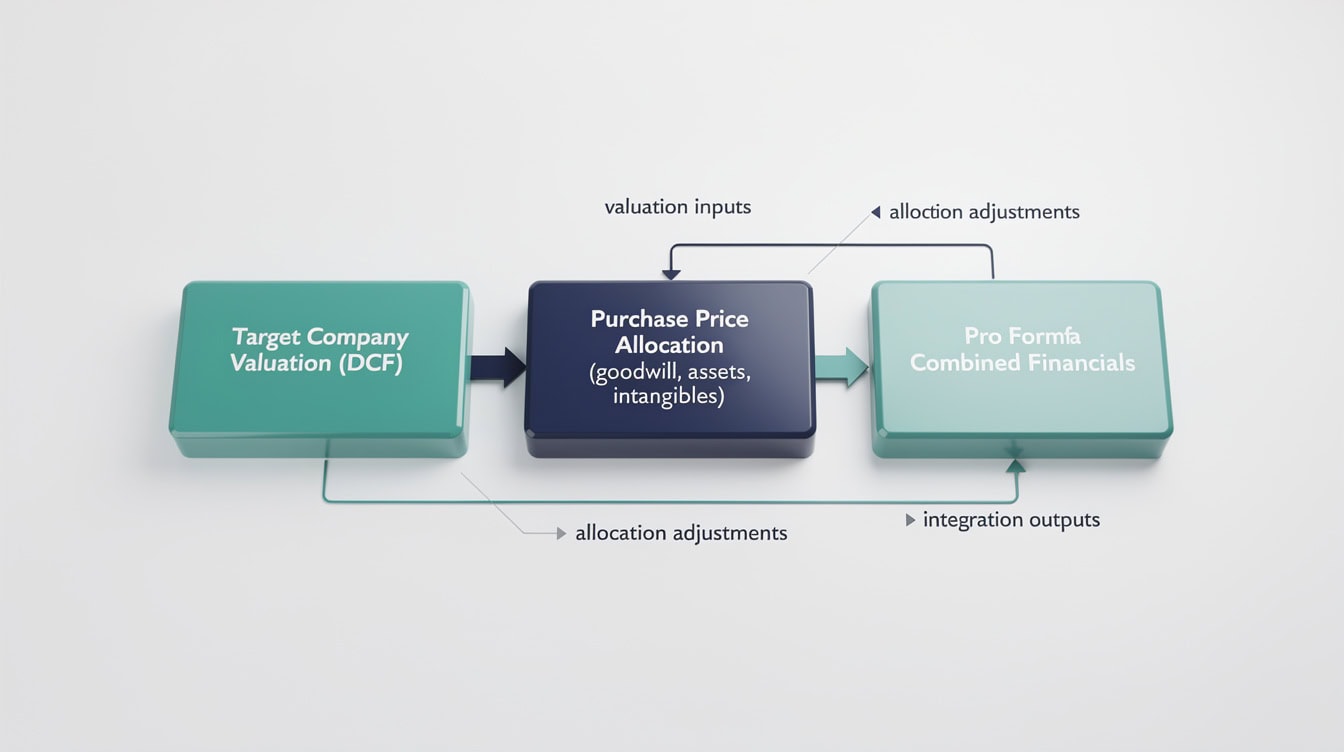
Acquisition plans require three integrated financial components that most generic business plan templates don’t include.
7. Franchise Business Plan
The franchise business plan has a unique requirement: it must model unit economics (the revenue and cost structure of a single franchise location) before projecting multi-unit growth. Franchisors and lenders both evaluate whether a single unit can generate enough cash flow to cover royalty payments (typically 4-8% of gross revenue), marketing fees, and debt service before approving expansion.
The Federal Trade Commission requires franchisors to provide a Franchise Disclosure Document (FDD) containing audited financial statements. Source The FTC’s Franchise Rule mandates that franchisors deliver the FDD to prospective franchisees at least 14 calendar days Source before any agreement is signed or money changes hands, giving buyers a defined window to review the audited financials. Franchisees building their own business plan must reconcile their projections against the FDD’s Item 19 financial performance representations. EFM’s restaurant and retail financial models include royalty fee inputs and unit-level P&L structures that align directly with FDD reporting formats.
8. Growth / Expansion Business Plan
The growth business plan is for established businesses entering a new market, launching a new product line, or opening additional locations. Its defining feature is scenario modeling: you need to show what happens under conservative, base, and optimistic assumptions, because expansion carries execution risk that a single-scenario projection can’t capture.
The financial components include an incremental revenue model (revenue attributable only to the expansion, not the existing business), a capital expenditure schedule (the one-time costs of expansion: equipment, leasehold improvements, hiring), and a payback period calculation (how many months until the expansion investment breaks even). EFM’s business plan templates include three-scenario toggle switches that instantly recalculate all outputs when you change a single growth assumption.

Growth plans must show all three scenarios—a single base-case projection signals to investors that execution risk hasn’t been stress-tested.
9. Operational Business Plan
The operational business plan translates strategy into execution. It’s an internal document, typically updated annually, that assigns specific financial targets to each department and tracks performance against those targets monthly. Think of it as the internal strategic plan’s more granular sibling: where the strategic plan sets direction, the operational plan sets the weekly and monthly actions that get you there.
Financial components include departmental cost budgets, headcount schedules by role and start date, and KPI dashboards (key performance indicators, the specific metrics each team is accountable for). The operational plan is where financial models earn their keep: a well-built model lets you instantly see the P&L impact of adding one salesperson or delaying a product launch by 60 days.
10. Feasibility Study / Pre-Business Plan
The feasibility study comes before the business plan. Its purpose is to answer one question: is this business worth pursuing? It’s typically 10-20 pages and focuses on market size validation, preliminary cost estimates, and a break-even analysis (the revenue level at which total costs equal total revenue, producing zero profit or loss).
The financial depth is intentionally limited: you’re not building a full 5-year model yet. You need a break-even calculation, a rough startup cost estimate, and a market size sanity check. If the feasibility study shows the market is too small or the break-even point is unreachable, you’ve saved yourself months of wasted planning. Approximately 20% of new businesses fail within their first 2 years. Source Inadequate market research is consistently cited as a leading cause. A rigorous feasibility study directly addresses this risk before capital is committed.
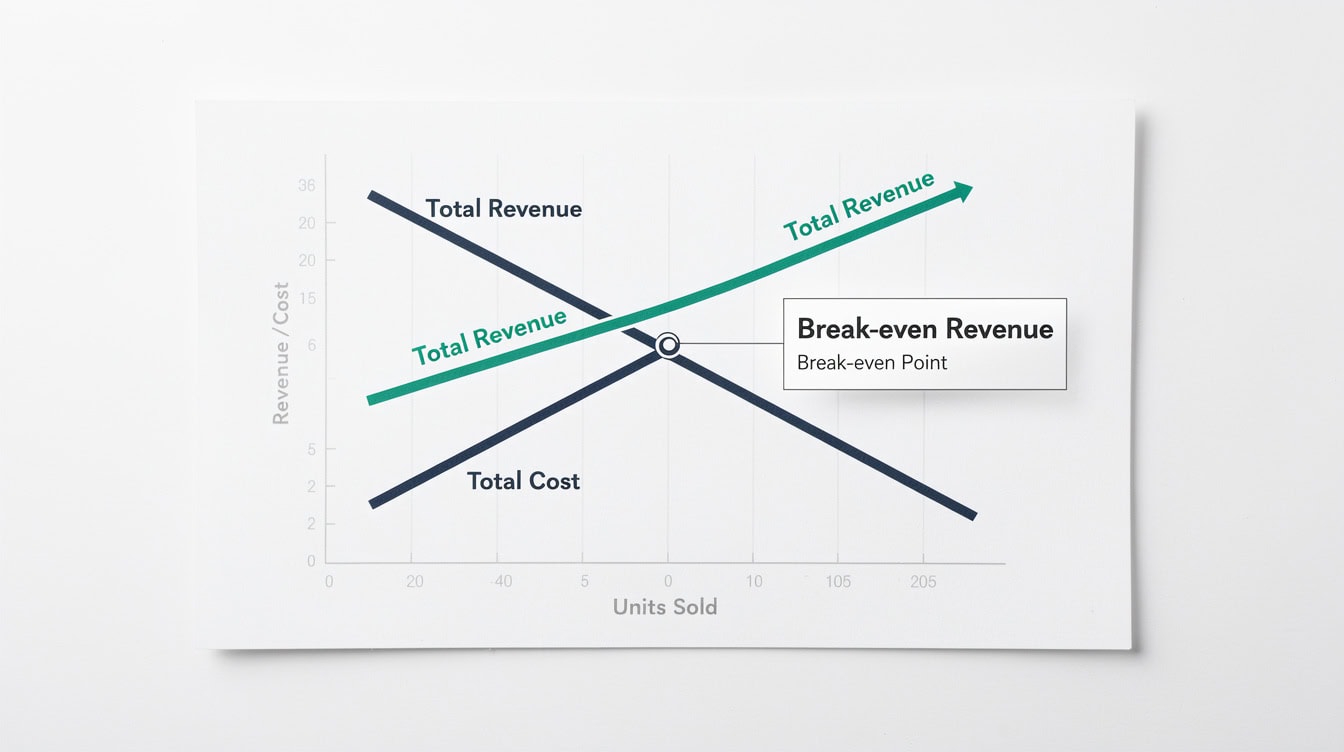
A feasibility study without a break-even calculation is just a market research report—the crossover point determines whether the business is worth building.
Worked Example: SaaS Startup Business Plan Financials
Here’s how a SaaS startup business plan’s financial section looks when built on a structured template. Assume the following inputs for Year 1:
- Starting monthly recurring revenue (MRR): $8,000
- Monthly new customer additions: 15
- Average contract value (ACV): $600/year
- Monthly churn rate: 2%
- Gross margin: 72%
- Monthly operating expenses (salaries, software, marketing): $45,000
Here’s the math for Month 12 MRR:
MRR (Month 12) = Starting MRR × (1 – churn)^12 + (New customers × ACV/12) × cumulative growth factor
Simplified: $8,000 × (0.98)^12 + (15 × $50) × 12 = $6,283 + $9,000 = $15,283 MRR by Month 12
Annual recurring revenue (ARR) at Month 12 = $15,283 × 12 = $183,396
Gross profit = $183,396 × 72% = $132,045
Operating expenses for Year 1 = $45,000 × 12 = $540,000
Year 1 net loss = $132,045 – $540,000 = -$407,955
This net loss figure, combined with a cash runway calculation (how many months of cash remain at the current burn rate), tells an investor exactly how much capital the business needs and when it will need it. The EFM SaaS model performs all of these calculations automatically across a 5-year horizon, with a dedicated investor metrics tab showing CAC payback period and LTV/CAC ratio.
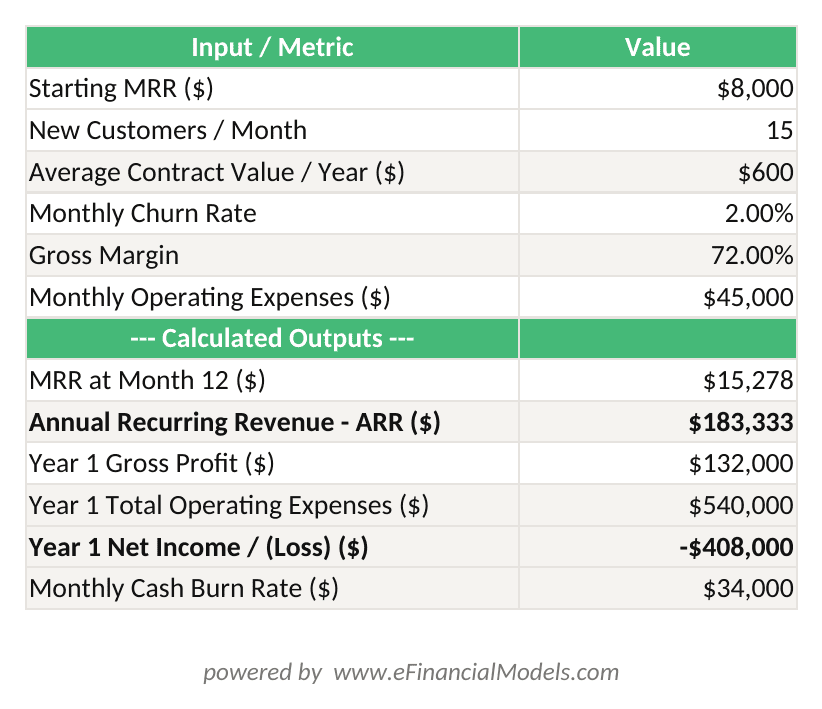
Year 1 SaaS financials: $183,396 ARR at 72% gross margin produces $132,045 gross profit against $540,000 in operating expenses, yielding a -$407,955 net loss and defining the capital raise requirement.
How to Choose the Right Business Plan Type
Choosing the right plan type comes down to answering three questions in order. First: who is the primary reader? If it’s an investor, choose between a pitch deck (early stage) and a full startup plan (later stage or larger raise). If it’s a lender, you need the bank loan plan. If it’s internal leadership, choose between the strategic plan and the operational plan based on whether you’re setting direction or managing execution.
Second: what decision does the plan support? Fundraising, lending, acquisition, expansion, and validation each require different financial outputs. Third: how much time do you have? A lean plan takes 2-3 days with a template. A full acquisition model takes 3-6 weeks even with pre-built tools.
When context is ambiguous, for example when a startup is simultaneously seeking angel investment and an SBA microloan, build the full startup plan first. It contains all the components the lender needs, and you can extract the financial highlights for the investor pitch deck. Never do it in reverse: a pitch deck lacks the financial depth a lender requires.
Comparison Matrix: All 10 Plan Types at a Glance
Every plan type differs on five dimensions that determine how much time and financial modeling depth you need.
| Plan Type | Typical Length | Financial Complexity | Primary Audience | Completion Time |
|---|---|---|---|---|
| Startup Business Plan | 20-40 pages | High | Investors, accelerators | 3-6 weeks |
| Pitch Deck | 10-15 slides | Medium | Angel/VC investors | 1-2 weeks |
| Lean Business Plan | 1 page | Low | Internal team | 2-3 days |
| Internal Strategic Plan | 15-25 pages | Medium | Leadership, board | 2-4 weeks |
| Bank Loan / SBA Plan | 25-40 pages | Very High | Lenders, SBA | 4-8 weeks |
| Acquisition Plan | 30-60 pages | Very High | Acquirer, advisors | 4-10 weeks |
| Franchise Plan | 20-35 pages | High | Franchisor, lender | 3-5 weeks |
| Growth / Expansion Plan | 15-30 pages | High | Board, investors | 2-5 weeks |
| Operational Plan | 10-20 pages | Medium | Department heads | 2-3 weeks |
| Feasibility Study | 10-20 pages | Low-Medium | Founder, early investors | 1-2 weeks |

Mapping all 10 plan types across five dimensions reveals that bank loan and acquisition plans require the most financial depth and preparation time.
Financial Modeling Mistakes That Undermine Each Plan Type
The most damaging financial modeling mistakes are plan-type specific, not generic. Here are the 5 most common, with the fix for each.
Mistake 1: Flat cost structure in a startup plan. Founders project revenue growth but keep operating expenses flat. Real businesses scale costs with revenue: more customers mean more support staff, infrastructure, and marketing spend. Fix: use a model with revenue-linked cost drivers, not static expense rows.
Mistake 2: Missing DSCR calculation in a bank loan plan. Submitting cash flow projections without explicitly calculating DSCR forces the loan officer to do the math themselves, and they’ll use conservative assumptions. Fix: include a dedicated DSCR summary row in your Year 1-3 cash flow statement.
Mistake 3: Single-scenario projections in a growth plan. Expansion carries execution risk. A single base-case projection signals to investors and board members that you haven’t stress-tested the plan. Fix: always include a downside scenario showing what happens if revenue ramps 30% slower than expected.
Mistake 4: Ignoring unit economics in a franchise plan. Projecting multi-unit revenue without first proving single-unit profitability is a red flag for both franchisors and lenders. Fix: build a unit-level P&L first, then multiply by the number of planned locations.
Mistake 5: Skipping the break-even analysis in a feasibility study. A feasibility study without a break-even calculation is just a market research report. Fix: calculate the break-even revenue point (fixed costs divided by gross margin percentage) before any other financial analysis.
EFM’s business template library includes plan-type-specific structures that prevent each of these mistakes through built-in formula logic and validation checks.
Frequently Asked Questions
What is the most common type of business plan?
The startup business plan is the most frequently requested document, used for accelerator applications, angel investment rounds, and early-stage bank loans. It typically runs 20-40 pages and requires a full 3-5 year financial model including projected income statement, cash flow statement, and balance sheet. According to the SBA, most lenders require at minimum 3 years of forward-looking projections for any new business loan application. If you’re unsure which plan to start with, the startup business plan covers the most ground and can be adapted for most early-stage purposes.
How long does it take to write a business plan?
Completion time ranges from 2-3 days for a lean one-page plan to 4-10 weeks for a full acquisition business plan. The financial modeling component is typically the longest part: building a 5-year integrated financial model from scratch in a blank spreadsheet takes most founders 40-80 hours. Using a pre-built financial model template reduces that to 8-15 hours of data entry and assumption-setting. The narrative sections (market analysis, competitive landscape, team bios) add another 10-20 hours regardless of plan type.
What financial statements does a business plan need?
The answer depends on the plan type. A lean plan needs only 3 metrics: burn rate, gross margin, and monthly revenue target. A startup plan needs 3 full projected statements: income statement (P&L), cash flow statement, and balance sheet. A bank loan plan adds a DSCR calculation and often a personal financial statement from the owner. An acquisition plan adds purchase price allocation, earnout modeling, and pro forma combined financials. The rule of thumb: the more capital or credit at stake, the more financial statements the reader requires.
What’s the difference between a startup business plan and a pitch deck?
A startup business plan is a comprehensive 20-40 page document covering all aspects of the business in detail, including full financial projections. A pitch deck is a 10-15 slide visual summary designed to generate investor interest, not close a deal. The pitch deck’s financial slides show highlights: revenue model, 3-year summary, and key metrics like CAC and LTV. Investors who want to proceed past the pitch deck will then request the full business plan and financial model. Build the full plan first; extract the highlights for the deck.
Do I need a business plan to get an SBA loan?
Yes. The SBA requires a business plan as part of the 7(a) and 504 loan application packages. The plan must include 3 years of financial projections with monthly cash flow detail for Year 1, a description of the business and its products or services, a market analysis, and information about the management team. The SBA’s lender match program connects applicants with approved lenders, but each lender sets its own documentation standards on top of SBA minimums. A plan without a DSCR above 1.25 will typically be declined regardless of the narrative quality.
What is a lean business plan and when should I use it?
A lean business plan is a one-page strategic summary that captures your value proposition, target customer, key metrics, and financial targets on a single page. It’s the right tool for internal team alignment, early-stage pivots, or pre-validation before committing to a full plan. It’s not appropriate for external fundraising, loan applications, or acquisition processes, all of which require detailed financial statements. The lean plan’s 3 required financial metrics are burn rate (monthly cash spend), gross margin (revenue minus cost of goods sold, expressed as a percentage), and monthly revenue target.
How do I choose between an internal strategic plan and an operational plan?
Choose the internal strategic plan when you’re setting 1-3 year direction: where the business is going, what markets to enter, and how to allocate budget across departments. Choose the operational plan when you’re managing execution: which team does what this quarter, what are the weekly KPIs, and how does each department’s spending track against its budget. Many businesses need both: the strategic plan sets the destination, and the operational plan is the turn-by-turn navigation. If you only have time for one, the operational plan drives more day-to-day accountability.
Conclusion
The 10 business plan types covered here aren’t interchangeable documents with different names. Each one serves a specific audience, supports a specific decision, and requires a specific level of financial modeling depth. Submitting the wrong type, or the right type with weak financials, is the fastest way to lose a funding round, a loan application, or an acquisition deal.
The financial model is what separates a credible business plan from a narrative document. Lenders calculate your DSCR from your cash flow projections. Investors check whether your CAC and LTV assumptions are internally consistent. Franchisors verify that your unit economics match their FDD disclosures. In every case, the quality of your financial model determines whether the reader trusts the rest of the plan.
I recommend exploring EFM’s financial planning template library to find the pre-built model that matches your specific plan type. Each template includes the statements, dashboards, and assumption drivers your stakeholders will scrutinize, so you can focus on strategy instead of spreadsheet formulas.