
0 ITEMS

Why AI Developers Still Choose Subscriptions to Monetize Their Applications

How a New Wave of AI-Powered Applications Is Reinforcing the Subscription Economy
| $556B Global subscription economy 2025 | 38% AI SaaS market CAGR to 2031 | 3.8B GenAI app downloads in 2025 | 92% SaaS companies adding AI features |
Executive Summary
The rapid proliferation of AI-powered applications has not displaced the subscription business model; it has cemented it. Across productivity tools, vertical AI applications, developer platforms, and AI-native SaaS products, subscriptions remain the dominant commercial model for new software. This report examines the data behind this trend: the explosive growth of the AI app market, the enduring dominance of subscription-based monetization, the practical barriers to adopting outcome-based pricing, and the unit economics that founders and investors must model to build durable, fundable businesses.
The global subscription economy is on course to exceed $556 billion in 2025 and is projected to reach $2.1 trillion by 2034. AI-specific SaaS alone is forecast to grow at a 38% compound annual rate. Against this backdrop, founders building AI-powered businesses face a familiar set of financial planning challenges: pricing, churn management, unit economics, and the path to breakeven. The tools have changed; the financial fundamentals have not.
1. The AI App Explosion: A Market Transforming in Real Time

Global spending on AI-enabled applications is projected to reach $644 billion in 2025, a year-over-year increase of 76.4%.[1] The global AI SaaS market, valued at $71.54 billion in 2023, is forecast to reach $775.44 billion by 2031 at a CAGR of 38.28%.[2]
Consumer engagement confirms the scale. Generative AI apps reached 3.8 billion downloads in 2025, generating more than $5 billion in in-app purchase revenue, and accounting for 48 billion hours of time spent.[3] Consumer spending on AI apps surpassed $1.4 billion in 2024 and is projected to exceed $2 billion in 2025.[4]
More than 1 billion people now actively engage with AI tools each month, with ChatGPT alone reporting 800 million weekly active users as of October 2025.[5]
Enterprise adoption is equally pronounced. By 2026, Gartner expects 80% of enterprises to have deployed GenAI-enabled applications, up from less than 5% just a few years prior.[6] A 2025 McKinsey survey found that 71% of organizations were already using generative AI in at least one business function.[7] Across the B2B SaaS sector, 92% of companies report they have launched or plan to launch AI features.[8]
2. The Subscription Model Remains Dominant
Despite extensive industry debate about outcome-based and consumption-based alternatives, the subscription model has retained its dominant position in AI-era software. The global subscription economy reached an estimated $556 billion in 2025 and is projected to grow to $2.1 trillion by 2034 at a CAGR of 15.9%.[9] Over the past decade, subscription revenue growth has surged 437%, outpacing the S&P 500 by a factor of 4.6x.[10]
The SaaS segment of the subscription economy, the most directly relevant to AI application builders, was valued at $408.21 billion in 2025 and is forecast to reach $465.03 billion in 2026.[11]
Even among companies actively reconsidering their AI pricing strategy, subscription and platform fees remain the most prevalent model at 58% of those surveyed, according to ICONIQ’s 2026 State of AI Bi-Annual Snapshot.[12] Consumption-based pricing is gaining ground at 35%. In comparison, outcome-based pricing remains the choice of only 18% of companies, and even this figure largely reflects aspirational adoption rather than operational reality for early-stage businesses.
3. Why Outcome-Based Pricing Remains Impractical for Most Founders
The appeal of outcome-based pricing is conceptually compelling: align revenue with the value customers receive, rather than access or usage. But translating this concept into an operational pricing structure remains genuinely difficult, especially for early-stage companies.
Measurement infrastructure is the first barrier. Outcome-based pricing requires agreed-upon, auditable definitions of success. Zendesk, charging $1.50 per successfully resolved customer interaction, spent months testing, built a dedicated telemetry infrastructure, and developed a seven-step decision flowchart to determine whether each interaction qualified for billing.[13] This is a substantial operational investment that most early-stage companies cannot reasonably undertake.
Trust is the second barrier. Outcome-based pricing demands that customers stake core business workflows on an unproven product. Early adopters will accept some risk; the broader market requires a track record that early-stage companies, by definition, do not yet have.
Revenue unpredictability is the third and perhaps most consequential barrier. Traditional SaaS gross margins run at 80–90%; AI-native products already face elevated cost structures with gross margins of 50–60%.[14] Adding outcome-based variance on top of this compressed margin profile creates a cash-flow environment fundamentally incompatible with the runway management and investor reporting demands facing early-stage founders.
Even Gartner’s more optimistic projections, that by 2025 over 30% of enterprise SaaS solutions would incorporate outcome-based components, up from ~15% in 2022[15], describe enterprise products, not early-stage startups.
This is not an argument against outcome-based pricing as a long-term evolution. It is an observation grounded in the realities of early company building: subscription revenue provides a foundation upon which a business can be built, funded, and ultimately transformed once the product, customer relationship, and measurement infrastructure are mature enough.
4. The Structural Advantages of Subscription Revenue

4.1 Working Capital and Cash Flow
Subscription models, particularly annual contracts, allow companies to collect revenue in advance of service delivery. This materially reduces the working capital burden that otherwise forces early-stage companies into repeated fundraising cycles, each of which dilutes founders and consumes management time that should be directed at product and customers.
4.2 Investor-Grade Predictability
Recurring revenue is the single metric that most reliably determines whether an early-stage company can raise capital at favourable terms. Most investors expect founders approaching a Series A to demonstrate $75,000–$125,000 in MRR, with the threshold rising toward $1 million in ARR for credible fundraising conversations.
Private SaaS companies trade at a median of approximately 4.8x revenue, with companies growing ARR at 40% or more annually commanding multiples of 7x–10x ARR.[16] The premium placed on predictable, growing recurring revenue is structurally embedded in how investors value software businesses.
4.3 Compounding Revenue Dynamics
Subscription revenue accumulates through the layering of cohorts. Each month of successful customer retention adds to a compounding base of recurring revenue. This creates a structural growth dynamic; revenue does not reset to zero each period, which fundamentally differentiates subscription businesses from transactional ones.
5. The Unit Economics Every Founder Must Model
The subscription model provides a stable commercial structure, but that structure is only as valuable as the unit economics underlying it. Investors will interrogate five core metrics above all others in any early-stage fundraising conversation.
| Metric | 2025–2026 Benchmark | Why It Matters to Investors |
|---|---|---|
| LTV: CAC Ratio | 3.6:1 median(target: 3:1–7:1) | Validates that the cost of acquiring a customer is justified by the lifetime revenue they generate. Below 3:1 signals structural unprofitability. |
| CAC Payback Period | <12 months(investor target) | Measures the months of gross profit required to recover the acquisition cost. Longer payback increases capital requirement and runway risk. |
| Monthly Churn Rate | 2.6% voluntary;~3.5% total B2B SaaS | A 3% monthly churn rate destroys roughly 30% of revenue per year. Investors model churn against ARR growth to assess net retention. |
| CAC | $1,200 avg B2B SaaS(+14% through 2025) | Rising acquisition costs compress margins and extend payback periods, requiring founders to model CAC by channel explicitly. |
| Freemium Conversion | 3–5% standard; 6–8% good;15–20% great (AI-native) | For AI-powered freemium products, conversion rate directly drives revenue ramp and cost efficiency; a small improvement has an outsized financial impact. |
Sources: Benchmarkit/pmtoolkit.ai (2026)[17], Recurly 2025 Churn Report[18], Genesys Growth CAC Benchmarks 2026[19], FirstPageSage Freemium Report 2025[20]
The data reveals a demanding environment for early-stage subscription businesses. Rising customer acquisition costs, compressed margins on AI-native products, and the relentless arithmetic of churn make rigorous financial modelling an operational necessity, not an optional exercise.
6. The Hidden Cost of Churn
Churn is the most misunderstood variable in early-stage subscription modelling. The average B2B SaaS company faces a voluntary churn rate of approximately 2.6% per month, with total churn (including involuntary) running at around 3.5%.[18] These figures may appear manageable in isolation, but their compounding effect on revenue is significant.
A subscription business with 1,000 customers and $a $100monthly average revenue per user generates $100,000 MRR at launch. At 3% monthly churn, without new customer acquisition, the business retains approximately 697 customers after 12 months, a revenue base of $69,700. The $30,300 monthly revenue erosion must be continuously replaced before any growth is possible.
For AI-powered products, freemium acquisition creates additional complexity. AI-native and hybrid products demonstrate slightly higher freemium-to-paid conversion rates than traditional SaaS, with top performers achieving 15–20% conversion, but the majority of products remain in the 3–8% range. The time-to-conversion matters equally: most conversions occur within the first 30 days, and activation sequences that articulate AI-driven value clearly and early show measurably better outcomes.[21]
7. Why Rigorous Financial Planning Remains Essential
The data assembled in this report converges on a single operational conclusion: building a subscription business on top of AI requires the same rigorous financial planning discipline as any other subscription business, with additional complexity introduced by AI-specific cost structures. Five financial planning questions structure every serious fundraising conversation.
- What is the pricing architecture, and how does it capture value across different user segments and usage levels?
- What are the realistic MRR and ARR growth trajectories, and what cohort assumptions underlie them?
- What does churn cost at the current and projected scale, and what is the net revenue retention trend?
- What are the CAC and LTV by acquisition channel, and when does the CAC payback period fall below 12 months?
- What is the path to operational breakeven, and how long does current capital extend the runway?
Founders who can answer these questions clearly, with documented assumptions and sensitivity analysis, enter investor conversations from a position of credibility. The thousands of AI-powered applications launching each month compete not only on product quality but on the clarity and rigour of their financial planning.
The subscription model provides the structural foundation. Financial modelling provides the navigation. Together, they give investors the confidence to write cheques and founders the visibility to manage their businesses with discipline.
8. Conclusion
The AI application wave is real, large, and accelerating. The subscription model is not its casualty; it is its commercial backbone. Across the evidence assembled in this report, the I SaaS market growth of 38% annually, $556 billion in global subscription economy value in 2025, 58% of AI companies retaining subscription as their primary pricing model even when reconsidering alternatives, and the structural barriers to outcome-based pricing adoption, the picture is consistent.
Thousands of new AI-powered applications launch every month. Each one faces the same financial questions: what does it cost to acquire a customer, how long do they stay, what does their lifetime value justify in acquisition spend, and when does the business reach the point where it can sustain itself without external capital? The technology underneath these businesses has changed fundamentally. The financial questions have not.
For founders building subscription businesses on top of AI, the path forward is clear: build rigorous financial models that stress-test the unit economics, model the churn, and chart the path to breakeven. Investors have always asked these questions. They are not stopping now.












































About eFinancialModels
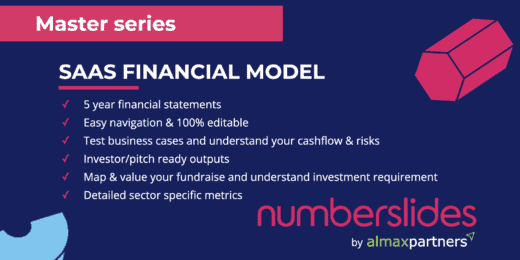
eFinancialModels is a global marketplace for professional financial model templates in Excel and Google Sheets. The platform serves entrepreneurs, investors, and finance teams worldwide, providing investor-grade SaaS financial models, startup valuation tools, and business planning templates designed to translate product vision into rigorous financial plans.
Visit www.efinancialmodels.com to explore the full template library.
Sources & References
- Gartner / BetterCloud, AI and the SaaS Industry in 2026
- Verified Market Research / BetterCloud, 175+ SaaS Statistics 2026
- Sensor Tower, 2026 State of Mobile
- BusinessofApps, AI App Revenue and Usage Statistics 2026
- OpenAI via Visual Capitalist, The Explosive Growth of Gen AI Apps
- Gartner / BetterCloud, 80% enterprise GenAI deployment by 2026
- McKinsey Global Survey on AI 2025
- High Alpha 2025 SaaS Benchmarks Report
- market.us, Subscription Economy Market Size CAGR 15.9%
- SQ Magazine, Subscription Economy Statistics 2026
- Grand View Research / BetterCloud, Global SaaS Market 2025-2026
- ICONIQ 2026 State of AI Bi-Annual Snapshot via Chargebee
- McKinsey, Evolving Models and Monetization Strategies in the New AI SaaS Era
- Bessemer Venture Partners, The AI Pricing and Monetization Playbook
- Revenera / Orb, Monetizing AI: Comparing Pricing Models
- Aventis Advisors / SaaS Capital, SaaS Valuation Multiples 2025
- Benchmarkit / pmtoolkit.ai, SaaS Metrics Benchmarks 2026
- Vitally / Recurly, B2B SaaS Churn Rate Benchmarks 2025
- Genesys Growth, CAC Benchmarks 2026
- FirstPageSage, SaaS Freemium Conversion Rates 2025 Report
- ChartMogul, The SaaS Conversion Report

