
0 ITEMS

Tax Efficiency in Investing: The Role of Financial Models

Tax efficiency can significantly boost long-term wealth by reducing the impact of taxes on investments.
- Small adjustments in tax planning, like asset placement and tax-loss harvesting, can lead to higher after-tax returns.
- Financial models help project future tax savings and optimize how investments are allocated across accounts.
- Strategies like Roth IRAs, municipal bonds, and smart asset placement minimize tax drag and grow wealth faster.
- Reducing taxable income through contributions and deductions increases the effectiveness of tax-efficient investing.
- High-income earners can benefit from specific tactics such as backdoor Roth conversions and maximizing deductions.
This article covers essential tax strategies and explains how financial modeling enhances long-term investment performance.
Why Tax Efficiency Matters for Investors and Business Owners
Tax drag refers to the reduction in investment returns caused by taxes. Taxes can eat into your earnings from dividends, interest, and capital gains, ultimately slowing the growth of your portfolio. However, minimizing tax drag is essential for long-term wealth growth.
When you adopt a tax-efficient investment strategy, you focus on reducing the impact of taxes on your investments. This means placing assets in the right accounts, leveraging tax-free investment vehicles, and using strategies such as tax-loss harvesting. The less you pay in taxes, the more you can reinvest, compounding your wealth over time.

The Role of Financial Models in Tax Optimization – Using Models to Project Tax Savings and Returns
Financial models are invaluable tools for tax optimization and planning. Projecting potential tax savings and returns enables investors to make informed decisions about where and how to allocate their investments. These models simulate different scenarios, allowing a better understanding of how tax-efficient strategies impact portfolio growth.
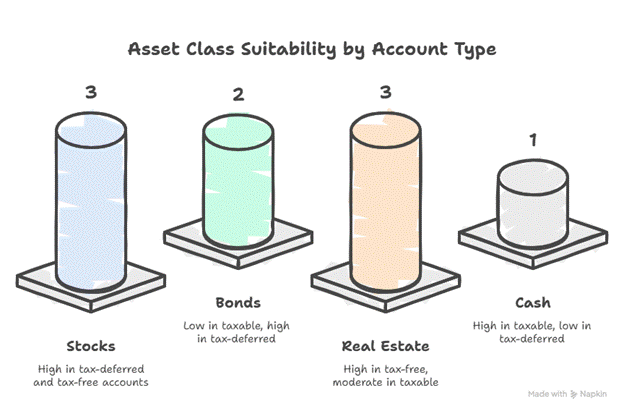
A key aspect of tax optimization is the tax-assets model, which categorizes investments based on their tax treatment and suggests the most efficient placement across taxable, tax-deferred, and tax-exempt accounts. This approach ensures that high-growth, tax-inefficient assets, such as bonds generating interest income, are placed in tax-advantaged accounts like IRAs or 401(k)s, while tax-efficient assets, like ETFs with low turnover, remain in taxable accounts to minimize overall tax liability.
For example, financial models can calculate the future tax savings of contributing to tax-advantaged accounts while also projecting the impact of strategies such as tax-loss harvesting or strategic asset allocation. By incorporating the tax-assets model, investors can evaluate how different asset allocation strategies affect long-term returns, ensuring that every investment decision aligns with optimal tax efficiency.
Key Strategies for Tax-Efficient Investments
When it comes to tax-efficient investments, several key strategies can be employed to optimize your portfolio and minimize your tax burden.
Asset Placement: Where to Hold Different Asset Types for Tax Efficiency
One of the foundational strategies for tax-efficient investment is asset placement. This involves deciding where to hold different types of investments based on their tax treatment. For instance, you may want to place tax-inefficient assets, like bonds, in tax-advantaged accounts like IRAs or 401(k)s, while placing tax-efficient assets, like stocks, in taxable accounts.
By placing your investments in the right accounts, you can minimize the tax drag and maximize your returns. This approach not only reduces taxes on interest and dividends but also allows your tax-efficient investments to grow without interference from taxes.
Reducing Taxable Income: How Tax Deductions and AGI Reduction Impact Investments
Reducing your Adjusted Gross Income (AGI) is a powerful tool for minimizing tax drag. By lowering your adjusted gross income (AGI), you can potentially reduce your tax rate and increase the amount of money available for investment.
Contributing to tax-advantaged accounts, such as a 401(k) or traditional IRA, can reduce your taxable income, thereby lowering your adjusted gross income (AGI). Additionally, tax deductions such as charitable contributions or mortgage interest payments can further reduce your taxable income.
By reducing your AGI, you’re also reducing the amount of taxes you pay on investment income, which can significantly improve the overall tax efficiency of your portfolio.
Tax-Loss Harvesting & Capital Gains Strategies: Offsetting Gains and Reducing Tax Liability
Tax-loss harvesting involves selling investments at a loss to offset taxable gains elsewhere in a portfolio. This reduces taxable income and lowers the overall tax burden. Proper valuation of tax-loss carryforwards plays a critical role in maximizing long-term tax efficiency.
Accurately valuing tax-loss carryforwards is crucial for long-term tax efficiency. This financial model helps estimate the retained value of these losses.
Tax-Free Investment Options: Roth IRAs, Municipal Bonds, and HSAs
Tax-free investment options can play a key role in reducing your overall tax burden. For example, contributions to Roth IRAs are made with after-tax dollars, but the growth within the account is tax-free. This makes Roth IRAs an excellent option for long-term growth.
Municipal bonds are another great tax-efficient investment. Interest earned from these bonds is typically exempt from federal income taxes and, in some cases, state taxes. Similarly, Health Savings Accounts (HSAs) offer tax-free growth and withdrawals when used for medical expenses.
By incorporating these tax-free investment options into your portfolio, you can enjoy tax-free growth while reducing your overall tax liability.
High-Income Tax Strategies: Maximizing Deductions and Using Backdoor Roth IRAs
High-income earners face unique challenges when it comes to tax-efficient investing. One strategy to consider is maximizing deductions to reduce your taxable income. Contributing to tax-deferred accounts, such as a 401(k), can help reduce your tax burden. Additionally, high earners may want to consider the backdoor Roth IRA strategy, which enables contributions to a Roth IRA even if income exceeds the limits.
This strategy enables high-income earners to benefit from tax-free growth in a Roth IRA, thereby bypassing the income restrictions.
How Financial Models Improve Tax Efficiency in Real-World Scenarios
A comprehensive tax model can improve tax efficiency in real-world financial planning. A case study published by the Financial Planning Association analyzed tax-efficient retirement withdrawal strategies using a comprehensive tax model.
The study examined a couple nearing retirement, utilizing a financial model to determine the optimal timing for withdrawing funds from tax-deferred accounts. By carefully structuring withdrawals, they minimized taxable income and extended the longevity of their portfolio. The model helped the couple decide when to tap into taxable versus tax-advantaged accounts, reducing their lifetime tax burden.
Key insights from the case study include:
- Withdrawals from taxable accounts first reduce the tax burden on future tax-deferred account distributions.
- Roth conversions in lower-income years can provide long-term tax savings.
- Strategic withdrawals can prevent retirees from moving into higher tax brackets.
Through financial modeling, investors can identify strategies to minimize tax liabilities and optimize retirement savings.
Conclusion & Takeaways – Smart Tax Strategies for Long-Term Wealth Growth
Tax-efficient investing is a crucial component of a comprehensive wealth-building strategy. By minimizing tax drag and using financial models to project tax savings, you can optimize your returns and achieve long-term financial success. The strategies discussed, including asset placement, tax-loss harvesting, and utilizing tax-free investment options, can significantly improve your portfolio’s tax efficiency.
As you plan for the future, remember that smart tax strategies, combined with the power of financial models, can help you maximize your wealth and achieve your financial goals more efficiently.
Frequently Asked Questions (FAQs)
1. What is tax efficiency in investing, and why is it important?
Tax efficiency refers to strategies that help investors minimize the taxes they pay on returns, allowing for greater wealth accumulation over time.
2. How does tax drag reduce my investment returns?
Tax drag is the erosion of returns due to taxes on interest, dividends, and capital gains, which slows portfolio growth if not properly managed.
3. How can I reduce taxes on my investments?
By using tax-efficient strategies like proper asset placement, contributing to tax-advantaged accounts, and harvesting investment losses.
4. What is asset placement, and how does it improve tax efficiency?
Asset placement involves holding tax-inefficient assets (like bonds) in tax-deferred accounts and tax-efficient assets (like ETFs) in taxable accounts to minimize tax impact.
5. How do financial models help with tax-efficient investing?
They simulate tax scenarios, project long-term tax savings, and help optimize where and how to allocate investments across accounts.
6. What is a tax-assets model?
It’s a financial model that categorizes assets by tax treatment and recommends the most tax-efficient account types for holding them.
7. What is tax-loss harvesting, and when should I use it?
It’s the practice of selling investments at a loss to offset gains elsewhere in your portfolio, reducing your overall tax liability.
8. Are Roth IRAs and HSAs good for tax-free growth?
Yes—Roth IRAs offer tax-free withdrawals in retirement, and HSAs allow tax-free growth and use for qualified medical expenses.
9. How can I reduce my taxable income to improve tax efficiency?
Contributing to retirement accounts and claiming deductions (like mortgage interest or charitable donations) can lower your AGI and investment taxes.
10. Do high-income earners have special strategies for tax efficiency?
Yes—strategies like maximizing deductions and using backdoor Roth IRAs can help high earners reduce tax burdens while growing investments efficiently.
This article is for informational purposes only and should not be considered tax, investment, or financial advice. Tax laws are subject to change, and individual financial situations vary. Consult a qualified tax professional or financial advisor before making investment decisions.
You might also like:
- 10 Ideas to Increase Average Revenue Per User
- 5 Practical Tips to Help Raise Funds For Startups
- 10 Tips to Develop a First Class Business Valuation Report
- Financial Planning for Small Business Owners – Taking an SBA Loan
- Financial Ratios Analysis and Its Importance
- What is Break-Even Analysis?
- Real Estate
- 5-year Financial Projections
- Business Valuation
- Financial Planning
- How to Prepare a Financial Plan for a Chicken Egg Farm?
- The Key Differences Between Levered and Unlevered Free Cash Flow
- How to Use Inflation Projection to Your Advantage
- Financial Ratios Cheat Sheet
- Financial Spreadsheet – A Key Tool for Entrepreneurs
- Financial Terms & Abbreviations
- Revenue Projections
- Leveraging a Cash Flow Projection Template
- The Top 5 Frameworks for Making Investment Decisions
- The Purpose of a Financial Model
- Financial Services


