
0 ITEMS

Eight tips to develop a 5-year personal financial plan
Creating a personal financial plan helps set clear short, medium, and long-term financial goals.
- Analyzing your current financial situation is crucial to building an effective 5-year plan tailored to your needs.
- Organizing financial records provides a clear picture of your assets, liabilities, and financial health.
- Developing a budget and tracking expenses helps identify spending habits and potential savings.
- Estimating future income scenarios allows for flexibility and realistic planning.
- Regular review and adjustment keep your financial plan aligned with changing life circumstances.
Continuing these steps will support your path toward financial stability and freedom.
Set Your Personal Financial Goals
Financial planning revolves around goals. Stop thinking about how you would like to live in the immediate or distant future and create a sketch of what you would like to do in your life. Take into account all areas: studies, work, housing, relationship and even the lifestyle you would like to have in the future.
Organize Your Financial Records
In order to develop a personal financial plan, it is very important to have clarity on all your invoices, tax returns, account statements, information about insurance policies, contracts, receipts, investment plan statements or mortgages, among others.
Having all this documentation filed and ordered will give you an overview of the real state of your personal financial situation.
Create a Preliminary Budget
We recommend that during a few months you write down your monthly expenses and income until you clearly define what you spend your money on, how much you can save per month and can create a preliminary budget. Once you are clear about your initial budget, it will help you determine how you will achieve your financial goals, as they will allow you to identify and evaluate your consumption habits and needs.
Determine Which Consumer Habits You Should Change
Discipline now is key to your financial success. When working with a 5-year financial plan template, personal habits determine your spending and therefore your savings. Using your preliminary budget as a reference, identify the monthly expenses that you can eliminate to use that money in the fulfillment of the financial goals you have outlined.
Make a Rough Estimate of Your Income
Your financial plan should also include some reflections of your income in the future. Income levels can vary. At this point, it is necessary that you work with several scenarios. For example, you can define an optimistic scenario, a realistic scenario and a pessimistic scenario. Check the savings rate you can achieve in each scenario.
Set a Time for the Fulfillment of Your Personal Financial Goals
Divide your financial goals by categories and deadlines along the way. For example, define realistic financial goals you can achieve within a year, within 5 years and until retirement. This way you can create some successes along the way by hitting some of the goals along the way.Commit Yourself to Your Personal Financial Plan
There is no point in drawing a financial strategy to follow if the plan is not followed through. If you want your financial plan to be effective, you must commit yourself and follow the steps you have outlined.
Review and Adjust Your Personal Financial Plan Continuously
Suggested is to review your financial plan from time to time and fine-tune your 5-year financial plan template personal to your situation. Remember that personal financial planning also is a process. It is very likely that you need to update your financial plan according to the changes that are appearing in your life. If you notice that your income is not enough to support your goals, reformulate your plan to try to create more income or readjust your future goals.
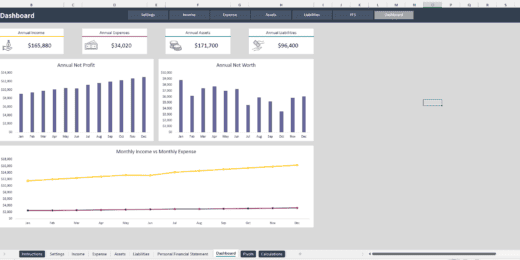
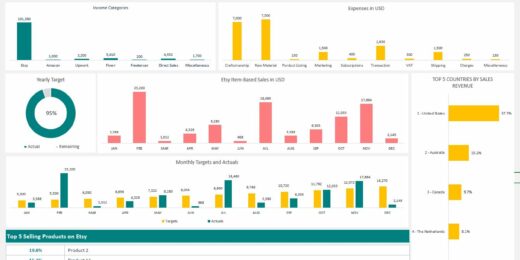
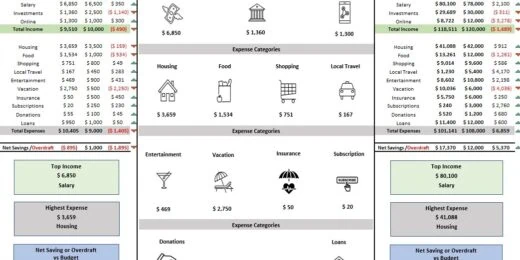
See the examples personal financial plan templates which can be helpful to find personal financial freedom.





You might also like:
- 10-Step Financial Planning Checklist for Smart Executives
- Financial Planning for Small Business Owners – Taking an SBA Loan
- 8 Tips to Develop Financial Models for Business Growth
- Budgeting
- 10 Ideas to Increase Average Revenue Per User
- Mastering the Art of IRR Calculation: A Comprehensive Guide for Investors
- 10 Main Elements of a Business Plan
- Understanding What is Yield to Maturity and Why It Matters
- Financial Ratios Analysis and Its Importance
- Financial Model Templates Easy to Use
- 5 Steps to Create a Drop Down List Using Data Validation in Excel
- Developing a 5 Year Financial Projection Template
- Finding Fair Market Value: A Quick Guide to Real Estate Valuation
- Real Estate Valuation
- Financial Statements – Definition, Uses, Contents and Templates
- Creating a Budget Plan – Using the Best Excel Budget Template
- Cash Flow Analysis in Excel
- Understanding Debt Sizing & Project Finance Ratios
- Key Financial Ratios
- Financial Planning Retirement Tips


