
0 ITEMS

Telecom & Mobile Sites
Companies that plan to build or start a telecom and mobile site infrastructure require a financial plan since it is a high-risk venture. Therefore, we listed here financial model templates designed for Telecom and Mobile Site Infrastructure projects. Financial model templates may include revenues from the construction contract but also revenues from site maintenance and services.


AI Data Center Power Procurement & Behind-the-Meter Generation Model ⚡…


Download our fully automated 2026 Semiconductor fab Excel model. Includes…
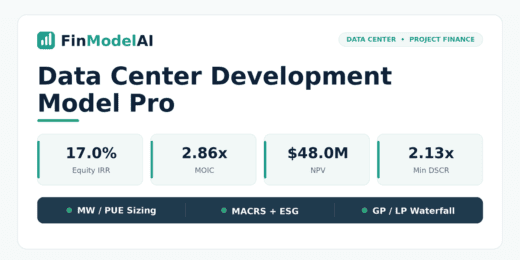

FinModelAI Data Center Development Model Pro is an institutional-grade Excel…


A dynamic, ready-to-use Excel template designed for AI, GenAI, and…


Comprehensive 8 year telecoms financial model forecasting income, cash flow…

Unlock the full potential of any data center acquisition with…
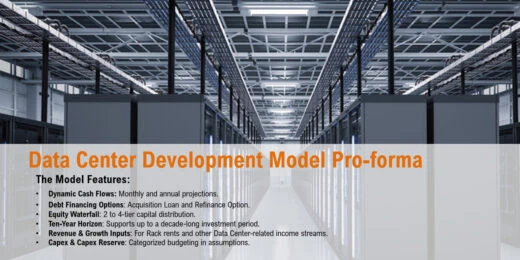

This detailed and user-friendly Excel spreadsheet template provides a comprehensive…
A comprehensive editable, MS Excel spreadsheet for tracking Data Center…


The template creates a financial model for your individual project…

Comprehensive editable, Excel spreadsheet for tracking Network Upgrade financials in…

Complete Buy-Side Telecom Tower Portfolio LBO Model. This model allows…


Financial Model for a Public-Private Partnership (PPP) project outlining the…

Financial Model presenting a business scenario of a Telecom Company…
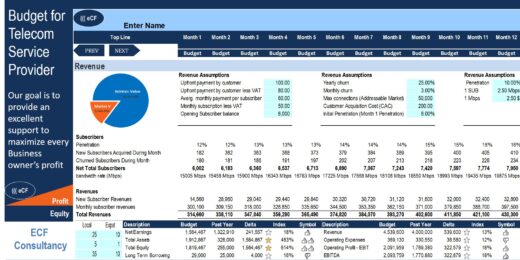

The template is a statement of estimated income and expenses…


Detailed Financial model for DCF valuation on Telecom Company



This is a financial model for an innovative infrastructure solutions…
Investing in Future Connectivity: Financial Planning for Telecom & Mobile Sites

The telecommunications industry stands as a cornerstone of the modern digital world, a dynamic field characterized by continuous technological advancements and an ever-evolving regulatory landscape. As we march toward a future increasingly defined by connectivity, investing in telecom and mobile infrastructure has become crucial. Financial planning for telecom investments plays a vital role in ensuring these investments are not only feasible but also profitable. In this article, we will delve into the complexities of the telecom landscape, examine key performance indicators for investment, explore the components of a solid financial model, and highlight the importance of using Excel templates for effective financial planning in this sector.
Understanding the Telecom Landscape
The telecommunications industry has undergone significant transformation since its inception. Originally centered around wired communication, the industry has evolved to encompass wireless technologies, redefining the way people connect. Central to this transformation is the rise of mobile telecommunications, which has become a primary driver of connectivity in today's digital world. The importance of telecommunications cannot be overstated—as industries, governments, and society depend on robust and reliable communication networks for seamless operation. One of the defining trends shaping the current telecommunications landscape is the rise of 5G technology. Promising faster speeds and greater connectivity, 5G is set to revolutionize mobile services, increasing the demand for new mobile sites. This demand is further driven by the burgeoning Internet of Things (IoT), which leverages extensive connectivity to drive smart devices and integrated solutions. The IoT's role in transforming mobile services underscores the need for telecom companies to stay at the forefront of innovation to remain competitive. Navigating the telecommunications industry entails understanding the regulatory and competitive environment. Various regulations, such as spectrum allocation and network security mandates, significantly impact operational decisions and market strategies. Furthermore, the competitive landscape is characterized by rapid shifts and intense market dynamics. Telecom companies must strategically manage their financial resources to navigate these complexities effectively.Key Performance Indicators (KPIs) for Telecom Investments
For investors and stakeholders, understanding key performance indicators is crucial for evaluating telecom investments. One of the primary KPIs is the subscriber growth rate. Monitoring user acquisition trends provides insight into market penetration and customer base expansion. These metrics help gauge how well telecom companies attract and retain subscribers, which in turn drives revenue growth. Another critical KPI is the Average Revenue Per User (ARPU), which provides insights into pricing strategies and profitability. Understanding the factors that influence ARPU fluctuations is essential for accurate forecasting and strategic pricing decisions. An increase in ARPU suggests that the company effectively monetizes its user base, while a decrease may indicate a need to recalibrate offerings to meet market demands. Additionally, network expansion costs offer a lens into the financial implications of building new mobile site infrastructure. As telecom companies expand their networks to support 5G and IoT advancements, understanding these costs is vital for efficient budget allocation. Churn rate management is another essential component of financial planning. Retaining users and minimizing churn is fundamental to maintaining a steady revenue stream. Strategies to enhance customer loyalty and reduce churn involve investing in customer service, network quality, and compelling product offerings.Components of a Robust Financial Model for Telecom & Mobile Sites
Building a comprehensive financial model involves several key components crucial for accurate forecasting and resource allocation. Capital Expenditure (CapEx) planning is one such component, focusing on the initial investments required for mobile site deployment. A detailed breakdown of CapEx helps identify potential funding sources and financing strategies, ensuring that projects are adequately funded. Operational Expenditure (OpEx) control is equally important, as managing ongoing operational costs is vital for sustained profitability. Effective budgeting for maintenance and upgrades ensures that telecom infrastructure remains competitive and reliable. Revenue forecasting techniques based on historical data and market trends allow telecom companies to project future earnings accurately. Utilizing scenario analysis enables telecom firms to account for various market conditions, providing a robust framework for strategic planning. Identifying potential risks is an integral part of investment planning. A comprehensive risk assessment and mitigation strategy protect investments from unforeseen challenges, ensuring that financial risks within the telecom sector are minimized to safeguard both profitability and growth.Why MS Excel Templates are Essential for Financial Planning
MS Excel templates are invaluable tools in financial planning, offering several benefits that enhance decision-making processes. The flexibility and customization capabilities of Excel make it an ideal platform for tailoring models to specific needs within the telecom industry. Users can easily adjust parameters and assumptions, allowing for a precise reflection of current market conditions. Visualizing complex data is another strength of Excel templates, as they provide tools for data visualization that simplify interpretation. Visual representation is crucial for stakeholders to understand insights, facilitating informed decision-making. Excel's ability to conduct scenario analysis and stress testing with ease is invaluable in uncertain markets, allowing telecom companies to prepare proactively and ensure resilience amid fluctuations. Moreover, Excel templates enhance error reduction and efficiency by streamlining calculations and minimizing the likelihood of errors. Utilizing pre-built templates designed for industry specifics guarantees accuracy, saving time and resources in the financial planning process.Conclusion: Empower Your Telecom Financial Planning
In summary, financial planning for telecom and mobile sites demands a nuanced understanding of industry dynamics and performance indicators. Tailored financial modeling is essential for navigating the unique challenges of this sector, driven by a KPI-focused approach. By leveraging industry-specific Excel templates, telecom companies can enhance their financial planning processes, making informed decisions that drive growth and profitability. If you're ready to elevate your financial planning capabilities, explore eFinancialModels' industry-specific Excel templates. These tools offer a comprehensive solution to streamline your financial analysis and empower your decision-making life cycle in the ever-evolving telecom landscape.Frequently Asked Questions
- Why is financial planning important for telecom investments? Financial planning is crucial to ensure that telecom investments are feasible and profitable, considering the dynamic nature of the industry.
- What are the key performance indicators for evaluating telecom investments? Key performance indicators include subscriber growth rate, Average Revenue Per User (ARPU), network expansion costs, and churn rate management.
- How do Excel templates benefit financial planning in the telecom sector? Excel templates offer flexibility, ease of data visualization, scenario analysis, and error reduction, making them essential tools for financial modeling and planning.
- What are the components of a robust financial model for the telecom industry? A robust financial model includes CapEx planning, OpEx control, revenue forecasting, risk assessment, and strategic funding allocation.
- How does 5G technology impact the telecom landscape? The advent of 5G technology increases demand for new mobile sites and enhances connectivity, driving investment in telecom infrastructure.
You might also like: