
0 ITEMS

Joint Venture
A Joint Venture is a business arrangement where two or more parties agree to pool resources for a specific task or project. Our financial model templates for joint ventures help you plan, analyze, and manage joint venture operations, ensuring alignment with all parties involved.


Underwrite a mobile home park deal in minutes: a model…


A professional Excel financial model for residential building development projects…

The Waterfall Profit Distribution Model – Up to 4 Tiers…


A complete and professional financial model of a dry-cleaning business…



A bottom‑up, operator-focused projection model that turns warehouse sizing +…

A tool designed specifically for modeling turnaround projects and then…

One of the most straightforward ways to struggle a preferred…

A 10‑year, investor‑grade model for a battery recycling plant at…

Model up to 10 years of ramping and stabilized operation.…

This financial model forecasts the performance of a subscription-based coworking…

This model is built to handle acquisitions or new develops…

An effective cash flow and financial planning tool for multiple…


Unlock funding success with this dynamic Biogas Financial Model Excel…



Includes forward assumptions for LTL, economic vacancy, credit loss /…

A complete financial model, including income statement, balance sheet, and…
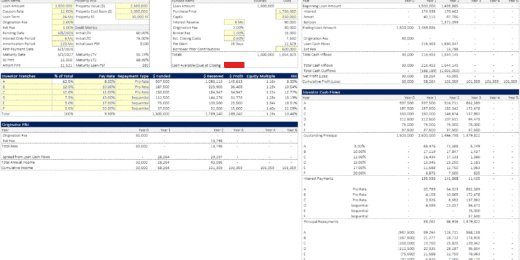

Professional Syndicated Note Template Excel Model. Transform your real estate…
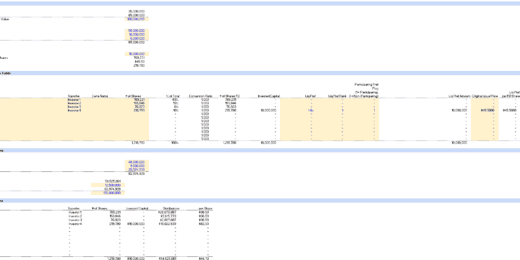
Introducing the **New Equity Raise Template (Debt-to-Equity Rollover Included)**—an essential…

A powerful underwriting tool designed for leveraged joint venture purchases…


This model offers a DCF Analysis and connected 3-statement model…

This model is a great tool to plan various joint…

One of the most advanced joint venture fund models. Plug…

A 10-year financial model to account for the startup costs…

This model is for the construction of a retail building,…

This real estate development model is designed for small or…

A financial model framework designed for an AI platform that…



Conduct a comprehensive financial analysis of a dam project, incorporating…

Analyze various strip mall acquisition deals with this model. Includes…

Plan out the financial requirements and potential returns of deploying…

A template setup specifically for single tenant industrial real estate.…

Plan out the feasibility of acquiring a company based on…

Create a detailed pro forma with this biogas financial model.…



Dynamic assumptions to create pro forma financial statements for a…

A pro forma template for any home service or general…

Create financial projections for a FaaS cloud computing services business.…


An integrated and comprehensive Blue Ammonia Production Plant Model that…

An integrated and comprehensive Blue Hydrogen Production Plant Model that…

Configure up to 100 rental property acquisitions and view the…

A financial forecasting model specifically designed for the economics of…


The EPC Financial Model Template for Builders and JV Partners…

Financial Planning Insights for Successful Joint Ventures

Understanding Joint Ventures: Key Attributes and Dynamics
Joint ventures refer to business agreements where two or more parties agree to pool their resources for the purpose of accomplishing a specific project or business activity. Unlike mergers, where companies combine into a single entity, joint ventures allow participating entities to remain independent while pursuing a shared venture. This structure is prevalent in industries such as technology, pharmaceuticals, and energy, where collaborative innovation and resource sharing are crucial for staying competitive. Collaboration in financial planning is of paramount importance in joint ventures, as each partner brings unique assets and liabilities. This requires a well-structured financial model tailored to the joint venture's specific characteristics. Such models should address the disparity in resources and financial expectations, facilitating transparency and effective risk management. Furthermore, these collaborative efforts drive the need for strategic alignment, ensuring that all parties work towards common objectives such as market penetration, product development, or geographical expansion. Key considerations for successful joint ventures include risk sharing, capital requirements, and strategic alignment. Risk is inherently present in any business endeavor, but joint ventures allow partners to distribute potential risks, making them more manageable. Financial planning must consider the allocation of resources and the extent of each partner's exposure to financial liabilities. Capital requirements also necessitate detailed scrutiny, as each partner must agree on how to fund the venture and sustain its operations. Lastly, strategic alignment ensures that all parties are pursuing the same goals, with a clear understanding of their roles and responsibilities within the partnership.Critical Performance Indicators for Financial Success in Joint Ventures
To ensure financial success in joint ventures, businesses must identify and monitor specific KPIs that drive effective financial planning. These metrics vary across industries, but several key indicators apply broadly. Profitability Ratios Profitability ratios such as Return on Investment (ROI), Operating Margin, and Economic Value Added (EVA) are especially pertinent for joint ventures. ROI measures the efficiency of the investment relative to its cost, providing insights into the overall worth of the partnership. Operating Margin, on the other hand, indicates how effectively the joint venture is converting revenue into profit, reflecting operational efficiency. EVA quantifies the economic profit generated by the joint venture, taking into account the cost of capital, and emphasizing the value created beyond mere accounting profits. Market Penetration Metrics Market penetration metrics are crucial for assessing a joint venture’s success in expanding its market share and attracting new customers. Metrics such as the growth in market share and customer acquisition cost are vital, providing insights into the joint venture's ability to capture new markets or strengthen its position within existing ones. Understanding these dynamics allows partners to allocate resources more effectively and optimize marketing strategies. Cash Flow Metrics Cash flow returns and operational liquidity are fundamental metrics for joint ventures. Positive cash flow ensures that the partnership can meet its operational obligations and continue its growth trajectory. Efficient cash flow management reflects the health of the joint venture, ensuring that resources are allocated optimally and operational needs are met without unnecessary borrowing or financial strain. Leverage Ratios Leverage ratios, such as the debt-to-equity ratio, are instrumental in shaping financing strategies and assessing risk. They provide insights into how a joint venture is financed through debt versus equity, influencing decisions regarding future borrowing and investment. In joint ventures, these ratios can reveal the level of financial flexibility and inform discussions on capital structure between partners, ensuring a balanced approach to funding.Strategic Financial Planning Components for Joint Ventures
Developing a robust financial plan for joint ventures involves several strategic components that ensure longevity and profitability. Scenario Analysis Scenario analysis is essential for anticipating potential challenges and opportunities a joint venture may face. By forecasting different scenarios, partners can prepare for varying market conditions, competitive pressures, and technological advancements. This proactive approach enables joint ventures to remain resilient and adaptable, optimizing decisions in accordance with changing external factors. Budget Allocation Effective budget allocation is critical in joint ventures as it dictates how financial resources are distributed among partners and various project facets. Clear agreements on financial contributions, shared costs, and revenue distribution must be established to avoid conflicts and ensure that all partners are adequately compensated for their inputs. A well-structured budget ensures that resources are allocated efficiently, supporting the joint venture's strategic objectives. Exit Strategy Considerations A comprehensive financial plan for joint ventures should also include exit strategy considerations. These strategies outline how partners can conclude the joint venture successfully, whether through buyouts, dissolutions, or other arrangements. Financial planning in this context addresses the valuation of assets, settlement of obligations, and fair compensation for contributions made by each partner. Clear exit strategies safeguard the interests of all stakeholders and provide clarity on the partnership's potential endgame. Leveraging MS Excel Spreadsheet Templates for Financial Planning MS Excel is a powerful tool for joint venture financial planning due to its flexibility, customization, and user-friendly interface. Excel templates can be tailored to accommodate the specific needs of joint ventures, allowing partners to incorporate unique variables and metrics relevant to their projects. Flexibility and Customization Excel offers unparalleled flexibility, enabling the creation of tailored templates that cater to precise project requirements. Whether it's a sophisticated financial model or a simple cash flow analysis, Excel allows users to adapt templates to suit their needs, providing a comprehensive platform for financial planning. User-Friendly Interface Excel is accessible to users of varying skill levels, making it an ideal tool for financial planning in joint ventures. Its intuitive interface allows partners to collaborate on financial models without extensive training, ensuring that all stakeholders can contribute to the planning process effectively. Data Analysis and Visualization Tools Excel's data analysis and visualization capabilities are crucial for informed decision-making. Features such as charts, graphs, and pivot tables provide a visual representation of financial data, allowing partners to track performance, identify trends, and make data-driven decisions that enhance the joint venture's success. Integrated Formulas and Automation Integrated formulas and automation streamline calculations and enhance accuracy in financial projections. Excel's robust functions allow for complex computations, ensuring that financial models are precise and reliable. Automation capabilities reduce manual errors, saving time and resources in the financial planning process.Conclusion and Call to Action
In conclusion, tailored financial planning and the identification of key performance indicators are crucial components for the success of joint ventures. By understanding the unique dynamics of these partnerships, businesses can develop strategic financial plans that align with their objectives and manage risks effectively. Leveraging robust MS Excel spreadsheet templates from platforms like eFinancialModels provides significant advantages, enabling partners to create detailed financial models that drive better decision-making. To achieve the full potential of your joint venture, explore the diverse range of Excel templates and financial modeling services available at eFinancialModels.com. With these resources, you can enhance your financial planning efforts, ultimately fostering successful and prosperous partnerships in your industry.FAQs on Joint Venture Financial Planning and Excel Templates
- What is the primary benefit of joint ventures in industries like technology and pharmaceuticals? Joint ventures allow companies to remain independent while pooling their resources and expertise to achieve shared business objectives. This structure is crucial for sectors where collaborative innovation is necessary.
- How important is financial planning in a joint venture? Financial planning is critical as it deals with aligning strategic objectives, managing capital requirements, and sharing risks, which are essential for the partnership's success.
- Why are profitability ratios important in joint ventures? Profitability ratios, like ROI and Operating Margin, help assess the investment's efficiency and the venture's operational efficiency, influencing decision-making and strategy formulation.
- What should a joint venture include in its exit strategy? An exit strategy should outline asset valuation, obligation settlement, and compensation for partner contributions, ensuring a planned and fair conclusion to the joint venture.
- How can MS Excel templates benefit joint venture financial planning? MS Excel templates offer flexibility, customization, and user-friendly features, allowing partners to create precise, tailored financial models that enhance planning accuracy and decision-making.
You might also like: