
0 ITEMS

VC Valuation
The venture capital (VC) Valuation Method offers an alternative valuation method to value early-stage businesses or startups from an investor's point of view.
This valuation method looks at the equity value of a Startup from an investor's point of view who would like to exit his investment in a couple of years. The business value is determined by estimating a reasonable future business valuation at the time of exit by, e.g., using an appropriate valuation multiple. Once the future business and equity value estimate is derived, the VC investor discounts the future equity value to its present value as of today by using his required rate of return (e.g., 30%) as the discount rate and the time needed until exit (e.g., 5-7) years.
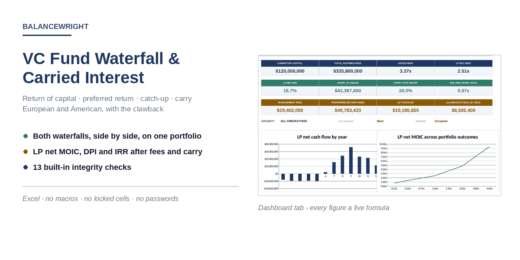

An Excel model of a venture or private equity fund's…


FinModelAI Biotech rNPV Valuation Model Pro is a purpose-built Excel…


Build a tailored financial model and estimate your company value.


Professional Clinic / Healthcare Business Financial Model Template in Excel…


A bottom‑up, operator-focused projection model that turns warehouse sizing +…


Provides a comprehensive framework for calculating the intrinsic value of…

Provides a comprehensive framework for valuing a SaaS business based…


The Veterinary Clinic Financial Model Template is a comprehensive Excel…

A complete financial model, including income statement, balance sheet, and…
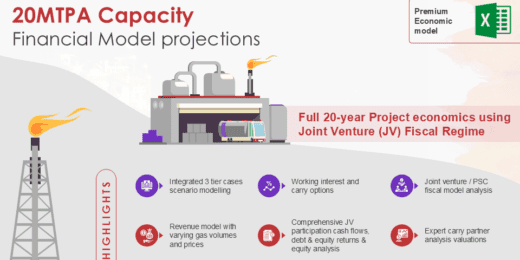

Here is a comprehensive model for evaluating project viability for…


A comprehensive editable, 5 Year 3 statement MS Excel spreadsheet…


This Digital Marketing Agency Financial Model Template has been built…

This Accounting Firm Financial Model Template has been built for…

This Automotive Manufacturing Company Financial Model Template has been built…



A comprehensive editable, MS Excel spreadsheet for tracking Solar Panel…


This Pharma and Biotech Valuation and Financial Model Template has…
This Manufacturing Company Financial Model Template has been built for…


The Mobile App Financial Model Template is a comprehensive tool…


This Student Bundle includes financial model templates from various industries…

A financial model framework designed for an AI platform that…

This model is used to provide a robust economic analysis…
This Venture Capital Fund Cashflows Model has been built for…


Discounted Cash Flow (DCF) Valuation is a fundamental financial model…

This Startup Company Financial Model Template has been built for…




This Solar Energy Financial Model Template (10 Year Financial Forecast,…

This Advanced Financial Financial Model Template has been built for…

This Cardiology Clinic Financial Model Template has been built for…

This Broiler Poultry Farm Financial Model Template has been built…


This Outpatient Clinic Financial Model Template has been built for…



This Industrial Real Estate Financial Model Template has been built…

This Commercial Real Estate Financial Model Template has been built…

This Fast Food Restaurant Financial Model Template has been built…

This Fine Dining Restaurant Financial Model Template has been built…

This Franchise Restaurant Financial Model Template has been built for…

This Indian Restaurant Financial Model Template has been built for…

This Chinese Restaurant Financial Model Template has been built for…

This Casual Dining Restaurant Financial Model Template has been built…


This Buffet Restaurant Financial Model Template has been built for…

This Breakfast Restaurant Financial Model Template has been built for…

This Bistro Restaurant Financial Model Template has been built for…

This Pizzeria Restaurant Financial Model Template has been built for…


Advanced, Dynamic and Easy-to-Use Excel Financial Projections Model that allows…


Highly versatile venture capital fund financial projection model with equity,…



Unleash the power of precise, customizable forecasting with Pro Financial…

A pro forma template for any home service or general…


Discover the key to financial success in your webinar ventures…
How Venture Capitalists Value Startup Companies
 Are you an entrepreneur seeking to understand the venture capital (VC) model for valuing early-stage companies? If you want to gain exposure to this process, you've come to the right place. Understanding the VC valuation method during fundraising exercises can offer valuable insights to entrepreneurs who need to better prepare for negotiations with Venture Capital investors.
What is the VC Valuation Method?
The Venture Capital (VC) Valuation Method can be an alternative for early-stage companies like Startups. The business and equity value of a Startup is derived by looking at the business's situation from the point of view of a Venture Capital investor whose motive to invest is to generate a specified return (e.g., 25% p.a.) during his holding period. Venture Capital investors typically invest in high-risk early-stage companies and need to exit their investment within 5-10 years and realize profits to return the funds to their co-investors, typically in the form of limited partners. The VC Valuation method derives today's business value by working backward from the time of exit. The business and equity value are first derived at investor exit, typically 5-10 years into the future. Then the VC discounts the future equity value at the rate of his required return (e.g., 25% - 30% p.a.) for the expected investment period and by also taking into account the effects of potential dilution in case additional fundraisings from investors are to be expected.The VC Valuation Method for Valuing Early-Stage Businesses – Step by Step
The following steps can be followed to perform a VC Valuation method: Step 1: Determine a Suitable Valuation Multiple. Depending on a company's stage and industry, an appropriate valuation multiple that can be used to value the business in the future must be identified. For companies that are expected to become profitable, an EV/EBITDA multiple might be suitable. In contrast, other valuation multiples such as EV/Revenues or a Multiple per User or Subscriber might be better for companies investing a lot of profits in growth. The best approach here is to look at comparable companies within the same industry and see which valuation multiples might have the best explanatory power. More research will be needed to define a suitable range in which such valuation multiple should lie (e.g., 1.0x – 5.0x revenues or higher). Step 2: Develop Financial Projections. Once a reasonable valuation multiple has been defined on which the business can be valued, we need to develop financial projections for the target company we like to value. It requires some financial modeling work for which you can use one of the financial model templates listed here. We must forecast key financials such as revenues, EBITDA, or metrics such as Users or Subscribers for the next 5 to 10 years. Step 3: Determine the Future Equity Value at the Expected Exit Time. Let's say that a reasonable valuation multiple is 10.0x Revenues based on the analysis of the valuation of similar companies, and we expect revenues to be USD 5 Million in Year 7, likely the exit year. It will lead to a business valuation of USD 50 Million by Year 7. Now, we need to also correct for the expected financial debt and cash position by Year 7 (combined net debt). We assume the net debt equals zero to keep things simple, or we use a more advanced financial model to correct the expected difference between business and equity value. We keep things simple and expect an equity value of USD 50 Million by Year 7. Step 4: Discounting the Future Equity Value to Today's Value. Given our valuation refers to 7 years in the future, we now need to calculate the corresponding valuation as of today. We can do this by applying the required rate of return from the point of view of a Venture Capital investor. It means we need to determine what rate of return a professional Venture Capital investor would require to compensate for assuming the investment risk necessary. VC investors typically require a return of 25% - 35% per year, slightly higher than Private Equity investors as the risk is higher. Let's say we require a return of 30% per year during the entire holding period of 7 years. It means we need to discount our USD 50 Million for 7 years at a 30% discount rate, leading to a present value factor of 0.16. So, today's resulting (rounded) equity value amounts to USD 8 Million. Step 5: Correcting for Potential Dilution of Our Equity Stake. One effect we have to consider is that the company might require additional capital during our holding period and might look to raise additional equity from new or existing investors. By issuing more shares, our equity stake in the company becomes smaller, and we face the effect of dilution. We also need to consider whether our equity stake will change during the holding period and might result in a smaller equity stake at the time of exit or case we are required to inject additional capital to avoid dilution. The following excerpt shows a calculation example of the VC Valuation method. The section is derived from a Simple VC Valuation Template.

Why Do You Need the VC Valuation Method?
Venture capitalists (VCs) use the VC valuation method to determine the value of a startup or early-stage company in which they are considering investing. It is one of the few available valuation methods since standard valuation methods are more difficult to apply because a Startup has limited financial history, and many KPIs still need to be proven due to uncertain prospects. Here are some good reasons why you might want to consider using the VC Valuation method:- Startup-Specific Point of View: Startups differ significantly from mature companies regarding their growth, profitability, and historical track record. The VC valuation method offers an elegant solution to these problems by first looking at the expected valuation in the future, which can better reflect the potential of a Startup's business idea than traditional methods.
- Negotiating Fundraisings from Investors: Entrepreneurs are well advised to think through the potential valuation implications of their business plan from an investor point of view when preparing to raise funding from such investors. The VC Valuation method offers a valuable tool to understand how an investor might view the possible valuation ranges today when applying the VC Valuation method. Knowing this allows us to better prepare for fundraising discussions.
- Evaluate Different Scenarios: The VC Valuation method is a forward-looking valuation approach based on subjective estimations of a company's future. The VC Valuation method requires a business scenario to come up with a valuation. When studying different strategies for a company's financial future, the VC Valuation method can quantify what the implications likely are going to be from an investor's point of view. E.g., preparing a business plan simply per the base case, worst case, and best case scenarios offers to determine a valuation range where a reasonable valuation of a business should be.
 It is important to note that the VC valuation method is just one approach among other valuation methods, and its relevance varies on a case-by-case basis. Investors might still look at the business value differently or prefer using different valuation methods for their decision-making. Also, remember that the valuation of early-stage companies heavily depends on the negotiations between entrepreneurs and investors. However, these negotiations are more likely to be positively impacted the better the preparation is.
Download One of Our VC Valuation Financial Model Templates
The VC Valuation method is a practical, forward-looking company valuation technique specifically designed to value Startups from an investor's point of view. If you want a practical and straightforward way to value your early-stage company, consider downloading one of our VC Valuation Templates included in our selection of spreadsheet templates above. With the right template in hand, you will be able to assess new investment opportunities better or re-evaluate existing ones to maximize the value of your business.You might also like: