
0 ITEMS

General Ledger
The general ledger is the primary accounting record used to track all financial transactions of a business. It's essential for preparing financial statements and ensuring accuracy in financial reporting. Our financial model templates include general ledger functionalities, simplifying the accounting process and ensuring compliance with accounting standards.
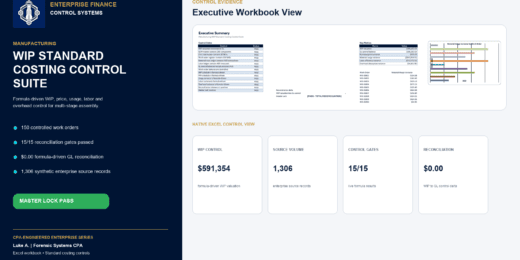

Enterprise Excel controls for WIP roll-forward, cost variances, overhead, and…
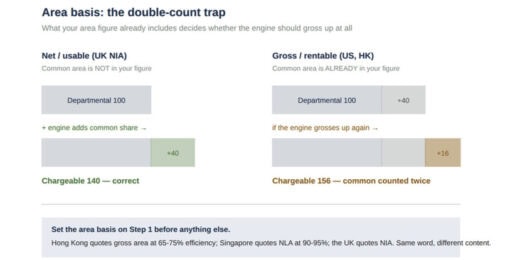

An occupier takes three floors. Rent, business rates, service charge,…
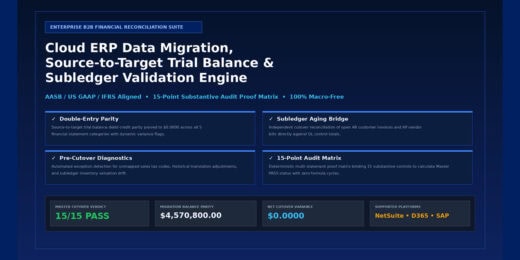
Institutional-grade Excel control engine for reconciling source-to-target trial balances, subledgers,…
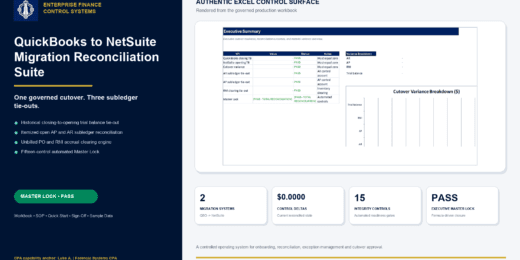
An Excel-based migration control suite for reconciling the QuickBooks closing…
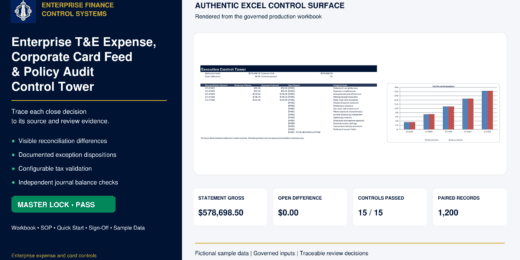
Enterprise Excel controls for corporate card matching, policy exceptions, tax…

The 3-statements financial model (integrating Income Statement, Balance Sheet, and…

For companies preparing to go public, this model shines in…
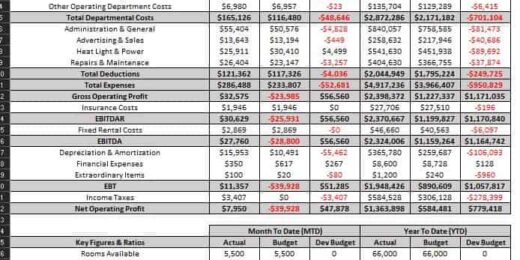
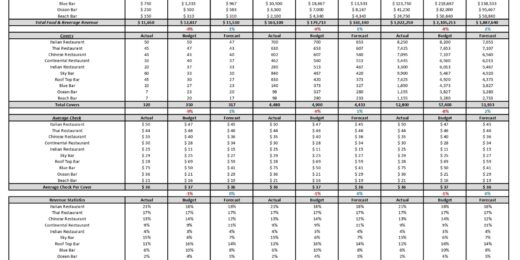

Restaurant & Bar Daily Revenue & Covers Report: Track your…
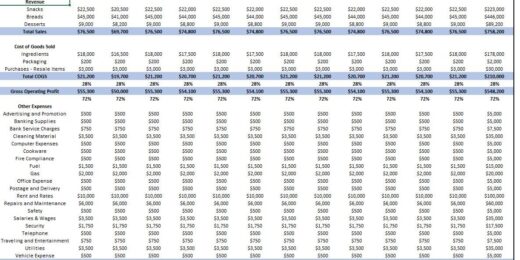
Bakery Accounting Template With Profit & Loss Accounts: Welcome to…

Financial Model of Amazon (Ticker: AMZN) with forecasting and valuations.…


This Excel model is an advanced, user-friendly financial planning tool…

This Excel model is a highly adaptable and user-friendly tool…

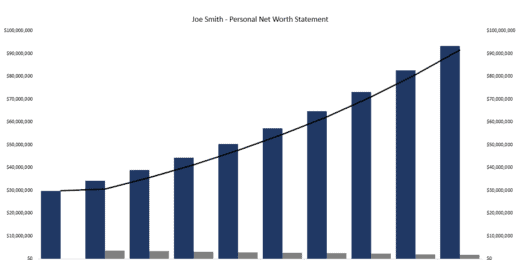

This model can be used to prepare, forecast, and analyze…


A simple tool that helps anyone doing three statement modeling…


Management Accounts Template, providing full reporting cycle and mapping between…
Streamline Your General Ledger for Effective Financial Planning

In the intricate world of financial management, the General Ledger (GL) stands as the backbone of an organization's financial system. It’s where all financial transactions culminate, forming a comprehensive record that drives financial planning and decision-making. The importance of an accurate and efficiently managed General Ledger cannot be overstated, as it plays a pivotal role in ensuring organizational financial health. A well-maintained GL not only enhances decision-making capabilities but also empowers businesses to strategize effectively, ensuring their financial decisions are sound and rooted in fact. As such, the pursuit of precision and efficiency in GL management is integral for any organization aiming to maximize its financial planning prowess.
In this article, we delve into the dynamics of the General Ledger and its critical role in financial planning. By understanding key performance indicators (KPIs) specific to GL management and implementing best practices, organizations can optimize their financial planning processes. Additionally, the utilization of Excel spreadsheet templates through platforms like eFinancialModels can transform GL management into a streamlined, efficient operation. Join us as we explore how a cohesive approach to managing your General Ledger can revolutionize your financial planning efforts and set your organization on a path to financial success.
Understanding Key Performance Indicators (KPIs) in General Ledger Management
In the realm of General Ledger management, understanding and tracking KPIs is paramount for assessing financial health and guiding strategic decisions. KPIs are quantifiable measures that help businesses evaluate their progress towards financial goals. Specifically, in the context of the General Ledger, KPIs are vital tools that highlight the efficiency, accuracy, and overall condition of financial systems. Monitoring these indicators allows businesses to identify areas needing improvement and adjust strategies proactively to enhance their financial planning efforts.
Several KPIs are particularly crucial in GL management, including:
- Transaction Volume: This refers to the number and value of transactions processed. A high transaction volume might necessitate robust GL systems to handle data efficiently.
- Reconciliation Timeliness: This tracks the time taken to reconcile accounts. Speed and accuracy here prevent financial discrepancies, enhancing overall financial reliability.
- Aging Receivables: This KPI focuses on the age of outstanding customer invoices and efficiently managing this can significantly impact cash flow and liquidity planning.
- Error Rate: This measures the frequency of discrepancies in entries, directly affecting the accuracy of financial reports. By continually monitoring these KPIs, businesses can adjust their financial strategies and planning to ensure alignment with their financial goals.
Implementing Best Practices for Financial Planning Through the General Ledger
The General Ledger is an essential tool for financial planning, but its effectiveness depends on the practices employed in its management. Optimizing GL processes requires the adoption of best practices geared toward accuracy, efficiency, and reliability. One fundamental practice is the Standardization of Processes. This involves creating consistent procedures for data entry and reporting, minimizing errors and improving the reliability of financial data. Standardized processes make it easier to train staff and ensure consistency across financial operations, which is particularly beneficial for larger organizations.
Regular Reconciliations are another cornerstone of effective GL management. Scheduled reconciliations ensure that all transactions are accurate and accounted for, helping to avoid financial discrepancies that can lead to significant problems down the line. Furthermore, maintaining Audit Trails and Controls is crucial. By implementing checks and controls, organizations can maintain data integrity and prevent unauthorized access or fraudulent entries. For best practices on auditing, explore our audit templates.
The role of technology in improving GL management cannot be overlooked. Cloud solutions, for example, provide flexibility, scalability, and access to the latest technological advancements, while on-premise solutions offer greater control over data security. The key is to thoroughly research and compare these solutions to discern which best fits an organization's specific needs, ensuring the selected tool enhances rather than complicates GL management.
Why Excel Spreadsheet Templates Are an Effective Solution
In the journey to streamline General Ledger management, Excel spreadsheet templates emerge as a highly effective solution. These templates offer several advantages that can significantly enhance financial modeling and planning. One of the most compelling benefits is their Customization Flexibility. Excel allows users to tailor templates to fit their specific GL needs, accommodating unique aspects of their financial strategy and organizational structure. This customization ensures that the financial models used are not only relevant but also highly applicable to real-world scenarios empowered by eFinancialModels’ templates.
Moreover, Excel's Intuitive Interface makes it a favored tool among financial professionals. Many users are already familiar with Excel, which reduces the learning curve and facilitates easier adoption throughout an organization. This familiarity leads to increased efficiency in data manipulation and analysis. Additionally, Data Visualization capabilities in Excel are robust, enabling users to present GL data effectively through charts and graphs. Such visual representations make complex data more accessible and understandable, facilitating informed decision-making.
Real-life examples of savings in time and effort abound for businesses using Excel templates. For instance, the ability to automate repetitive tasks and consolidate multiple data sources into a single worksheet saves substantial time, allowing staff to focus on analysis rather than data entry. At eFinancialModels, we provide templates specifically designed for General Ledger planning, offering businesses the ability to streamline their processes and enhance their financial planning efforts effortlessly.
Conclusion: Take Control of Your General Ledger for Better Financial Planning
The importance of an optimized General Ledger in financial planning cannot be overstressed. By maintaining a well-managed GL, organizations ensure their financial decisions are based on accurate, reliable data, bolstering their strategic planning and decision-making capabilities. Monitoring KPIs pertinent to GL management is instrumental in maintaining financial health, allowing businesses to proactively adjust strategies to meet their objectives.
Implementing best practices, such as standardizing processes, performing regular reconciliations, and leveraging audit trails, further enhances the efficacy of General Ledger management. Meanwhile, technological advancements, particularly Excel spreadsheet templates, play a crucial role in simplifying and improving financial planning operations.
In essence, taking control of your General Ledger is a pivotal step towards effective financial planning. To facilitate this, we invite you to explore the financial model spreadsheet templates available at eFinancialModels. By leveraging these expertly designed templates, you can streamline your GL processes and elevate your financial planning efforts to new heights. Embrace the power of an efficient General Ledger and unlock the full potential of your organization’s financial future.
You might also like: