
0 ITEMS

Airlines
Airline operators provide transport services regionally or worldwide. Connections follow either the Hub-Spoke concept or aim for the best direct flight connections depending on local market demands. Larger airlines will require an attractive network of flight connections to fill their planes with the desired occupancy rates. Listed here are financial model templates for existing and new Airline Industry and other related business sectors.


🚀 Premium eVTOL / Urban Air Mobility Financial Model A…

A professional Excel financial model for commercial airline planning, aircraft…


Offers a comprehensive framework for building accurate financial projections with…


A streamlined 5-year airline financial model using a RASK-based revenue…


10-year financial model for an Air Freight Company providing forecasts,…

An investor-ready 10-year financial model for a Helicopter Services Company…


A bundle containing 5 MS Excel Financial Models. From Cargo…

Financial Model providing a dynamic up to 10-year financial forecast…


The provided Excel template is a blueprint for starting a…

A streamlined 5-year financial model built for commercial airlines operating…

“An investor-ready private jet charter financial model featuring automated 3-statement…


Embark on a journey to financial mastery with our Private…

A comprehensive 5-year airline financial model designed for mixed leased…

Financial Model of an Airport development project forecasting construction costs,…

Financial model providing a dynamic 10-Year Financial Plan for an…


Air Taxi – Build and Operate Business Plan Model with…


Seaplanes Operator Financial Model consists of a financial model related…


The Freight Brokerage Financial Model Financial Model Template helps entrepreneurs,…
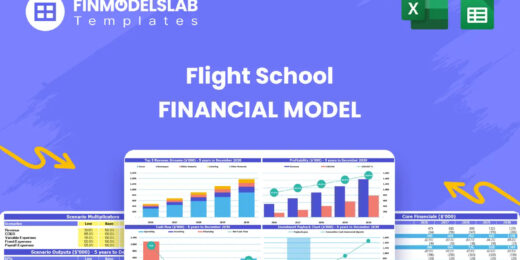
The Flight School Financial Model helps users turn an aviation…

Detailed Financial model template or DCF valuation model for Airlines…

Get both Airport | Airline financial model templates in a…


Navigating Cost Efficiency in Airlines Financial Planning

The airline industry is a complex and rapidly evolving sector, constantly maneuvering between operational demands and financial sustainability. Airlines face unique challenges, from volatile fuel prices to stringent regulatory requirements, which necessitate meticulous financial planning. Central to navigating these challenges are sophisticated financial models and analytical tools that enable airlines to forecast, plan, and adapt to diverse market conditions. This article delves into the intricacies of cost efficiency in the airline sector, highlighting the role of specific financial metrics and strategic planning in achieving operational excellence.
The concept of cost efficiency is critical in airline financial planning. Given the high-stakes nature of airline operations, where costs can fluctuate significantly, understanding and managing these expenses is vital. Through targeted strategies and robust financial modeling, airlines can optimize their resources, reduce waste, and enhance profitability—essentially transforming financial planning from a mere administrative task into a strategic advantage.
Understanding the Unique Financial Landscape of the Airline Industry
The airline industry's unique financial landscape is characterized by its intricate network of operational and economic interdependencies. It's crucial to have a firm grasp of the industry's complexity, as this sector involves coordination across a multitude of components, from aircraft leases and crew scheduling to passenger services and ground operations. A critical element of this landscape is understanding the specific financial metrics that drive airline operations and help navigate the myriad costs associated with running an airline.
These costs are driven primarily by four main factors: fuel prices, labor, airport fees, and maintenance. Fuel prices, which are highly volatile, represent one of the most significant expenses, often comprising a large portion of an airline's operating costs. Labor costs, including wages, benefits, and training, are another substantial factor, influenced by union agreements and industry standards. Additionally, airport fees and charges for landing rights, terminal leases, and security services significantly impact cost structures. Finally, maintenance costs involve regular inspections, repairs, and overhauls to ensure aircraft safety and regulatory compliance.
Regulatory frameworks and international coordination play a pivotal role in the financial planning of airlines. Airlines are subject to a complex array of regulations, requiring compliance with safety standards, environmental mandates, and air traffic control protocols. International coordination, particularly for airlines operating across multiple countries, further complicates the financial landscape, necessitating adept financial planning to navigate cross-border regulatory requirements and taxation rules.
Key Performance Indicators (KPIs) for Airlines Financial Planning
To navigate this intricate financial landscape effectively, airlines rely on a set of Key Performance Indicators (KPIs) to guide decision-making. These KPIs serve as critical benchmarks for performance assessment, helping airlines maximize cost efficiency.
- Cost per Available Seat Mile (CASM) is a fundamental measure of cost efficiency in airline operations. By dividing operating costs by the available seat miles (ASM), CASM provides insights into cost management and efficiency. It is an effective tool for benchmarking against competitors and identifying areas for cost reduction.
- Revenue Passenger Kilometers (RPK) is another vital KPI for capacity management. It measures the total revenue-generating passenger kilometers flown and helps airlines assess their market share and service demand. By analyzing RPK alongside capacity, airlines can optimize resource allocation and flight schedules.
- Break-even Load Factor is crucial for understanding profitability in diverse demand scenarios. This KPI indicates the minimum load factor an airline must achieve to cover its operating costs. By monitoring the break-even load factor, airlines can make informed decisions on pricing strategies and route management to enhance profitability.
- On-time Performance, often overlooked, significantly affects operational costs and customer satisfaction. Delays can lead to substantial costs related to airport charges, crew overtime, and passenger compensation. Hence, tracking and improving on-time performance can result in substantial cost savings and better customer retention.
These KPIs not only provide valuable insights into operational performance but also inform strategic planning and decision-making. By monitoring these indicators, airlines can adjust their operations, anticipate market changes, and strategize accordingly, ensuring they remain competitive and efficient.
Strategies for Enhancing Cost Efficiency in Financial Models
To enhance cost efficiency, airlines must adopt comprehensive strategies that address various expense areas. These strategies extend beyond basic cost-cutting, focusing on optimization and innovation.
Fleet optimization and scheduling efficiency are paramount considerations. Through detailed analysis and modeling, airlines can streamline their fleet management, ensuring they deploy the right aircraft for the right routes. Scheduling efficiency reduces unnecessary flight hours, leading to savings on fuel and maintenance.
Fuel hedging and exploring alternative fuel sources are critical strategies to manage the volatility of fuel prices. By locking in fuel prices through hedging techniques and investing in research for alternative fuels, airlines can stabilize their fuel expenses over time.
Staff productivity measures and labor cost management also significantly impact cost efficiency. Implementing productivity-enhancing technologies and training programs can reduce labor costs while maintaining service quality. Furthermore, renegotiating labor contracts and optimizing crew schedules can yield substantial savings.
Scenario modeling for risk management and cost forecasting is another essential tool. By developing forecasts under different market conditions and performing sensitivity analysis, airlines can assess their financial stability amidst fluctuations, enhancing their readiness for various economic scenarios.
The role of technology and data analytics in financial modeling cannot be overstated. By leveraging advanced analytics, airlines can better predict demand, optimize pricing strategies, and improve operational decision-making, ultimately fostering a more resilient financial model.
FAQ
- What is cost efficiency in the airline industry? Cost efficiency refers to the ability of airlines to manage and minimize their operational costs while maximizing their revenue potential.
- Why are KPIs important in airline financial planning? KPIs are essential as they provide measurable performance indicators that help airlines assess their financial health and operational efficiency.
- How can airlines enhance cost efficiency? Airlines can enhance cost efficiency through strategies such as fleet optimization, fuel hedging, staff productivity measures, and effective scenario modeling.
- What role does technology play in airline financial planning? Technology and data analytics play a crucial role by enabling better demand predictions, pricing strategies, and operational efficiencies, contributing to overall financial resilience.