
0 ITEMS

Retirement Planning
Retirement planning involves preparing for financial stability during retirement. Our financial model templates offer retirement planning tools, helping individuals forecast retirement income, expenses, and savings, ensuring a secure retirement.


En español - Project Plan: Simple and Advance Gantt Chart…




Excel model to calculate the expected value and return for…
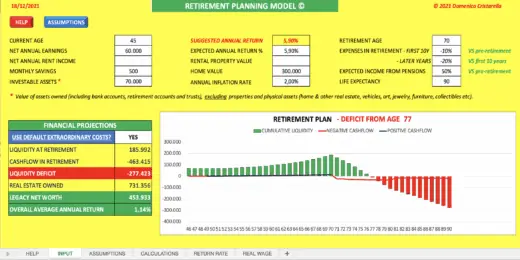

This Retirement Planning model estimates the evolution of your investable…
Crafting Your Future: Smart Financial Planning for Retirement Planning

In today’s world, retirement planning is more crucial than ever. With increasing life expectancies, fluctuating economies, and the unpredictable nature of financial markets, understanding how to effectively plan for retirement is paramount. This comprehensive article will delve into the essential aspects of retirement planning, shedding light on the steps and strategies necessary to secure a financially stable future. Whether you’re nearing retirement or just beginning your career, setting a robust retirement plan can make all the difference. Prioritizing smart financial planning now can lay a strong foundation for worry-free golden years.
Understanding Retirement Goals and Objectives
Setting clear and achievable retirement goals is the first step toward securing a comfortable post-retirement life. These goals act as a roadmap that guides financial decisions and investments towards a desired future. Many individuals overlook this crucial component, often leading to insufficient savings and unmet retirement expectations. By defining what you hope to achieve during retirement, you can tailor your financial strategies to meet those specific objectives.
Several factors influence these retirement goals. The timeline to retirement is a critical element. The number of years until you retire will determine the aggressive or conservative nature of your savings and investment strategies. Additionally, deciding on your desired lifestyle post-retirement is equally important. Whether you plan to travel extensively, engage in leisurely activities, or maintain a simple, budget-friendly lifestyle, these choices will vastly impact your financial requirements. Another key consideration is the anticipated expenses you might face during retirement. Healthcare, travel, and leisure are major cost areas that can significantly influence the amount of retirement savings needed. Lastly, your risk tolerance plays a vital role, as it determines your investment strategy—balancing higher-risk, high-return investments with stable, low-risk options to meet your retirement income needs. Understanding financial metrics can further assist you in effectively gauging your progress towards these goals.
Key Performance Indicators for Retirement Planning
Understanding key performance indicators (KPIs) is essential for evaluating the effectiveness of your retirement financial planning strategies. KPIs offer valuable insights into how well-prepared you are for your retirement journey.
One fundamental KPI is the Replacement Ratio, which measures the percentage of your pre-retirement income needed to maintain your standard of living during retirement. Typically, a replacement ratio of 70-80% is recommended. This figure helps determine how much income you need to continue your current lifestyle and guides your savings and investment decisions. Learn more about calculating your Replacement Ratio to understand its importance in your planning.
Another crucial metric is the Savings Rate, representing the percentage of your income dedicated to retirement savings. A higher savings rate during your working years can harness the power of compound interest, increasing the probability of achieving your retirement goals. Even small increases in your savings rate can result in substantial benefits over time.
Investment Allocation is also a vital consideration in retirement planning. This involves deciding how to spread your investments across different asset classes, such as stocks, bonds, and real estate, to balance growth and preservation. A well-diversified portfolio can mitigate risks and optimize returns, ensuring your retirement funds grow sufficiently over time. Our portfolio allocation templates can assist in crafting this balance.
Projected Longevity, or the estimated length of time you will spend in retirement, influences how long your retirement savings need to last. Several tools can help forecast potential longevity, allowing you to adjust your savings and investment strategies accordingly to avoid outliving your financial resources.
Creating a Comprehensive Financial Model for Retirement
A comprehensive financial model is a sophisticated tool that provides a detailed framework for retirement planning. Such models are essential for mapping out financial elements and forecasting future scenarios to ensure a secure retirement. You can explore more about this in our guide on financial modeling.
The model begins with Income Projections, estimating funds from sources like Social Security, pensions, and investments. Accurate projections help assess whether your income will be sufficient to cover anticipated retirement expenses. Expense Forecasting is another crucial component, where fixed and variable costs are estimated. This includes recurring expenses like housing and healthcare, as well as discretionary spending on travel and hobbies.
Tax Considerations and Strategies are also integral to the financial model. Understanding how different retirement income sources are taxed and employing strategies to minimize tax liabilities can enhance your overall retirement funds.
Building a retirement financial model involves several steps. Start by gathering foundational data including current financial status, desired retirement age, and lifestyle expectations. Then, create Cash Flow Projections to visualize the inflow and outflow of funds over time. Analyzing different scenarios, from best-case to worst-case circumstances, can provide a holistic view and prepare you for any eventuality. Tools like cash flow projection templates can be very beneficial in this process.
The Advantages of Using MS Excel Templates for Retirement Planning
Leveraging MS Excel templates offers numerous advantages for those engaged in retirement planning. One of the primary benefits is Flexibility and Customization. Excel allows for tailoring spreadsheets to meet individual financial situations and preferences, ensuring that all unique aspects of your retirement plan are accommodated.
The platform’s Visualization Tools can transform complex data into easy-to-understand charts and graphs, enabling clearer insights into financial trends and patterns. This visual representation aids in better decision-making, allowing you to grasp the broader financial picture.
Scenario Analysis is another feature of Excel that proves invaluable for retirement planning. By easily manipulating input variables, you can test various scenarios and assess their potential impact on your retirement plan. This feature empowers you to make informed decisions and adapt to changing circumstances swiftly. Read our blog on scenario planning for more strategies in this area.
Moreover, Excel templates offer Time Efficiency through pre-built functions and templates which streamline the modeling process, saving considerable time and effort. This efficiency allows more focus on refining strategies rather than getting bogged down in data entry.
Conclusion: Planning for a Secure Retirement Starts Now
As you navigate your career and life milestones, it is crucial to prioritize personal retirement planning and financial modeling. Setting clear, achievable goals and understanding key performance indicators can significantly enhance your readiness for retirement. By embracing comprehensive financial models and utilizing Excel templates from eFinancialModels, you can craft a solid retirement plan that accounts for every financial eventuality. Don’t leave your future to chance—be proactive in your planning efforts.
Frequently Asked Questions
- What is the most important step in retirement planning? Setting clear and achievable retirement goals is crucial as they guide financial decisions and investments towards your desired future.
- How do key performance indicators help in retirement planning? KPIs like the Replacement Ratio and Savings Rate provide insights into how well-prepared you are for retirement and help refine your savings and investment strategies.
- Why is a financial model necessary for retirement? A comprehensive financial model helps map out financial elements and forecast future scenarios, ensuring you’re financially ready for retirement.
- What are the advantages of using MS Excel templates in retirement planning? Excel templates offer flexibility, visualization tools, scenario analysis, and time efficiency, making your retirement planning more effective and personalized. For tailored solutions, check out our range of financial templates.
- When should I start planning for retirement? It’s best to start as early as possible to take advantage of compound interest, but it's never too late to begin securing your financial future.
You might also like: