
0 ITEMS

Newspaper & Journals
The financial model templates included here are related to businesses related to newspapers & journals. A newspaper is a regularly published article that provides updates on current events and other fields of interest. On the other hand, the journal is a published collection of articles on specific topics about academics or profession. Even in the digital marketing age, newspapers and journals are still used for information, marketing, and promotions.
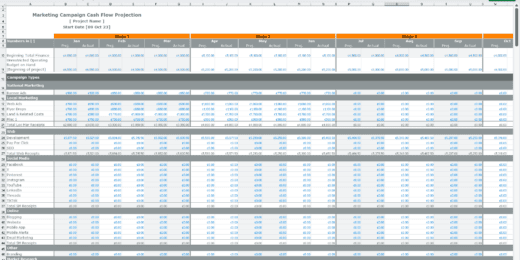

Comprehensive editable, Excel spreadsheet for tracking marketing campaign financials in…


The Photography Studio Financial Model helps users turn a studio…
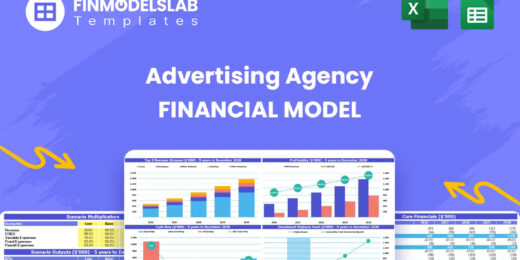
The Advertising Agency Financial Model helps founders, agency owners, consultants,…
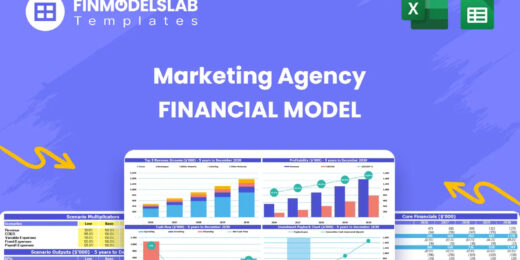
The Marketing Agency Financial Model is a ready-to-use financial model…

The Direct Marketing Agency Financial Model helps turn an agency…
Forecasting Revenue Challenges in Newspaper & Journals Financial Planning

The newspaper and journal industry has long been a cornerstone of delivering information and insights, shaping public discourse and opinion. However, over the past few decades, this industry has undergone transformative changes, reshaping how content is consumed and monetized. These shifts have brought new challenges, especially in financial planning and revenue forecasting. In this article, we delve into the intricacies of forecasting revenue for newspapers and journals amidst these changing times. With a specific focus on identifying challenges, defining relevant Key Performance Indicators (KPIs), and leveraging financial models for prediction, we aim to provide clear insights to industry professionals. By understanding these elements, media companies can better navigate financial planning and enhance their strategic decisions.
Understanding the Unique Landscape of the Newspaper & Journals Industry
The newspaper and journals industry today exists in a dramatically different landscape than it did just a few decades ago. There has been a marked transition from traditional print to digital platforms, which has significantly impacted how these businesses operate and plan financially. With the global digitalization trend, print circulations have been steadily declining, forcing media companies to adapt promptly. This adaptation requires a more nuanced approach to financial planning to remain competitive and financially stable. As digital platforms gain dominance, newspapers and journals are compelled to explore innovative methods to capture audience interest and revenue. Forecasting revenue for this industry has become increasingly complex due to declining print circulation, intense competition from digital content providers, and a significant shift in consumer preferences towards online content consumption.
Print circulation, once a key revenue driver, has been declining as consumers increasingly favor online content, which often offers greater accessibility and interactive features. This tectonic shift has led traditional media houses to invest more in their digital offerings, hoping to replace declining print revenue. Meanwhile, competition from purely digital platforms, many of which offer free content, presents a significant challenge, as newspapers and journals strive to convince their audience of the value of paid content. Furthermore, consumer preferences have evolved, with audiences now expecting more personalized and engaging content, which places additional pressures on revenue forecasting as consumer whims become more unpredictable. Given these dynamics, adapting financial planning to external market changes has never been more crucial.
Key Performance Indicators (KPIs) Specific to Newspapers & Journals
Financial planning in the newspaper and journals industry hinges significantly on specific Key Performance Indicators (KPIs), which provide insight into revenue streams and the effectiveness of financial models. Understanding and applying these KPIs is vital for businesses aiming to thrive. Circulation revenue serves as a foundational KPI, representing income from both print and digital subscriptions. Tracking circulation revenue allows newspapers to gauge the health of their audience base and predict future income streams. As the industry leans towards digital, it's essential to not only observe changes in print subscriptions but also closely monitor digital growth, which necessitates more intricate modeling.
Advertising revenue is another critical KPI for this industry. Advertisers are shifting their budgets from print to digital platforms, attracted by the promise of detailed targeting and analytics. Newspapers and journals must dissect not just total ad revenue, but differentiate between print and digital gains to forecast accurately and adjust strategies. Additionally, content monetization through paywalls, premium content, and value-added services represents another revenue stream that impacts financial planning. Paywalls have become a popular method to monetize online content, but determining the right balance between free and paid content within this framework is challenging.
Reader engagement metrics also hold significant influence over financial forecasts, with higher engagement generally leading to better subscription renewals and more attractive options for advertisers. Metrics such as time on site, page views, and interaction rates can serve as indicators of engagement. In this evolving landscape, capturing these KPIs ensures media companies have a comprehensive understanding of their revenue streams and the factors influencing those streams, allowing them to refine their financial models for improved accuracy and strategic decision-making.
Financial Forecasting Models for Revenue Prediction
In response to these industry challenges, financial forecasting models become indispensable tools for newspapers and journals aiming to predict revenue accurately. Different models provide frameworks that help companies anticipate changes in revenue drivers and plan accordingly. Scenario analysis is a vital component of this forecasting, enabling companies to construct multiple revenue scenarios based on different possible future events. By constructing and analyzing diverse scenarios, media companies can assess risks, adapt strategies efficiently, and capitalize on opportunities presented by evolving market conditions.
Effective financial models utilize historical data in combination with market trends to create predictive models that are both flexible and sophisticated. This aspect allows companies to account for past performance while incorporating expected market changes, leading to more robust and adaptable forecasts. Accurate financial forecasting models must incorporate flexibility to adjust rapidly to unexpected market changes, ensuring that companies remain agile in their strategic responses. The challenge, however, lies in the accuracy and reliability of traditional forecasting methods, which may not entirely capture the new equilibrium between print and digital revenue streams or dynamic consumer behavior.
To overcome these hurdles, advanced financial models emphasize flexibility and are increasingly data-driven, often integrating machine learning algorithms or complex statistical methods to predict revenue more accurately. These refined models are crucial for enabling newspapers and journals to forecast their financial futures reliably, despite the uncertainty of the landscape.
Leveraging MS Excel for Enhanced Financial Planning
Microsoft Excel remains a powerful and versatile tool for financial planning and modeling in the newspaper and journals industry. Its flexibility and customization potential allow media companies to tailor financial models to suit their unique needs, ensuring that they capture the nuances of their revenue dynamics.
With built-in functions that facilitate complex calculations, Excel is ideal for performing sophisticated financial analyses essential to the industry. Functions such as Net Present Value (NPV) and Internal Rate of Return (IRR) support evaluating current and future investment returns, while advanced data visualization tools in Excel help present data insights effectively, promoting better decision-making.
Furthermore, Excel's capabilities are enhanced by available financial modeling templates, such as those offered by eFinancialModels. These templates streamline the modeling process, providing structured approaches that media companies can adapt to their specific contexts. Case studies of successful brands have shown how leveraging these pre-designed Excel templates can enhance forecasting accuracy, providing structured frameworks aligned with the industry's dynamics and challenges.
Conclusion: The Path to Successful Financial Planning in an Evolving Industry
The newspaper and journals industry faces numerous challenges in forecasting revenue, primarily due to declining print circulation, competition from digital platforms, and shifting consumer preferences. However, by identifying and leveraging the right KPIs, embracing advanced financial forecasting models, and utilizing tools like Microsoft Excel, media companies can surmount these challenges. Robust financial modeling aids in strategic decision-making, enabling media businesses to navigate their financial futures successfully.
For industry professionals looking to refine their financial planning, exploring eFinancialModels' tailored Excel spreadsheets for Newspapers & Journals is an essential next step. These templates provide the flexibility and precision required to handle the nuances of this rapidly evolving industry. By adopting such tools, media companies can enhance their financial forecasting accuracy and resilience, ensuring sustainable growth and adaptation in a challenging landscape.
Frequently Asked Questions
- What are some challenges in forecasting revenue for newspapers and journals? The major challenges include declining print circulation, intense competition from digital content providers, and an unpredictable shift in consumer preferences towards online content.
- Why are Key Performance Indicators (KPIs) crucial for this industry? KPIs like circulation and advertising revenue help newspapers and journals track revenue streams, evaluate financial model effectiveness, and refine strategic decisions for sustainability and growth.
- What role does reader engagement play in financial forecasting? Higher reader engagement often leads to better subscription renewals and more appealing opportunities for advertisers, directly impacting revenue forecasts.
- How can Microsoft Excel be utilized in financial planning for newspapers and journals? Excel’s functions allow complex financial analyses, and its customization potential helps media companies develop precise financial models that capture nuanced revenue dynamics.
- What is the benefit of using financial modeling templates from eFinancialModels? These templates offer pre-designed, structured approaches that streamline the modeling process and improve forecasting accuracy in line with industry dynamics.
- How do advanced financial forecasting models improve accuracy? By integrating historical data and market trends with sophisticated methods like machine learning, these models provide flexible, accurate predictions of future revenue trends.
You might also like: