
0 ITEMS

Return on Click
ROC is a metric used in online advertising to measure the revenue generated per click. Our financial model templates include tools to calculate and analyze ROC, helping businesses optimize their online advertising strategies.

This dynamic Early Stage Startup SaaS Financial Model, built by…

This Amazon FBA Financial Model Template has been built for…
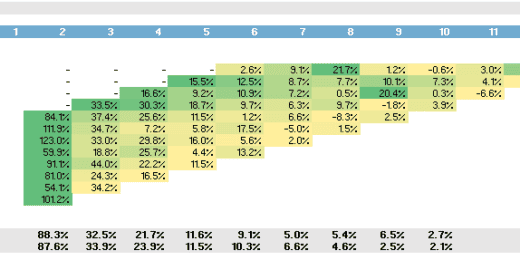

This meticulously crafted Excel model is designed for in-depth user…

Maximizing Profitability in Return on Click Financial Planning

In today's highly competitive digital marketing and e-commerce landscape, understanding how to maximize profitability is paramount. One powerful approach for doing so is through Return on Click (ROC) financial planning. ROC is not just an indicator of how well your online advertising and customer engagement strategies are performing; it’s a critical measure that can drive decision-making processes. This concept intertwines the direct cost of acquiring website traffic with the potential returns, providing a clear picture of your advertising effectiveness. If planned and executed correctly, ROC can significantly enhance your business’s financial outcomes.
The core of ROC financial planning involves analyzing and strategizing around clicks that your digital advertisements receive. Every click on an ad is a potential lead and a step towards conversion, but the challenge lies in converting these clicks into tangible revenue efficiently. The effectiveness of ROC is heavily reliant on understanding and manipulating various financial and engagement metrics to optimize profitability. Let’s delve deeper into the fundamentals of the Return on Click model and how it applies to maximizing profitability in online advertising.
Understanding the Return on Click Model
The Return on Click model is pivotal in the realm of digital marketing and e-commerce, serving as a critical metric for evaluating online advertising success. ROC measures the financial returns generated from the clicks a particular advertisement or campaign receives. Essentially, it quantifies how lucrative each click on an online ad or link is in terms of generating business revenue, providing a concrete measure of engagement efficiency.
In today's internet-driven business environment, the importance of deploying ROC strategies cannot be overstated. Companies invest heavily in online advertisements to drive traffic to their websites, and ROC helps assess whether these investments are yielding desired returns. This model helps businesses fine-tune their customer engagement strategies, ensuring that every click counts towards boosting overall profitability. The calculation revolves around determining the net revenue earned from clicks after deducting the associated costs, which can unveil insights into optimizing ad spend strategies.
Key Performance Indicators (KPIs) for ROC
To fully harness the potential of the Return on Click model, it’s essential to integrate industry-specific Key Performance Indicators (KPIs) into the financial planning framework. These KPIs offer insights into performance tracking, enabling businesses to make data-driven decisions that enhance profitability. The following are critical KPIs to consider:
Click-Through Rate (CTR)Click-Through Rate is a major player in understanding user engagement. It represents the ratio of users who click on a specific link to the number of total users who view a page, email, or advertisement. A higher CTR indicates effective user engagement, serving as a precursor to conversion rates and, consequently, revenue generation. By scrutinizing CTR alongside other metrics, businesses can glean insights into how appealing their ad content is, leading to informed adjustments in their advertising approach.
Cost Per Click (CPC)Analyzing the Cost Per Click is essential for budgeting strategies and profitability analysis. CPC reflects the actual cost incurred for each click on an ad, aiding in financial planning by setting benchmarks for advertising spend. Monitoring CPC trends is pivotal for optimizing the Return on Ad Spend (ROAS) because fluctuating rates can profoundly influence budget allocation decisions. Lower CPCs can signal cost-effective campaigns, allowing for an expanded reach without relentlessly draining financial resources.
Customer Lifetime Value (CLV)The calculation of Customer Lifetime Value considers ongoing customer interactions, extending beyond one-off purchases. CLV gauges the total worth of a customer to a business over time, influencing acquisition strategies by highlighting the potential long-term revenue from targeting specific audiences. By aligning CLV insights with advertising efforts, businesses can judiciously allocate spend towards segments with higher lifetime value, ultimately maximizing profitability.
Return on Ad Spend (ROAS)The relationship between ROAS and overall profitability is symbiotic. ROAS measures the revenue generated for every dollar spent on advertising, shedding light on campaign success. By actively monitoring ROAS, businesses can pinpoint the most lucrative advertising channels, streamline ad budgets, and focus on avenues yielding the highest returns. Continuous evaluation of ROAS aids in recognizing patterns and adapting strategies to maximize profitability over time.
Integrating Financial Planning with ROC Analytics
Improving ROC outcomes through strategic financial planning is a pathway to enhancing business profitability. Effective integration of financial planning within ROC analytics supports informed decision-making and aids in economic resilience. The following strategies can improve ROC outcomes:
Scenario AnalysisUtilizing scenario analysis allows businesses to predict potential ROC under varied conditions, offering a foresight advantage. By creating different scenarios—such as best-case or worst-case outcomes—enterprises can anticipate potential challenges and opportunities, enabling robust contingency planning. Scenario analysis acts as a preparatory measure to adjust strategies, ensuring sustained profitability despite market dynamics.
Budget AllocationStrategic distribution of marketing budgets is facilitated by ROC insights, emphasizing the need for iterative budgeting practices. Allocating resources based on empirical data rather than assumptions enables continuous improvement and refinement of financial strategies. By leveraging ROC analytics, businesses can direct their financial commitments towards campaigns demonstrating tangible ROI, ensuring optimal resource utilization.
The Role of Excel Spreadsheet Templates in Financial Planning for ROC
Microsoft Excel is an optimal tool in the Return on Click industry due to its extensive functionalities, offering unparalleled support for financial planning. Excel's versatility and adaptability make it ideal for crafting sophisticated financial models aligned with ROC requirements.
One of Excel’s predominant strengths is its customization and flexibility. Excel templates can be tailored to specific ROC needs, accommodating varied metrics and calculations vital for comprehensive modeling. This adaptability ensures businesses can address unique financial scenarios pertinent to ROC.
Ease of data integration is another feature that positions Excel as a leader in ROC financial planning. Its ability to consolidate information from multiple sources allows seamless data synthesis, promoting cohesive analysis. Businesses can swiftly aggregate diverse data streams into a singular Excel file, fostering a holistic understanding of financial standings.
Excel's facilitation of real-time analysis and adjustments is crucial for maximizing ROC. Businesses can simulate numerous ROC scenarios using real-time data, allowing for immediate modifications in financial plans based on market changes or emergent threats. This aptitude for quick recalibration enhances a company’s preparedness against anomalies.
Furthermore, Excel's visualization tools empower users to craft impactful graphs and charts derived from financial data, simplifying complex concepts for easier interpretation. Effective visual representations support decision-making, enabling quick comprehension and strategic maneuverability based on visual insights.
Conclusion and Call to Action
The importance of customizing financial plans based on industry-specific KPIs cannot be downplayed, especially in the evolving landscape of digital marketing. Implementing strategic financial planning tailored to Return on Click parameters can significantly influence the success and profitability of advertising efforts. Utilizing Excel spreadsheet templates designed for ROC analysis enhances this process, offering precision and adaptability.
At eFinancialModels.com, we provide an extensive library of Excel templates specifically crafted for Return on Click financial modeling. Our templates are designed to simplify the financial planning process, ensuring ease of use while delivering proven effectiveness. We encourage you to explore these resources and leverage our expertise to optimize your financial results in the dynamic world of digital advertising.
FAQ on ROC Financial Planning and Excel Utilization
- What is Return on Click (ROC) financial planning? Return on Click (ROC) financial planning involves analyzing the cost and potential revenue generated from clicks on digital advertisements, helping businesses make data-driven decisions to optimize profitability.
- Why is ROC important for my business? ROC helps businesses assess the effectiveness of their online advertisements, ensuring that marketing strategies are profitable and aligned with overall financial goals.
- How do Excel templates aid in ROC financial planning? Excel templates offer a flexible platform for modeling ROC scenarios, enabling businesses to incorporate KPIs, perform scenario analyses, and visualize data to enhance strategic decision-making.
- What are the key KPIs to consider in ROC analysis? Important KPIs include Click-Through Rate (CTR), Cost Per Click (CPC), Customer Lifetime Value (CLV), and Return on Ad Spend (ROAS), which provide insights into user engagement, budget allocation, and long-term value.