
0 ITEMS

3D Printing
Financial model templates for 3D Printing businesses are used to assess and analyze all kinds of 3D Printing opportunities such as B2C or B2B. 3D Printing is in strong demand as it allows custom print flexible and small series of products in plastic, metal, and other materials. Printing can be done locally without having to use mass-production methods of a more massive factory.


Purpose-built Excel model to evaluate any hardware or physical product…


Optimize your drone manufacturing startup’s financial planning with our Drone…


Comprehensive editable, 5-year 3-statement MS Excel spreadsheets for tracking a…
Comprehensive editable, 5-year 3 statement MS Excel spreadsheets for tracking…
Comprehensive editable, 5-year 3 statement MS Excel spreadsheets for tracking…
Very comprehensive editable Financial models for tracking CNC Component Manufacturer…
Comprehensive editable financial models for tracking 3D Printing Manufacturer finances.…

Comprehensive editable, 5-year 3 statement MS Excel spreadsheets for tracking…

A comprehensive editable, MS Excel spreadsheet for forecasting and tracking…
Comprehensive editable, MS Excel spreadsheets for tracking Construction Equipment Manufacturer…

Comprehensive editable, 5-year 3 statement MS Excel spreadsheets for tracking…
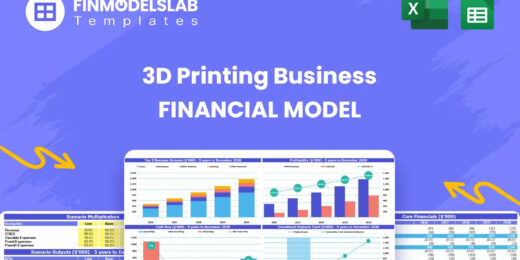

The 3D Printing Business Financial Model helps entrepreneurs, founders, consultants,…


Lifetime access to all future templates as well! Here is…


Unlock the Future of Your Manufacturing Business with Our Powerful…
Specific logic that pertains to starting a 3D printing business.
Crafting a Financial Blueprint for Success in 3D Printing

The 3D printing industry, a cornerstone of modern manufacturing, has become a pivotal force in technological innovation and industrial transformation. Its evolution from a niche technology to a mainstream industrial tool highlights a significant shift in how products are designed, manufactured, and delivered globally. As this industry expands, driven by increasing demand for bespoke production solutions, businesses face unprecedented opportunities and challenges. The success of a 3D printing enterprise depends largely on robust financial planning, essential for navigating this complex landscape. Given the sector's rapid growth, manufacturers must leverage strategic planning to capitalize on market opportunities while mitigating inherent risks. This necessitates a comprehensive understanding of unique industry challenges and the development of a financial model that can withstand market volatility.
Understanding the 3D Printing Sector’s Challenges and Opportunities
The current state of the 3D printing sector reflects its rapid technological advances and increasing adaptability across various industries, from healthcare and automotive to aerospace and consumer goods. Each sector presents an array of opportunities for innovation and market penetration. Yet, amidst these opportunities, businesses face an intricate web of challenges—fluctuating material costs, the need for advanced technology investment, and intense competition. Financial planning is paramount to equipping firms to navigate these challenges efficiently, ensuring that resources are allocated effectively to growth and innovation initiatives. Considering the complexities involved, it is clear that businesses must adopt sophisticated financial strategies tailored to the unique demands of the 3D printing landscape.
Critical KPIs for Performance and Strategic Success
To harness the potential of the 3D printing industry, businesses must focus on specific Key Performance Indicators (KPIs) that align with its distinctive operational and strategic needs. These KPIs are crucial benchmarks for evaluating performance and guiding decision-making processes:
- Production Efficiency: This KPI gauges the speed and effectiveness of the production process, akin to "just-in-time" manufacturing principles. Firms need to optimize throughput to meet demand promptly without unnecessary resource expenditure.
- Material Utilization: In an industry where material costs can be substantial, this KPI focuses on minimizing waste to enhance cost savings and environmental sustainability. Efficient material utilization is a direct contributor to profitability.
- Time-to-Market: The 3D printing business thrives on rapid prototyping and the swift transition of products from concept to market. Time-to-market is a critical KPI, reflecting a firm's ability to outpace competitors and meet customer needs promptly.
- Customization Efficiency: This indicator measures a company's capability to produce tailored products that align with diverse consumer requirements. High customization efficiency translates to better customer satisfaction and increased market reach.
- Revenue per Build: Assessing the profitability of individual projects provides insight into financial performance and informs strategic pricing decisions. It is essential for understanding profitability at a granular level.
Implementing Strategic Financial Planning Strategies
Given the dynamic nature of the 3D printing field, businesses must employ targeted financial strategies to sustain growth and ensure operational excellence. These strategies encapsulate the core aspects necessary for financial stability and adaptability:
- Scenario Analysis: As market conditions and technological advances fluctuate, scenario analysis becomes crucial for preparing for potential shifts. Businesses can model various outcomes based on different market scenarios, aiding in informed strategic decision-making.
- Cash Flow Management: With significant investment often required for technology and raw materials, managing cash flow is vital. This involves maintaining liquidity to support operations while enabling investments in critical growth areas.
- Capital Expenditure Planning: Strategic investment in new machines and technology upgrades is imperative. Through careful capital expenditure planning, companies can ensure that their equipment remains cutting-edge, enhancing production capabilities and competitive advantage.
- Budgeting for R&D: Innovation is the lifeblood of the 3D printing industry. Companies must allocate sufficient resources to research and development, ensuring they remain at the forefront of technological advancements and continuously satisfy consumer demands.
- Market Research Costs: Understanding emerging trends and opportunities helps businesses allocate resources efficiently. Robust market research is required to identify shifts in consumer preferences and technological developments that could impact business strategy.
Benefits of Using MS Excel Templates in Financial Planning
MS Excel remains a preferred tool for financial modeling due to its versatility and comprehensive functionality, making it particularly effective for 3D printing financial planning:
- Customization: Excel allows users to adapt templates to reflect specific business operations and KPIs, ensuring that financial models are aligned with strategic goals.
- Flexibility: The platform supports easy adjustments, whether for scenario analysis or sensitivity testing, enabling businesses to simulate different market or operational conditions.
- Collaboration: Excel facilitates collaborative financial planning efforts across different departments, ensuring cohesive strategy development and implementation.
- Wide Acceptance: As a familiar tool for financial professionals worldwide, Excel ensures ease of adoption and execution within any corporate culture.
- Cost-Effectiveness: By utilizing pre-built templates, companies can significantly reduce modeling costs compared to developing bespoke solutions, aligning well with budget constraints while offering robust capabilities.
Achieving 3D Printing Success with Smart Financial Planning
In sum, navigating the 3D printing industry's complex landscape requires sophisticated financial planning and an acute understanding of industry-specific KPIs. By strategically managing resources and investments, businesses can maximize growth potential and secure a competitive edge. Leveraging MS Excel templates enhances this planning by providing customizable, flexible, and cost-effective solutions. This approach not only refines financial accuracy and decision-making but also positions firms to thrive amidst evolving market conditions.
To support your business's journey towards smart financial planning, explore eFinancialModels’ extensive array of financial model templates specifically designed for the 3D printing industry. Discover the numerous benefits these tools offer, paving the way for greater business success and a stronger competitive position.
Frequently Asked Questions
- What are the main challenges faced by the 3D printing industry? The main challenges include fluctuating material costs, the need for advanced technology investment, and intense competition across various sectors.
- Which KPIs are essential for success in the 3D printing sector? Key KPIs include production efficiency, material utilization, time-to-market, customization efficiency, and revenue per build.
- Why is MS Excel a preferred tool for financial planning in 3D printing? MS Excel is preferred due to its customization, flexibility, collaboration features, wide acceptance, and cost-effectiveness for financial modeling.
- How can scenario analysis benefit 3D printing businesses? Scenario analysis helps companies prepare for market fluctuations by modeling various outcomes, thus aiding informed strategic decision-making.
- What strategies are crucial for managing cash flow in this industry? Effective cash flow management involves maintaining liquidity to support ongoing operations and investing in critical growth areas like technology and raw materials.